Just under a month ago, we hosted our first symposium centered on the patient experience in rare cancers.
Grateful to have been part of it and to everyone who made it possible including support from @bravelikegabe and @fredhutch
💙
https://t.co/aaHtoTtZD6
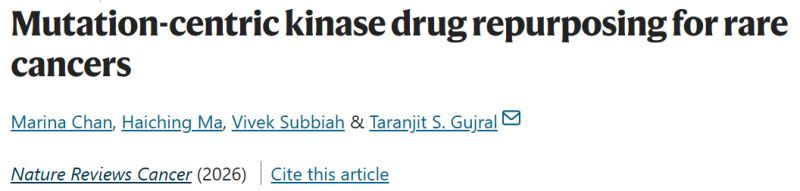
Many rare cancer variants may already be targetable with existing therapies; we need better drug-mutation matching. See our commentary in Nature Reviews Cancer on mutation-centric kinase drug repurposing for rare cancers. https://t.co/zZ5Zzfuu8p
DNA is often called a cell’s instruction manual. It tells a cell how to respond, move, divide, repair, or die.
But every time a cell divides, billions of nucleotides must be copied. Mistakes can happen. We call them mutations.
See our full description at https://t.co/Rqm1g807lv
“Cancer” comes from the ancient Greek/Roman word for crab.
Early physicians used it as a metaphor: a hard mass gripping the body, with invasive extensions reaching outward.
Today, we look closer — at the cells inside tumors.
What changes inside a cell to make cancer happen?
Kinase inhibitors have transformed cancer treatment, but mostly for common cancers.
KIRHub (Kinase Inhibitor Repurposing Hub) changes that.
Built by the TRACER team, it maps kinase inhibitor pharmacology to rare cancer variants. See more below
https://t.co/A9iTE5t1lS
At Fred Hutch's TRACER program, we're using AI-powered platforms to screen hundreds of FDA-approved drugs, including non-oncology drugs, against rare tumor tissue. The goal is to find matches that work, faster.
read more at:
https://t.co/RfamwCKEY4
Any single rare cancer type affects less than 2% of patients annually.
But collectively? Rare cancers account for more than 1 in 4 of all cancer diagnoses.
Learn more about TRACER at
https://t.co/eH4M1nqz2A
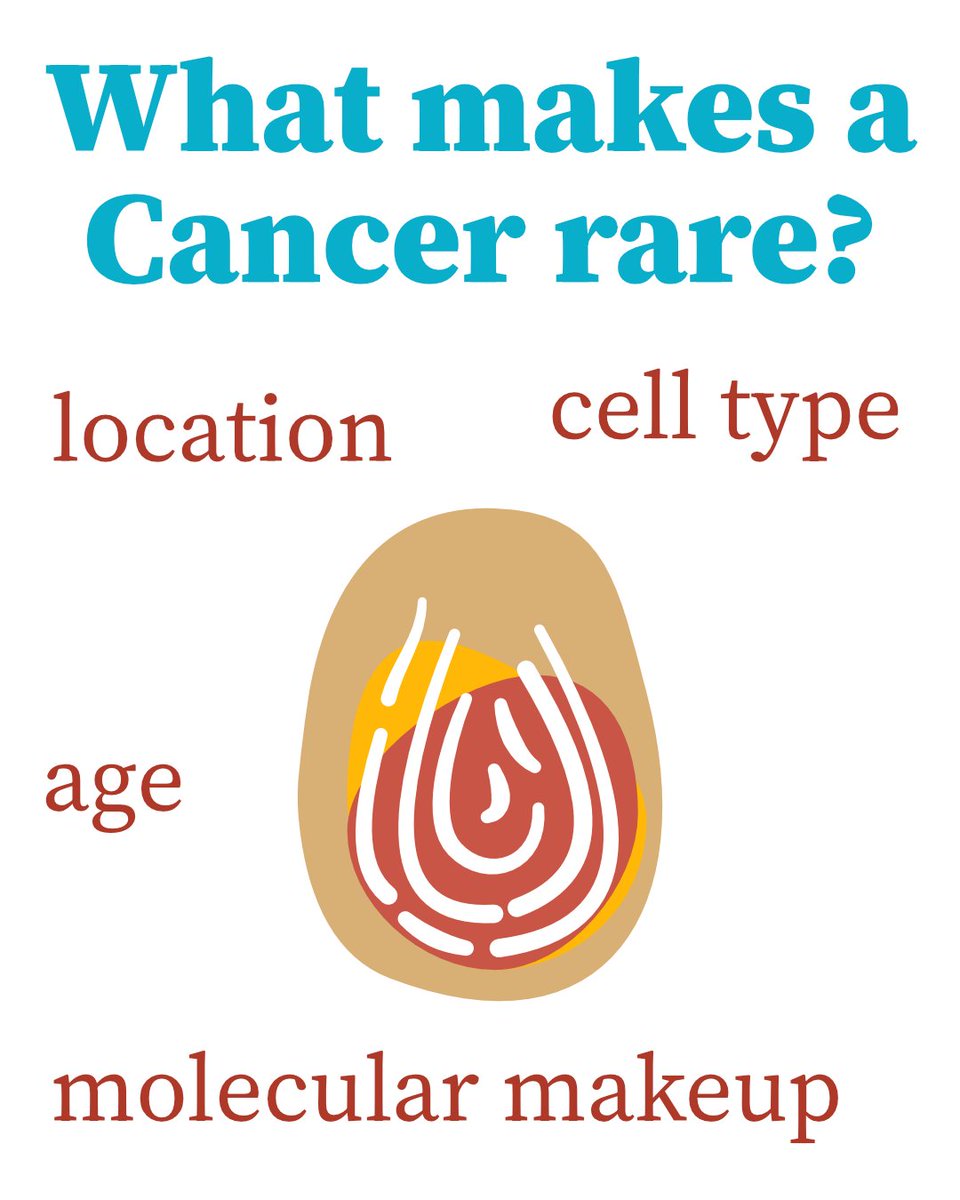
What makes a cancer “rare”?
By definition, it’s fewer than 6 cases per 100,000 people. But in reality, rare cancers represent a meaningful share of the global cancer burden.
Each one is shaped by where it arises, when it appears, and how it develops at a molecular level.
In mid march at the first @TRACER_Cancer education symposium, rare cancer patients & caregivers joined researchers and clinicians to learn, connect and problem solve together.
Read the full story → https://t.co/K4eqGPTuQQ
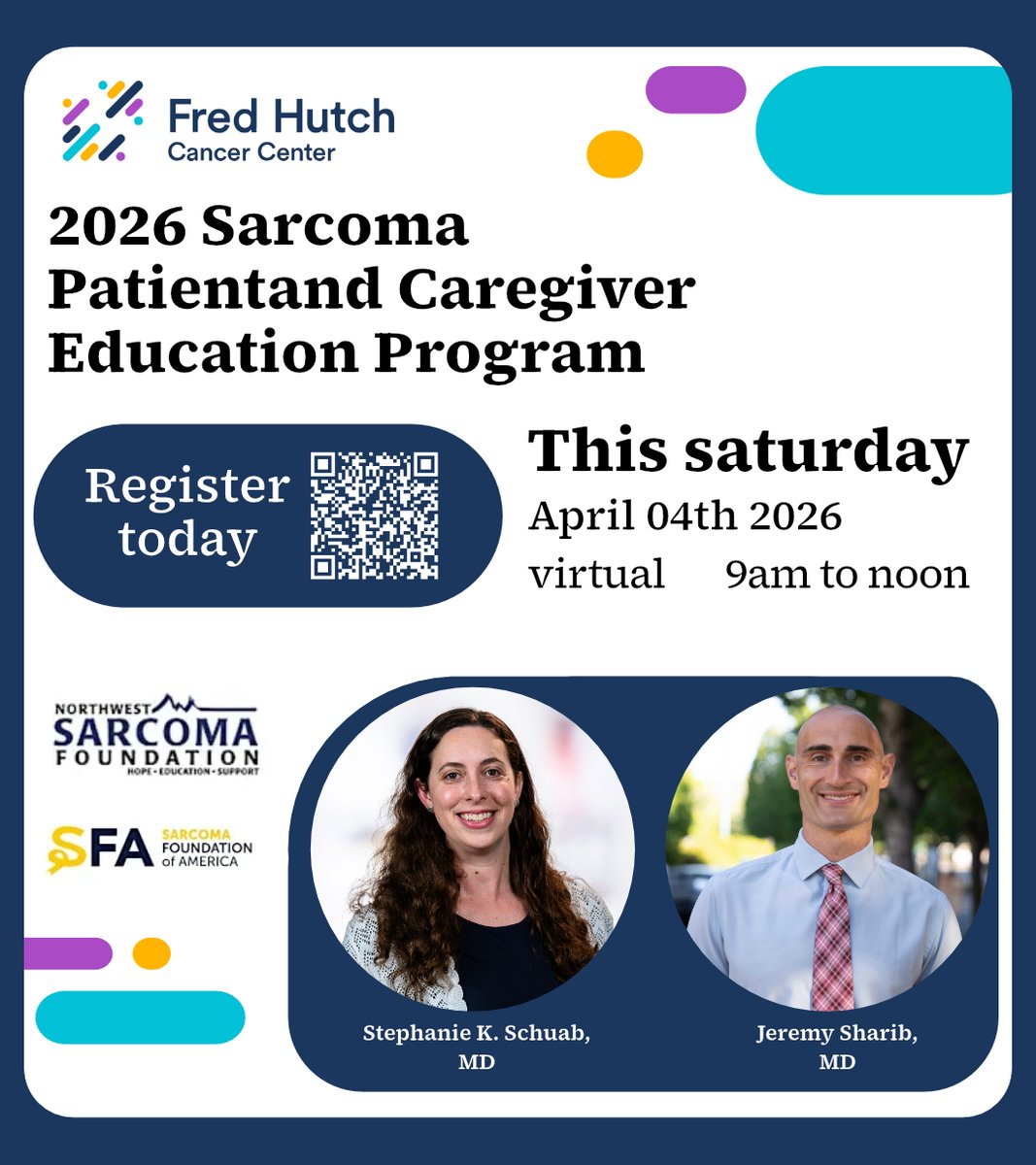
This Saturday, Fred Hutch Cancer Center is hosting a free, virtual patient education event for patients with sarcoma and their caregivers.
Please register here or visit the QR below
https://t.co/mDwkIANQoS
When broken strands of DNA get repaired improperly, they can stitch together in new “Frankengene” fusions that can cause cancer. Fred Hutch researchers are working to better understand how a fusion called ZFTA-RELA drives rare brain tumors in children. https://t.co/aLVAYFWgm8
When broken strands of DNA get repaired improperly, they can stitch together in new “Frankengene” fusions that can cause cancer. Fred Hutch researchers are working to better understand how a fusion called ZFTA-RELA drives rare brain tumors in children. https://t.co/aLVAYFWgm8
Learning about #rarecancers at @fredhutch's Rare Cancer Symp, sponsored by #Seattle Translational Tumor Research program, @TRACER_Cancer.
"If we work in silos, the progress will be too slow. Collaboration has 2B the foundation of our effort." ❤️
- Dr. Taran Gujral
Join #TRACER at @fredhutch for a free, half-day symposium designed to empower rare cancer patients and the communities that support them.
🗓️March 14, 2026 (Saturday)
⏲️10AM - 1:30PM
🔗 Register here: https://t.co/2gvOcmLkDu
#RareCancerSymposium#RareCancerResearch#FredHutch
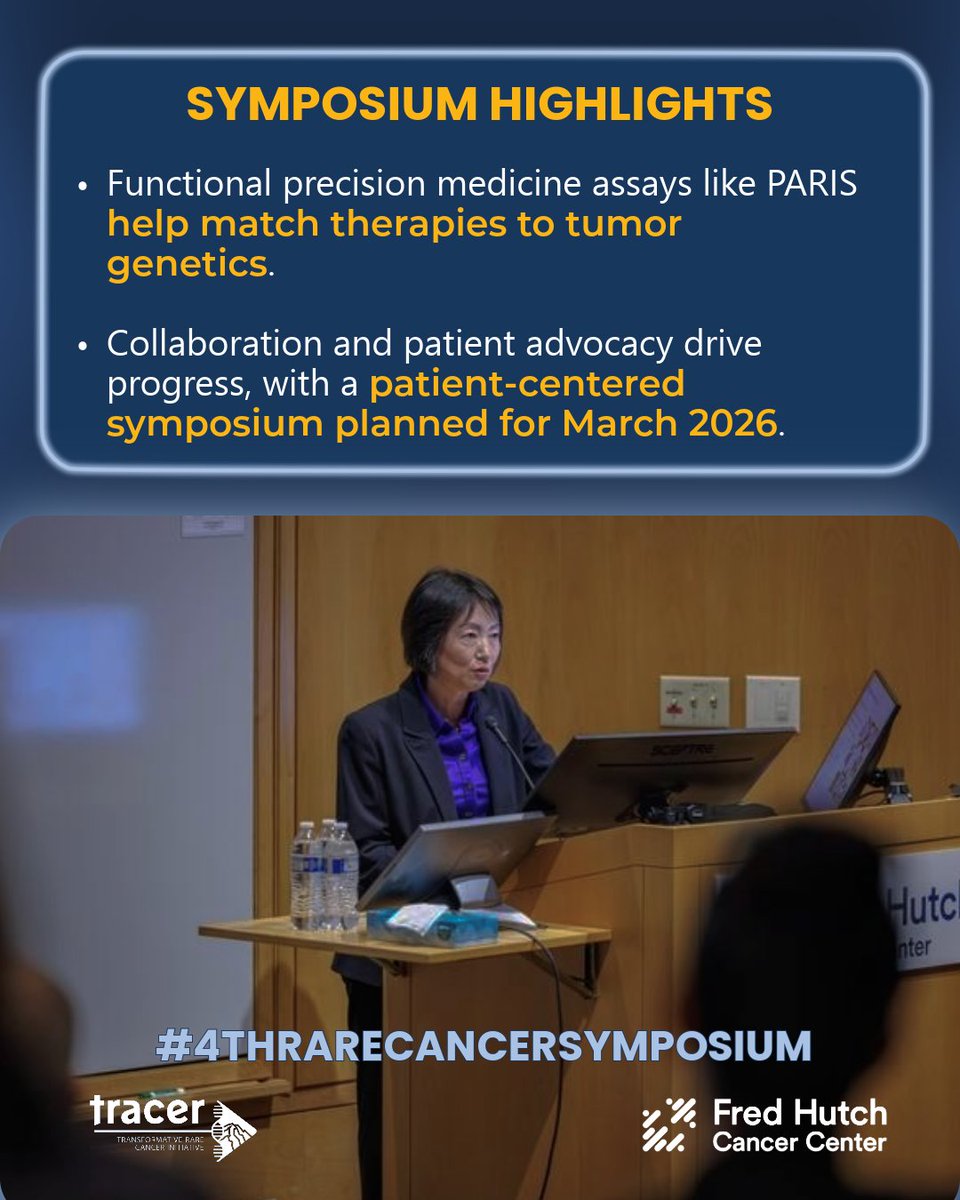
New strides in rare cancer research! 💙 Fred Hutch’s 4th Rare Cancers Symposium brought together researchers, clinicians & patients to advance progress in diagnosis and treatment.
🔗: https://t.co/YPxneQQXkn
#RareCancerResearch#TRACER#FredHutch#4THRareCancerSymposium
It’s Neuroendocrine Tumors Awareness Month: rare, often silent cancers arising from hormone-producing cells.
At #TRACER, we’re building tissue banks, diving into molecular profiling and accelerating discovery in NETs.
🔬 Read More: https://t.co/6G6mpoTGl2
#NeuroendocrineTumor
🔬Are Tissue-Agnostic Oncology Drugs a Silver Bullet for Rare Cancers?
Read more on how molecular alterations guide tissue-agnostic therapies and transform the landscape for #RareCancers.
🔗https://t.co/MB1USmR0Uq
#TRACER#TissueAgnostic#CancerResearch
The 4th Rare Cancers Research Symposium is coming up Oct 17 @fredhutch 🎉
Join leading researchers & clinicians as we spotlight advances in rare cancer science and care.
#TRACER#RareCancers#CancerResearch#FredHutch