finance made sense once I stopped listening to finance people. ex chess kid. I read the data daily so I can turn today's headline into something that clicks.
every day there's a headline saying the market is doomed or unstoppable. usually it's neither. I break down what actually happened, anchored to the real number, using plain language and the occasional meme because markets were never as complicated as they sound.
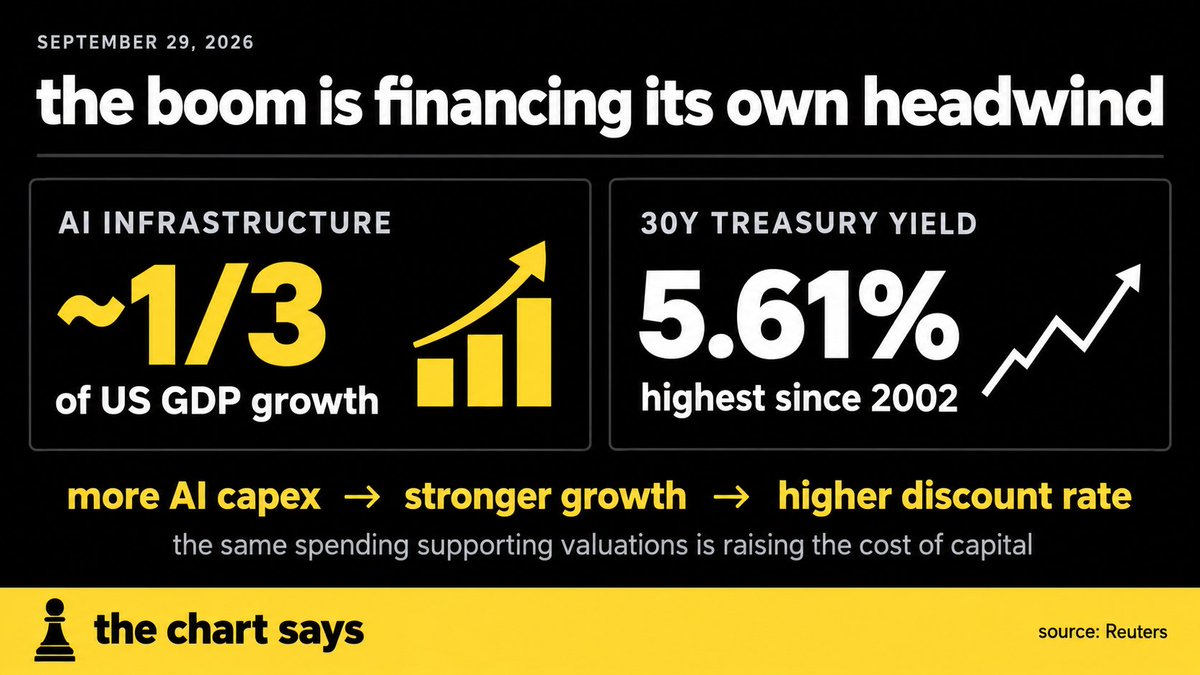
the chart says AI infrastructure spending is now contributing nearly one-third of US GDP growth, while the 30-year treasury yield just reached 5.61%, its highest level since 2002
the obvious read is that the AI boom is keeping the economy stronger for longer
the deeper read is that the same spending supporting growth is also making the Fed’s job harder. more data centers, power demand and construction mean more capital chasing limited resources while inflation remains elevated
AI investment is helping equities grow into their valuations, but it is also pushing the discount rate used to value those future earnings higher
the boom is financing its own headwind
worth knowing this is a pattern, not a one off. cz has been posting vague hype teasers like this since 2019, "soon," "soonish," cryptic screenshots, and they've moved bnb short term more often than they've delivered concrete news
@StockSavvyShay OpenAI moving beyond Azure the second agent VMs need serious compute scale. somehow $AMZN always finds a way to collect the infrastructure tax
@TedPillows when the US 30Y hits a 24-year high at 5.60%, it’s hard to write this off as just term premium. the market is repricing US fiscal risk, and high-beta tech is going to feel what a structurally higher cost of capital actually means
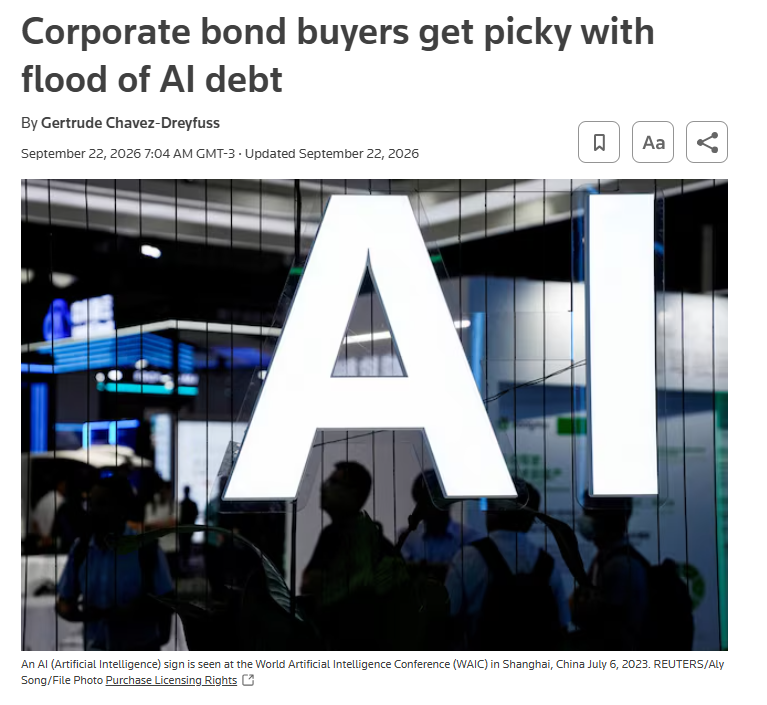
the chart says hyperscaler debt issuance is expected to reach a record $420 billion next year, up 60% from 2026 estimates
the obvious read is that big tech can afford to borrow aggressively for AI
the deeper read is that the bond market is starting to charge for the uncertainty. AI-linked bonds now trade at wider spreads than the broader corporate market, not because investors expect defaults, but because every new data center requires more chips, power and financing before the returns are visible
the AI trade is no longer funded by cash flow alone. it is becoming a competition for capital
stocks are still pricing the upside. credit is starting to price the bill
worth being precise on the mechanism: yields aren't rising because growth is collapsing, they're rising because growth and inflation came in hot. september's flash pmi hit the fastest pace since july 2021 right before the yield spike to 5.23%. that's the opposite of what typically drives yields down into a recession
This is the first time ever…
& I mean ever.
That the 10 year treasury has gone from sub 4% to over 5.2% within 150 trading days.
The best part of this is that the S&P 500 is just -1.5% off record highs.
We’re literally witnessing the early stages of a recession being made…
@Barchart the inverse cramer effect remains the only macro indicator with a flawless track record. at this point, nvidia canceling buybacks isn't capital allocation, it's portfolio protection
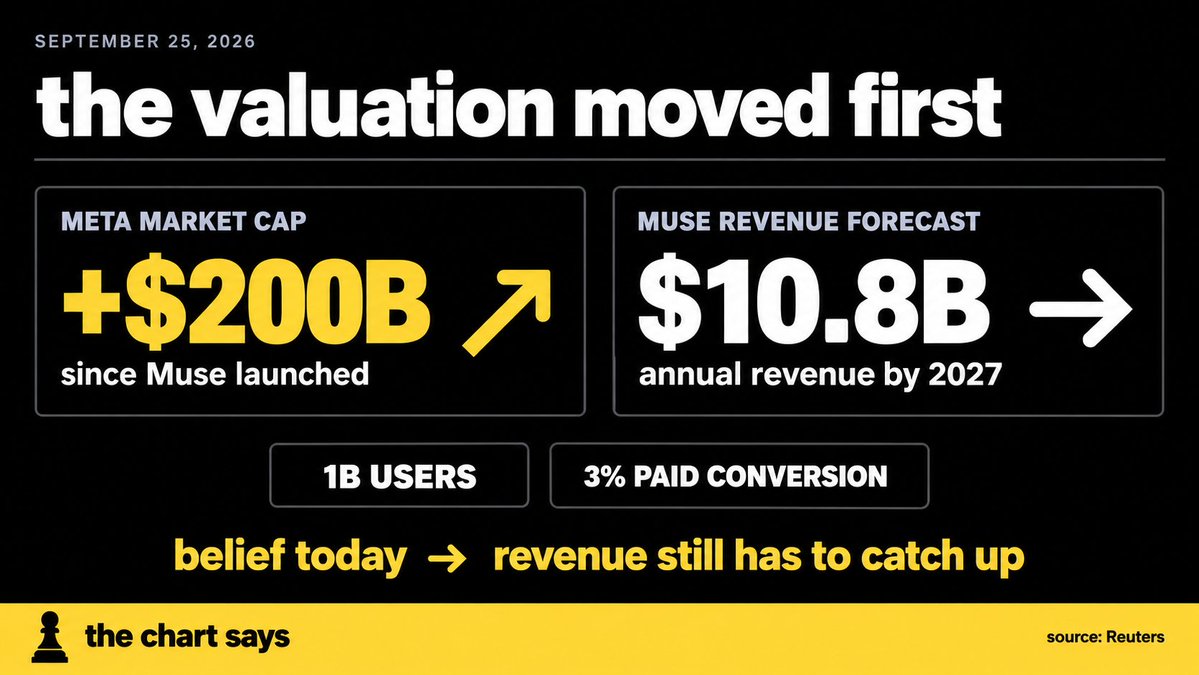
the chart says Meta has added more than $200b in market value since launching Muse, while one bullish forecast sees the AI agent generating $10.8b in annual revenue by 2027
the obvious read is that Wall Street has already found Meta’s next growth engine
the assumptions underneath that forecast are doing a lot of work: 1 billion users and a 3% conversion rate across its $20 and $100 subscription tiers
Meta has the distribution to make that scale possible. the open question is whether downloads become habits, and habits become paid users fast enough to justify what the market has already priced in
the chart is showing belief today. revenue still has to catch up
year-to-date flows only just turned positive again after being down $5.5 billion through june. this streak matters more as a trend reversal than as a standalone number, but reversals built on a fading daily pace are worth watching closely, not just celebrating
the chart says the 30 year treasury yield reached 5.48% today, its highest level since 2004. the 10 year climbed to 5.20%, while the 2 year sat lower at 4.92%
the obvious read is that markets expect more Fed hikes
the shape of the curve points to a broader problem. investors are demanding more compensation to hold long term US debt as oil rises, government spending stays elevated and new bond supply keeps hitting the market
even heavy borrowing from hyperscalers is adding pressure as the AI buildout competes for the same pool of capital
the market is repricing the cost of money for decades, not just the next Fed meeting
worth being precise about what this actually is: it's a liquidity-support buyback for illiquid long-end treasuries, not the government paying down debt. bessent tripled the operation size in august because liquidity was, in his words, very poor. yields at the long end went up anyway