Master in Teaching. PhD student at SALIS DCU. Tweets in English and Portuguese. Instructional Designer, Educator, Researcher. This is my professional account.
Today I presented my poster “A Philosophical Provocation: What if Machine Translation is not Translation” at @AdaptCentre’s Annual Conference.
In this poster, I present the theoretical perspective of Translation Hermeneutics to argue that MT may not be understood as translation.
this week marked my first time attending EAMT (officially).
great conference made by great people!
i got really good feedback and questions from both TS and NLP scholars during the poster presentation.
and of course, i got to have my fun at the poster boaster!
and i cannot emphasise enough, attending this conference and presenting this poster was only possible with the support of @DcuSalis, @dcuctts and the @AdaptCentre.
Huge @DcuSalis (@DCU) representation at @EAMT_2024 (@EAMTee) in Sheffield.
Amazing three full days of conference are now over, but ready for tomorrow’s workshops and tutorials.
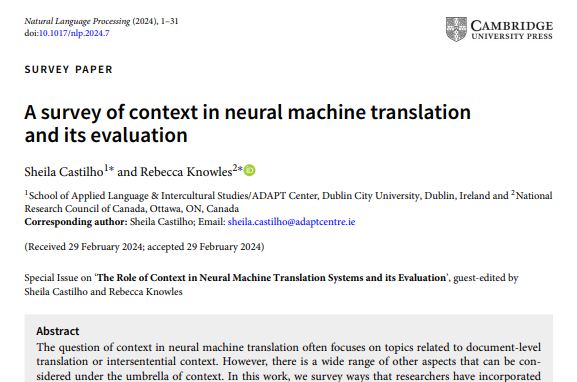
Myself and Rebecca Knowles are excited to share our article *A survey of context in NMT and its Evaluation* available as FirstView in the Natural Language Processing Journal.
@DcuSalis@DCU@AdaptCentre@HumanitiesDCU
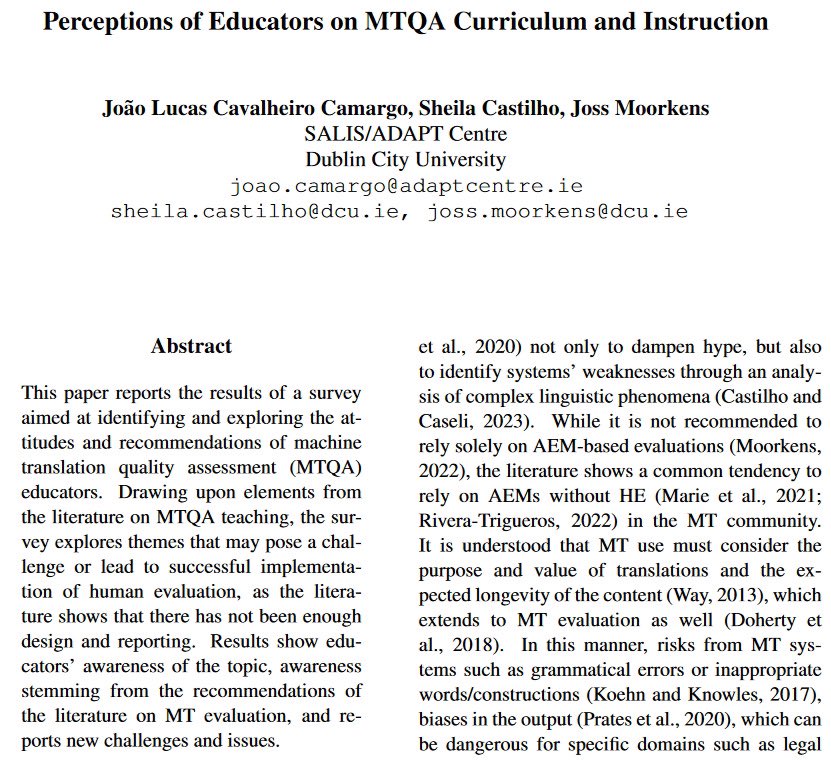
My paper with @Jossmo and @_SheilaCastilho where we explored educators' attitudes and recommendations for MTQA, has been accepted at #EAMT2024 in Sheffield! 🙌
Thanks to @DcuSalis, @dcuctts, and @AdaptCentre, and all participants.
Paper available here: https://t.co/w9jVdV2xaa
🌐 NLP & Machine Translation Educators:
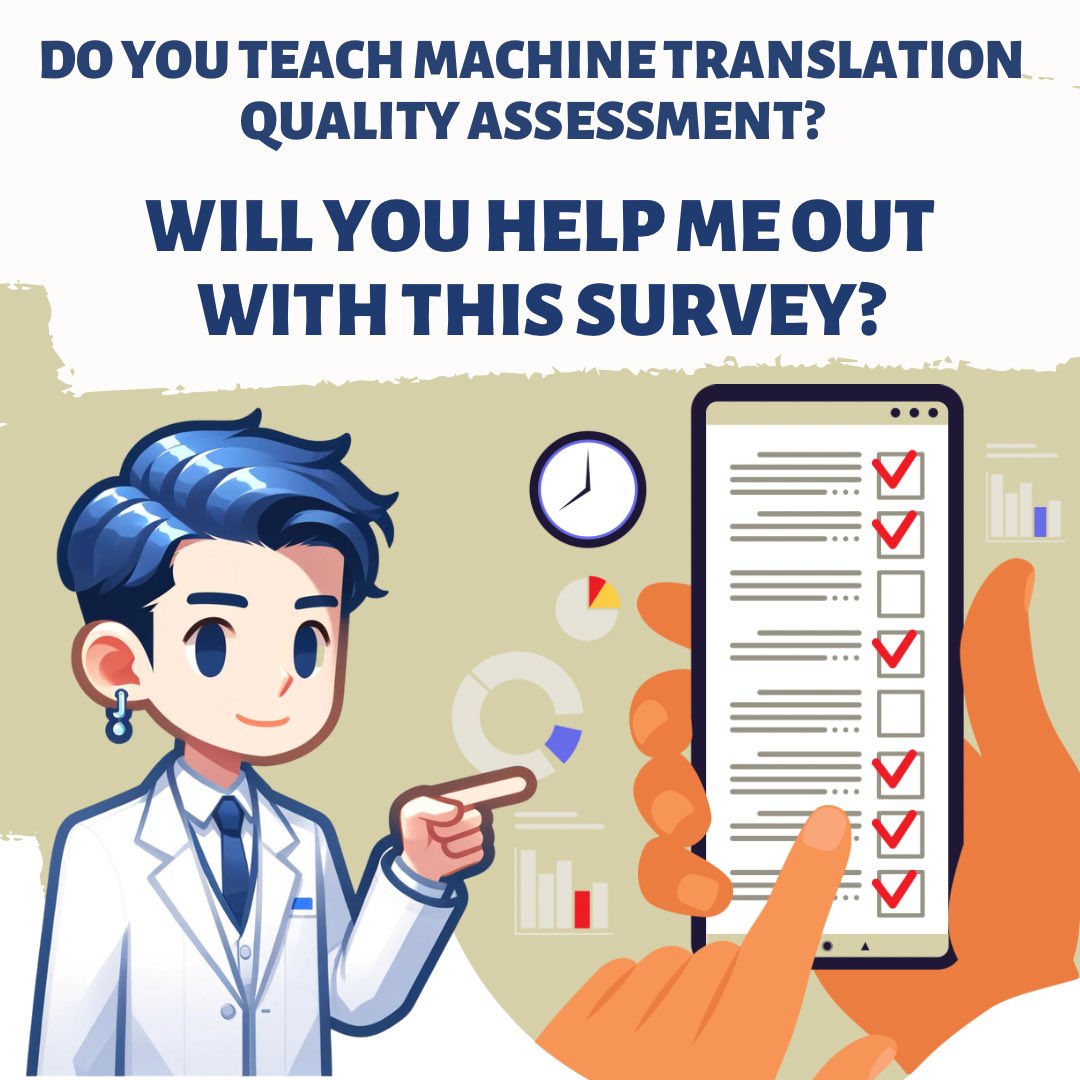
I’m João, doing my PhD on MT quality assessment teaching! Your insights are crucial. Will you help me out? 📊
✔️ 10-15 min survey
✔️ Impact MTQA education
✔️ Share your expertise
Link: https://t.co/JWaKqrrANB
#NLP#MachineTranslation
📢 I am happy to introduce the first edition of our New Frontiers Training Series in which we will try to unpack new and emerging technologies affecting translation and localization industry.
🏫 The first 3-hour master class will be on Blockchain Technology and Localization and delivered by Prof. Nick Lambson who has been one of the pioneers in writing about this technology and its implications on our industry.
💡I wanted to start with this topic since it is a multi-faceted topic and there is a lot of "noise" in the form of misinformation, speculation and unfounded hype. All combined, they hide the real potential of this technology. We would like to take a calm look at this technology and help you distinguish noise from signal.
#blockchain #translation
Tickets: https://t.co/c2sbPkviX5
🌐 NLP & Machine Translation Educators:
I’m João, doing my PhD on MT quality assessment teaching! Your insights are crucial. Will you help me out? 📊
✔️ 10-15 min survey
✔️ Impact MTQA education
✔️ Share your expertise
Link: https://t.co/JWaKqrrANB
#NLP#MachineTranslation
New article:
With my colleagues @VicentBriva and @TRihawf from @DcuSalis we have uploaded our latest research on @arxiv. We compared the translation quality of #GPT4 and #Vicuna against #GoogleTranslate in legal domain in 4 language pairs: English - Spanish, English - Brazilian Portuguese, English - Catalan, English - Turkish
Link: https://t.co/Zh89XlWdgP
Abstract:
This study evaluates the machine translation (MT) quality of two state-of-the-art large language models (LLMs) against a traditional neural machine translation (NMT) system across four language pairs in the legal domain. It combines automatic evaluation metrics (AEMs) and human evaluation (HE) by professional transla-tors to assess translation ranking, fluency and adequacy. The results indicate that while Google Translate generally outperforms LLMs in AEMs, human evaluators rate LLMs, especially GPT-4, comparably or slightly better in terms of producing contextually adequate and fluent translations. This discrepancy suggests LLMs' potential in handling specialized legal terminology and context, highlighting the importance of human evaluation methods in assessing MT quality. The study underscores the evolving capabilities of LLMs in specialized domains and calls for reevaluation of traditional AEMs to better capture the nuances of LLM-generated translations.
(soon we will share journal details)
Special thanks to: @AdaptCentre@DTIEAO_UAB
The last lecture of #DOTTSS2023 is delivered by @RiskuHanna. The results of ongoing empirical research on translation expertise are shown and the methodological procedures of analysing the data are certainly interesting :)
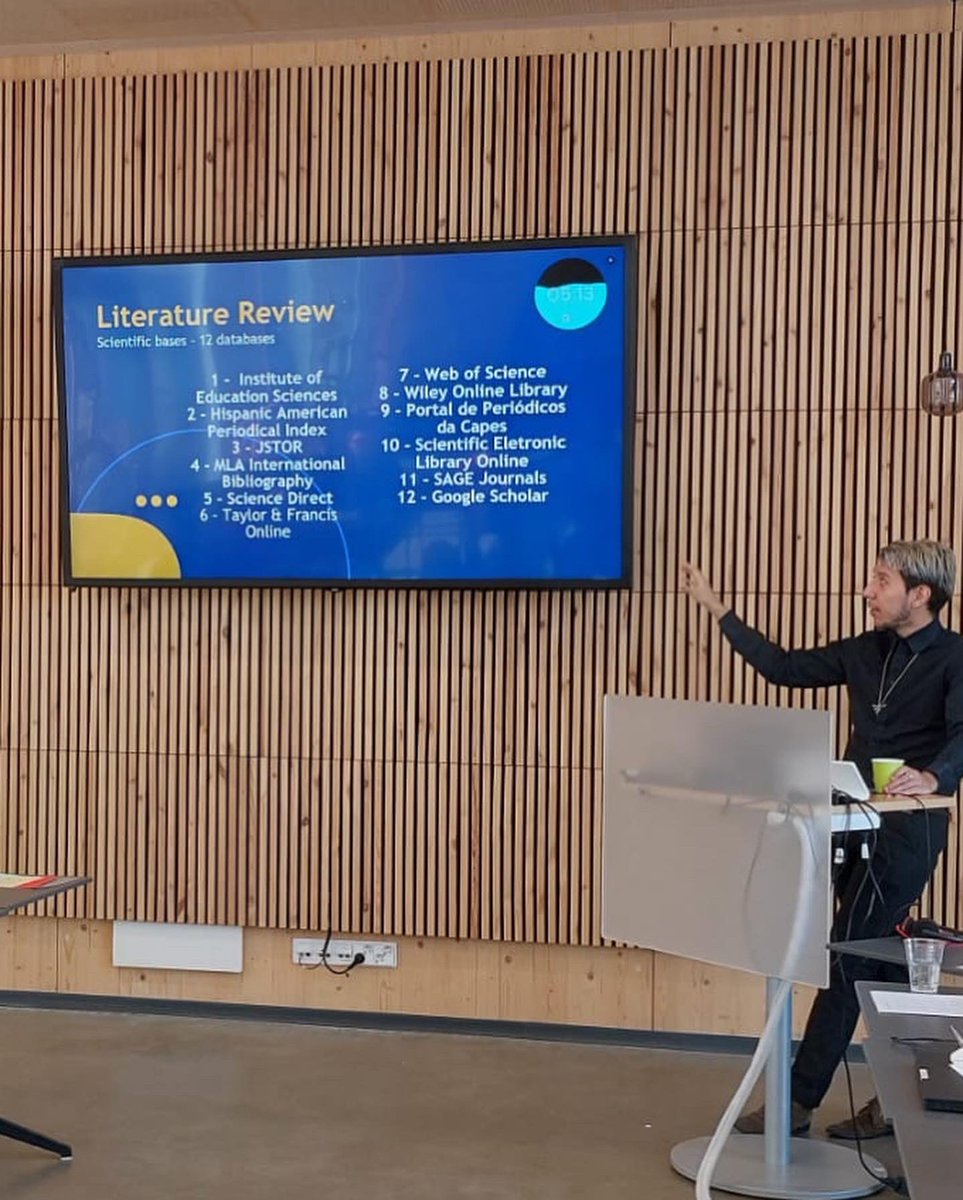
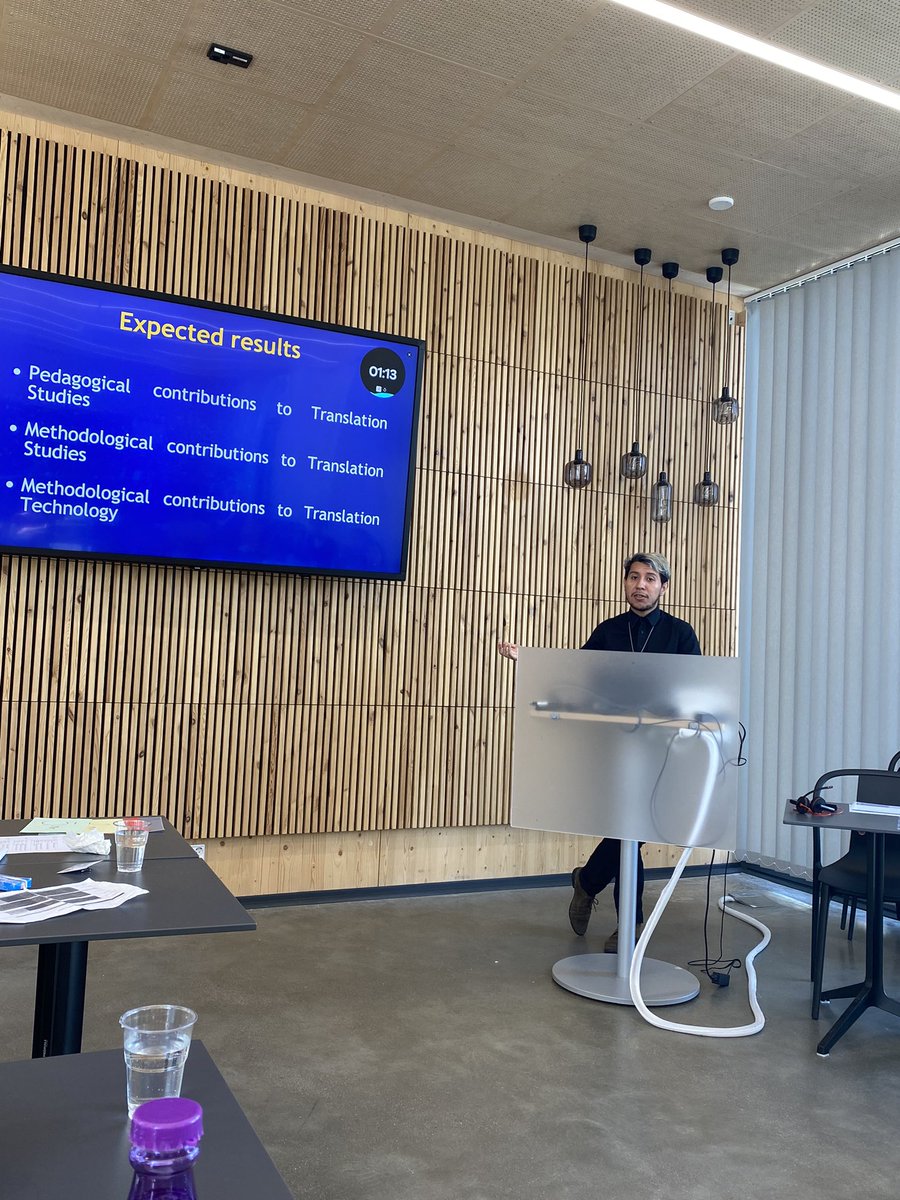
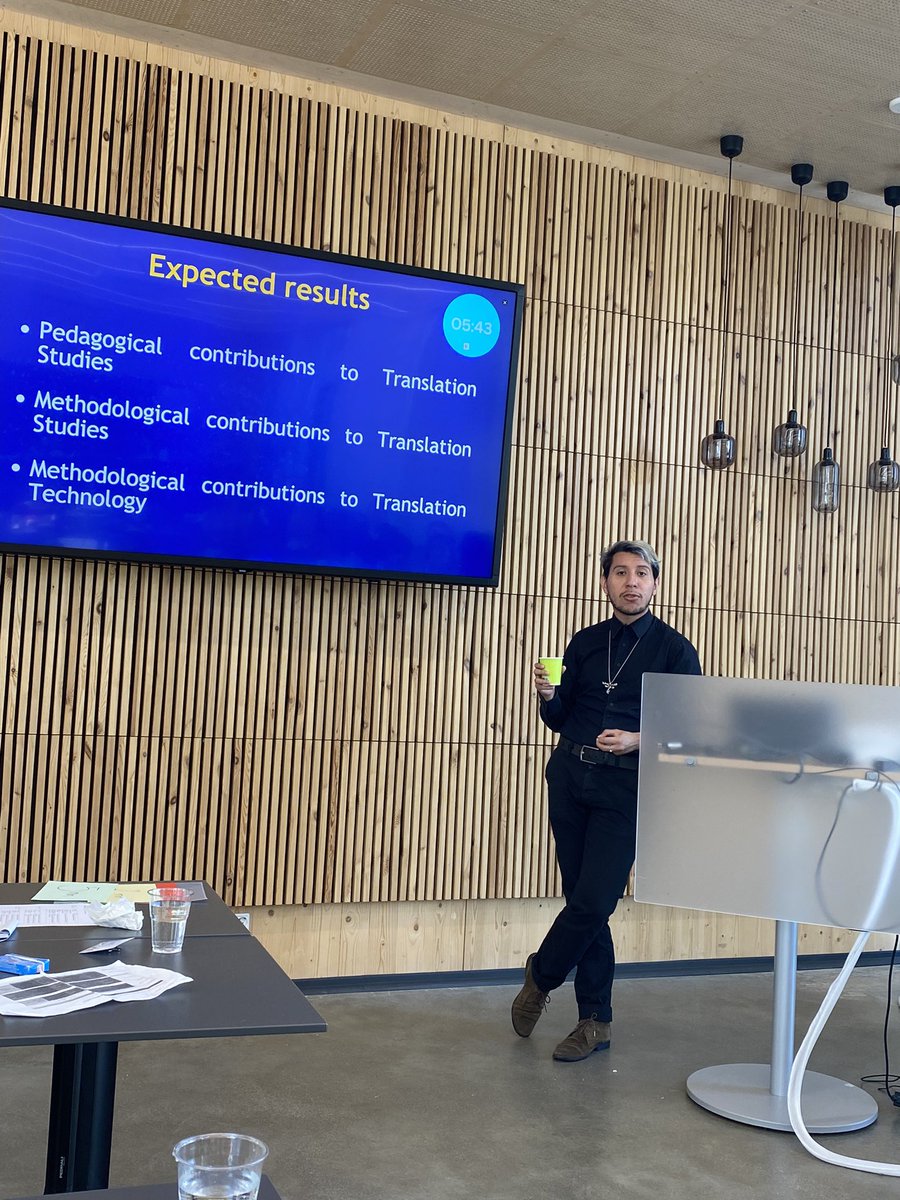
Today at #DOTTSS2023 I presented my research at its current stage. I described my theoretical framework, literature review, my methods and expected results.
It is always great to share with colleagues what we are doing - especially when coffee is involved 😝
@ProbPubHealth i did that and let me tell you, you’ll be in for a ride
portuguese yielded way more results than spanish for my topic, it might be different for yours