small legal chores pile up… until they demand all your attention. protect your runway and your next release. meet The StartUp Legal for a fast, practical check-in; 15 minutes online, on us.
get started today
🔗 https://t.co/CQA793XWtH | [email protected]
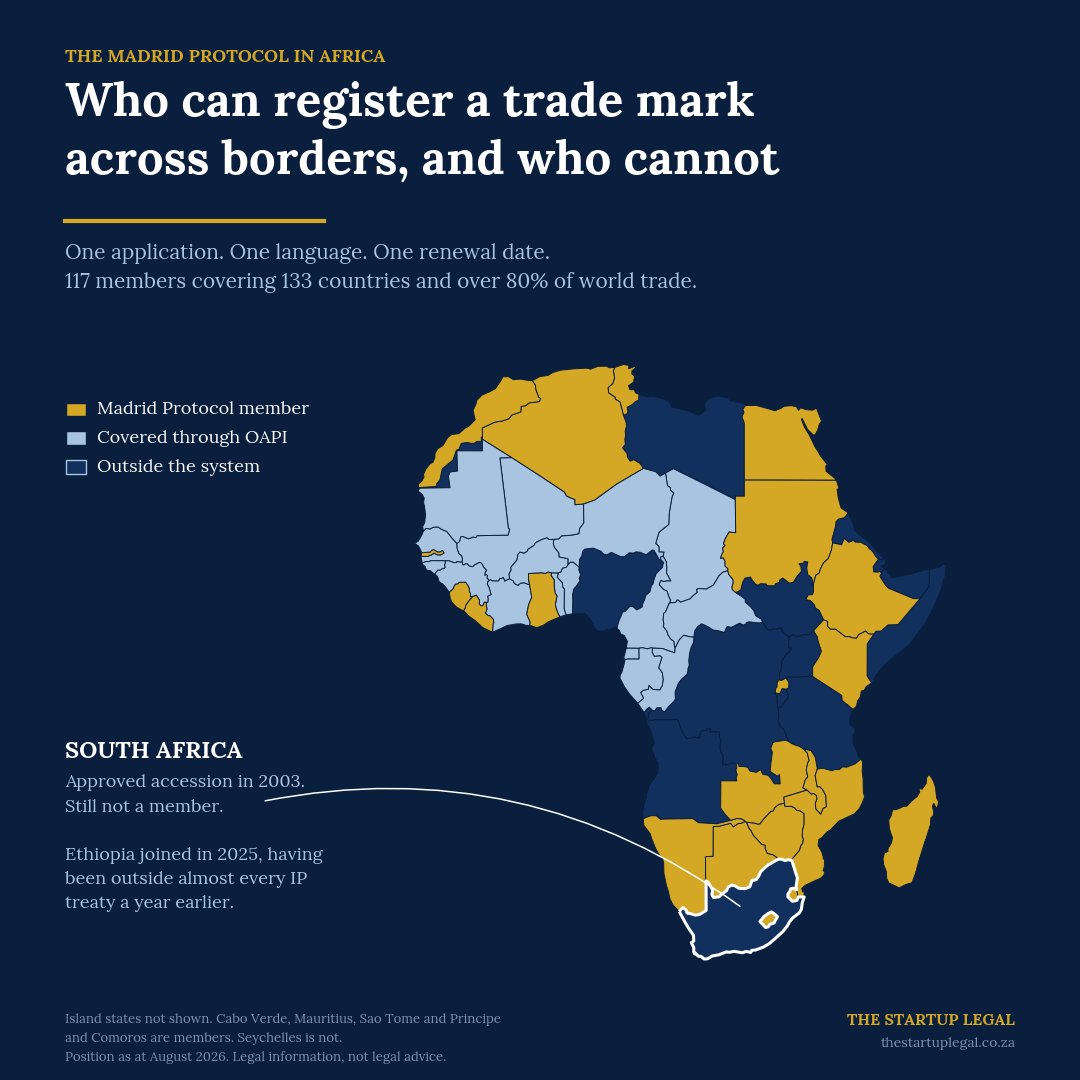
South Africa decided to join the Madrid Protocol in 2003. Twenty-three years later, we still have not joined.
The map shows where that leaves us.
Madrid lets a business file one trade mark application, in one language, through its home office, and tick off the countries it wants. It is not one global trade mark. It is a bundle of national rights kept in one file, with one renewal date, each still governed by local law. 117 members, 133 countries, more than 80% of world trade.
Ethiopia joined in 2025. Two years before that it sat outside almost every major IP treaty.
We are not settled on what this means in practice, so we would rather ask than argue.
If a startup expanding into six markets has to pay six sets of local attorneys and six sets of fees, how many simply put it off until the money runs out or someone else registers the name first?
And on the other side. A Madrid office has 12 or 18 months to refuse a mark, depending on its declaration. Miss that window and the mark goes through. Given where CIPC turnaround sits, would we end up with foreign marks on the register by default while local applicants queue?
Is capacity a real reason to hold back, or has it become a permanent one?
One practical note in the meantime. You can use Madrid if you have nationality, domicile or a real business presence in a member country. If your group has already flipped to a UK or US holdco, the route may already be open to you through that entity.
Founders, funders, IP practitioners: what would you do?
The 1956 women's march worked because it was a legal act, not only a moral one. Twenty thousand women did not simply show up. They lodged a document.
Petitions signed across the country, carried to Pretoria, delivered to the office of the Prime Minister on 9 August 1956. Thirty minutes of silence. Then a song that outlived the government it was aimed at.
The obvious counterargument is that it failed. The pass laws were extended anyway. The state did not move. On a narrow reading, the paperwork achieved nothing.
We read it differently. The regime won that year and lost the record. Because the demand was written, signed and delivered, there was never any argument about what was asked, by whom, or when. Seventy years later the claim is not in dispute. That is what documentation does. It does not guarantee the outcome. It guarantees the claim survives.
The same pattern runs through the businesses women are building in South Africa right now.
Three failures we see repeatedly, none of them about capability.
First, undocumented co-ownership. Two founders, a verbal fifty-fifty, three years of work, then a funder asks for the securities register. The Companies Act 71 of 2008 requires a company to keep one. It reads what is recorded, not what was intended. Intention is not a shareholding.
Second, intellectual property that never made it into the company. Work begun before incorporation belongs to the person who created it until it is assigned. Under section 22(3) of the Copyright Act 98 of 1978 that assignment must be in writing and signed. No signature, no transfer, and a diligence process finds it every time.
Third, B-BBEE ownership claimed on a structure nobody can verify. The claim is often genuine. The evidence is often absent. In a procurement conversation those are the same thing.
None of this is a capital problem. It is a legibility problem, and it is the part a founder controls before anyone offers them money.
For the funders and enterprise development managers reading this: our view is that a meaningful share of pipeline attrition is diligence failure rather than business failure, and that the two get recorded as the same thing. We would be interested to know whether your numbers say otherwise.
An investor once said he can predict a due diligence outcome from one document: the share register.
If it matches CIPC, the pitch and the founders' story, the rest of the file is usually clean too.
If it does not, nothing else will be either.
Start where the funders start. Shareholders' agreement template at https://t.co/8NVDuROGf5
“We'll sort the shares out later” has ended more SA startups than load shedding.
Later means: after the fallout, through lawyers, at ten times the price.
A shareholders' agreement costs less than one hour of a dispute.
Template at https://t.co/24jmxjKiUh.
Most co-founder fallouts don't happen because the business fails. They happen because it works.
Someone wants out. Someone stops pulling their weight. Money comes in, and suddenly everyone remembers the handshake differently.
A shareholders' agreement is the document you write while you still trust each other, so you never have to test that trust in a boardroom. It sorts out the things that quietly break companies:
- Who decides what.
- What happens to a founder's shares when they leave.
- How investors come in without washing out the people who built the thing.
- Vesting and leaver terms, so a co-founder who exits in month three doesn't keep a founder-sized slice forever.
Drafted for South African companies, under South African law, by a practising attorney. Plain language. Ready to customise. A free clause-by-clause guide is included, so you're not guessing at the numbers that matter.
A proper shareholders' agreement costs less than one bad argument between shareholders. Yours for R1 995.
Get your shareholders' agreement template: https://t.co/8NVDuROGf5
A "final" call got reopened this week after pressure from the top. FIFA says its process stayed independent. A lot of people are not convinced.
Founders, this is the actual lesson in it. A rule you will only enforce until someone senior pushes back is not a rule. It is a suggestion with better PR.
Written authority, clear sign-off lines, and a process that holds under pressure, not just on paper, are what keep a business defensible when the wrong person leans on it.
Football contract rule that runs your business too:
If someone is pressuring you to sign today, the pressure is the warning sign, not the reason.
Rushed deals hide bad terms. Check the replay before you make the call.
#SmeSA
Watch how fiercely a major tournament defends its name, its logo and its marks. That is not corporate paranoia. That is an asset being protected, because the brand is worth more than any single match.
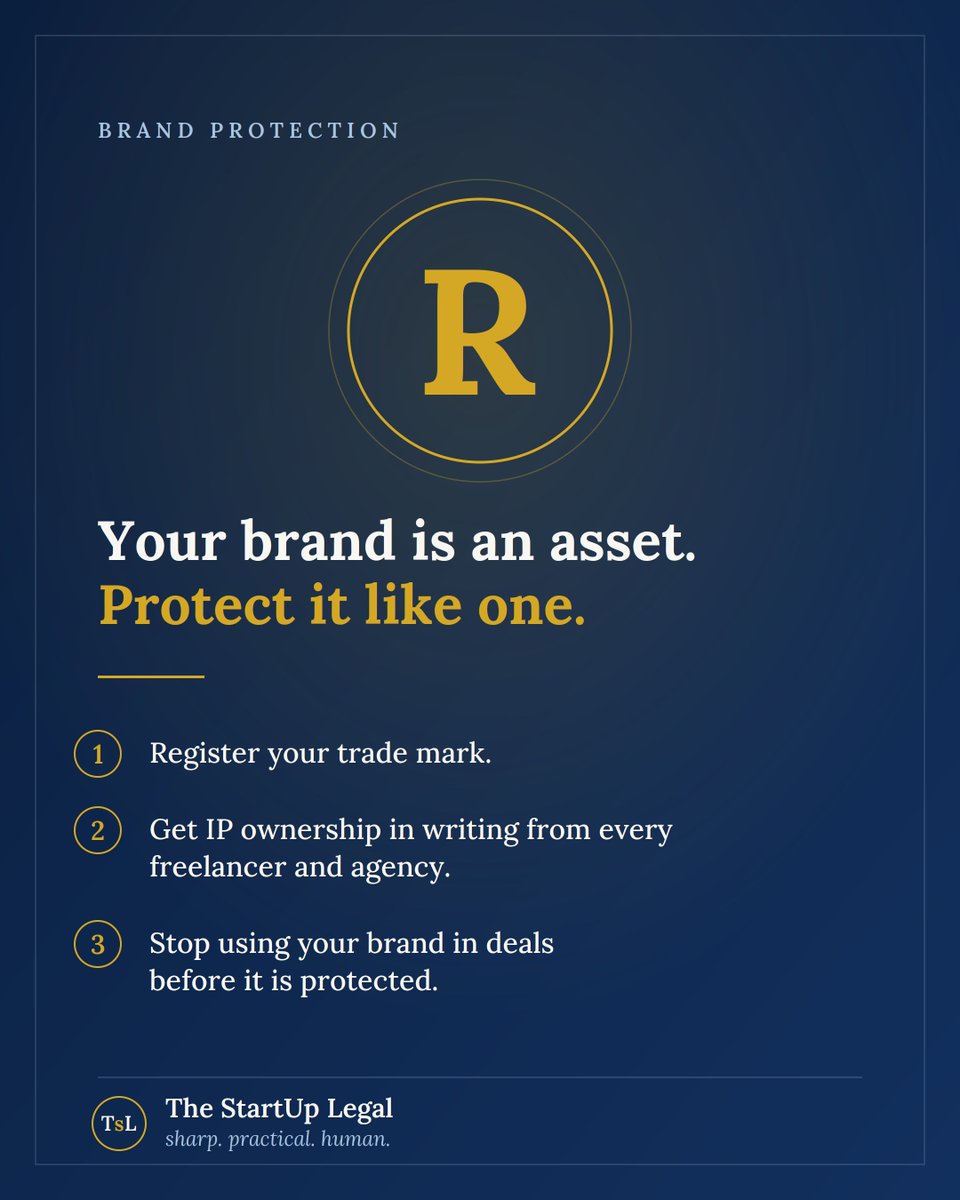
Your brand is an asset too. Most South African founders treat it like an afterthought until someone copies it.
Three things worth doing this year:
- Register your trade mark. A name you have not protected is a name someone else can take.
- Get IP ownership in writing from every freelancer and agency. If they made your logo, make sure you own it.
- Stop using your brand casually in deals before it is protected.
The biggest brands in the world spend fortunes guarding what they own. You can start by simply owning yours properly.
Is your business name actually registered as a trade mark? Worth checking this week.
Football quietly teaches better contract lessons than most boardrooms. Three that translate straight to your business.
1. The release clause. Top players have a price and terms agreed long before anyone wants to leave. Your contracts should do the same. Decide how a partner, co-founder or supplier exits while everyone is still happy.
2. VAR. The referee checks the replay before the big call. You should too. Read the contract properly before you sign, not after the deal turns. The slow look now saves the expensive fight later.
3. The transfer deadline. Deals get rushed under pressure, and rushed deals hide bad terms. When someone pushes you to sign today, that pressure is the warning sign, not the reason.
Contracts are not red tape. They are the rules everyone agrees to while things are calm, so nobody has to argue when they are not.
Before you sign anything this week, do the VAR check.
Backing a creator or sponsoring an event this season? Before any money moves, get these four things in writing:
- Exclusivity. Can they work with your competitor?
- Scope. What exactly are they delivering, and when?
- Ownership. Who owns the content, and can you reuse it?
- Exit. What happens if it goes wrong?
A WhatsApp 'yes' and an invoice is not a contract. It is a problem you have not met yet.
Save this one for the next time someone pitches you a deal.
Half your team will want the same match days off over the next few weeks. Here is how to keep it fair without playing referee every day.
- Decide how leave is shared out, and put it in writing.
- Set clear rules on screens during work hours.
- Make shift swaps go through one approval, not WhatsApp guesswork.
- Apply the same rule to everyone, every time.
Most tournament tension at work is not about football. It is about one person feeling another got special treatment. Clear rules fix that before it starts.
What is your rule for match days at work?
In 1976, young South Africans put everything on the line. Today, a new generation is building the businesses that will shape the future. To every young person backing themselves, keep going. #YouthDay#YouthMonth
'Official sponsor of the games'? That caption is a legal risk, not a flex.
You can ride the football. You cannot borrow the badge. Big events protect their marks hard, and small businesses get letters too.
Talk about the moment, skip the logo.
#SmeSA
The football starts tonight. So does the marketing scramble.
If you run a business and you want to ride the buzz around the games, here is the plain line between clever and costly.
You can talk about the football. You can run a watch-the-games special. You can put on a vibe for your customers.
What you cannot do is use the official emblem, the trophy, or the official competition name. You also cannot pretend to be an official sponsor when you are not.
Cross that line, and you can pick up a legal letter, even as a small business. The marks belong to the organisers, and they enforce them.
Ride the moment. Just do not wear a badge that is not yours.
Good luck to Bafana Bafana against Mexico tonight.
#SmallBusiness #AmbushMarketing
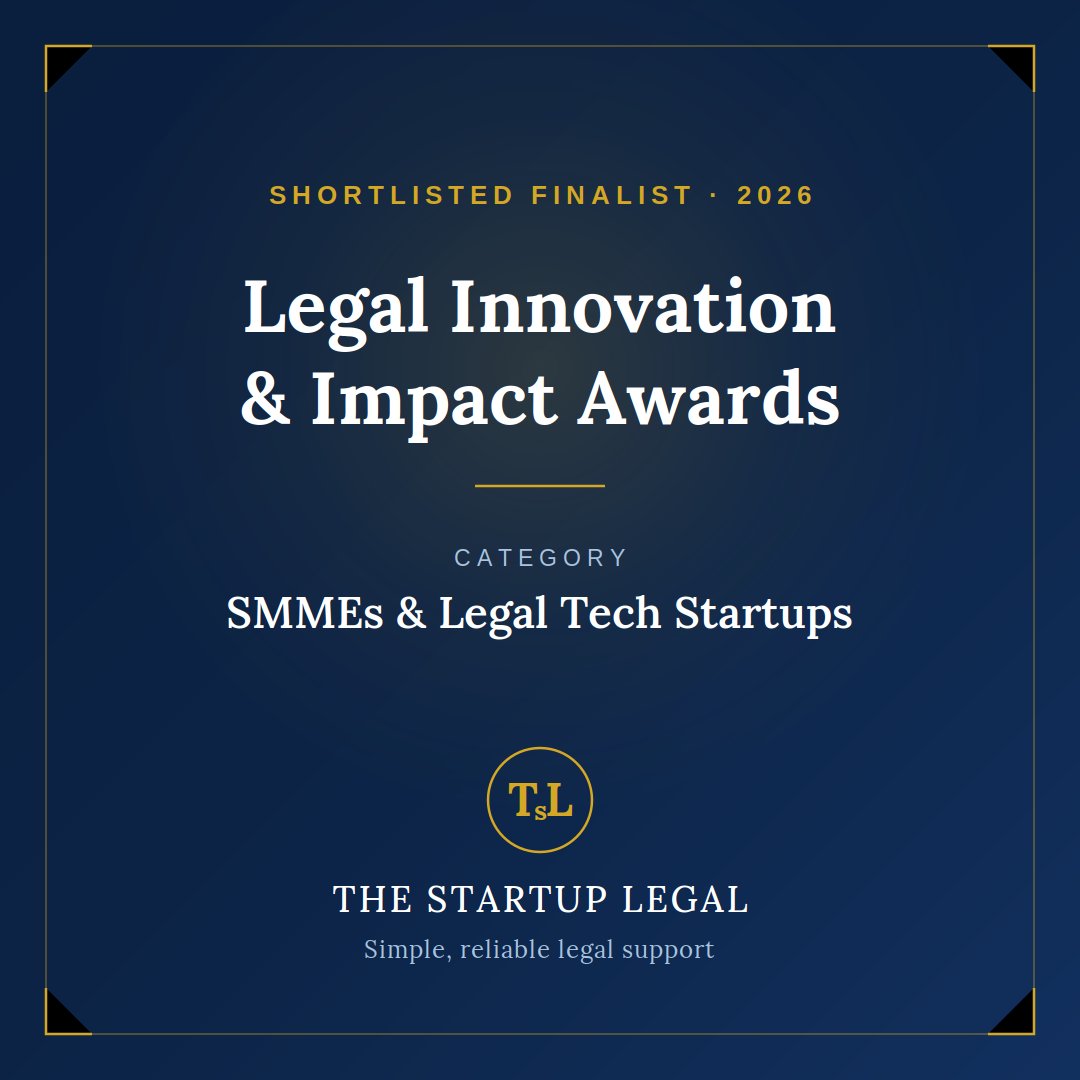
Some news worth sharing. The StartUp Legal has been shortlisted as a finalist in the SMMEs & Legal Tech Startups category at the Legal Innovation & Impact Awards 2026.
In May, we were nominated. This week, we made the finalist shortlist, alongside a strong group of founders building the future of law across Africa.
We started The StartUp Legal for one reason. Too many founders only meet a lawyer once something has already gone wrong. We wanted to flip that. Plain-English legal support, attorney-drafted templates, and counsel that helps you move fast without getting burned.
Being recognised for that work means a lot. Thank you to everyone who has trusted us with their business. Winners are announced on 25 June in Johannesburg. We will be there.
@lisummitafrica
#LegalInnovation #LegalTech