physics feels hard because most people learn it as equations floating in air.
but physics is really about state, change, functions, and constraints.
that is why functional programming fits physics so well.
Scott N. Walck’s Learn Physics with Functional Programming is interesting because it forces you to think like this:
→ a particle has a state
→ forces transform that state
→ time evolves the system
→ equations become executable models
→ abstract laws become simulations
haskell is not just “another programming language” here.
it trains your brain to think in pure transformations.
no messy mutation.
no hidden state.
no hand-wavy intuition.
just:
input → function → output
which is basically how much of physics wants to be understood.
you stop treating formulas as things to memorize.
you start treating them as machines.
gravity becomes a function.
velocity becomes a derivative.
energy becomes a conserved structure.
motion becomes an update rule.
fields become mappings over space.
this is the real benefit of coding physics.
not “learning programming.”
but forcing your intuition to become precise enough that a machine can execute it.
that is where real understanding starts.
On Saturday, in the early hours of the morning, my cousin brother who was also my seatmate in senior secondary school was murdered in his own home by five officers of the Nigerian Army. I was one of the first people to respond to the scene, and everything I am about to state is true.
The officers arrived at his residence under the guise of a patrol, claiming they suspected a thief was in the compound. One of them scaled the fence over a barbed wire to open the gate for the rest. Once inside, they forcefully attempted to gain access to his room. In doing so, they discharged two shots, one of which was a headshot that pierced through the door and killed him instantly.
The evidence at the scene was undeniable three bullet holes(two on the door and the killing shot that went through his head to the wall) and blood splattered across the wall. He was 24 years old, a graduate of Civil Engineering, and full of promise. Three of his siblings were present in the house that night, sleeping upstairs, and they are live witnesses to what happened.
After committing this act, the officers called the police themselves, reporting that they had killed someone they had “mistakenly” suspected to be a thief. What followed made matters worse. They tampered with the scene by summoning vigilantes who cleaned up the pool of blood. All pictorial evidence is currently in the possession of the police, who have refused to release the statements of the officers involved, only confirming that the soldiers reported the killing as a mistake.
It is a painful and devastating reality that the very people entrusted with our protection are now killing us in the comfort of our own homes. We demand that the @hqnigerianarmy identify and hold these five officers accountable, and that justice be delivered without delay.
On the early hours of Saturday 26 of April 2026 by 2am, my best friend A young graduate who just finished school last year and currently serving his country and was meant to pass out just next month was KILLED BY THE NIGERIAN ARMY. @HQNigerianArmy@PoliceNG_CRU@sowore@PeterObi@officialnyscng @vdmempire @BenHundeyin
While at home with his siblings (his parents were away), 3 armed military men forced their way into their house around 2am claiming they were chasing a thief.
They encountered him and he locked his door like anyone would do to protect themselves and his siblings because he was the eldest and he has a duty to protect his siblings. they shot through the door multiple times, A bullet hit his head and another hit his stomach. They killed him in his own home.
It didn’t end there.
They prevented his sister from going to him. They tried to stop her from calling for help and when help finally came, his body was taken away. The soldiers called the local vigilante to come and clean the scene. The scene was cleaned and the house was locked down. No clear answers were given. This happened in Dakwa Abuja, it’s not longer rumors that we aren’t safe, not even in our homes.
This was someone’s son. Someone’s brother. Someone’s friend.
He was kind. He was good. He had a future.
This cannot be swept under the rug.
We are demanding accountability. We are demanding answers. We are demanding justice.
Please repost. Please speak up. Don’t let this be ignored.
Please help me tag the necessary authorities under this post
@HQNigerianArmy@PoliceNG @vdmempire
#JusticeForAbdulsamad
#WhoKilledAbdulsamad
#StopKillingNigerians
Treating students like machines is why many AI study tools fail.
We changed that.
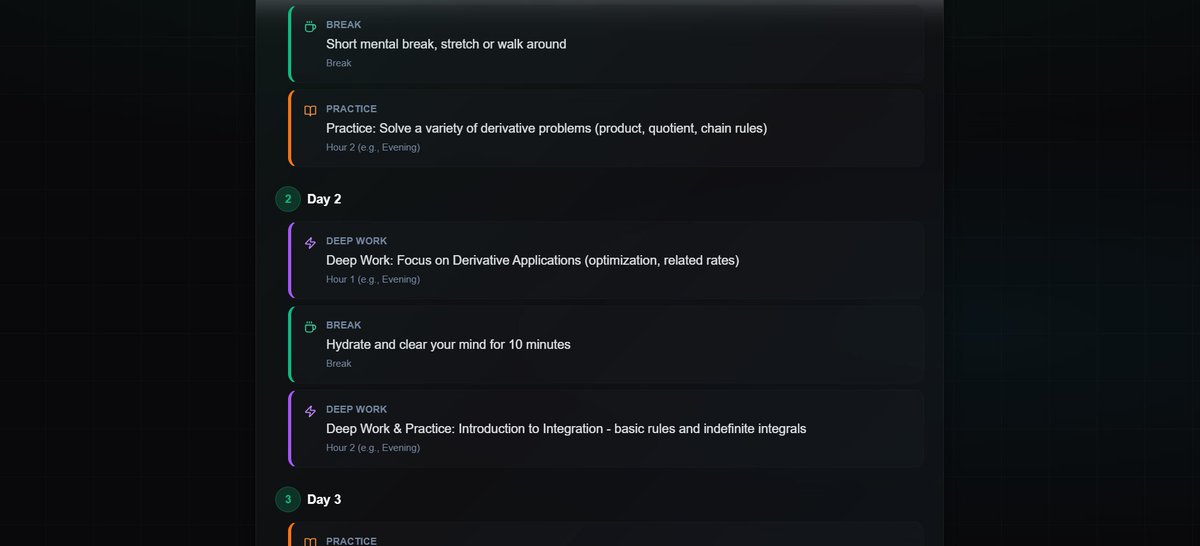
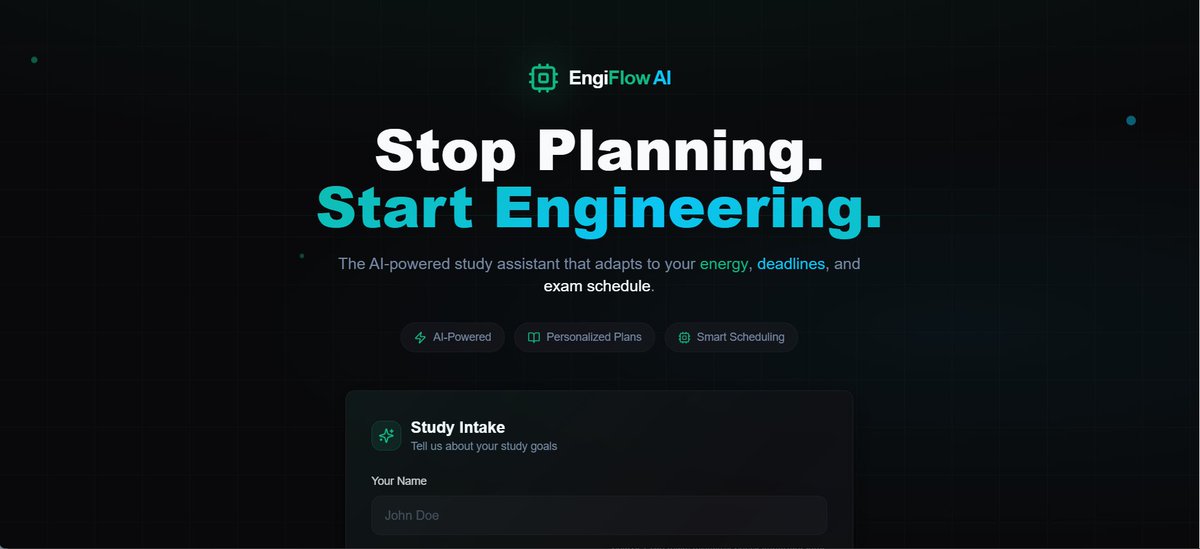
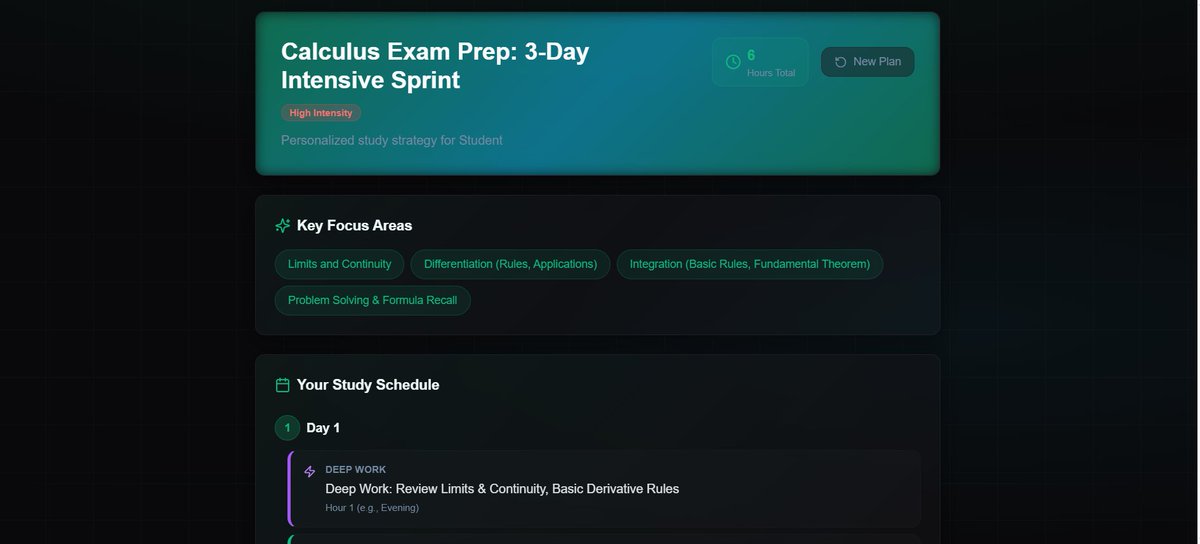
EngiFlow AI adapts to your energy, deadlines, and real life.. built with agentic AI + n8n by @Gods_Splendour, @mimicho_co, @_kubbys.
Grateful to our mentor @hgeh_o
AI study tools fail when they treat students like machines.
So we @T_T_Charles , @mimicho_co, @_kubbys built EngiFlow AI a study planner that adapts to energy, deadlines, and real life using agentic AI + n8n. Thanks to our mentor @hgeh_o
“What everyday problems can AI actually solve?” 🤖
AI/ML mentorship week 3
Built 3 AI tools using n8n
📚 AI Study Planner
❤️ AI Dating Profile Optimizer
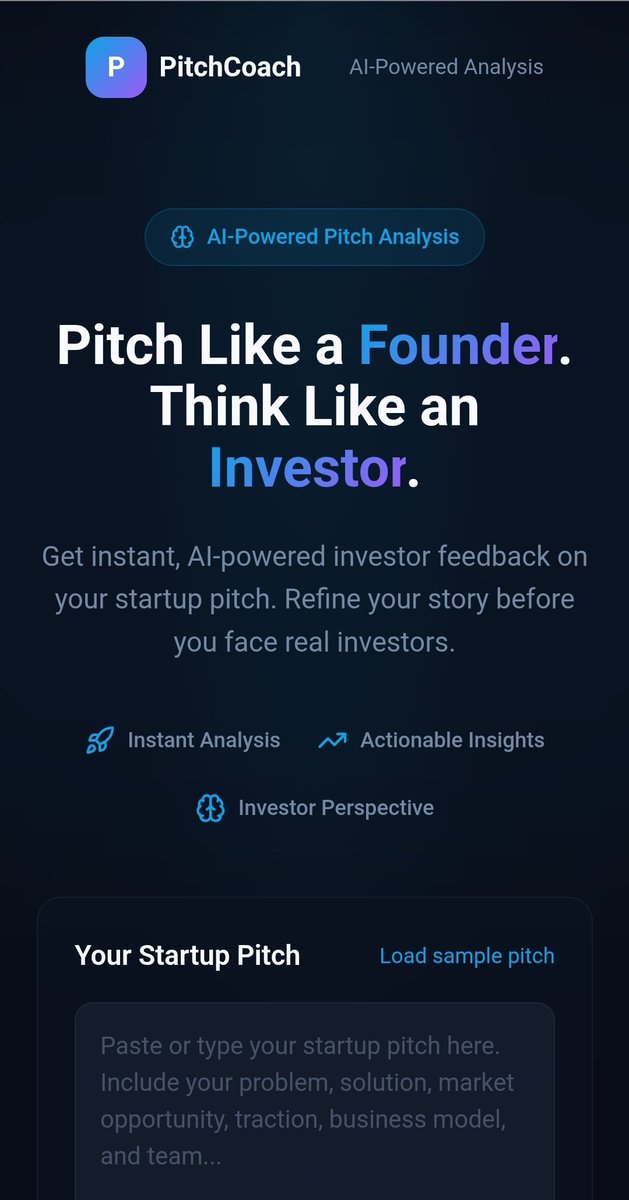
💼 AI Investor Pitch Coach
Shout out to incredible team mates: @T_T_Charles@mimicho_co and our awesome mentor: @hgeh_o
It is dangerously easy to build a neural network today without actually understanding how it works.
We live in an era of 'import torch'. You can train a model in three lines of code, but the moment you need to debug a collapsing loss function or a vanishing gradient, syntax won't save you. You need first principles.
I recently went through this notebook collection by Simon J.D. Prince, and it is the antidote to tutorial hell.
Instead of just showing you the code, it forces you to visualize the mechanics:
1./ The Math => It builds the intuition for shallow networks and regions before adding complexity.
2./ The Optimization => It doesn't just use an optimizer; it compares Line Search, SGD, and Adam so you see why they behave differently.
3./ The Modern Stack => It connects the dots from basic backpropagation all the way to Self-Attention and Graph Neural Networks.
Move from running code to engineering systems => this is a goldmine.
Built a basic feedback analyzer telegram bot using https://t.co/LbC6STizXV
Learned a lot from this build. Big thanks to my teammate @Gods_Splendour and our mentor @hgeh_o for the support and guidance.
hot takes:
the best way to learn is to copy.
copy the masters. type their code.
don't just run it; understand every line.
when you finally change something, it becomes yours.
copying is practice. originality is what happens after..
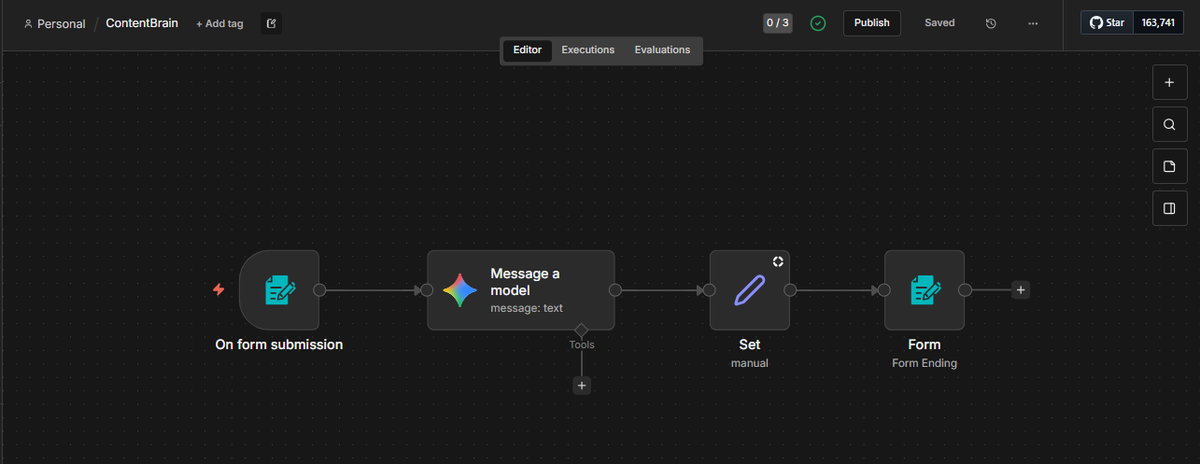
just finished my first mini n8n project (An AI content generator which takes in information about your business and generates tailored ideas for you)has only 4 nodes although it took me longer than it would have with code i guess its cause i didnt understand it well enough yet
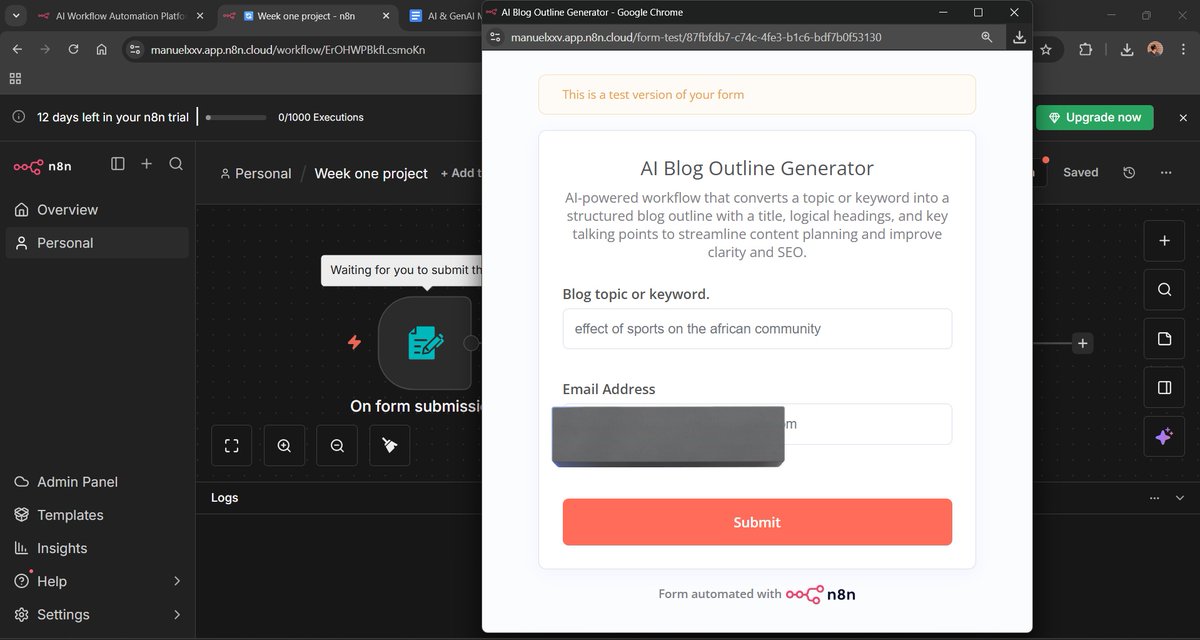
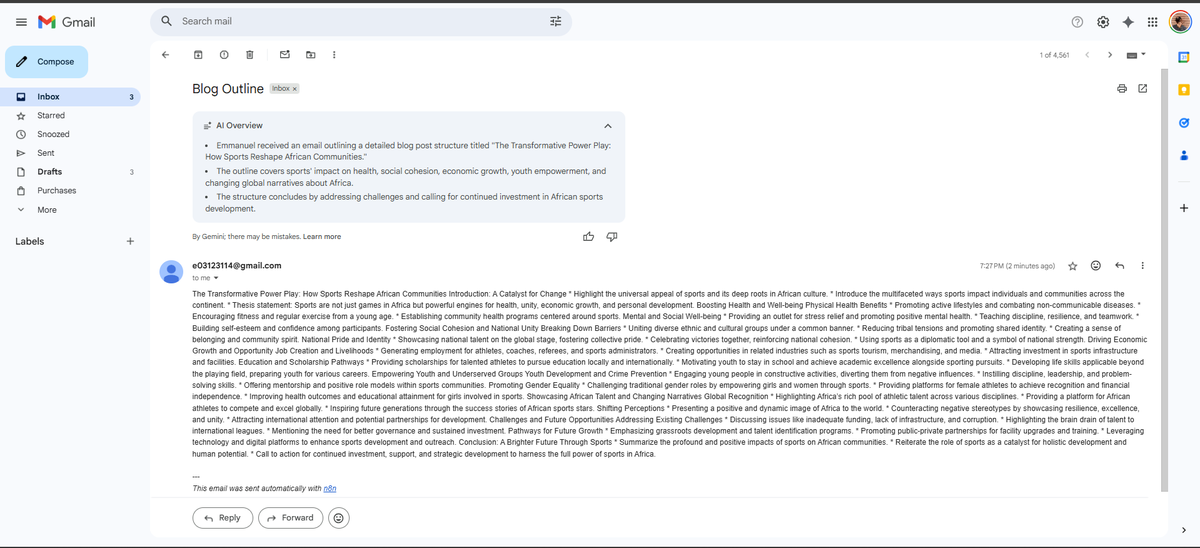
Worked on a project with @Uf_aliyuN using https://t.co/s0SuWQmmZx to automate blog content creation, from outlining ideas to drafting complete articles.
Just finished working on our first project with @Manuelxxix using https://t.co/YTIzAlW35o to automate blog content creation, from outlining ideas to drafting complete articles
🚀 Built an AI Decision Recommendation Bot during our AI/ML mentorship program
The bot helps students make smarter academic & career decisions by:
• Breaking choices into criteria
• Ranking options objectively
Built with Python + Telegram Bot API 🤖
@T_T_Charles@hgeh_o
This paper from Harvard and MIT quietly answers the most important AI question nobody benchmarks properly:
Can LLMs actually discover science, or are they just good at talking about it?
The paper is called “Evaluating Large Language Models in Scientific Discovery”, and instead of asking models trivia questions, it tests something much harder:
Can models form hypotheses, design experiments, interpret results, and update beliefs like real scientists?
Here’s what the authors did differently 👇
• They evaluate LLMs across the full discovery loop hypothesis → experiment → observation → revision
• Tasks span biology, chemistry, and physics, not toy puzzles
• Models must work with incomplete data, noisy results, and false leads
• Success is measured by scientific progress, not fluency or confidence
What they found is sobering.
LLMs are decent at suggesting hypotheses, but brittle at everything that follows.
✓ They overfit to surface patterns
✓ They struggle to abandon bad hypotheses even when evidence contradicts them
✓ They confuse correlation for causation
✓ They hallucinate explanations when experiments fail
✓ They optimize for plausibility, not truth
Most striking result:
`High benchmark scores do not correlate with scientific discovery ability.`
Some top models that dominate standard reasoning tests completely fail when forced to run iterative experiments and update theories.
Why this matters:
Real science is not one-shot reasoning.
It’s feedback, failure, revision, and restraint.
LLMs today:
• Talk like scientists
• Write like scientists
• But don’t think like scientists yet
The paper’s core takeaway:
Scientific intelligence is not language intelligence.
It requires memory, hypothesis tracking, causal reasoning, and the ability to say “I was wrong.”
Until models can reliably do that, claims about “AI scientists” are mostly premature.
This paper doesn’t hype AI. It defines the gap we still need to close.
And that’s exactly why it’s important.