Vehicles stuck as Super highway blocked at Sohrab Goth. People protesting due to power outage. Thousands of people stranded with elderly, patients, children and women. No one has any clue @murtazawahab1@Khitrafficpol
May 28, 1998. Twenty-eight years on.
I recorded this conversation in 2022, and due to some delay at @voaurdu end, it aired last year. https://t.co/ycEGVtVTQI
I am sharing it today because May 28 is not just a date in Pakistan’s strategic history. It is a reminder of an extraordinary national journey marked by resolve, sacrifice, scientific achievement, and the will to survive in a difficult neighborhood.
Pakistan’s nuclear capability was never about prestige alone. It was born out of a hard security reality, shaped by regional asymmetries, wars, coercive pressures, technology denial regimes, and the repeated lesson that nations must ultimately secure their own sovereignty.
Twenty-eight years later, Pakistan’s nuclear program stands as a symbol of national resilience and strategic restraint. It has helped preserve deterrence, prevented large-scale war, and created space for Pakistan to defend itself despite persistent conventional and technological imbalances.
This journey belongs to the scientists, engineers, policymakers, armed forces, and countless unnamed Pakistanis who carried the burden of national security with quiet commitment.
As Pakistan marks 28 years as a declared nuclear weapons state, the task ahead is not only to celebrate the achievement but to continue thinking seriously about responsibility, restraint, crisis stability, emerging technologies, and the future of deterrence in South Asia.
#Yometakbeer reminds us that sovereignty is not gifted. It is protected, built, and carried forward with clarity, courage, and responsibility.
India can never attack Karachi, PPP has been constructing battle trenches at university road for years ! India will immediately lose all their communications at the hands of Mobile Snatching Forces deployed since decades in the city. Millions are ready to spit 'paan ki peek' on fancy Indian planes if they may come! All Indian soldiers will be returned in gunny bags (bori).
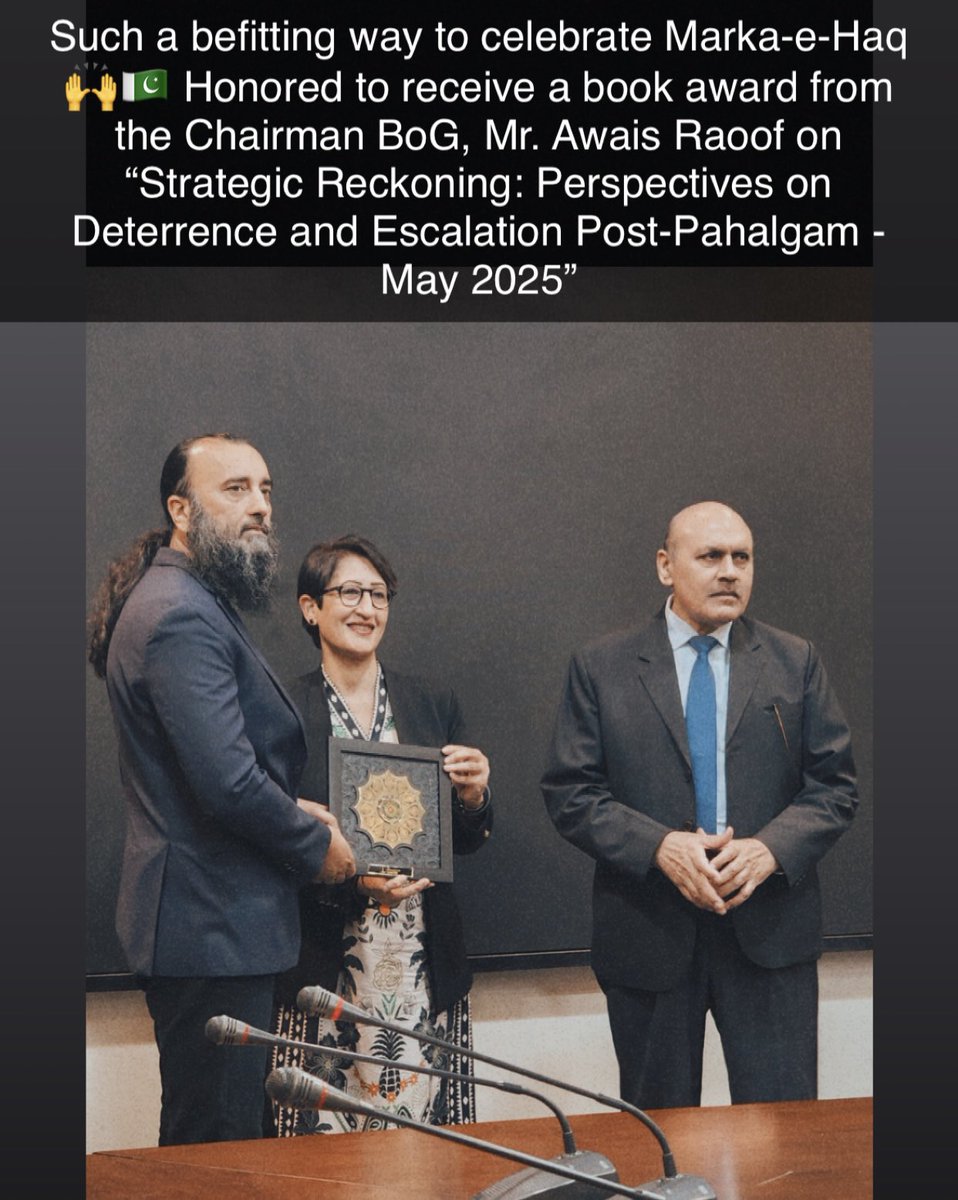
A Woman, A Scholar, An Intellectual power house who singlehandedly defended Pakistan in the information space through insightful commentary on deterrence, security and strategic narratives in real time during the war ! Honored to be her student ❤️ #MarkaEHaq
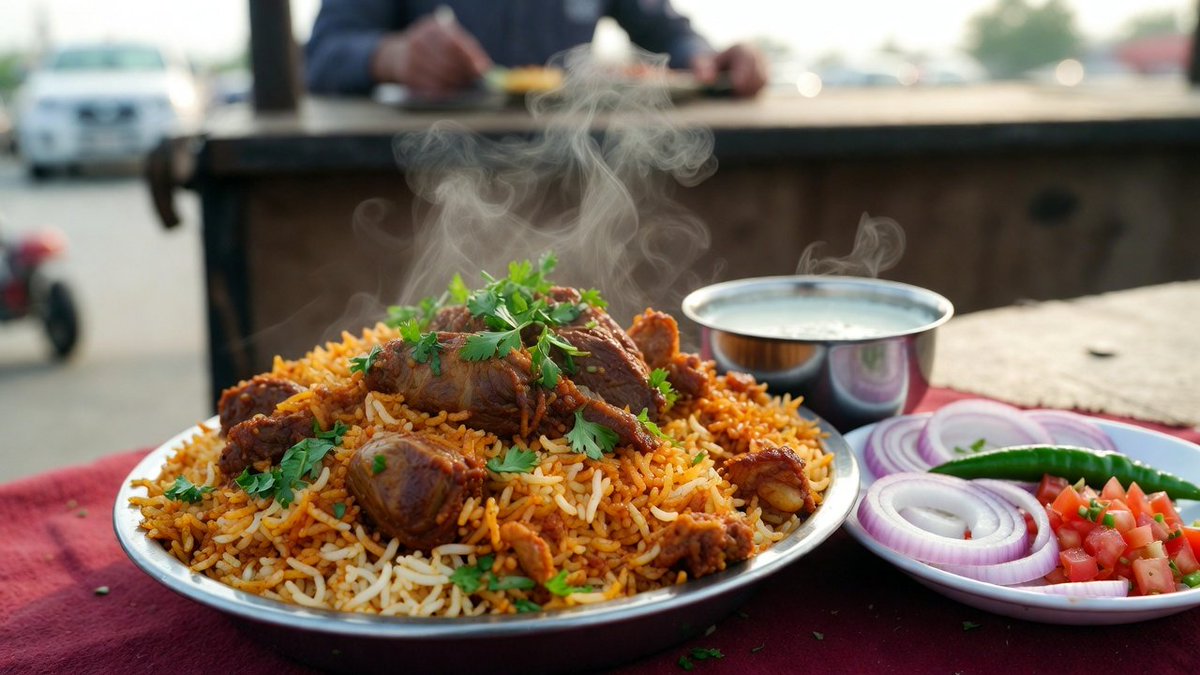
The reason why Karachi is undisputed food capital is solely because best chefs of Punjab ended up in Karachi decades ago for business when Lahoris told them the wrong direction :D @DanQayyum
As someone who was born and brought up in Karachi and been living in Lahore since more than a decade now, I can tell you the famous foods of Lahore
1. Bannu Beef Pulao
2. Ilyas Dumba Karahi
3. Karachi Naseeb Biryani
4. Javed Nehari
5. Saheefa Ka Pizza
I love Lahore but something about calling it Pakistan's food capital has always felt lazy to me. Is a food capital where people eat the most, or where the food is actually the best? Asking because Karachi's biryani alone wins on the latter
@faizanlakhani Donkey is expensive, someone fooled Lahoris that since its expensive it'll taste good. Karachites can never be fooled in to eating donkey since they recognise Bachiya ka gosht. In Lahore, you get Bhens ka Katta at best
@CherieDamour_ Waris Nehari is best and anyone that comes close to it is Zahid at Tariq Road Karachi. Never liked Muhammadi Nehari, not worth the exaggerated price at all, not good spices. Javed Nehari once ruled karachi few years ago, its Lahore branch is not the taste I grew upto. So Lhr wins
Look at this map.
Nagpur 45°. Ahmedabad 44°. Prayagraj 43°. Delhi 42°. The entire country is a single dark red mass. This is not a heatwave. This is a country that was told its forests were fine.
And this is April. Not May. Not June. The hottest months have not even arrived yet.
The past few days have been hell. So I did what I always do when something bothers me. I went looking for answers.
What I found was a policy con job that has been running for over two decades.
But before I explain what happened, let's clear some definitions.
A garden is not a forest. An orchard is not a forest. A plantation is not a forest.
A forest is a living system. Soil, water, fungi, insects, birds, mammals, decades of accumulated complexity, specific to its land and climate. It cannot be designed. It cannot be harvested. It regulates water, cools land, shelters hundreds of species. It takes decades to become what it is.
You can plant a forest. But it will take decades to become one.
In 2001, India's forests were disappearing. The Indian state, led by the Vajpayee government, faced a choice. Protect what remained, or change what the numbers said.
It chose the numbers.
The Forest Survey of India quietly changed the definition of what a forest means. Any land with 10% tree canopy cover and more than one hectare in area was now a forest. Your mango orchard. A coconut plantation in Tamil Nadu. A tea garden in Assam. Lodhi Garden in Delhi.
All forests, on paper.
The FSI will tell you that 10% canopy cover follows international norms. The FAO also uses 10% as its threshold. But the FAO's definition comes with a crucial exclusion that India's FSI quietly dropped.
The FAO explicitly states that fruit tree plantations, oil palm plantations, olive orchards, and agroforestry systems are not forests. The World Bank says the same. India adopted the number but discarded the exclusion.
It took the cover of international legitimacy while gutting the standard that gave it meaning.
The government will also tell you this was never hidden. That it was publicly stated in every report, disclosed in Parliament. That is technically true. But a disclosure buried in a technical government document is not transparency. It is the appearance of transparency.
I did not know any of this until I went looking. Neither do most Indians whose forests, whose land, whose air this directly concerns. The con is not in what was hidden from experts. It is in what was never explained to the people it was done to.
This is not a technicality. This is the con.
It was a trick as old as power itself. If you cannot fix the problem, fix the measurement.
For ten years after 2001, Congress governed India. Two terms, two environment ministers, including Jairam Ramesh, one of the more serious ones. They saw the numbers. They knew what the numbers meant.
They did nothing.
Because the lie was convenient. India looked good in international climate negotiations. The fiction of a greening India served everyone in power, so everyone in power kept it. Congress did not create this lie. It simply chose, year after year, to live inside it.
The BJP is different.
When they returned to power in 2014, they came with something Congress never had. An absolute majority, and no coalition compulsions. They did not merely inherit the lie. They built on it. And in 2023, they legislated it.
The Forest Conservation Amendment Act of 2023 removed legal protection from "deemed forests." Forests that existed outside the official definition but were ecologically real.
Forests that Adivasi communities had lived in and depended on for generations. Forests that cooled land, held water, sheltered species. They were not on the right list. Since the amendment, forest destruction on Adivasi land has accelerated.
The people who knew these forests best, who had protected them longest, now watch them being cleared. Legally.
CONT++
"Pakistani humour is not a coping mechanism, though it functions as one. It is a cultural signature. Pakistanis have lived with war, terrorism, political instability, economic crisis, and international isolation for most of their national existence. They have learned that the one thing that cannot be bombed, sanctioned, or narratively reframed is laughter."
Pakistan is a true jugār nation not just improvisation, but the art of creating pathways when none exist. When conditions are constrained, we don’t retreat; we recalibrate, negotiate, and build fragile bridges where others see dead ends.
At a moment when the world stood on the edge, Pakistan quietly stepped in , brokering space, de-escalation, and dialogue between the US and Iran. No grandstanding, no theatrics just strategic restraint, diplomatic instinct, and a deep understanding of crisis thresholds.
This is jugār at the state level: buying time for sanity, even if only two weeks of fragile peace, imperfect, punctured at the margins, yet enough to pull the world back from the brink.
A proud moment for a nation that knows how to navigate complexity, absorb pressure, and still choose stability over spectacle. 🇵🇰 Hameesha Zindabad