"I was raised religiously, and it looks as though Ethiopia is on the verge of Armageddon," says a professor"
Hiskel Gabisa
Nail from Tigray Media corperation
#UAE🇰🇼A message to the UAE:Stop using your money to fuel conflicts,destroy African nations,and exploit their resources. Africa is not for sale. No amount of money justifies the destruction of African lives,sovereignty, and future. Africa deserves peace, dignity,and development 🌍
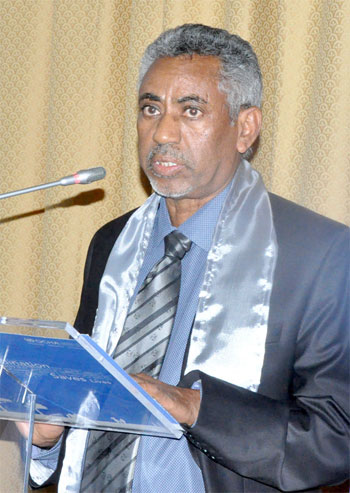
#Eritrean Information Minister Yemane Gebremeskel has accused Ethiopia's ruling party of pursuing expansionist policies and destabilising relations with Eritrea, Somalia and #Sudan.
He argued that #Ethiopia's conflicts in #Tigray, Amhara and Moyale stem from the government's own political decisions, rather than external threats.
The minister condemned military training involving senior Ethiopian officials and warned that another cycle of conflict could have devastating consequences for the wider Horn of Africa.
@AbiyAhmedAli must be held accountable for the alleged crimes against humanity committed under his regime. Justice must be served, and the dignity of every human life lost through massacres must be recognised and respected.
The international community, including Canada, must not turn a blind eye.
@Canada@CanadianPM@HOAAffairs@hrw
#Genocide #AbiyMustGo #Justice #Accountability
ERITREA MAKES HISTORY! 🇪🇷🥈
Congratulations to Yonas Mantay Ghebreab for winning silver in the men’s 800m at the Dakar 2026 Youth Olympic Games, clocking an impressive 1:49.31 PB.
A remarkable achievement and a proud moment for Eritrea. The next generation is rising! 🇪🇷
Journalist @thomascmountain lived in #Eritrea for 15 years. What did he learn?
We discuss resilience, sanctions, economic potential, and creating opportunities for young people to build their futures at home.
Watch full video:
https://t.co/yWTpgapcgp
#Condolences: Funeral Services for His Reverend Abune Lucas, Administrator of the Office of the Patriarch, Member of the Holy Synod of the Orthodox Tewahdo Church, and, Archbishop of the Southern Region (Adi-Kayeh Section), held at Debre Libanos Monastery in Ham yesterday.
The Funeral Services were preceded by extended prayers at Asmara's St. Mary Church in the early morning hours on Wednesday.
Book of Condolences also signed by senior Government and PFDJ Officials as well as members of the Diplomatic Corps.
"Eritrea’s independence stands as an irreversible fact of international law and African political history; forged in the crucible of an organic, self-reliant, and spontaneous popular struggle for sovereignty, human dignity and national liberation. "
ERITREA: ANCIENT AND NEW
A Thursday Reflection
#Eritrea is mourning the passing of His Grace Abune Lucas, Administrator of the Office of the Patriarch, Member of the Holy Synod of the Eritrean Orthodox Tewahdo Church and Archbishop of the Southern Region, Adi-Keih. His passing is a moment of sorrow for the faithful and the wider Eritrean community.
It also draws attention to the enduring place of the Church, its spiritual institutions and their custodians in our country's history. Debre #Libanos, where he was laid to rest, is not simply a burial place. Like Debre Bizen, Debre Sima and other ancient monasteries across Eritrea, it forms part of a much older inheritance of faith, learning, memory and cultural continuity.
There is something profoundly revealing about standing before an ancient monastery in #Eritrea. Perched on a mountain, overlooking valleys and landscapes that have witnessed centuries of human history, these institutions seem almost indifferent to the passage of time. Their stone walls, manuscripts, traditions and accumulated memories speak of generations long gone, yet remain very much present.
I was fortunate enough to visit Debre Libanos some years ago. I remember the mummies discovered there and the arrangements governing access to the main building, where women were not permitted. I was content to remain with the women in the smaller church midway up the ascent, taking in the beautiful scenery and reflecting on the history surrounding us. It is an experience that has stayed with me.
Debre #Bizen, traditionally dated to the fourteenth century, became an important centre of monastic scholarship and manuscript preservation. Debre Libanos, associated with the early Christian monastic tradition of Semenawi Bahri, is linked to an older religious heritage.
Debre #Sima and other ecclesiastical institutions form part of a landscape in which religious, cultural and intellectual life developed over many centuries. Their significance lies not only in their age, but in their endurance. Through changing political authorities, successive administrations, wars and invasions, they have preserved an inheritance that cannot be confined to the chronology of any modern state.
#Eritrea's historical depth is also reflected in its archaeological landscapes, ancient settlements, languages, diverse communities, maritime connections and cultural traditions. Archaeological discoveries at Sembel, in the greater #Asmara area, reveal settled communities dating back to the first millennium BCE.
Further evidence from Adulis, the ancient Red Sea port city where recent excavations have uncovered even earlier traces of human activity, illustrates how these lands were connected to wider African, Arabian and Mediterranean worlds through centuries of trade and cultural exchange. Eritrea's history is not the story of one civilization, religion, community or period. It is a tapestry woven from diverse peoples, cultures, beliefs and experiences.
And then there is #Asmara, Eritrea's beautiful capital, where history, culture and architecture come together in a city unlike any other. Anyone who has walked its streets cannot fail to be struck by its magnificent architecture: elegant façades, imposing public buildings, broad avenues, cinemas, theatres, churches, mosques and carefully planned urban spaces. Different periods, influences and styles have come together to create an extraordinary architectural landscape.
In 2017, UNESCO inscribed Asmara on the World Heritage List as Asmara: A Modernist African City, recognizing its exceptional modernist architecture and urban planning, particularly from the Italian colonial period of the 1930s and 1940s. UNESCO's recognition did not create Asmara's heritage; it acknowledged an exceptional legacy that had endured long before its inscription.
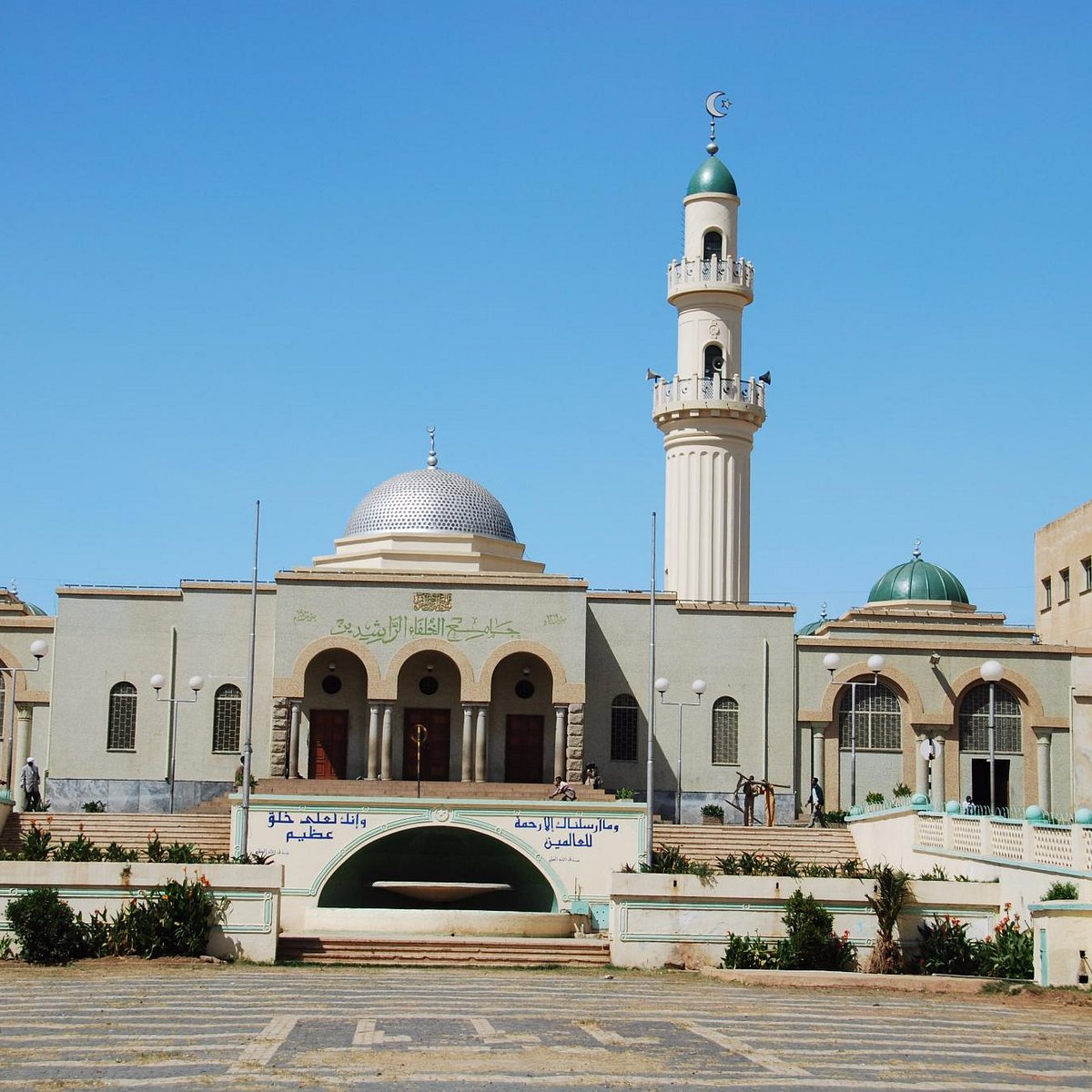
The Cathedral at the centre of Asmara, completed in 1922, is now more than a century old. Its imposing bell tower and Lombard Romanesque character have become defining features of the city's skyline. The Church of Our Lady of the Rosary, the Al Khulafa Al Rashiudin Mosque, the former Fiat Tagliero building, Cinema Impero and countless other structures contribute to Asmara's distinctive architectural identity. But there is something important to remember when admiring these buildings… the buildings predate Eritrea's independence. The people of Asmara and their history predate them.
Before modernist architecture transformed the city, there were already communities, families, neighborhoods, markets, places of worship and established social and cultural life. Asmara was not an empty landscape upon which an architectural experiment was imposed. It was an inhabited place with a history of its own.
The architecture we admire reflects a particular period in the city's development; it does not mark the beginning of Asmara or the history of its people. Colonial architecture can be preserved and appreciated for its historical and artistic value without confusing the legacy of colonial construction with the origins of the city and its inhabitants.
The same distinction applies beyond Asmara. Successive foreign powers that occupied or administered Eritrea constructed buildings, roads, fortifications, military installations, administrative centres and other infrastructure across the country. Some remain visible today and form part of Eritrea's built heritage.
They tell us about the ambitions and priorities of those who built them, but their presence does not make Eritrean history begin with their arrival, nor does it make the history of the country the history of its occupiers. An occupying power may leave its mark on the landscape; it does not thereby become the author of the land's history.
And then there is #Assab. Today, Assab is discussed in terms of strategic geography, maritime access and the economic requirements of landlocked #Ethiopia. Yet, long before it became the subject of contemporary geopolitical calculations or the site of a modern deep-water port, people lived in this region, sustained communities and livelihoods, and maintained their own social and political institutions.
#Assab was not an empty coastline awaiting European discovery. It was home to established Afar communities, including the Ankala, whose old settlement at Assab Saghir and traditional presence across the wider Dankalia coast are documented in historical sources. These communities were part of the wider Afar world, with established connections across the Red Sea and surrounding territories.
#Assab was #Eritrean under the 1952 federal arrangement. Its subsequent annexation by #Ethiopia, following the unilateral termination of the federation in November 1962, must be understood in that historical context. Annexation did not erase the identity of the region or the history of its inhabitants. Assab's strategic importance cannot be separated from its history, and its history cannot be reduced to the interests of those who may wish to use it.
#Assab's history begins with its people, not its port. Its strategic importance, infrastructure development and commercial potential do not alter its historical identity or its place within #Eritrea. A port can be constructed, a harbor modernized and infrastructure developed to transform a town's commercial importance. None of these developments creates the historical existence of the people who live there or establishes sovereignty over the surrounding territory. Building a port, a road or other infrastructure does not confer sovereignty over the land on which it stands. Construction is not a deed to sovereignty.
Eritrea is ancient and new at the same time. Ancient in its peoples, civilizations, cultures and historical roots; new as a modern sovereign state, born of a long struggle for self-determination and internationally recognized in 1993. Independence did not begin the history of the Eritrean people; it opened a new chapter in it. Eritreans did not come into existence with the end of colonial rule, the termination of the federation, liberation in 1991 or the 1993 referendum. These were milestones in the political history of the modern state, not the origins of the people who made it possible.
Long before modern statehood, our forefathers built communities, cultivated the land, worshipped, traded and crossed the seas. The modern Eritrean state emerged through a turbulent history of Italian colonialism, British administration, federation with Ethiopia, its unilateral termination and the annexation of Eritrea in 1962.
The liberation struggle was the assertion of the people's right to determine their own future. 1993 marked the emergence of #Eritrea as an internationally recognized sovereign state, not the creation of the #Eritrean people or their historical identity.
#Eritrean identity is not a recent discovery, our historical presence is not a diplomatic invention, and our sovereignty is not a concession granted by anyone else. Our monasteries, archaeological sites, historic cities and coastal communities bear witness to the depth and diversity of our historical experience. They remind us that while Eritrea is a young sovereign state, the society and people it represents have much older roots.
#Eritreans did not fight for independence to become a people. They fought for independence because they were a people, with a history, an identity and the right to determine their own future. That history continues through their independence and theirsovereign statehood…
#ThrowbackThursday #ThursdayThoughts #Thursdaywisdom
A lunch meeting with H.E. Stan Smith, PR of the #Bahamas to the @UN, provided an opportunity for a timely and substantive exchange of views on developments in our respective regions, the pressing situation in #Haiti, and the broader challenges confronting multilateralism.
We discussed the evolving international response to the crisis in Haiti, including the UN-authorized Gang Suppression Force (GSF), its mandate to address the threat posed by armed gangs, secure critical infrastructure and protect civilians. The situation underscores the complexity of translating international decisions into effective and sustainable responses on the ground.
At a time when multilateralism faces multiple and increasingly interconnected challenges, exchanges of this nature are particularly valuable. Understanding the historical, political, security and regional contexts in which crises unfold is essential, not only to informed diplomatic engagement, but also to shaping responses that are realistic, balanced and responsive to the needs of the countries and peoples concerned.
Developments across the greater #Horn of #Africa warrant precisely this kind of deeper examination. From #Eritrea, #Ethiopia and #Djibouti to #Sudan, #SouthSudan and #Somalia, the region is shaped by interconnected histories, political transitions, security challenges, sovereignty questions, competing external interests and the aspirations of its peoples.
These developments cannot be adequately understood through headlines, isolated security assessments or prevailing geopolitical narratives. They require a broader appreciation of the region's historical experience, internal dynamics, relationships among neighbouring states and wider strategic significance. A nuanced understanding of these interconnected dimensions is indispensable to responsible diplomacy, preventive engagement and constructive multilateral action.
Effective multilateralism requires more than responding to immediate crises; it requires understanding their underlying causes, appreciating their regional dimensions and sustaining informed, principled dialogue among Member States...
History of the skilled LABOUR force of #Eritrea and self reliance maintenance capacity dates back to the World War II aftermath. Maintenance and construction skill of Eritrean workers spread all over the Horn of Africa and the Middle East countries. Mention any field, pioneers of technical maintenance workshops, in various areas of economic activities , in #Ethiopia, #Sudan and #SaudiArabia were always dominated by Eritreans. This is a huge plus of a woking culture for all investment opportunities availed in the country of “WE CAN DO” people today.
Thank you Ambassador and GM of Massawa Port for sharing this important cultural example with all of us. Small example but of a historic significance as a dominant culture and value in the country until today. エリトリア @JETRO_info@jica_direct #JETRO #ジェトロ #JICA #国際協力