Cybersecurity is more than just Tech.
It’s leadership, risk & resilience.
I’m Aditya Mukherjee, a cybersecurity executive with 19+ yrs across Cyber Ops, IR, Threat intel & Risk Governance.
I share practical insights on bridging security strategy & execution.
Views are my own.
1/ The offshore "support" model is dead. DSCI & KPMG’s 2026 report reveals 51% of global cybersecurity teams now report directly to India-based Cyber GCC leadership, with 80%+ represented on global executive committees. This isn't cost saving—it is strategic ownership
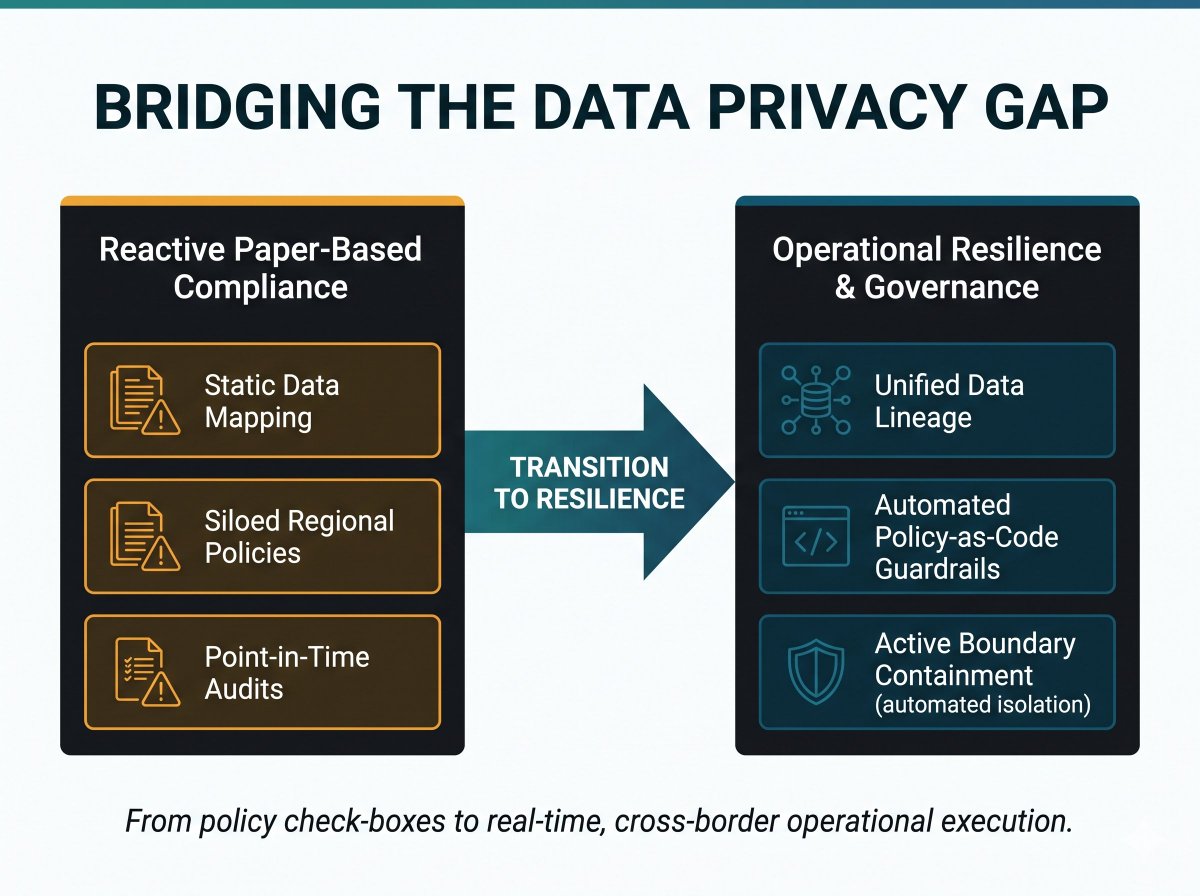
With India's DPDPA enforcement and global frameworks like the FCA’s GC26/7, privacy is now a test of operational resilience, not just paperwork. If your compliance rules don’t live inside your API and pipeline code, you aren’t compliant.
1/CISA added 6 more Known Exploited Vulnerabilities yesterday, along with a new ransomware advisory.
When attackers weaponise flaws at zero-day speed, relying solely on patch cycles is a losing strategy. Your SOC must be built for rapid containment.
3/ The takeaway for Boards and C-Suites:
Stop asking if 100% of systems are patched. Start asking your CISO: If an active zero-day hits our core environment tonight, can the SOC autonomously isolate the blast radius in minutes, or do we wait on SLAs?
2/ After 19 years in security, moving from alert fatigue to Next-Gen SOC resilience takes 3 shifts:
• Context over volume: Prioritize flaws exploited in your stack
• Continuous threat hunting: Assume breach
• Autonomous containment: Isolate via Agentic AI gates
3/ The takeaway for Boards and Audit Committees:
Stop asking how many vendors passed an annual compliance questionnaire. Start asking your CISO how many third-party integrations hold standing administrative privileges; and how fast your SOC can sever them in a crisis.
2/ 3rd party risk is no longer a procurement checklist.
Leaders must accept 3 realities:
• SaaS & AI apps hold standing keys to your identity plane
• Non-human identities (OAuth/service principals) are prime targets
• Point-in-time vendor audits cannot stop token abuse
1/ A dangerous gap is widening in the boardroom:
Yesterday’s BDO survey reveals 25% of corporate directors have deprioritized cyber and AI oversight due to crowded agendas. On the exact day a single compromised ConnectWise credential exposed ~1,000 customer M365 tenants.
3/ The takeaway for Boards and C-Suites:
If your India GCC engineers your core platforms and runs 24/7 threat hunting, they aren't a back-office support unit. Empower them as a front-line command centre before a crisis tests your escalation delays.
2/Leading global security operations at scale requires 3 structural shifts:
• Granting GCC leaders autonomous containment authority across time zones
• Harmonizing CERT-In, DPDPA, SEC & DORA incident playbooks into a single command chain
• Governing AI & identity at the source
1/ The biggest cyber risk in global financial institutions isn't a tooling gap. It’s an authority gap between HQ and their Global Capability Centres (GCCs) in India.
With 31% of CEOs naming cyber risk their #1 threat to growth this week, the old offshore SOC model is dead.
For those tracking how regulatory shifts and cross-border compliance are reshaping security ownership across India's GCC ecosystem, here is yesterday's BW Businessworld analysis that sparked this reflection: https://t.co/FwaDlCfscj
India’s GCCs no longer just support the global enterprise perimeter—they hold the keys to it.
Boards need to stop asking if their GCC SOC can detect a breach at 3 AM EST, and start asking if local leadership has the autonomous authority to contain it.