Last night I randomly came across the Canucks game, and it reminded me of my first year here when someone so generous invited me to watch a game. I didn't understand how it was played back then, I just enjoyed the moment. Yesterday I felt it was finally time to truly learn the game. Curiosity led me to a pub, where I had some good food, an iced beer, and enjoyed watching. It taught me that when we look around carefully and open our minds, there is so much to enjoy in the moment.
I talk about my excitement moving into a big house in Vancouver with a multicultural crowd of students and workers, and how it reminds me of my childhood home in Afghanistan, especially the pear tree. I express gratitude for this experience and the beauty around me.
My mother asked for my ID so she could send me money from Afghanistan.
Since I began sharing my story and living as my authentic self online, she believes I’m only doing this for money.
Yes — I want to earn money.
And yes — I want to impact the world by sharing what I’ve lived.
But the deeper reason is simple: I want to help humanity.
I’ve been doing this for months with no income, and still it feels right.
It feels good to finally have the courage to be my real self.
As someone who was once Muslim and religious,
and who is now completely free,
I want to say this:
They lied to us.
Freedom is everything.
There is nothing
just consciousness.
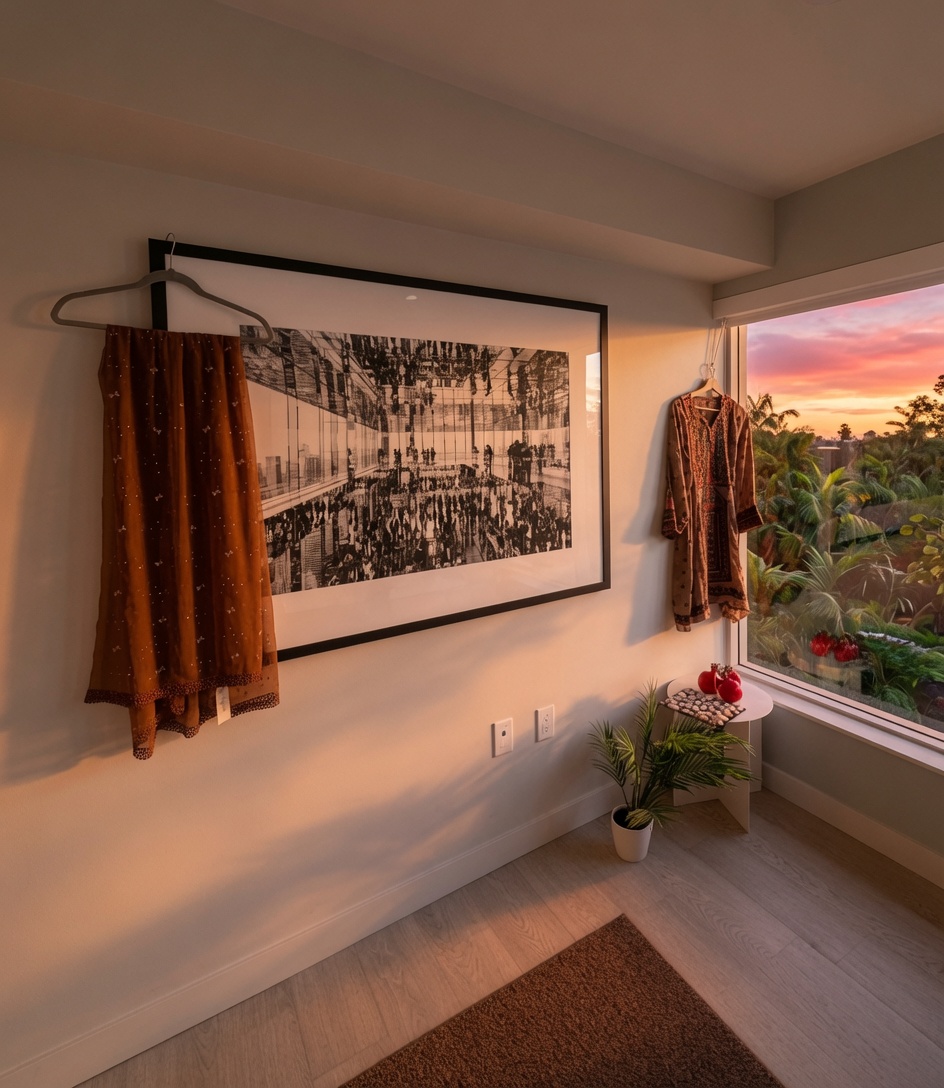
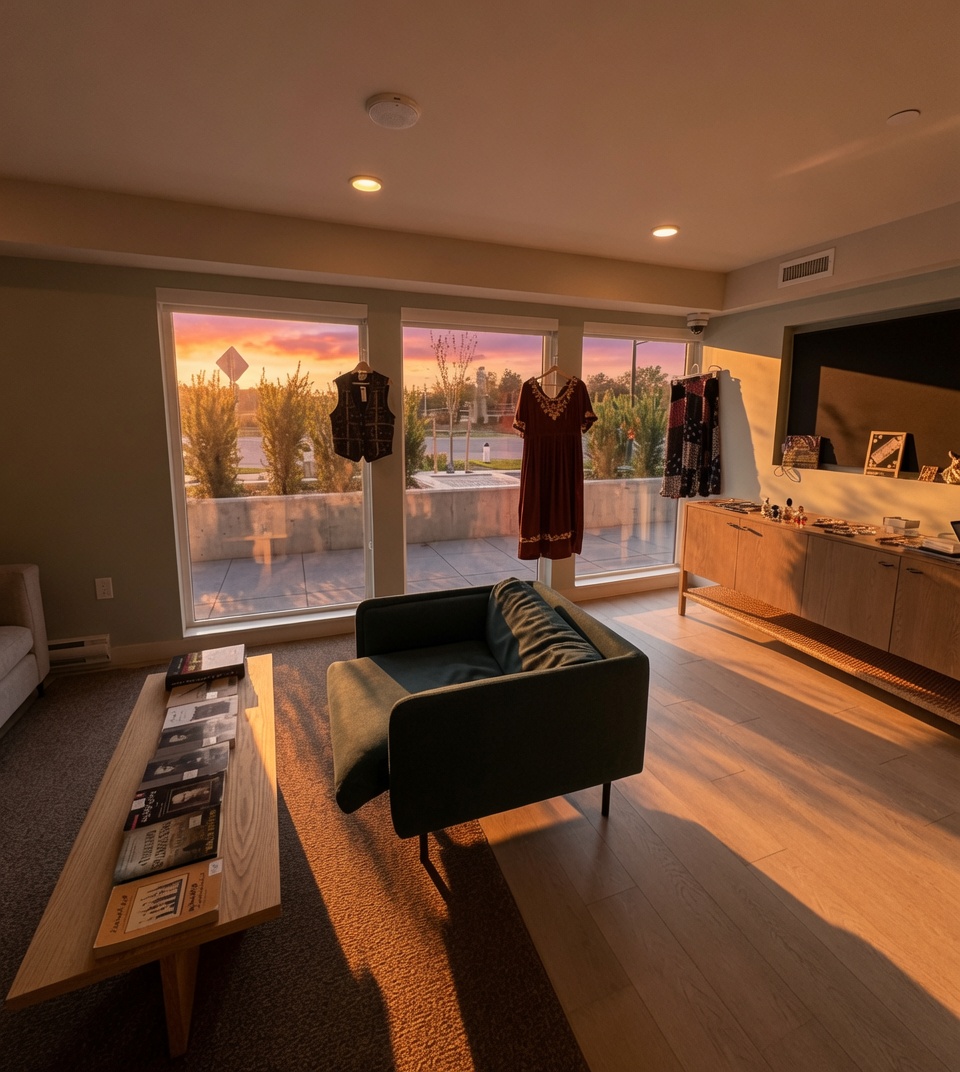
Yesterday, I put all my small business jewelry and clothes on sale. I’m still battling to meet my basic needs — a child laborer who grew up in deep poverty, surrounded by suffering and pain for so many years.
I held the sale in the party room of my building. At first, no one came. Then I posted the announcement in Persian too, and a few people showed up. They were browsing when a man walked in, touched some of my clothes and jewelry, said he would send his wife, and then disappeared.
After that, I listed everything on the marketplace to make it easier to sell. I posted a beautiful gold Iranian necklace. A woman messaged me saying she wanted to buy it for her daughter. I held the piece for her without asking for a deposit. When she arrived, she touched the necklace and earrings for nearly 20 minutes… and in the end, she didn’t buy anything.
I felt disappointed, but I also saw clearly: she didn’t come for the jewelry. She came to touch the energy.
These days, I notice people intentionally getting close to me when I go out — drawn to the rich energy I carry. Yes, I am rich. I am the cycle-breaker of generational trauma and poverty. I am wealthy because I am healthy, optimistic, and full of vision to grow.
Be careful with energy vampires. Protect your light.
Sometimes I ask myself: Why did God let me go through this and come back from the edge of death? The answer I found is this so I could rescue others, raise awareness, and help women, especially young Afghan girls, stay safe. My pain became my purpose.
P.S. That person was conservative, so I don’t have any evidence or information about him. I just know I saw someone like him in a picture of my recent ex-boyfriend, but I’m not sure if it was him he looks exactly like him.
A Lesson I Learned the Hard Way: Trust, Danger, and Survival in Kabul
Between 2013 and 2015, one ordinary day, my hostel friend and I visited an acquaintance’s house near the airport in Kabul. After spending a few hours there, we started walking back. A car pulled up beside us. A young man offered us a ride home. Without thinking twice, we accepted.
He drove us to a supermarket near the US Embassy, bought some snacks, and then suggested we go to his house for a while before he dropped us off. He seemed polite and harmless, so we agreed. When we arrived, I went to the bathroom to wash my face. Suddenly, my friend rushed in, terrified. She whispered that the man had told her he planned to have sex with both of us that night.
She had begged him, saying we were virgins and had made a mistake trusting him. He replied coldly that good girls would never get into a stranger’s car or go to his home. He called us whores and threatened us. I started crying. We tried to run, but as we reached the door, he appeared with a gun.
He had multiple phones, a bundle of US dollars, and the weapon everything felt suspicious and dangerous. He warned us that since we had come willingly, we had to stay quiet and go to his bedroom. The room was close to the main door, which he kept open so we couldn’t escape. That night, we tried several times to jump from the window to the street below, but the height was too great. We barely slept.
In the morning, he came in with the gun and demanded we get undressed. When I resisted and refused, he slapped me hard to silence me. He then turned to my friend. She was so frightened that she complied. I watched blood appear as he forced himself on her. He also touched me, commented on my body, and demanded other acts while I cried helplessly.
Afterward, he searched our bags and phones, looking at everything photos, messages, our student cards. “Oh, you’re students,” he said. “I thought you were whores. This is your punishment for trusting strangers and getting into cars with men you don’t know.” He recorded videos of us to keep us silent. He told me I looked like a good girl and complimented my friend for being “sharp” because she wasn’t scared of guns something common among certain powerful families in Afghanistan at the time.
Eventually, he let us call a taxi and leave. We cried the entire way, choking on fear and shame. From that day, I vowed never to get into a stranger’s car again. But the memory of that video haunted me for years. I avoided social media and stayed silent, terrified of blackmail or worse. Even when one friend later learned what happened, instead of support, she taunted me.
In those years in Kabul, many girls especially students who had come from the provinces trusted men who stopped their cars offering rides to save money. Some were taken to certain areas where men went looking for girls to spend the night with. Many of those girls were innocent and naive. Tragically, women’s and girls’ bodies were often found dead in the streets of the capital. This violence continued even under the Taliban.
I do not support the Taliban, but from my experience and what I’ve heard, many of these killings were carried out by the same kind of dangerous men who prey on trusting girls. Some people even joined the Taliban because they saw so many dead bodies in their neighborhoods and wanted to stop the chaos.
After surviving that night, I began using my experience to protect others. When I saw girls from the provinces about to get into strangers’ cars, I would intervene, book them a safe taxi, and warn them. I even stopped my own childhood friend from repeating the same mistake and gave her the awareness I had gained through pain.
I also noticed the same pattern here in Canada. Some girls easily get into strangers’ cars, and I warn them not to trust so readily because this kind of incident happened to me, and it could happen to you too.
If you’re walking through your own awakening, know you’re not alone. ✨
One time, when I was still wearing the hijab — of course, because an Afghan man had forced me into it — they tried to control my energy and clip my wings. They didn’t want my light; they wanted to dim it. That’s why they covered me.
Yesterday at Starbucks, a few hijabi women looked at me and laughed, mocking me openly. They carried themselves with confidence and certainty. In that moment, their judgment pulled me back into the old timeline — the girl in Afghanistan who was taught to shrink.
Back then, I would see free, stylish, radiant women walking in their truth and I judged them from my cage. As a hijabi girl, I told myself I was pure and heaven-bound while they were lost for choosing freedom. Yet deep inside, my soul whispered, I wish I could wear what makes me feel alive. Over time, the hijab slowly became normal, and I even found a kind of safety in it. However, the quiet jealousy remained — a clear sign that my soul was never meant to stay there.
Now I understand it was all part of the journey.
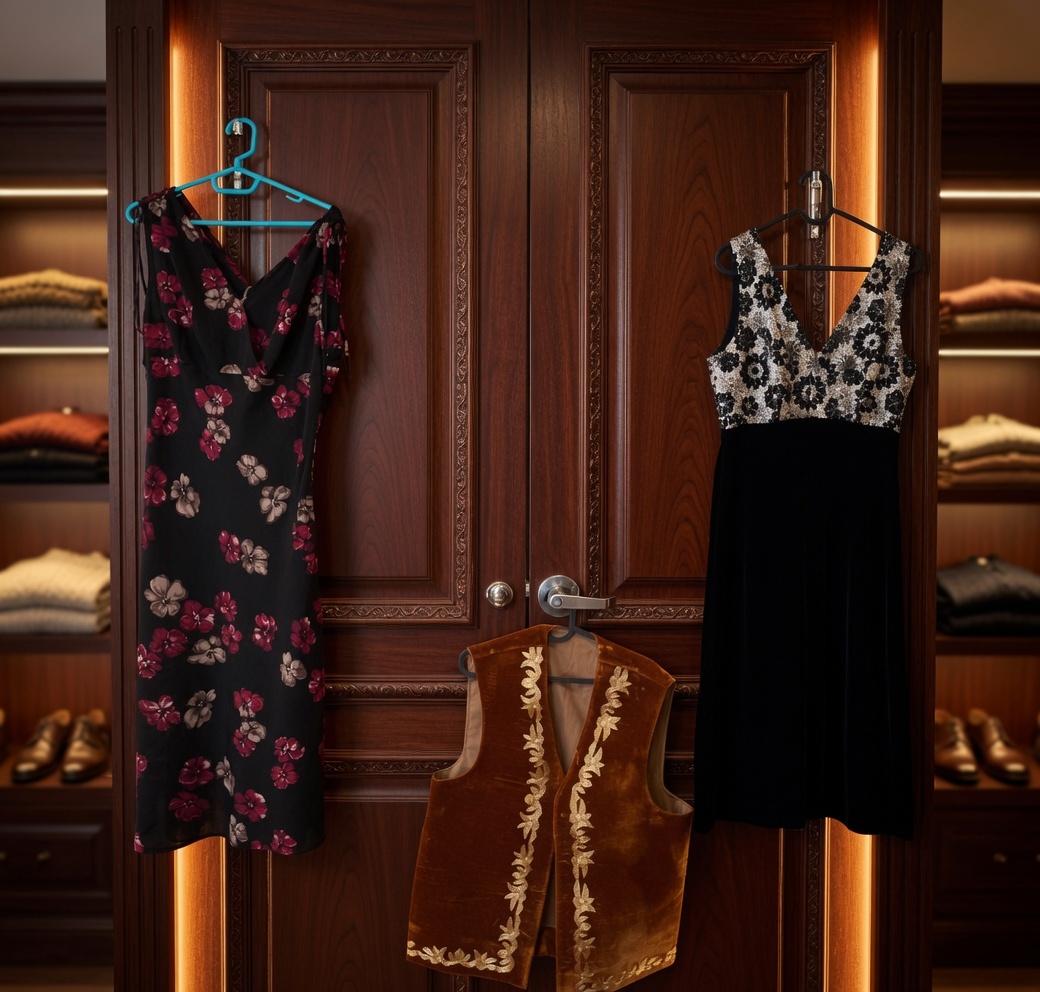
I came from a third-world reality of scarcity and survival, where we wore thrift-store clothes and I hid the truth because it embarrassed me. Even after arriving in Canada, I continued wearing second-hand clothes. In my first years here, a kind Canadian woman helped me and brought me many used pieces. I wore them with genuine interest and gratitude. I wasn’t arrogant about the relatively good life I had known in the last few years before Afghanistan collapsed. To this day, I still love vintage and second-hand treasures — they feel authentic to my soul.
Throughout it all, I fought to remove the scarf in the office. I fought my family. I fought through relationships and an engagement that tried to keep me small. And recently, I ended the latest toxic cycle for good.
Finally, I chose myself.
As a mature soul, I now decide what aligns with my highest vibration. I am free to make mistakes, to learn, to expand, and to rise — without apology. I no longer allow anyone else’s timeline to dictate mine.
These days, when eyes follow me — old and young, judging, mocking — I simply smile and walk forward. Their gaze no longer lowers my frequency. In fact, the more they project the old 3D conditioning, the more anchored I become in my 5D light. Even those who look modern still carry old programming. Two months ago they admired me. Now some judge. Yet it doesn’t matter.
I have stepped out of the old matrix.
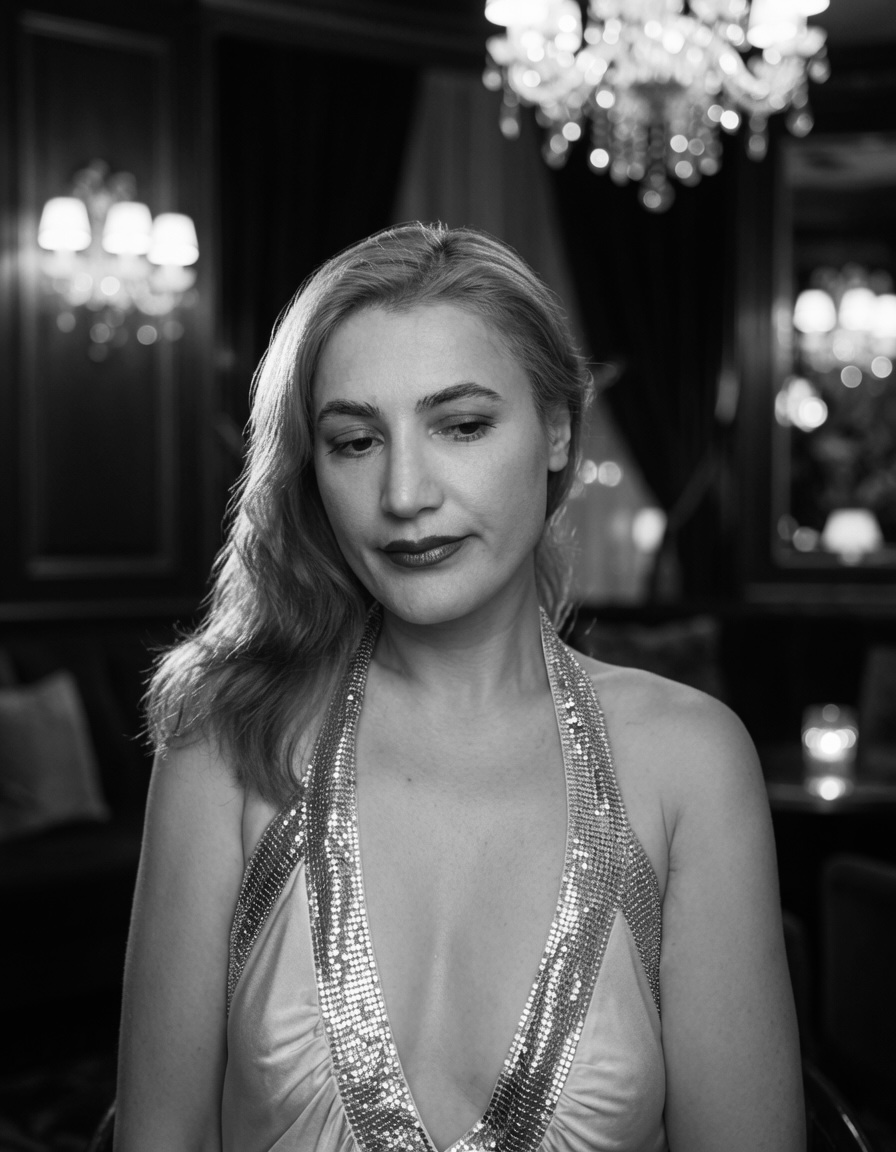
I am no longer hiding my beauty, my voice, or my truth. I move through this world as a free woman, radiating the light I once dimmed. My body, my clothes, my choices — all are expressions of my liberated soul.
I am home in my own energy.
I am sovereign.
I am unapologetically radiant.
And this freedom? It vibrates so beautifully on me. 💫
I am still searching for this innocent young woman who suddenly disappeared in Afghanistan.
Her name is Ziba Mahzal. She was a journalist with Afghanistan’s national media.
I only know she had become involved with dangerous individuals. To this day, no one has confirmed whether she is dead or alive, even though we shared many mutual friends. I will keep following every lead until I find answers.
Midnight in February 2026
In the safety of a warm bed, a childhood of violence finally found its voice.
It was past midnight in February 2026. We lay side by side as he played his favorite childhood game and excitedly pointed out the characters on the screen: “This one is me, that’s my older brother, and this is my little brother.” They really did resemble his family. He recounted his memories with such joy and humor that I couldn’t help but smile.
“I really liked those scenes,” I told him.
But silently I thought: These are worlds I knew nothing about. A few years ago, I had never even seen cartoons like this.
When I said I wanted to sleep, he gently replied, “No, stay. I want you to know the games I loved.” So I asked, “How old were you in those days?”
“2000,” he answered.
I let out a deep sigh. “You were enjoying your childhood then,” I said softly. “But when I was a child, I was punished just for wanting to play.”
The Price of a Simple Egg
In my home in Afghanistan, asking for money or food to play with other children was met with refusal. So I learned to sneak a potato, an onion, or an egg from the kitchen. I was often caught. The punishment was always severe.
One holiday, I took an egg from the chickens and was heading to the gardens to play with the girls. My mother saw it in my hand and beat me mercilessly with a tool that burned hot and fast. My body throbbed with pain. “Wait until your father comes home,” she warned. “He still has to deal with you.”
When my father returned from work—tired, hungry, and thirsty—my mother handed me over without hesitation. What followed was a storm of rage. He beat me so brutally that the sticks broke over my head and body, right in front of my childhood friends.
In the chaos, he grabbed my shirt to drag me home. It lifted, exposing my developing chest to the boys and girls in the street. The shame was unbearable. One girl whispered, “Your father beats you so much… ours don’t even slap us.”
There were times the beatings happened in the bathroom. I would wet myself in fear before his anger finally passed. Then he would leave, and I remained alone on the floor. No one came to comfort me. I eventually had to clean myself up and hide from the world for days.
The Girl the Wolves Tore Apart
My father rarely showed affection. I would try to lean on his knee while eating, only to be pushed away. All I wanted was a hug, a moment of safety in his arms. But it never came.
Those years of cruelty and neglect slowly erased me. I became overly trusting, naïve, and desperate for approval — easy prey for a harsh world. Society felt like a pack of wolves. They tore the little girl apart until she forgot who she was. All that remained was a body that could still recognize goodness, but no longer saw its own worth.
Reclaiming What Was Stolen
Today, years later and oceans away in Canada, I can finally speak these memories without hiding. Writing them down is both painful and liberating. Every word is an act of reclamation.
That frightened little girl survived what no child should ever endure. She is still with me — but she no longer defines me. The pain is part of my story, but it is not my identity. I am no longer the girl hiding eggs or begging for love. I am a woman choosing herself, writing her truth, and turning trauma into testimony.
Healing is not pretty or linear. It is messy, brave, and deeply worth it.
And for the first time, I believe I am finally safe enough to keep healing.
This evening, as I walked through a quiet park lined with trees that cast deep shadows, a group of teenage boys approached from the opposite direction. In an instant, a wave of trauma surged through me, transporting me back to Afghanistan during my first year of university. I was only 18, extremely timid, and still living with my sister in an old rented house in an alleyway shared with neighbors.
One afternoon, while returning home, I noticed a group of teenage boys walking toward me. Even from a distance, my intuition warned me of danger. As they drew closer, my fear deepened. I lowered my head and quickened my pace, but the street was empty. They stopped and waited for me. I slowed down, hoping to avoid them, but they whispered among themselves and encouraged one boy to approach. He was small in stature. When he reached me, he suddenly grabbed my breast and ran. I was frozen in shock and humiliation. I chased after him, shouting for help, but the group only laughed and mocked me before disappearing. That night, I couldn’t sleep. I kept replaying the moment, wishing I had run faster so I could confront him. For a long time afterward, I felt afraid every time I walked home, until I finally moved to the university hostel for safety.
Last winter, I encountered a similar scene at a public pool here in Canada. A group of teenage boys speaking Farsi—clearly from Afghan backgrounds—were openly harassing girls their own age. They commented crudely on the girls’ bodies from head to toe, using embarrassing language, staring intently until the girls felt uncomfortable and left. I understood every word. I wanted to speak up, but I held back, realizing this behavior should have been corrected by their parents long ago. It pained me to see the same patterns repeating in a new country.
What frustrates me most is the deep unfairness in how we raise our children. Teenage girls are often strictly controlled, deprived of freedom, and forced to wear the hijab in the name of “honor,” while boys are allowed to roam freely and behave however they wish. This double standard is not only unjust—it perpetuates harm and generational trauma.
Today, I choose differently.
That frightened 18-year-old girl who was violated in an alley no longer defines me. I have survived far worse and have grown into a woman who sets clear boundaries and speaks her truth. The brief encounter in the park this evening triggered old pain, but it did not break me. Instead, it reminded me of how far I have come—from silence and fear to resilience and voice.
I share this story not for pity, but for awareness. To every survivor carrying similar wounds: your pain is real, but it is not your identity. To parents and communities: teach your sons respect, accountability, and equality. Girls deserve freedom, safety, and dignity just as much as boys do.
I walk through parks, pools, and life now with my head held high—unbowed, healing, and committed to breaking these cycles. My light was forged in darkness, and I refuse to dim it for anyone.