It's never too late to chase your dream: 88-year-old actor Anthony Hopkins signed with Decca Records to release an album of original compositions.
More: https://t.co/dQmMTmNFFP
RIP Bonnie Tyler 😔💔🙏🏻
The iconic singer had recently fallen into a coma following a serious medical complication resulting from intestinal surgery.
With her powerful, raspy voice, she captivated the world. We say goodbye to a legend of the 80s and 90s.
The older I get, the more I appreciate Javier Bardem's performance in Skyfall (2012). Silva isn't trying to conquer the world. His motivations are deeply personal, which is exactly what makes him so dangerous.
Breaking News: Bonnie Tyler, the Welsh singer who soared to No. 1 with “Total Eclipse of the Heart,” a titanic pop anthem of the 1980s, died at 75. https://t.co/GknDvQUlGb
カルト的人気を誇る映画『Crossroads』(1986年)でのクライマックスシーン。
主人公ユージーン(Ralph Macchio)と“悪魔側のギタリスト”ジャック・バトラー(Steve Vai)が「魂をかけた決闘」を音楽で表現した場面『Epic Guitar Battle』。😂
この勝負は単なるライブではなく、運命を左右する試練として置かれているので、演出がかなり大げさでドラマチックで面白い🤣
スティーヴヴァイのテクニックを観たい人もぜひ❣️👍
Michael Shanker, Joe Satriani
Yngwie Malmsteen, Van Halen, Paul Gilbert
マイケルシェインカー ジョーサトリアーニ
イングヴェイマルムスティーン ヴァン・ヘイレン ポールギルバート
Steve Vai vs Ralph Macchio Epic Guitar Battle
En 1994, Gary Sinise interpretó al teniente Dan Taylor en Forrest Gump, dedicando meses a aprender a moverse como si no tuviera piernas. Su actuación le valió una nominación al Óscar, pero lo que no esperaba fue el impacto que tendría en los veteranos reales.
Sinise había cofundado el teatro Steppenwolf de Chicago en 1974, a la temprana edad de dieciocho años y sin ningún recurso económico, junto a Jeff Perry y Terry Kinney, en el sótano de una iglesia de Highland Park. A pesar de carecer de un apellido conocido o de una formación en una escuela de élite, Sinise construyó su carrera obra a obra. Cuando Forrest Gump lo catapultó a la fama como uno de los actores más reconocibles de Hollywood, se encontró con una consecuencia inesperada: los veteranos mutilados de Vietnam, hombres que habían perdido las piernas de verdad, comenzaron a asistir a sus actos y a dirigirse a él por el nombre de su personaje, “teniente Dan”, sin ninguna ironía.
Los atentados del 11 de septiembre de 2001 aceleraron la comprensión de Gary Sinise sobre las dificultades que enfrentan los veteranos. Al presenciar el regreso de miles de jóvenes de Irak y Afganistán con amputaciones, lesiones medulares y traumatismos que hacían sus hogares inaccesibles, Sinise comenzó a visitar hospitales. Formó la Lt. Dan Band y ofreció conciertos gratuitos en bases militares y hospitales durante años, a la vez que continuaba con su trabajo en CSI: NY y otros proyectos. En 2011, formalizó sus esfuerzos en la Fundación Gary Sinise, con el programa R.I.S.E. (Restoring Independence Supporting Empowerment) como su iniciativa más importante. R.I.S.E. construye hogares inteligentes y accesibles, sin hipoteca, para veteranos con lesiones graves de combate.
Lo que muchos desconocen es la meticulosa atención al detalle que implica la construcción de estas casas. Elementos como puertas estrechas, escalones en la entrada y encimeras de cocina diseñadas para personas de pie pueden suponer obstáculos insuperables para los veteranos con discapacidades. Por ejemplo, un soldado que perdió ambas piernas en Irak puede sobrevivir a la explosión, a múltiples cirugías y a la rehabilitación, solo para descubrir que necesita ayuda para ducharse en una casa convencional. R.I.S.E. aborda estos problemas construyendo casas con pasillos anchos, puertas automatizadas, duchas accesibles y cocinas y baños adaptados a las capacidades físicas actuales de los veteranos, no a las que tenían antes de desplegarse. Estas casas se entregan sin ninguna carga financiera para los veteranos.
Entre 2011 y 2021, la fundación recaudó más de trescientos millones de dólares. En noviembre de 2025, durante la ceremonia de entrega de llaves al sargento de primera clase retirado Joe Bowser, se completó el hogar número cien del programa. Cien familias, cien hipotecas eliminadas y cien veteranos que ahora pueden acceder a sus hogares desde una silla de ruedas.
A sus setenta y un años, Gary Sinise sigue asistiendo a tantas ceremonias de entrega como su agenda se lo permite. En sus memorias de 2019, “Grateful American”, relata que el momento que lo transformó fue cuando un veterano herido lo saludó como “teniente Dan”, una mezcla de gratitud y reconocimiento que trascendía la película.
¿Crees que el impacto de un personaje de ficción puede llegar a ser más duradero que el del actor que lo interpretó, o en este caso, ambos se han convertido en una misma cosa?
Fuente: Gary Sinise Foundation, informes anuales 2011-2021; People, "Gary Sinise Says It Took 2 Decades for Wounded Veteran to Accept Gift of a New Home" (11 noviembre 2025); Gary Sinise, "Grateful American: A Journey from Self to Service" (Thomas Nelson, 2019); IMDb, filmografía de Gary Sinise
Police Respond to “Break-In” Call, Find Bear Getting Beat Up by House Cat
Officers were called to a home after neighbors reported a loud crash and a possible break-in.
When police arrived, they found the back door smashed open, but it wasn’t a burglar.
It was a black bear in the kitchen, trying to get into a bowl of cat food.
Body-cam footage shows the homeowner’s cat standing between the bear and the food before suddenly swatting the bear in the face. The bear immediately turned around and ran back out through the broken door.
No one was hurt, and wildlife officials say the bear was likely attracted by the smell of pet food.
Police later posted a public reminder:
“Lock your doors, secure pet food, and please do not rely on your cat as home security.”
The cat, however, is reportedly undefeated.
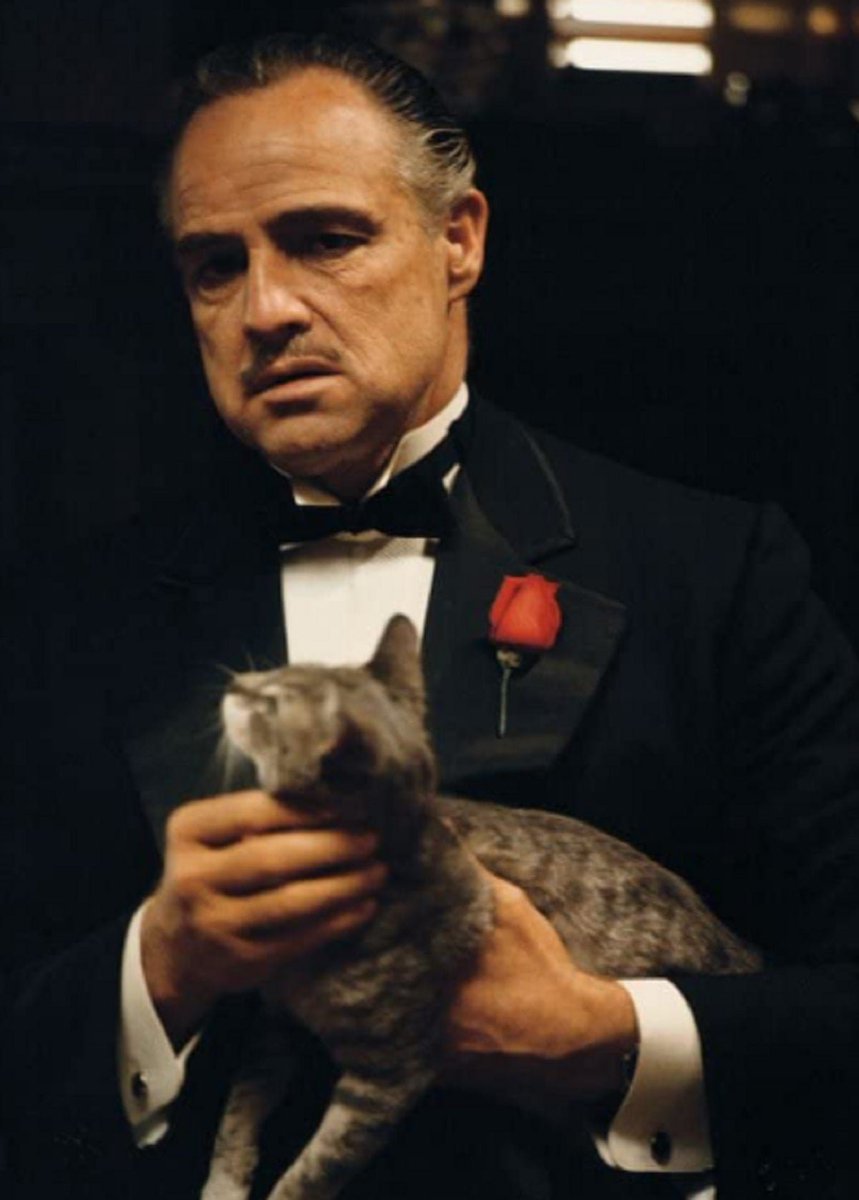
Cuando grababan 'El Padrino' en 1972 un gato callejero de los estudios Paramount interrumpió en el set, inmediatamente Marlon Brando lo tomó en brazos sin salirse de su personaje, dejando una de las mejores escenas del cine ganando incluso un Oscar.
En el 2022, durante una rueda de prensa en el mundial de Qatar apareció un gato callejero sobre la mesa, a lo que el jefe de prensa de la Selección de Brasil reaccionó lanzandolo. De ahí se le atribuye "La maldición del gato" la cual impide que la selección llegue a semifinales.
Quien diría que un gato podría definir tu suerte..
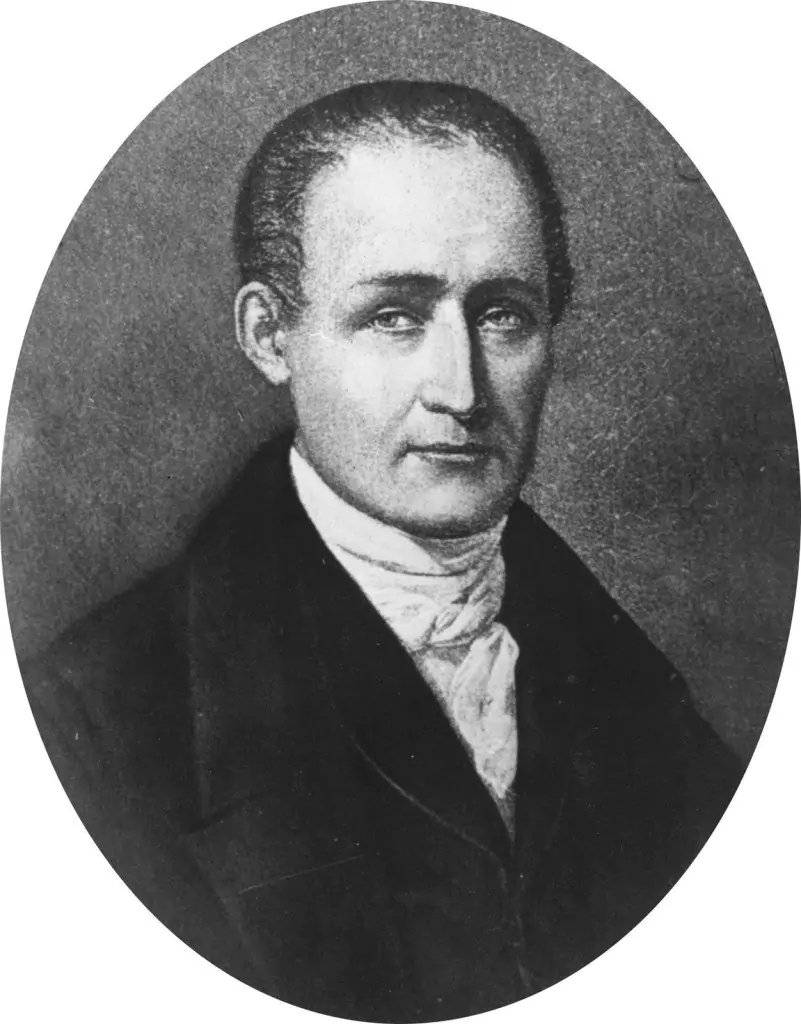
Il a inventé un objet que vous tenez plusieurs fois par jour. Il est mort ruiné, sans jamais connaître la gloire. Et c'est un autre qui a récolté son nom.
5 juillet 1833, à Saint-Loup-de-Varennes, près de Chalon-sur-Saône. Un homme de 68 ans s'effondre, terrassé par une hémorragie cérébrale. Il laisse derrière lui des dettes, et une invention que personne ne prend au sérieux.
Cet homme s'appelle Nicéphore Niépce.
Des années plus tôt, dans le grenier de sa maison, il a réussi l'impossible. Fixer une image par la seule action de la lumière. Une plaque d'étain, du bitume, et une patience folle : il faut poser des heures pour capturer une simple vue depuis sa fenêtre.
Cette image existe toujours. C'est la plus ancienne photographie du monde.
Ruiné, il s'associe à un certain Louis Daguerre pour vendre son procédé. Mais Niépce meurt avant. Six ans plus tard, Daguerre présente "sa" découverte devant l'Académie. On l'acclame comme l'inventeur de la photographie. Le nom de Niépce, lui, s'efface.
Aujourd'hui, chaque photo prise avec votre téléphone descend de sa plaque d'étain. En 2026, la France fête les 200 ans de son invention.
Le vrai père de la photo méritait mieux, non ?
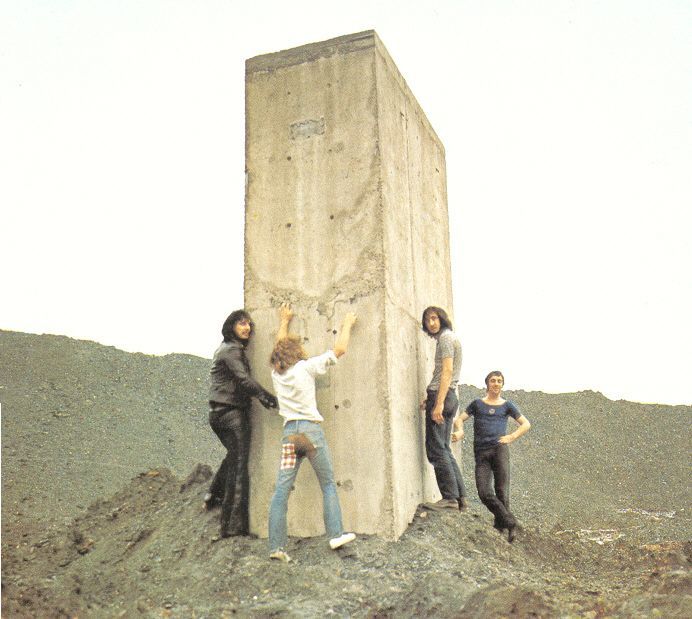
The Who during an impromptu roadside photoshoot that would ultimately yield the iconic cover art for 'Who's Next,' Celebrated rock photographer Ethan Russell was actually driving the band back to London after a show in Sunderland when they looked out the window and saw these bizarre, giant concrete structures jutting out of the coal waste slagheaps at Easington Colliery.
Because Stanley Kubrick's 2001: A Space Odyssey was a massive cultural phenomenon at the time, the band immediately saw these pillars as a hilarious, industrial version of the movie's alien monolith. Russell pulled the car over, and the guys started fooling around, climbing the sides, and posing for the lens. Just moments after this specific shutter clicked, they decided to pull a legendary prank that resulted in the final, iconic cover photo for their absolute masterpiece album, Who's Next. It is a spectacular behind-the-scenes look at four rock icons just acting like kids in a wasteland, completely unaware they were making art history.
The earliest known record of a pet with a name dates back more than 3,450 years to ancient Egypt. The cat was called Nedjem, a name that translates to “Sweet One” or simply “Sweetie.”
Nedjem belonged to Puimre, a high-ranking official who served as the Second Priest of Amun and oversaw temple estates and religious ceremonies at Karnak Temple.
The cat’s name appears in Puimre’s decorated tomb at the Theban Necropolis, where Nedjem is shown beneath a chair, a common artistic way of depicting beloved household pets.
The name Nedjem (ndm) means “Sweet One,” “Pleasant One,” or “Delightful One.” It was also used as a personal name in ancient Egypt, suggesting it was an affectionate and familiar term rather than one reserved for animals.
Nedjem offers rare evidence of the close bond ancient Egyptians could share with their pets. Although cats were valued for protecting grain stores from rodents and snakes and were linked to the goddess Bastet, they were also cherished companions.
A 33-year-old woman at MIT wrote the code that ran inside the Apollo 11 lunar lander, and 20 seconds before Neil Armstrong touched the moon, her program made a decision the astronauts didn't know was happening that was the only reason the mission didn't crash.
Her name was Margaret Hamilton.
She led the team writing every line of code that would fly humans to the moon and back. The part almost nobody knows is that she had to fight to be allowed to do the work at all.
Code in 1965 was not treated as real work.
Rockets were serious. Circuits were serious. Writing code was something the men at NASA thought secretaries could do on the side. Hamilton was told this to her face more than once.
So she started calling what her team did "software engineering."
She used the phrase on purpose. In meetings. In memos. To force people to treat it as a discipline instead of a chore. Colleagues laughed at her the first few times she said it out loud.
That phrase is now the name of the biggest engineering profession on earth.
The story of what her code did on July 20, 1969 is the one every kid should be taught.
Neil Armstrong and Buzz Aldrin were 3 minutes from touching down when the computer inside the lunar module started flashing an alarm.
1202.
Then again. Then 1201. Five alarms in four minutes. The computer was telling the astronauts it could not finish everything it had been asked to do.
The computer they were flying with had less memory than a modern microwave.
Someone on the checklist had left a switch in the wrong position, and a radar the astronauts did not even need right then was flooding the computer with data. It was eating around 13% of the machine's brain at the exact moment every second mattered.
In almost any other system, that overload would have frozen the machine.
A frozen machine 30,000 feet above the moon means a crash. It means two dead astronauts and a third one orbiting alone above them, waiting for a signal that would never come.
Hamilton's code did something else.
She had built the software with a rule almost nobody in her field was using at the time. When the machine ran out of room, it would not treat every task as equally important. It would look at the list of jobs it had been asked to do, throw out the ones that could wait, and keep running only the ones keeping the crew alive.
The radar was the low priority job.
The landing was the highest.
So the computer did what she had told it to do. It dumped the radar. It kept flying. The alarm was not a failure. It was the machine reporting that it was handling the overload exactly the way she had designed it to.
Down in Houston, a 24-year-old engineer named Jack Garman recognized the alarm from a test his team had run months earlier. He shouted "Go" to the flight controller. The controller shouted it up to the crew. The landing kept going.
Armstrong touched the surface with 25 seconds of fuel left.
The part that gets lost in every retelling is why Hamilton had built that safety net in the first place.
NASA had not asked for it.
She had added it on her own, years earlier, because her 4-year-old daughter Lauren had once crashed the simulator by pressing a button during a test. The button was one the astronauts had been told they would never press.
Hamilton wanted the code to survive that button press anyway.
Her bosses told her it was a waste of time. Astronauts do not make mistakes.
She insisted. The safety net went in.
Two years later, on the way to the moon, an astronaut left a switch in the wrong position. The exact class of mistake she had been told would never happen.
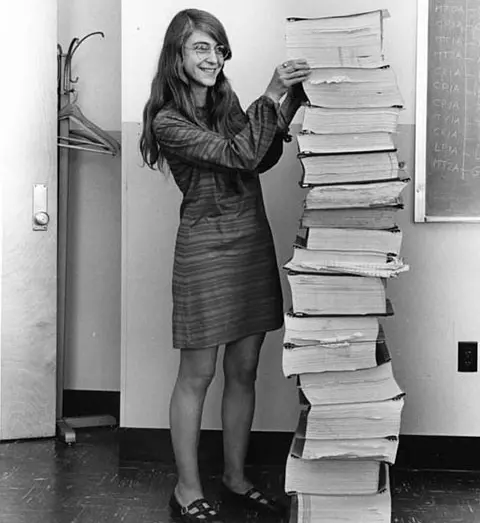
There is a photograph of her from that period.
She is standing next to a stack of paper as tall as she is. Every page in that stack is the code her team wrote for the mission. She is smiling at the camera like she knows something the rest of the aerospace industry has not figured out yet.
In 2016, Barack Obama put the Presidential Medal of Freedom around her neck and said the astronauts did not have much time, but thankfully, they had Margaret Hamilton.
Every autopilot in every plane you have ever flown on uses a version of what she invented. Every pacemaker. Every self driving car. Every satellite in orbit.
The idea that a machine should know which job matters most and drop the rest when it runs out of room is now the foundation of almost every safety system on the planet.
She wrote it because a 4 year old crashed a simulator and nobody else thought it was worth fixing.
The men in the room laughed at her for calling it engineering.
Then her code was the only thing in the sky that did not fail.
Gioggia Meloni visita un poverissimo paese della Basilicata e chiede al sindaco quali siano le tre priorità per rilanciare la zona.
«La prima è l’ospedale: c’è, ma mancano i medici».
Lei tira fuori il telefonino, parla per un paio di minuti e poi annuncia:
«Fatto. Entro una settimana arrivano i medici».
«La seconda è l’acqua: c’è, ma una miniera a monte ha inquinato le falde».
Lei riprende il telefonino, altre due parole, e dice:
«Fatto. Entro un mese le falde saranno bonificate e la proprietà risarcirà gli abitanti».
«E la terza?» chiede lei.
«La terza sono i telefonini» risponde il sindaco.
«Qui non prende niente».
🥖 La baguette française n’est pas née d’un caprice de roi. Ni de Louis XIV. Ni de Napoléon. Mais d’une contrainte très moderne.
Paris, début du XXe siècle. Dans les fournils encore sombres, les boulangers travaillent avant l’aube, les mains dans la farine, le visage marqué par la chaleur du four. Pendant longtemps, le pain français est surtout rond, dense, massif. Mais une nouvelle règle sociale va bouleverser les habitudes. Les boulangers doivent s’adapter vite. Et c’est là qu’un pain long, fin, plus rapide à cuire, va s’imposer dans les vitrines.
📍 Après la Première Guerre mondiale, le travail de nuit dans les boulangeries devient plus encadré. Les fournils doivent produire plus vite, sans commencer aussi tôt qu’avant. La miche traditionnelle demande du temps. La baguette, elle, cuit beaucoup plus rapidement.
Peu à peu, les boulangers changent leurs gestes. 📜
La pâte est façonnée plus longuement.
Le pain devient plus fin.
La cuisson est plus courte.
Le transport devient plus simple.
La vente peut commencer dès l’ouverture.
Ce qui était d’abord une solution pratique devient une habitude nationale.
La baguette entre alors dans la vie quotidienne. On l’achète fraîche, parfois plusieurs fois par jour. Elle accompagne la soupe, le fromage, le café du matin, le repas familial. Elle devient si ordinaire qu’on finit par croire qu’elle a toujours existé.
🔍 Ce que peu de gens savent... la baguette, telle qu’on l’imagine aujourd’hui, est relativement récente. Les Français mangeaient du pain depuis des siècles, bien sûr, mais pas forcément sous cette forme longue et croustillante. Selon les historiens de l’alimentation, la baguette moderne s’impose surtout au XXe siècle, portée par l’évolution du travail, des horaires, des fours et des habitudes urbaines. Ce symbole que le monde associe immédiatement à la France est donc né moins d’une tradition royale que d’une adaptation sociale.
🏛️ Voilà le paradoxe : l’un des plus grands symboles français n’est pas sorti d’un palais, mais d’un fournil pressé par le temps.
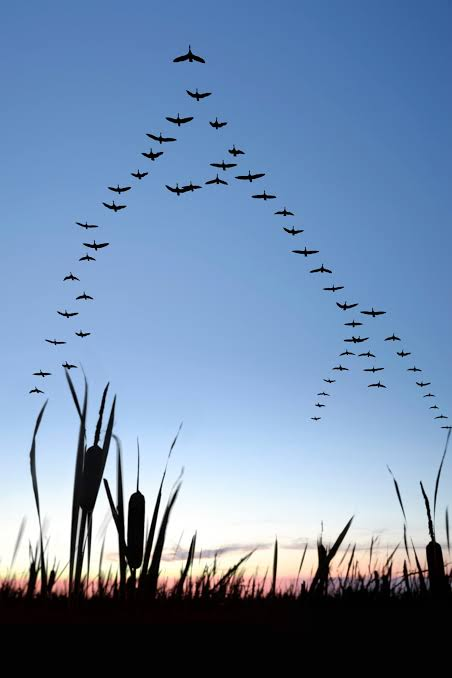
Los gansos vuelan formando una "V" porque cuando cada pájaro bate sus alas, produce un movimiento en el aire que ayuda al ganso que va detrás de él. Cuando el líder de los gansos se cansa, se pasa a uno de los puestos de atrás y otro ganso toma su lugar. Los gansos que van detrás producen un sonido propio, y hacen esto con frecuencia para motivar a los que van adelante a mantener la velocidad. Cuando un ganso enferma, dos de sus compañeros se salen de la formación y lo siguen para ayudar y protegerlo. Se quedan con él hasta que esté nuevamente en condiciones de volar o hasta que muere. La vida no se trata de sobresalir individualmente, sino de trabajar en equipo.
La naturaleza nos demuestra que el individualismo extremo es ineficiente. Los gansos entienden perfectamente que para llegar lejos, se necesita del otro, compartiendo el esfuerzo, alentando desde atrás y no dejando a nadie abandonado en el camino. Es, sin duda, una de las mejores lecciones de solidaridad que podemos aplicar en nuestras vidas, familias y equipos de trabajo.
1867. Au bout de la chaussée de Sein, des hommes s'approchent en barque d'un rocher qui disparaît à chaque vague. Ils ont quelques minutes, entre deux lames, pour creuser un trou dans la pierre. Puis la mer revient, et il faut tout arrêter.
Ce rocher s'appelle Ar-Men. On va y bâtir un phare, à 30 km au large du Finistère, dans l'une des mers les plus dangereuses du monde.
La première année, on ne travaille que quelques heures en tout. Les ouvriers sont attachés à une corde, déposés sur la roche, repris avant que la houle ne les emporte. Chaque pierre de granit est taillée à terre, puis scellée une à une dans la masse.
Il faudra quatorze ans pour allumer le feu. Quatorze ans pour une seule tour.
Ensuite vient l'autre épreuve : y vivre. Les gardiens l'ont surnommé l'Enfer des Enfers. Par tempête, la tour tremble sous les coups de la mer, et la relève devient impossible.
En 1922, trois hommes y sont restés bloqués quatre-vingt-dix jours. Seuls, au milieu de l'Atlantique, à garder une lumière allumée pour les autres.
A fumaça de alecrim no galinheiro é um método antigo que ainda funciona.
🌿 Antes dos desinfetantes industriais, os camponeses italianos e os seus homólogos franceses, queimavam molhos de alecrim seco no estábulo e no galinheiro uma vez por mês.
Não era um ritual. Era uma técnica.
O alecrim queimado liberta em fase gasosa cânfora, cineol, alfa-pineno e ácido rosmarínico.
Em espaço fechado, estes compostos atingem concentrações letais para os artrópodes: moscas, mosquitos, ácaros, pulgas e piolhos, sem afetar mamíferos e aves, que toleram concentrações muito superiores.
É esta seletividade que tornava a técnica viável num galinheiro cheio.
— O ácaro vermelho (Dermanyssus gallinae) é o parasita mais temido na avicultura.
Esconde-se nas fendas da madeira dos poleiros durante o dia e suga o sangue das galinhas à noite.
Uma infestação forte provoca anemia, queda na postura e mortalidade dos pintos.
Os camponeses fumigavam o galinheiro vazio (galinhas fora), deixando a fumaça penetrar em cada fenda durante uma hora. O efeito durava 2 a 3 semanas.
As moscas dos estábulos; Stomoxys calcitrans e Musca domestica, caíam em poucos minutos.
A fumigação mensal interrompia progressivamente o ciclo reprodutivo.
A tradição não se limitava ao alecrim:
• Sálvia seca: mesmos princípios ativos, usada onde faltava alecrim.
• Zimbro seco: fumaça resinosa eficaz contra moscas e mosquitos, clássica nos estábulos alpinos.
• Lavanda seca: fumigação dos quartos contra percevejos; o linalol queimado tornava as fendas da madeira inabitáveis.
🌿 A fumigação com ervas também tinha um papel de desodorização.
A fumaça aromática mascarava o amoníaco do estrume; um irritante respiratório real para bovinos, suínos e aves.
Reduzir essa concentração melhorava concretamente o bem-estar dos animais.
🌿 Hoje, para quem gere um pequeno galinheiro biológico onde os tratamentos químicos não são desejáveis, queimar um molho de alecrim seco no galinheiro vazio uma vez por mês continua a ser um tratamento complementar contra o ácaro vermelho: sem resíduos, sem contaminação dos ovos e com o custo de um ramo.