There are 13 different types of Ehlers-Danlos syndrome (EDS), each with distinct features and risks. In this video, Dr. Clair Francomano, medical geneticist, clearly explains the key differences between EDS types, such as classical EDS, vascular EDS, and kyphoscoliotic EDS.
Watch now: https://t.co/R9PSLDKjhT
Discover how Dr. Jackie Cook and Dr. Frances Elmslie are pushing to streamline genomics adoption in the NHS. The article covers the push for faster rare disease diagnosis, the need for greater clinical literacy, and the role of AI and new technologies in this exciting field.
https://t.co/GsiJkACXqV
#GenomicsInTheNHS #RareDiseaseUK #NHSGenomics #AIinHealthcare #TuberousSclerosis #DiagnosticOdyssey
What do we mean by de-identified data?
Georgia Chan, Senior Data Wrangler at Genomics England, joins our latest Genomics 101 episode to explain.
These bitesize podcast episodes explain genomics terms. Listen on your favourite podcast app or on our website: https://t.co/tGoAKDaHv2
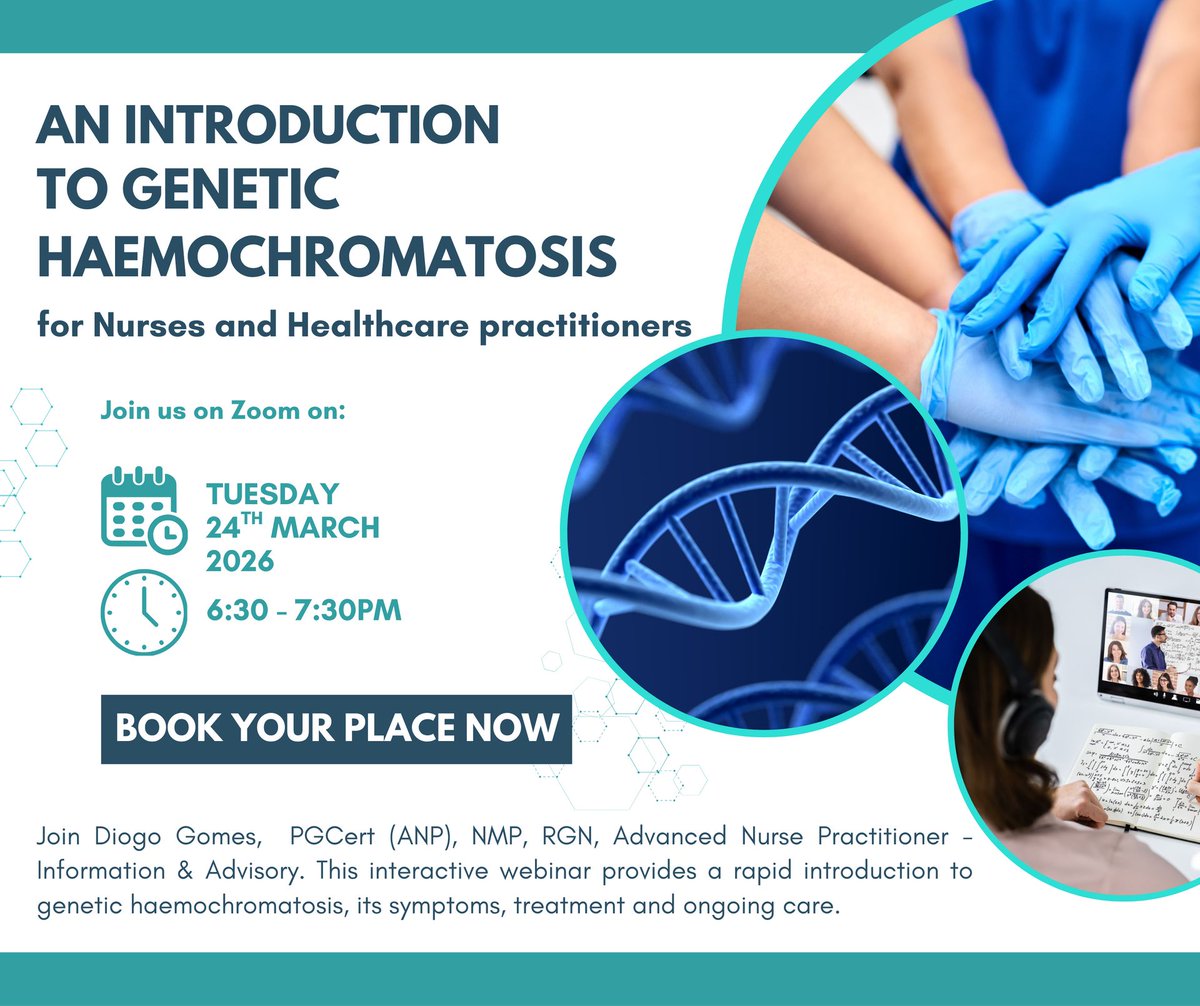
🚨Calling all Nurses and Healthcare Practitioners 🚨 On Tuesday 24th March, join Diogo Gomes ANP for a rapid introduction to genetic haemochromatosis, it's symptoms, treatment and ongoing care.
https://t.co/EICadAbomT
The Infant Movement Project, iMove, explores the early development of repetitive motor behaviours in infants aged 6-12 months with rare genetic syndromes.
For further information please contact Rachel Martlew at [email protected].
LAUNCHING TODAY: Our new information sheets help to explain inequity in the context of rare conditions. Download and share them today: https://t.co/lOCFGnYAR2
#RareDiseaseDay2026#RDD2026#Rarequity
“When completed, the Generation Study will generate first-of-its-kind evidence that could help to change the future of genetic health.” Read our Mediaplanet UK Rare Disease Day campaign article online and in today’s copy of the Guardian: https://t.co/MQxJX6RK6N
@MediaplanetUK
This #RareDiseaseDay, we’re highlighting how open data sharing supports diagnosis, research, and families living with rare conditions.
Watch to find out how access to rare data through DECIPHER can help families better understand their children’s rare conditions.
Happy #RareDiseaseDay!
We are joining @GeneticAll_UK and their 220+ members to call for an equitable future for everyone
living with rare conditions.
Add your voice to ours by sharing https://t.co/w1L7NCIgwZ
Rare Disease Day is one week today!
1 in 4 people wait at least three years for a rare condition diagnosis.
You can help by joining us in raising awareness and sharing the report far and wide
Coming #RareDiseaseDay 28.02.26
Familial hypercholesterolaemia (FH) remains underdiagnosed, despite being a common cause of premature coronary artery disease.
This study shows that genetic cascade testing can be delivered effectively in primary care.
https://t.co/3FLRi6Eskl
We join with representatives from the UK cell and gene community and have signed an open letter from parliamentarians, patient organisations, and industry partners regarding the importance of strengthened national leadership for cell and gene therapies.
As members of the @DisabledChildrensPartnership (DCP), we know how
important it is that the voices of disabled young people are heard.
The DCP want to understand your experiences, challenges, and ideas so we can
push for real change together.
https://t.co/iyVHYyW8do
As we approach Rare Disease Day, we're sharing our Genomics 101 blog that explores what the diagnostic odyssey is and the impact it can have on people and families:
https://t.co/EcxPsCgLtI
#RareDiseaseDay
The ESHG recommendations on cascade testing to identify relatives at high genetic risk suggest that an active approach, such as directive counselling, is appropriate in cases of high risk of serious, avoidable harm. @eshgsociety
https://t.co/Wxpgb2S0o9
The National Maternity and Neonatal Investigation is asking women and families across England to share their experiences of maternity and neonatal care through a public Call for Evidence. The Call for Evidence is open until 17 March 2026. More information: https://t.co/t9xjnY6AuA
It has been a busy start to the year and Gene People have been in the thick of things.
If you know of an event that you think Gene People should be represented at, please do get in touch and let us know!
This week as it's #fundraisingweek, we're highlighting Tom, our 2026 TCS London Marathon Runner.
Tom says, "Gene People caught my eye because my son Rory was born with a rare genetic condition"
Please support Tom's fundraising!
https://t.co/Ma4eb7hYw3
#londonmarathon