As vezes eu fico pensando, como um ser humano pensou nisso?
São tantas coisas que se você parar pra pensar que alguém do nada inventou aquilo, é muito absurdo...
30,000 hours of footage, equivalent to 3 years and 7 months, were filmed to capture the blooming of 77 types of flowers, and the result is spectacular.
About a quarter of the ocean's surface is a desert. Hundreds of miles of open water with almost no food in it. So when a big ship crosses one of these empty stretches, it becomes the only interesting thing for miles, and fish start trailing along behind it.
Biologists have studied this for decades. Any floating object out there, a log, a clump of seaweed, a drifting coconut, a stray piece of trash, a whole ship, ends up working like a magnet for fish. To something living in all that emptiness, anything floating might mean food, or a place to hide. The effect is so dependable that a big share of the world's tuna fishing is built on it. Boats drop rafts in the open sea, sail away, and come back later to find fish gathered underneath.
It builds in stages. A few small fish turn up first, sometimes within hours. Those small fish draw in bigger ones, and before long a whole moving crowd is traveling along under the ship. Sailors noticed this ages ago. In the 1840s a young naturalist fresh out of Yale wrote about little fish that lived for days right beneath a slow ship, and Melville put the same scene in Moby-Dick, a school of fish that drops one ship to follow the next one passing by.
So by the time someone leans over the railing with a scrap of food, there's already a hungry audience waiting below. It has been tagging along for who knows how long, maybe days.
The corn itself barely matters. Out in open water, fish aren't fussy eaters, grabbing whatever they happen to bump into, so the splash just tells them where to aim. A piece of bread or a chunk of corn gets the same result. The ship had already gathered the crowd. The food only told them where to go.
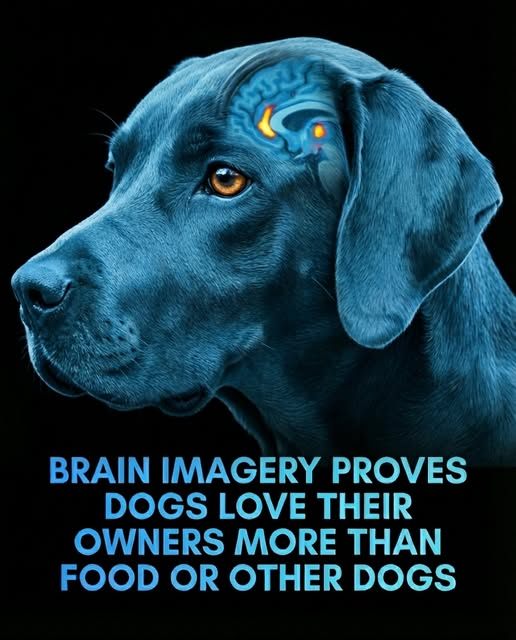
Your dog likely loves you more than anything — and science finally proves it.
A new brain-imaging study has provided scientific proof of what most dog owners have always suspected: many dogs love their humans even more than they love food.
Published in Social Cognitive and Affective Neuroscience, the research led by Emory University neuroscientist Gregory Berns used fMRI scans to watch how dogs’ brains lit up in response to different rewards. Dogs were first trained to associate one toy with food and another with enthusiastic praise from their owner.
The findings were striking: while a few dogs leaned toward treats and some showed no clear favorite, a remarkable four out of the fifteen participants consistently chose praise over food—even when both were offered at the same time. For those dogs, the neural reward centers activated more strongly for their owner’s happy voice than for the promise of a snack.
This builds on earlier work from the same lab showing that dogs’ brains respond more powerfully to their owner’s scent than to the scent of any other person or dog.
The message is clear: for a significant number of dogs, the bond with their human isn’t just about getting fed. They genuinely crave our affection and approval, which means praise can be every bit as motivating (and far healthier) than treats when it comes to training and strengthening that special relationship.
I'm Italian, living in Portugal. From Lisbon, the Spanish border is two hours east.
I'm in Extremadura more than I'm in Porto.
Almost every foreigner who comes to Spain does the same trip:
Madrid, Barcelona, maybe Sevilla, Granada or Valencia.
The Spaniards I know don't spend their weekends there. They drive inland. To Castile, Extremadura, Aragón, Galicia. The interior that emptied out since 1950, what they call la "España Vaciada".
That's where the country still lives.
10 places I've stayed in. Some many times.
🧵