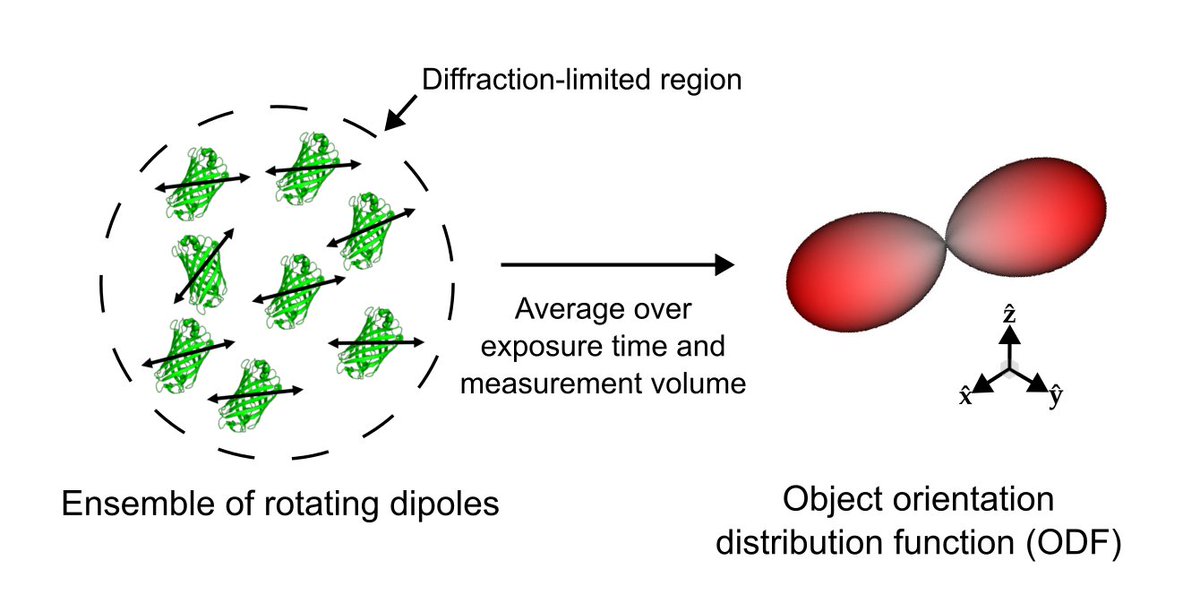
I’m thrilled to share our preprint: “Three-dimensional spatio-angular fluorescence microscopy with a polarized dual-view inverted selective-plane illumination microscope (pol-diSPIM)”, a new 3D take on fluorescence anisotropy. 🧵1/15
Preprint: ⬇️
https://t.co/6y2hz4Kj6h
🔬Researchers from the Shroff Lab & collaborators have developed a new method to simultaneously image the 3D orientation & position of biomolecules, giving scientists a new view into how structures are arranged inside cells.
🔗 https://t.co/RJu1JS5KrN
We hope you have as much fun reading as we did building, learning, and writing. I couldn’t have dreamt of better lead coauthors Min Guo, Patrick La Rivière, and Hari Shroff. Collaborations with Yijun (Pluto) Su, Jiji Chen, Yicong Wu, Junyu Liu, Atharva Agashe, Bob Fischer,...
I’m thrilled to share our preprint: “Three-dimensional spatio-angular fluorescence microscopy with a polarized dual-view inverted selective-plane illumination microscope (pol-diSPIM)”, a new 3D take on fluorescence anisotropy. 🧵1/15
Preprint: ⬇️
https://t.co/6y2hz4Kj6h
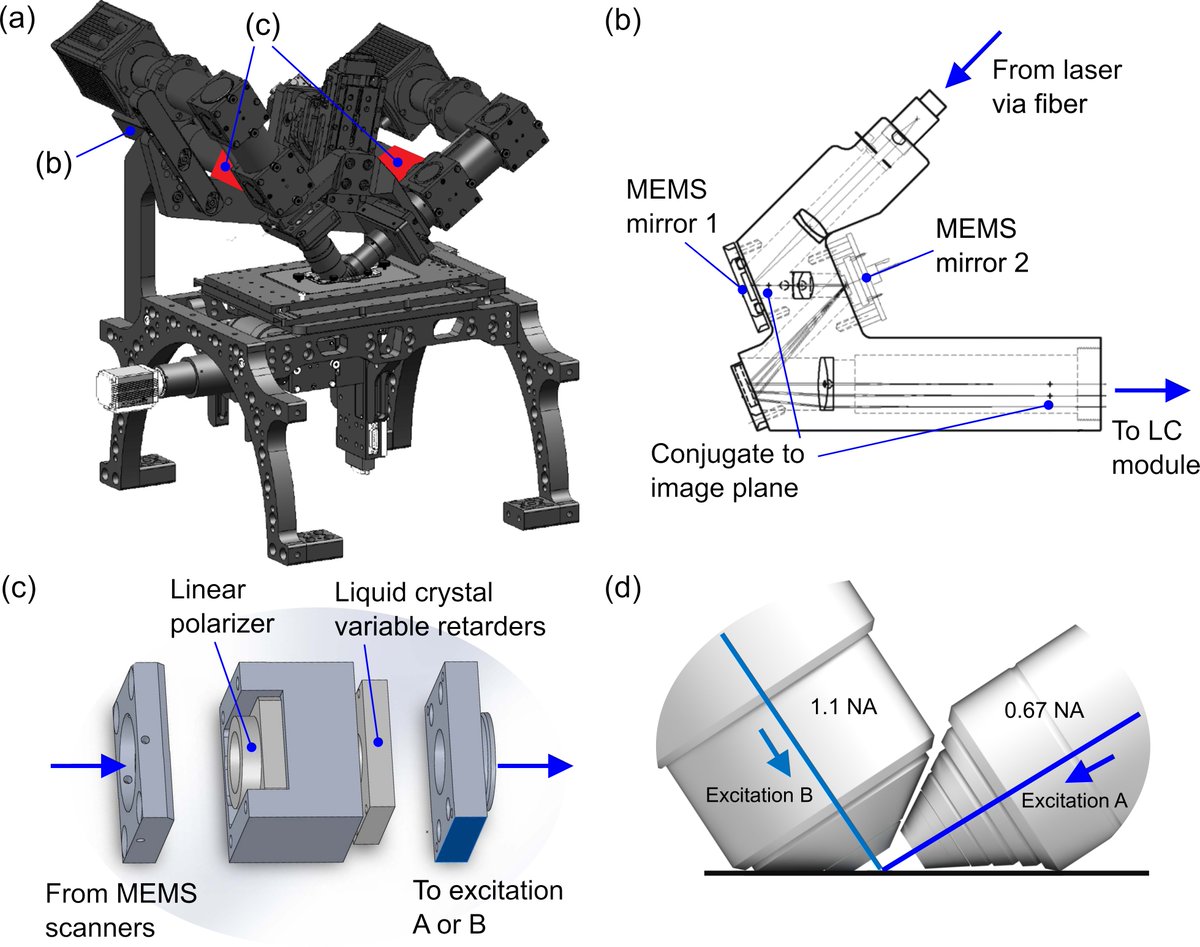
Is this a baroque one-of-a-kind microscope? We don’t think so. Most of the parts are commercially available, and the only custom parts are simple mounts. Min’s new lab in Zhejiang is spinning up an improved variant, and we’ve made all of our data and code available.
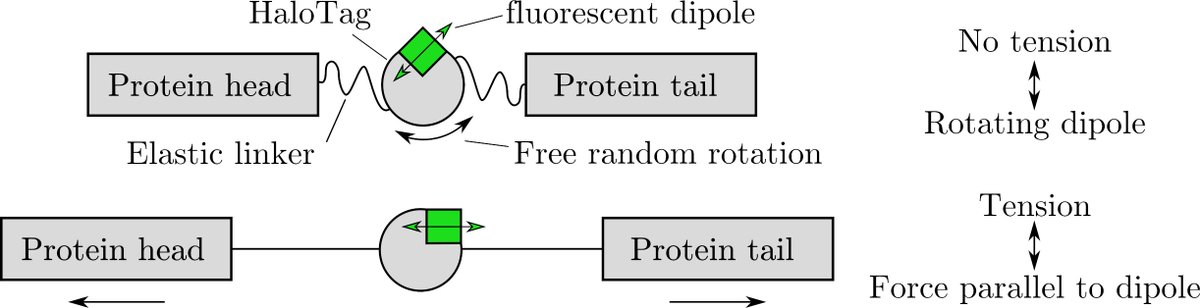
We think this subfield has a strong future, especially if effort is put towards new probes, which we view as the major limiting factor. Could future probes encode force (dream probe below), voltage, pH, or concentration gradients into 3D orientations?
…we made the first 3D orientation measurements of giant unilamellar vesicles, cellulose in xylem cells, and actin in U2OS cells. We went further with mouse fibroblasts grown on nanowire arrays, measuring orientational correlations across length scales.
The current instrument has limitations, including ~4 seconds per volumetric reconstruction, too slow for many live-cell dynamics applications, an imperfect angular response, and a limited palette of probes, but despite these limitations…
We also found that we could use spherical harmonics to understand the limitations of our instrument, leading us to propose and implement light-sheet tilting to address its shortcomings. (Red boxes indicate components that are only transmitted with tilting light sheets).
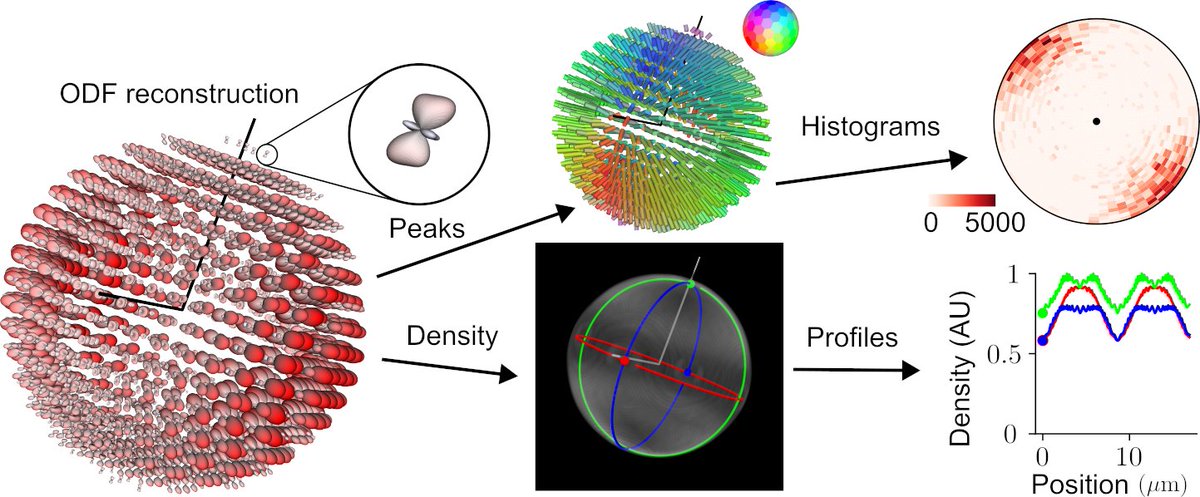
Along the way, we developed a rich set of theoretical tools for understanding and designing these microscopes. We found we could reconstruct orientation distribution functions, similar to those used in diffusion MRI, which we could summarize with peaks, histograms, and profiles.
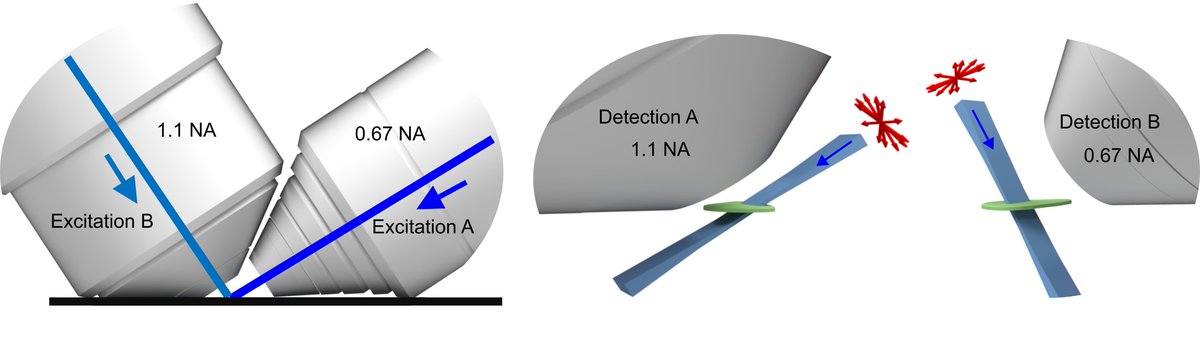
We asked what it would take to recover the 3D orientation and position of fluorescent ensembles, and this manuscript is our answer. Briefly, we took a dual-view light-sheet system (a diSPIM) and added polarized illumination, light-sheet tilting, and reconstruction algorithms.
This idea has been used for >100 years in spectroscopy and ~50 years in microscopy with applications across the biological and material sciences, but, outside of single molecules, it has been mostly restricted to 2D.
If a fluorescent molecule is rigidly attached to a structure that doesn’t rotate much during a measurement, you can use polarized light to selectively excite and detect it. With multiple measurements, you can solve an inverse problem to recover its orientation.
All fluorescence microscopists are familiar with the importance of the location of biomolecules, but may not be aware of the importance of molecules’ orientation in biology.
Above: a 3D spatio-angular reconstruction of fast-scarlet labelled cellulose. (a) orientation-distribution functions (ODFs), (b) peaks with orientation and color showing how most molecules are oriented, and (c) density–the result from typical fluorescence microscopes.
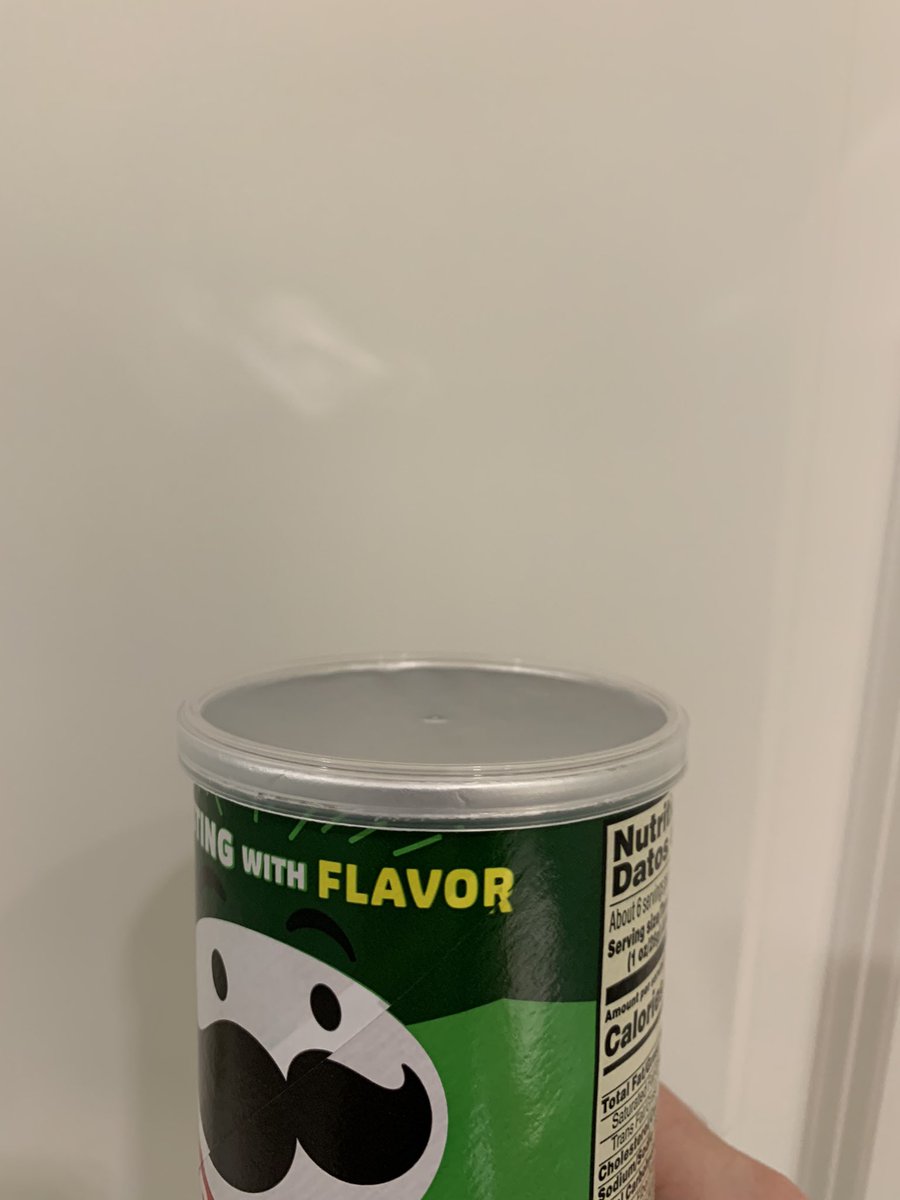
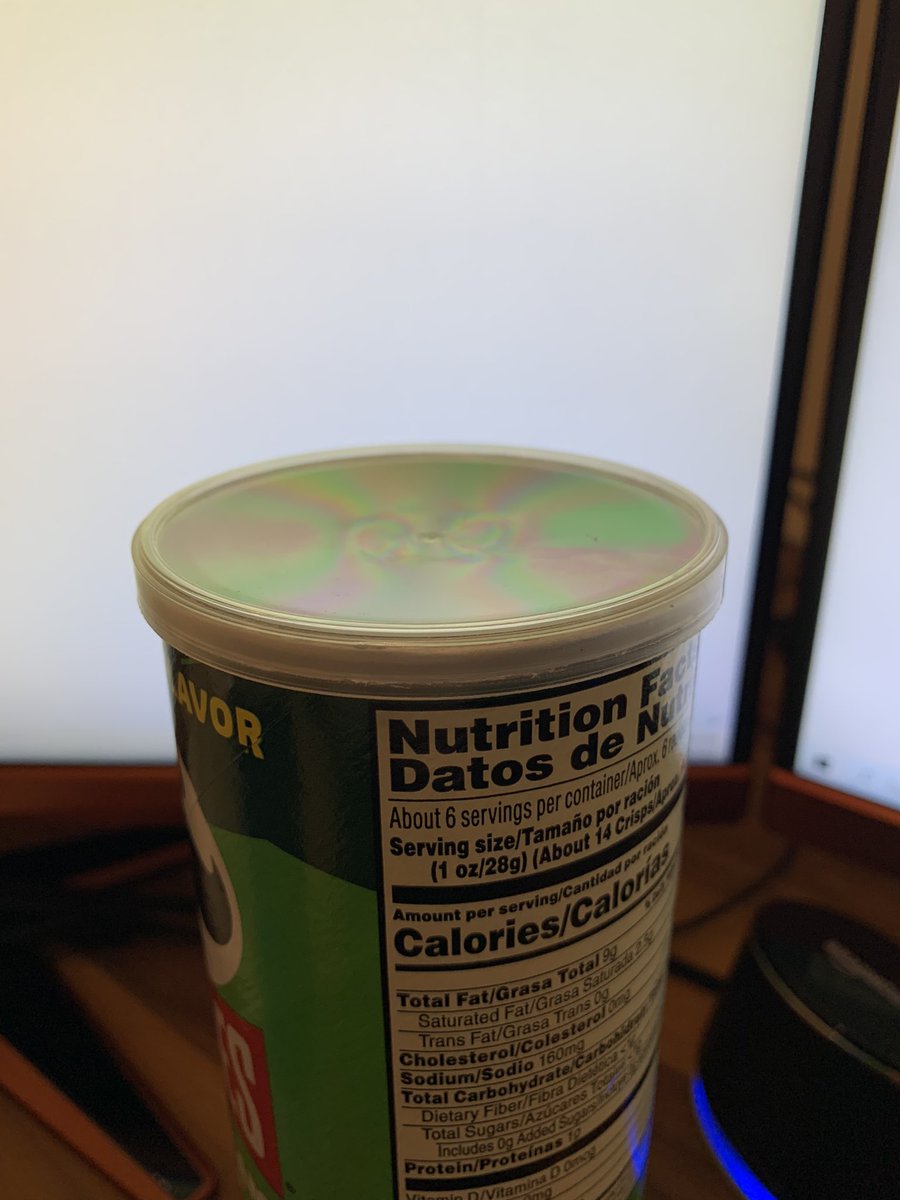
You can see the colorizing effect of the birefringent stressed plastic on the lid of a Pringle’s can when illuminated by an LCD monitor’s polarized light, but not in normal lighting.
Have you seen stained-glass-like birefringence images on Twitter over the past couple of years? Wondered how the colours are created and manipulated?
Let me take you on a visual tour of my new paper: "Painting in Polarization" #popsci#photonics
1/13 🧵
https://t.co/mz6NDBDoJX
@s_r_constantin@tommycollison You might be interested in "Working" by Studs Terkel. https://t.co/OZnB1Up6vw. It doesn't follow a single street, but it has interview highlights from different professions in 1970's Chicago.