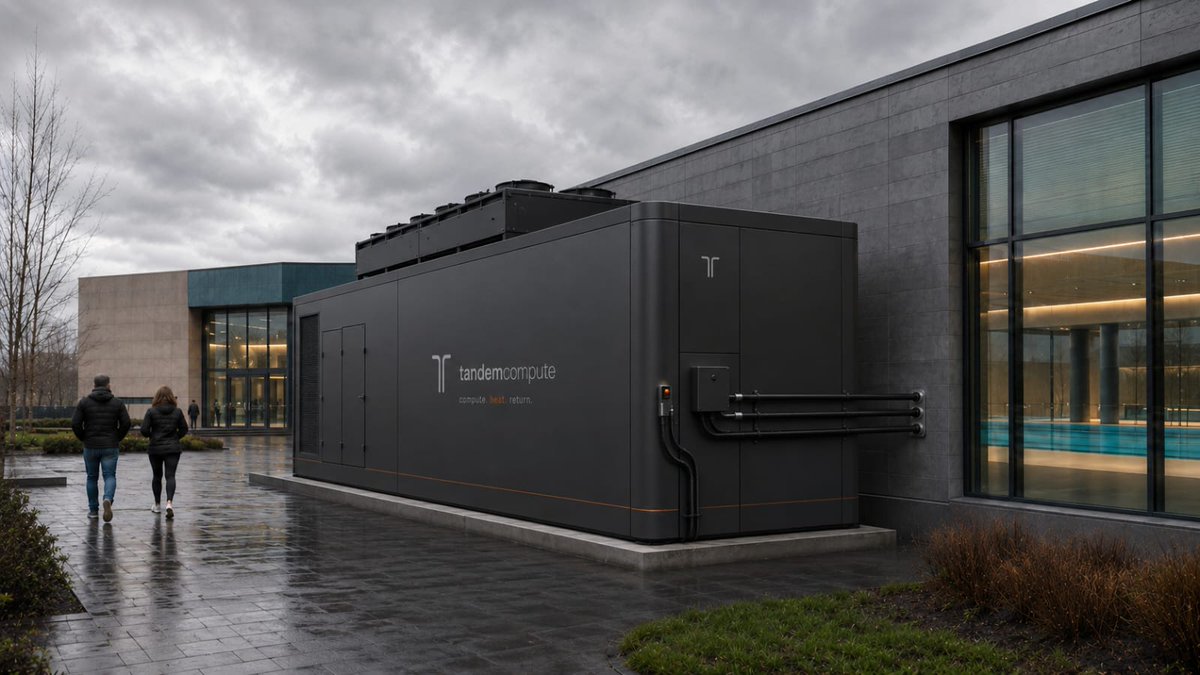
Europe wants to triple data centre capacity, and heat reuse is a key part of the plan.
That's good news for the whole industry, whether it's hyperscale, colocation, edge or distributed. The heat a server makes is energy you've already paid for. Plan where it goes from day one and it stops being a cost and becomes something you can sell.
Whatever the model, the data centres that get this right will be easier to plan, easier to power and easier to sell to the people living next door.
https://t.co/rKHCxmuY3v
Cooling is a sealed loop. Liquid carries the heat away from the chips and gets pumped round again, so nothing evaporates and no water is lost. That heat then goes to work in the host building, heating places like pools and hotels instead of being dumped.
On gas: Ireland's grid is badly constrained, so on-site CHP lets us power sites without waiting years for a connection. We'll use biogas to cut carbon, and grid electricity from renewables wherever we can, but grid constraints limit how much of that we can get today. Meanwhile each unit of gas does three jobs: heat from the CHP, electricity for the compute, and heat recovered from the compute that the building would otherwise burn gas to make.
Data centres produce heat. Pools pay to produce heat.
We think those two things should meet. Tandem is looking for sites across Ireland where distributed compute and useful heat demand can work together.
Great minds! Span in the US is already trying this with Nvidia, putting small compute units on the sides of homes. We'd be a bit nervous about that much kit on the outside of a house, though, and a home's heat demand mostly disappears in summer. That's why we go for pools, leisure centres and hotels, which need heat every day of the year and have proper plant rooms for the kit.
Do you want free heat for your pool?
Tandem is looking for Irish pools, leisure centres, hotels and other sites with reliable year-round heat demand.
We deploy the compute infrastructure. The heat it produces can be put to useful work.
Tell us about your location.
Hyperscale built Ireland's data centre industry and will keep growing it. The next layer gets built ground up, in every county, not just one.
Source: KPMG for the Department of Enterprise, "The value of data centres to Ireland" https://t.co/EkHkAnMNUx
Most talk about AI compute ends at hyperscale, the giant cloud campuses. They matter to Ireland and they aren't going anywhere. But they're not the only way to build compute, and for a lot of work they're not the best value either. 🧵
That's where distributed compute comes in: smaller sites in buildings that already exist, powered on site, with the host using the heat. It takes capacity, jobs and spend outside Dublin, and helps close what KPMG calls the "regional digital divide".
@ocnjbernadette We're after leisure centres, public pools and hotels, the places heating a lot of water every single day.
Great use as the pools are a huge costs to these businesses, both public and private, and this would massively reduce the cost to run them for the business.
11/ Most of these problems come from how data centres get built, not from data centres themselves. Build smarter: smaller sites, local power and heat that gets used. The full KPMG report for the Department of Enterprise is here: https://t.co/EkHkAnMNUx
1/ Data centres in Ireland get blamed for a lot: water, power, jobs, housing, noise and how they look. Some of it is fair and a lot of it isn't. Here are six common myths, checked against the numbers. 🧵
10/ Myth 6: data centres are massive and ugly. This one's fair. Huge grey sheds on the edge of town are a real problem for planning and for communities. We want to be part of the fix: a network of smaller sites inside buildings that already exist, alongside large ones only where they make sense.