Tonight the musical history of Dalymount was brought to a close by Johnny Logan. ❤️🖤
Massive thanks to every single act who played over the past few days. 👏🏻
Marley, Lizzy, Red Hot Chilli Peppers, Faith No More, Christy Moore and countless others played the stadium. l over the years.
Tonight was a special way to close out the amazing list of stars who've played under the floodlights.
RÉCAP MERCATO⭐️💚
Je vous ai fait un gros débrief du mercato avec une présentation pour chaque nouvelle recrue 🎯
Un mercato très animé avec 8 recrues dont 4 dans le dernier jour du mercato ⏳
Tous derrière le Red Star💚❤️
L'excellente performance de Haissem Hassan rappelle à quel point le football a besoin de clubs formateurs/intermédiaires, en l'occurrence Châteauroux dans son cas qu'il a rejoint à l'adolescence
Triste de voir aujourd'hui la Berrichonne dans un état pareil (économiquement, sportivement) car plusieurs mondialistes (Mateta aussi) ont débuté leur carrère ici
On ne pouvait rêver mieux pour cette édition anniversaire "les 5 ans" du Festi'Bauer. Un village plein de diversité, de solidarité, d'activités, de petits et de grands, de sportifs plus ou moins confirmés, d'artistes et d'auteurs, a ouvert le bal.
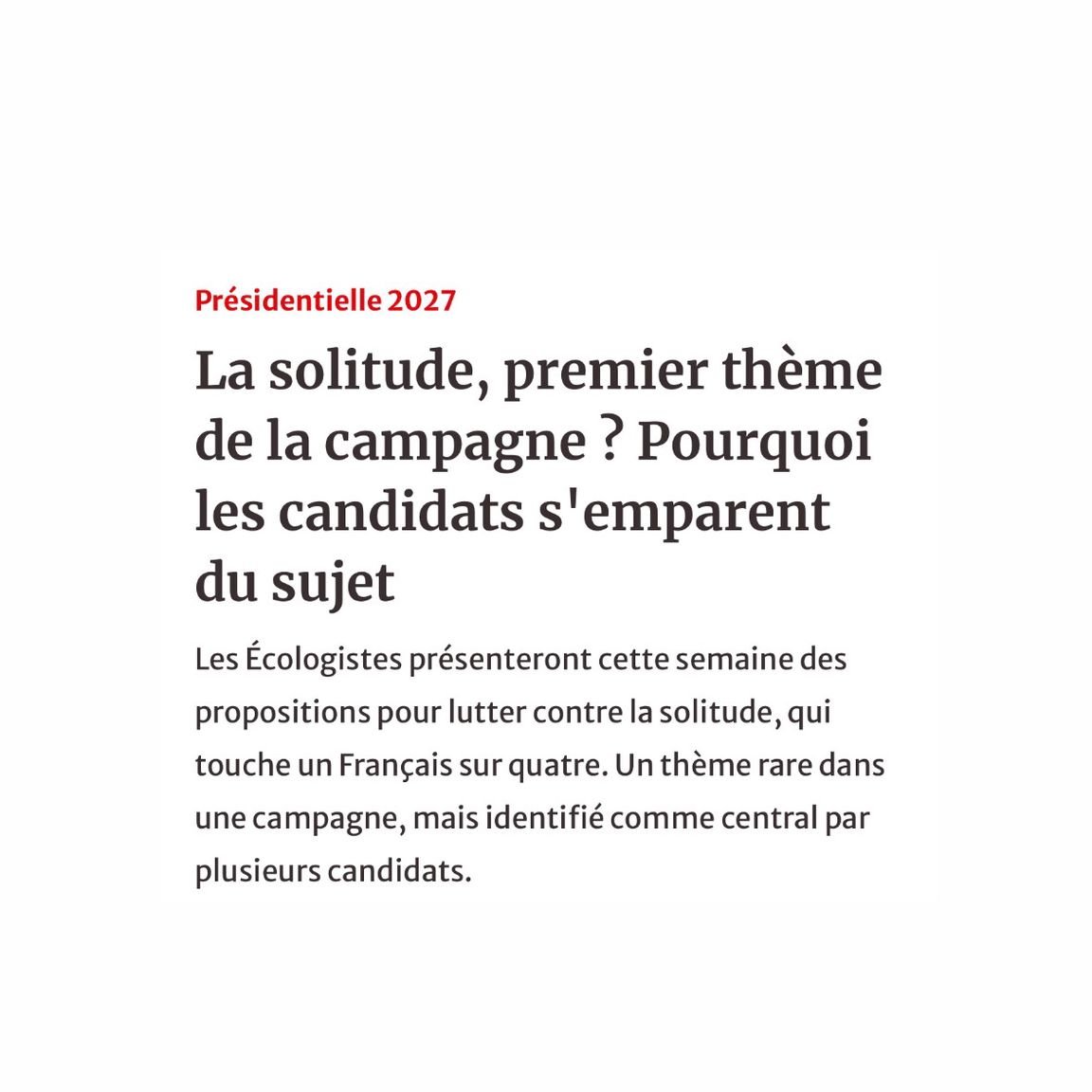
La solitude des Français est dans l’actualité. 🇫🇷
L’occasion de rappeler que dans une culture foot aboutie, le stade reste l’un des derniers lieux où l’on peut venir seul et repartir avec le sentiment d’appartenir à quelque chose.
À force d’y retourner, on retrouve les mêmes visages et on prend des habitudes.
Si vous aimez le foot et que vous vous sentez seul, poussez la porte du stade de votre club local. Le niveau de jeu importe peu. Ce qui compte, c’est le lien.
🇫🇷🇩🇪 Le groupe français Derichebourg annonce le rachat à 100 % du géant allemand Scholz Recycling, une opération majeure dans le recyclage des métaux.
💰 Cette acquisition permet à Derichebourg de devenir un champion européen du recyclage avec un chiffre d’affaires combiné d’environ 4,9 milliards € et plus de 8 800 salariés.
🌍 Scholz apporte un réseau dense de plus de 180 sites principalement en Allemagne et en Europe de l’Est, renforçant fortement la présence internationale de Derichebourg.
♻️ L’opération s’inscrit dans la stratégie de développement de l’économie circulaire et de la décarbonation de l’industrie sidérurgique via l’utilisation accrue de ferraille recyclée.
📅 La transaction, financée par la trésorerie existante, devrait être finalisée au second semestre 2026 après les autorisations réglementaires.
https://t.co/ZN31ojzZzv
👀 Avant le déplacement de Strasbourg au Rayo Vallecano, demain en demi-finale de Conférence League, notre envoyé permanent en Espagne @edgar_groleau a profité de la gentillesse de Salim, habitant de Madrid dont le balcon donne directement sur l'Estadio de Vallecas.
Bruges looks like a fairytale because the economy collapsed in 1500. The river that connected the city to the sea filled up with mud and sand. Merchants left for Antwerp, and the money never came back. The town had been Europe's richest trading port. It even had the world's first stock exchange, run out of an inn owned by a family called Van der Beurze. Their family name became the French word for stock exchange. French speakers still call it a "bourse" today. Once the river died, nobody had money to tear down the medieval houses and rebuild. So they stayed. Five hundred years later, in 2000, UNESCO put the city center on its world heritage list. The collapse is what saved it.
Belgium is tiny. About 30,689 square kilometers, slightly smaller than Maryland. Inside that, it fits 16 UNESCO World Heritage sites. Roughly one every 1,900 square kilometers, packed in tighter than almost anywhere else in Europe.
The train station in the last photo is Antwerp Central. Built between 1895 and 1905 by an architect named Louis Delacenserie. The huge glass-and-steel dome on top is 75 meters high (about a 25-story building) and copied from the Pantheon in Rome. In 2014, Mashable called it the most beautiful train station in the world. The city spent €765 million in 2007 digging a tunnel underneath so high-speed trains could pass through without disturbing the original hall.
Right next to that station is Antwerp's diamond district. About a square mile of streets. For most of the last hundred years, this tiny patch handled roughly 84 percent of the world's uncut diamonds. Trade peaked at nearly $41 billion in 2022. By 2025 it had dropped to $19.1 billion, down 22 percent in a single year. Antwerp lost its top global ranking to Dubai and Mumbai for the first time.
The gothic building covered in carvings, second photo, is Leuven Town Hall. It took 30 years to build (1448 to 1469) and two of the three lead architects died on the job. The facade has 235 stone figures tucked into little niches, most of them carved between 1850 and 1913. There used to be 236. The statue of King Leopold II was taken down in 2020 because of his role in colonial Congo.
In 2024, France pulled in 100 million international tourists. Belgium pulled in 9.64 million and ranked 41st in the world. A country that fits the planet's most beautiful train station, 84 percent of the global diamond trade, and a medieval city frozen in time into something the size of Maryland is getting roughly one tourist for every ten France gets.