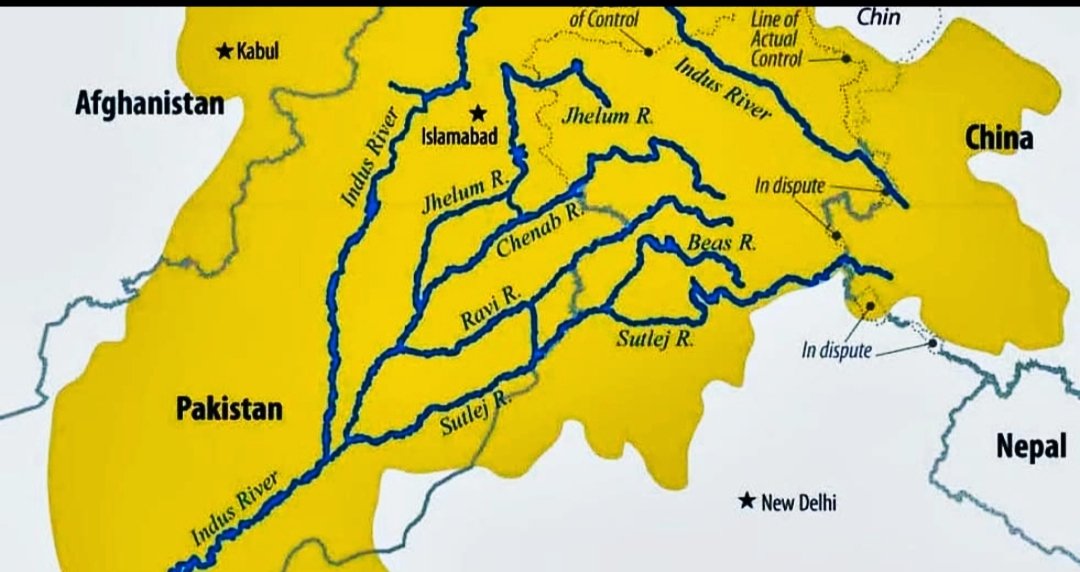
Pak views these projects not in isolation, but as part of a strategic threat one where #Infrastructure could be leveraged as pol pressure, even if not explicitly violating treaty terms. India is increasingly using its ‘upper riparian advantage’ to assert development rights.
Chenab and Jhelum Rivers: The New Flashpoints in #IndoPak Water Diplomacy. While the Indus often grabs the spotlight, it is Chenab and Jhelum both allocated to Pak under #IWT that are increasingly witnessing friction, especially with India's expanding hydropower footprint in J&K.
Jhelum’s Legal Precedents: The #Kishanganga project on the Neelum (tributary of Jhelum) highlighted imp. legal ambiguity, can Ind divert water from one western river to another for power generation? The arbitration allowed it with limitations, reshaping treaty's interpretation
Pakistan’s deep dependence, even minor upstream interventions by India within IWT's legal scope can create disproportionate impacts and triggers alarm in Pakistan’s strategic circles. It’s Pakistan’s own internal dependence and planning gaps that have made the treaty so critical.
💧 Heavily canal dependent irrigation inherited from the colonial period is inefficient losing nearly 40% of water in conveyance.
💧 The Indus basin is fed largely by Himalayan glaciers. Glacial melt is accelerating, risking unpredictable flooding followed by long-term drought.
Water diplomacy is no longer just about quantity. It's about trust, infra, and climate adaptation. The IWT is at crossroads: reform, renegotiation, or further politicization? What’s your take? Is the IWT still a success model for transboundary water sharing, or an outdated relic?