The earliest known tapestry weaving was done in linen by the ancient Egyptians between 1483 and 1411BC.
Later, the Copts adopted the tradition for burial traditions - a link between the ancient pagan practices and the beginnings of the iconoclasm controversy in the 8th century.
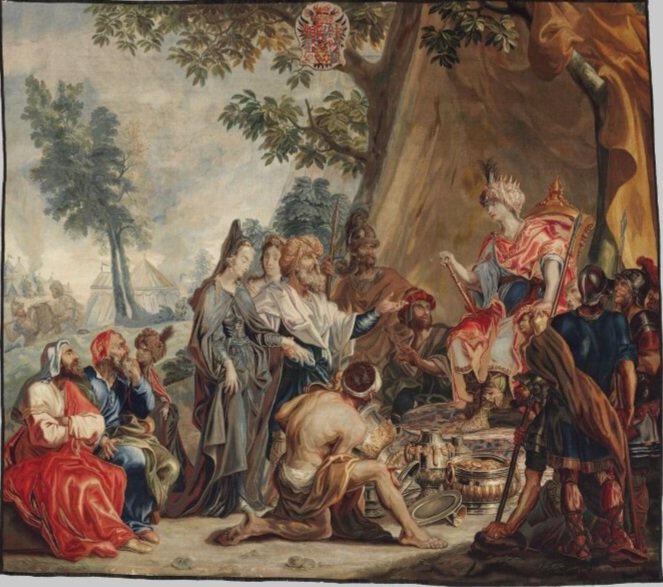
Story of Cyrus series, De Hase. Brussels, c. 1771-76.
Made for Marie Theresa, the empress of the Holy Roman Empire.
Cyrus was the mythical historical founder of the Persian Empire who met his demise at the hands of a barbaric Scythian queen during the expedition of the East.
There are a few, the most famous by Raphael Sanzio da Urbino, c. 1519. It is housed in the Vatican Museum.
Bonus fact: The tapestries were made with gold and silver thread. During the Sack of Rome in 1527 soldiers would burn them to extract the precious metals.
@TapestryHistory , do you know of a good Tapestry of the Conversion of St. Paul? The parish would like to get a replica to cover a big wall in the parish hall/obscure the electrical box.
Seasons and Elements (Summer) (set of four) ca. 1683 by Charles Le Brun, French
The four panels are believed to have been commissioned by Madame de Montespan about the time King Louis XIV transferred his affections from her to Françoise d’Aubigny, who he eventually married.
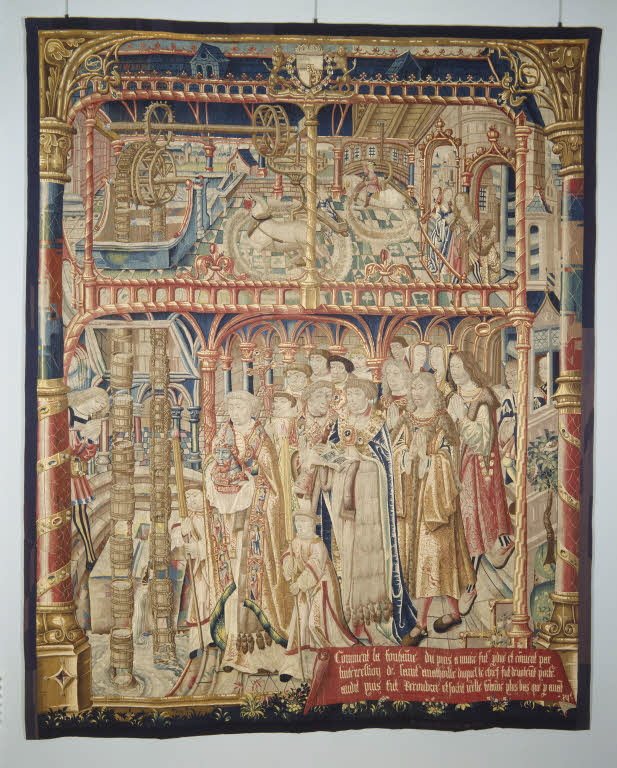
Tapestry of The Life of St. Anatoile de Salins
This tapestry was the twelfth piece of a ensemble of fourteen pieces commissioned by the canons of the church of St. Anatoile de Salins, France. The wallcovering was intended to adorn the nave and transept of the building.
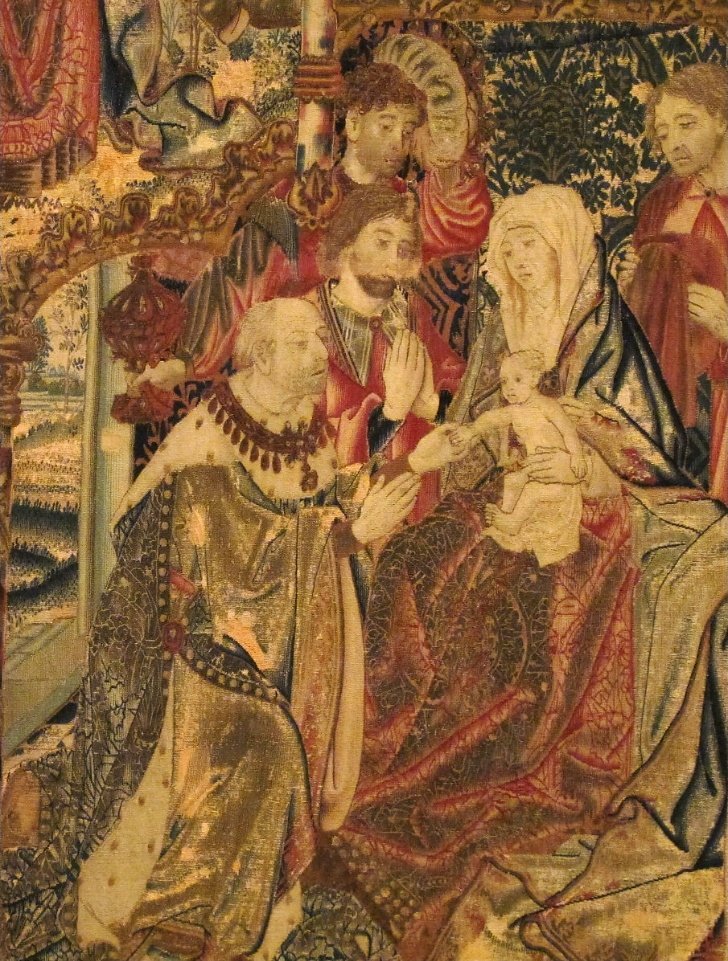
Scenes from the Life of the Virgin ca. 1490–1510
South Netherlandish
The tapestry’s relatively small size suggests that it was designed to hang alone behind an altar.
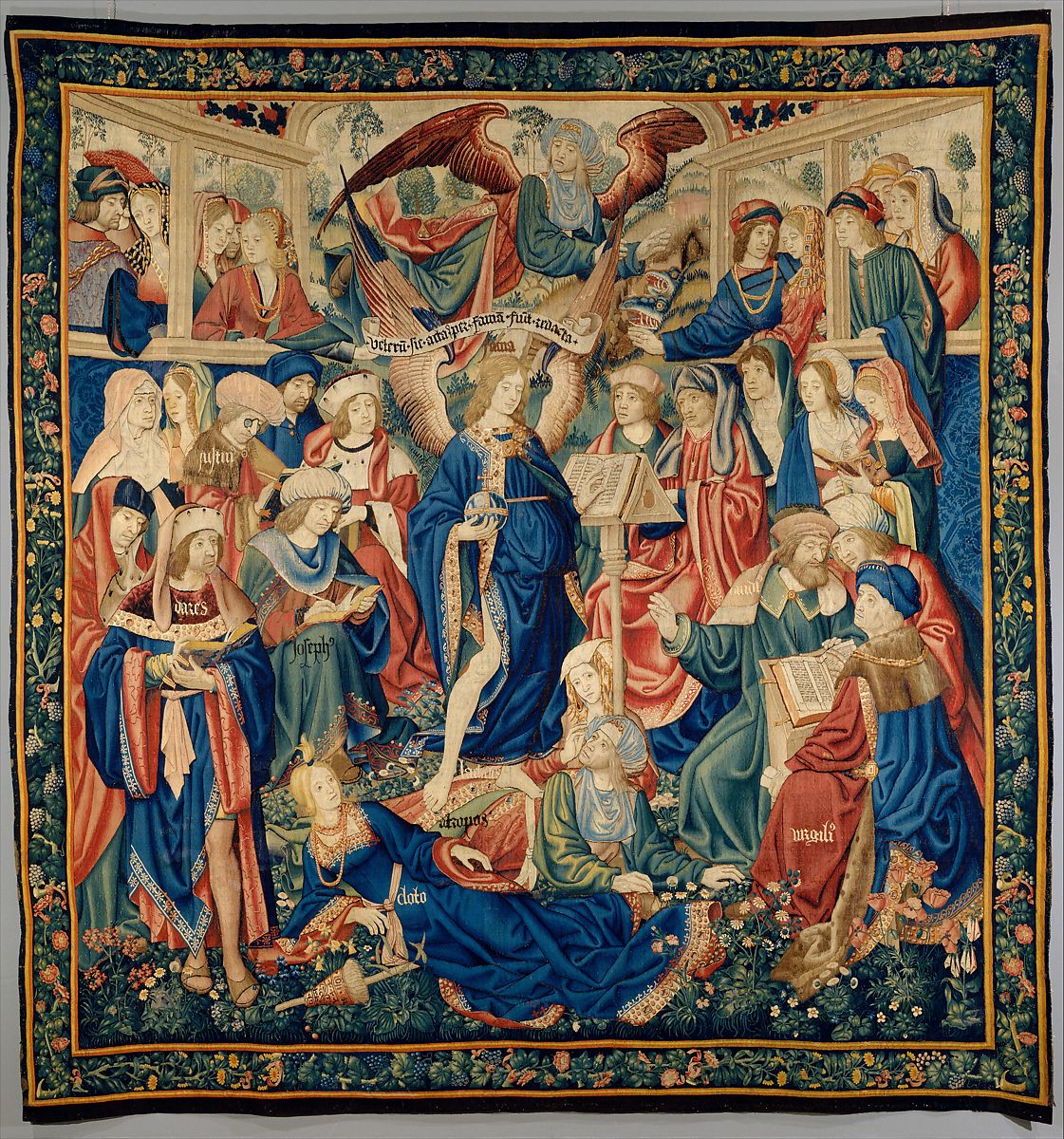
The Triumph of Fameca. 1502–4, Netherlands.
Based in part on Petrarch’s poem I Trionfi, this tapestry belonged to a set of six representing the triumphs of Love, of Chastity over Love, of Death over Chastity, of Fame over Death, of Time over Fame, and of Religion over Time.
Why are tapestries important?
This form of art was movable during times of war and that the nobility traveled to different castles throughout the seasons. This was accomplished by rolling them up like a carpet for moving to another location.
Castles and large stone churches were drafty places that are hard to keep warm during the winter. In those days, insulation was unheard of, therefore tapestries were placed in buildings to keep them warm.
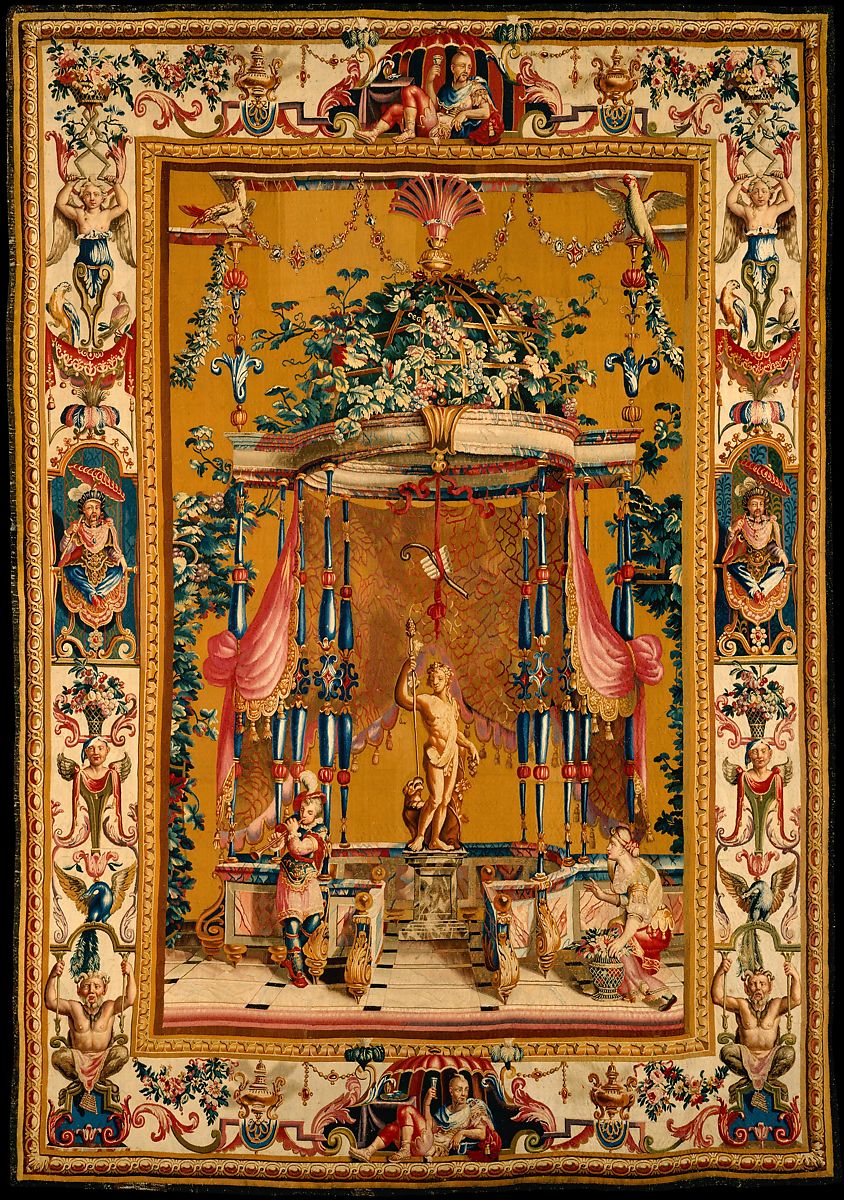
The Offering to Bacchus (from a set of five Berain Grotesques) designed ca. 1688, woven ca. 1690–1711
By Jean-Baptiste Monnoyer
The architecture & figures were emulation of the Roman wall-paintings excavated in the chambers of Nero's palace in Rome (erroneously called 'grotti')
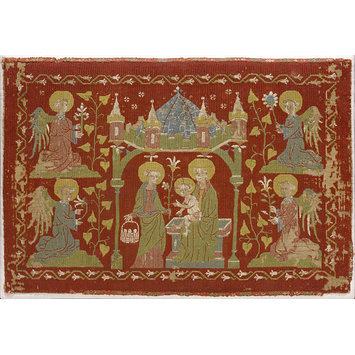
A book cushion cover from Germany, ca. 1400-1430
During the Middle Ages the church was an important patron of embroidery. This particular embroidery could be part of a portable or house altar. It shows the Holy Family which was common in different art during the Middle Ages.
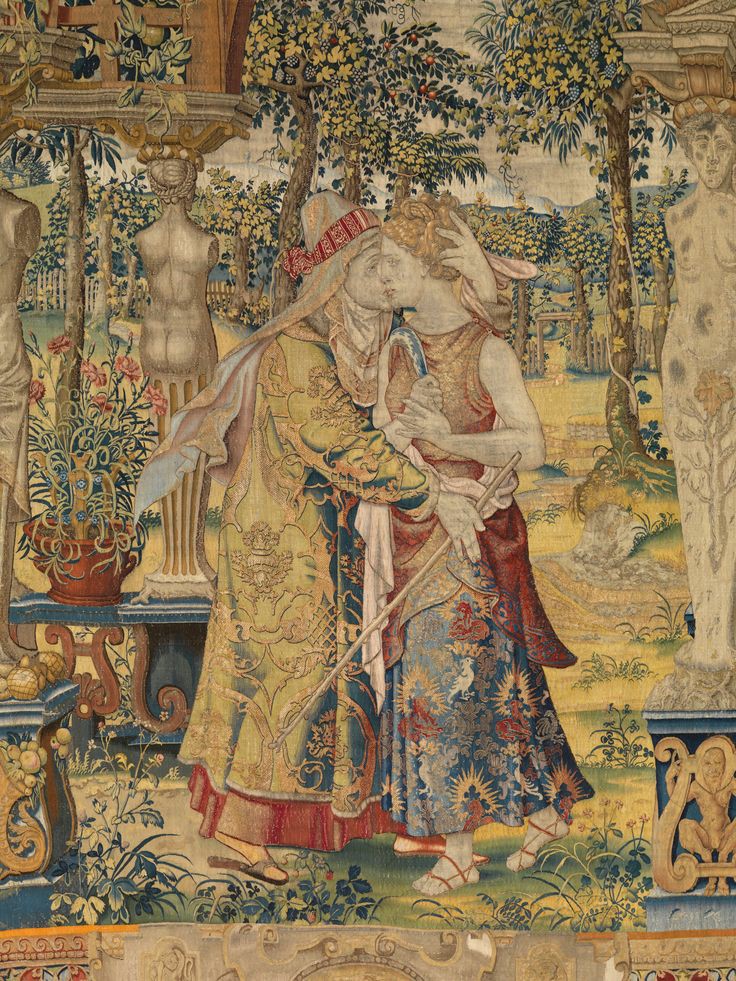
Detail of Vertumnus kissing Pomona, from the Story of Vertumnus and Pomona series by Pieter Coecke van Aelst (Netherland, 1502–1550).
The #tapestries Coecke designed reached the greatest of Renaissance collectors: François 1st and Henry VIII, the Habsburgs, and the Medici.