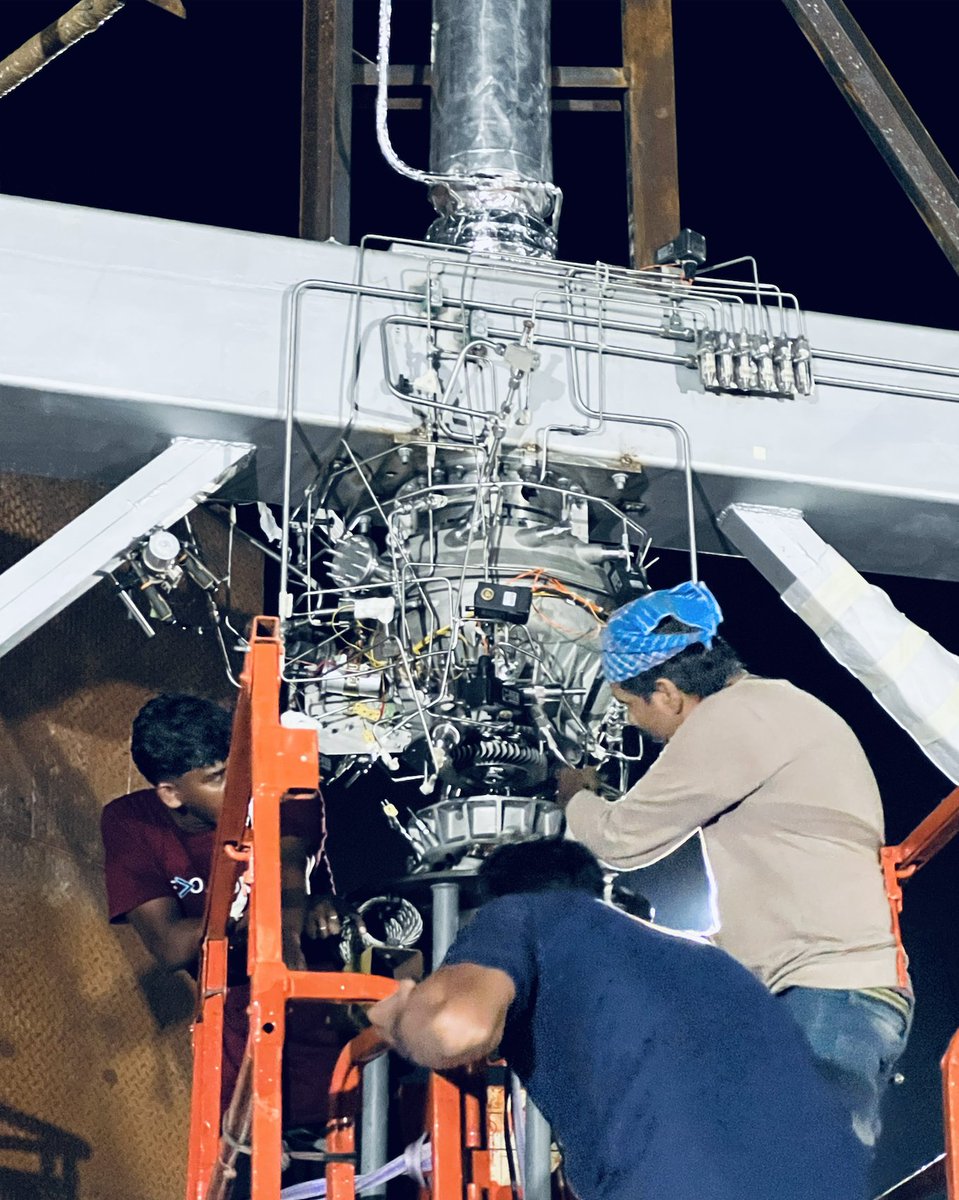
Hardware from a few months ago. This is our LOX Powerhead on the test stand, being prepared for a hot-fire test.
We are getting closer to unveiling Astrobase’s fully integrated 80-tonne-class FFSC engine. More soon.
On 07 July, ISRO successfully conducted Integrated Main Parachute Air Drop Test (IMAT) for Gaganyaan Programme at the Aerial Delivery Research and Development Establishment (ADRDE) drop zone in Sheopur, Madhya Pradesh.
Seems like #ISROfixYourPR has worked 😜 (bgm of the video)
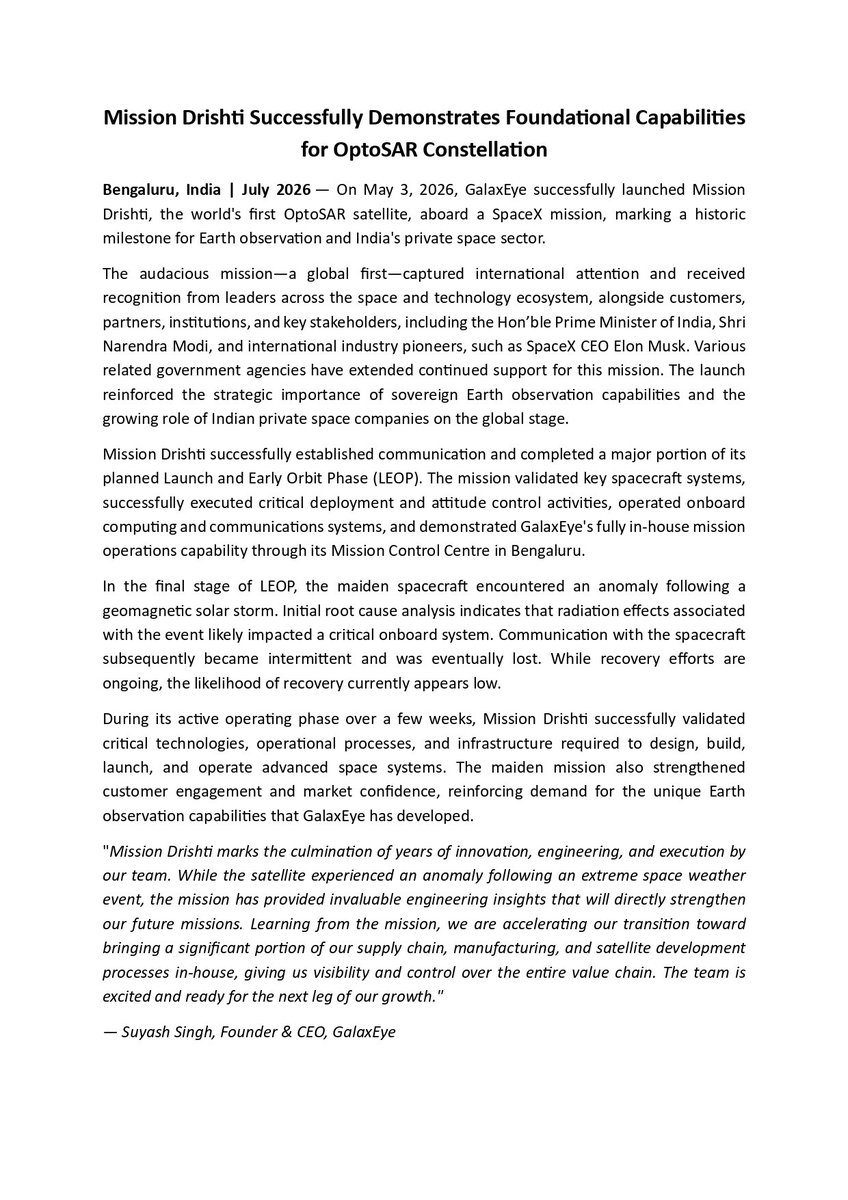
the reason given in the report is "the maiden spacecraft encountered an anomaly following a geomagnetic solar storm."
this appears to be unrelated from the previous reports of tumbling.
https://t.co/FL9PfLdkWK
Hey Suyash, I can understand dealing with the LEOPs has been tough lately so I wouldn't want my post to further ruin your morning.
Also, I noticed that in your long response you didn't deny once that any of these claims are misleading? So should we all reckon that something is indeed amiss?
That's understandable, because all the ground passes of Drishti have been telling the same story- https://t.co/Jn6M2xWfm4
And here's the data from the latest pass from just under an hour ago- https://t.co/gg4SMIZMRD (see attached pic). Similar tumbling rates.
And you've answered yourself for why you haven't seen such a level of interest/questioning from the community before. It's exactly because it's the first uniquely big satellite of this mass class from the private Indian ecosystem! So it'd naturally invite both praise and scrutiny in increased proportions. Come on, you should have thought of that before.
Plus, you're right. I haven't had the chance to work upon a 190 kg satellite. But if and when I do, I'll definitely be taking lessons from this convo about preparing a proper response plan instead of publicly crashing out.
Anyway, all the best to your mission control team. Looking forward to being proven wrong and zipping up when you put out your first OptoSAR image in front of all of us. Cheers :)
Implementation of NPS simplifies complex activities associated with testing under High Altitude Test (HAT) conditions; requires less resources and enables enhancement of test duration.
In order to enable testing of CE20 engine with nozzle of full area ratio 100 under sea-level conditions, the Nozzle Protection System (NPS) was developed and validated on a qualification engine with multiple tests.
This test is for the next LVM3 mission LVM3-M7, The engine will be further refurbished and assembled to the C32 flight stage being integrated for the LVM3-M7 vehicle.
On 06th July, ISRO successfully conducted Flight Acceptance Test of Cryogenic Engine CE20 at Main Engine & stage Test facility (MET) at ISRO Propulsion Complex.