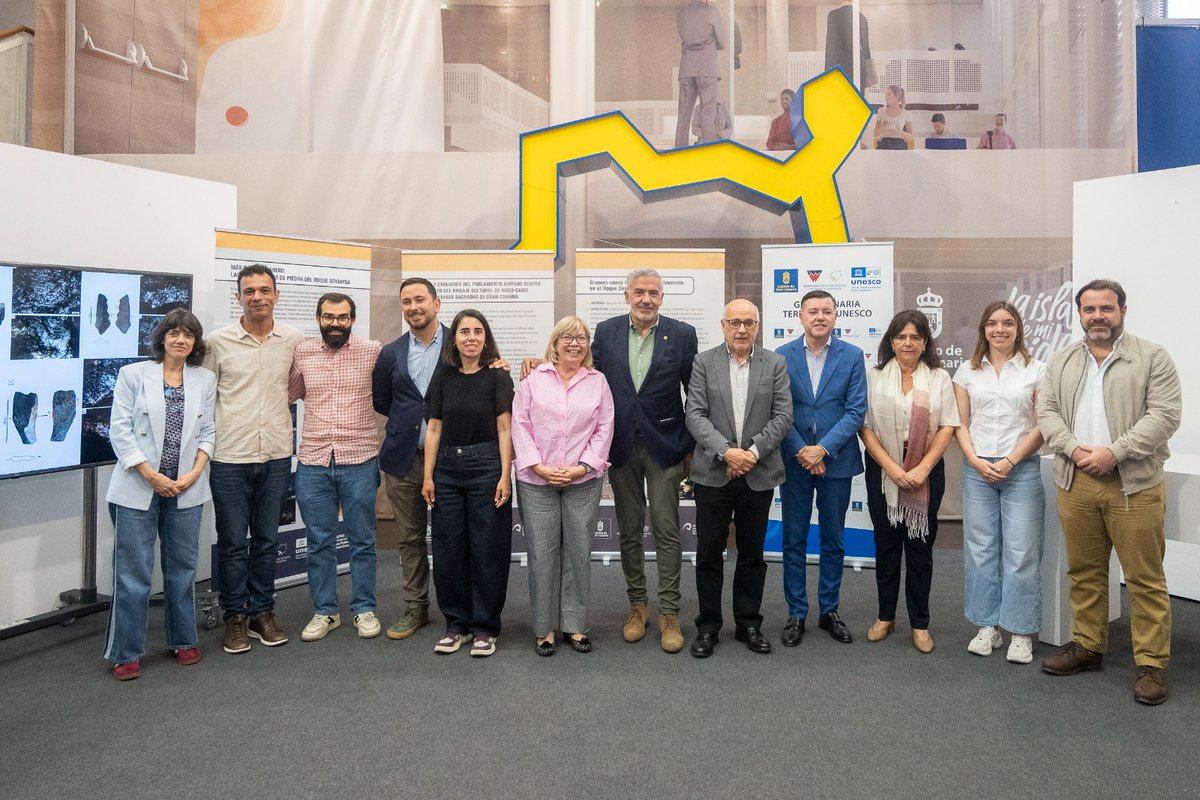
🪨 Gran Canaria sigue descubriendo su pasado
Un estudio impulsado por el Cabildo y la ULPGC identifica la evidencia más antigua de siega en Canarias
👉 Nuevas claves sobre las comunidades aborígenes
#GranCanaria#Patrimonio#Arqueología
Hoy nuestras colegas presentaron una comunicación sobre análisis funcional en obsidiana y basalto del período indígena en Gran Canaria en @AWRANAnetwork 👏🏻🔬
Today, we presented a paper at the international conference of the Association of Archaeological Wear and Residue Analysts @AWRANAnetwork
on the use of lithic tools in granaries and funerary caves from the indigenous period of Gran Canaria 🪨🔬✨
Today, we presented a paper at the international conference of the Association of Archaeological Wear and Residue Analysts @AWRANAnetwork
on the use of lithic tools in granaries and funerary caves from the indigenous period of Gran Canaria 🪨🔬✨
📢 ¡Nuevo artículo!
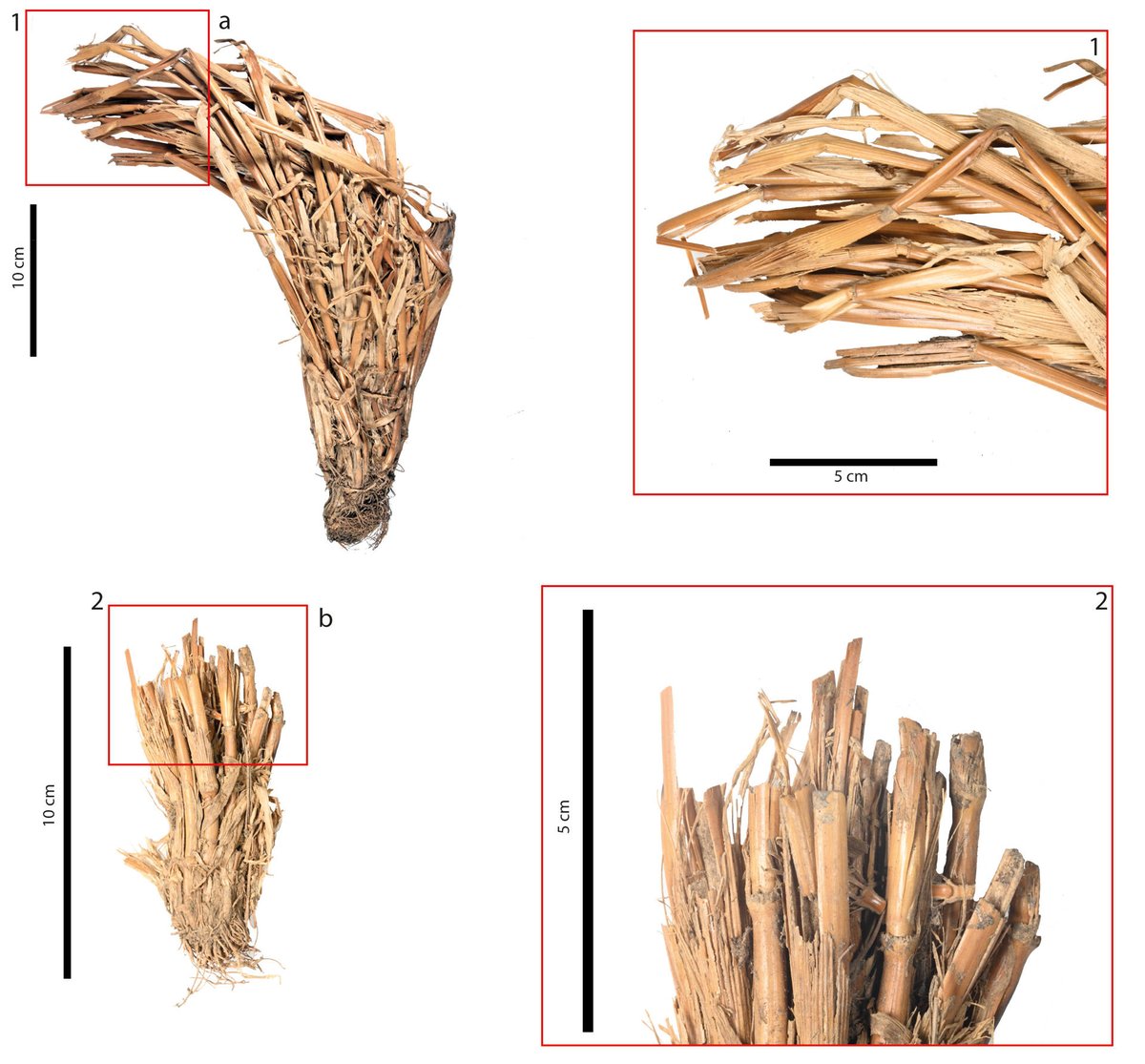
Primera evidencia directa de cosecha de cereales con herramientas líticas en las Islas Canarias 🌾🪨
El análisis funcional de herramientas de C008 de Bentayga revela su uso para recolectar cereales y trabajar junco y pieles 🌱🐐
🔗 https://t.co/upd67C14Kq
Hoy sale publicado un trabajo muy especial en el que llevamos @AiBriMay y un servidor llevamos trabajando varios años. Va de cuevas, muertos e insectos, y de cómo entender mejor las prácticas funerarias en el pasado. Abro hilo.
We’re thrilled to share that our colleague Aaron Morquecho Izquier has defended his PhD thesis on the analysis of oral conditions in the Amazigh population the Canary Islands 🦷🌴
We’re very proud of him! 🎉📚
✨ New paper from our group led by @JaredJM1999!
This study explores how femoral cross-sectional geometry relates to the rugged landscapes of Gran Canaria in the Amazigh population.
Check it out! 🧬👇🏻
https://t.co/OmLoHOEM9h
New paper out❗️⚠️
@ULPGC@ulpgcresearch
✅Our study examines how Gran Canaria’s topography shaped femoral cross-sectional geometry in the Amazigh population (1st-15th centuries CE) 🦴
🚨 New paper from our team out now! 🚨
Led by @jonalbsantana, we explore how climate, biogeography & human agency shaped Amazigh population dynamics in the Canary Islands (1st–15th c. CE) 🌱🌴📈 https://t.co/J3LdaGnWlL
This study shows how ecological diversity and agricultural innovation were key to resilience, offering insights into how human communities can adapt or collapse under environmental pressure 🌾🌊
Our new article is out ‼️
We explored how post-depositional surface modifications (PDSM) affect the preservation of use-wear on obsidian and volcanic stone tools from two coastal sites in Gran Canaria 🪨🔬🌴
@ulpgcresearch @DUlpgc https://t.co/AQVCu6UnCc
📢¡El I Congreso JIACan se celebra estos días 3 y 4 de abril en la @ULL!
Consulta el programa del evento en nuestra web: https://t.co/9JvheDiZGE
¡Asistencia libre y gratuita hasta completar aforo!
Con el apoyo de @ULPGC@AlumniULL@IECanarios@AsociacionJINTE@ArchHubCSIC
We're on fire 🔥
Another article from our group, this time led by Aarón Morquecho. This study examines the oral health conditions of the Amazigh population of the Canary Islands 🦷🌴
@ulpgcresearch @ULPGC
Read it here 👇🏼 https://t.co/N04k5XwH3s
This study examines how plants and animals, like maize, shaped diets beyond the Americas, focusing on the Canary Islands’ role in transatlantic trade 🌴🌽
Check it out 🔔
@ULPGC@ulpgcresearch