WK15: One great tool for interprofessional education is simulation. In realistic scenarios the employees or students can learn to work together and gain valuable feedback in an environment that is risk free #NURS646FA20
WK13:Nanotechnology is a new trend that has many positive benefits for providers. One is the use of nanogel spheres which can help target a thrombus in an MI and deliver medications to dissolve it, preserving more of the heart’s function without surgical intervention #NURS646FA20
WK10: A key factor to a successful CDS is to fit into the user’s workflow, such as expert workup and management advisors that advise a patient workup/management based on evidence-based protocols within the CPOE system the provider is ordering from #NURS646FA20
WK8: As a future acute care nurse practitioner I would recommend the Withings Health Companion app to assist in the tracking of blood pressure. The app not only logs and trends blood pressure but has also developed a blood pressure cuff that works with the iPhone #NURS646FA20
WK6:The planning phase of SDLC is the most challenging & consequently the most critical for success. To be successful here considerations for operational(does it meet requirements), economic(cost benefit analysis), technical, & end user feasibility must be considered.#NURS646FA20
WK3 Increased costs, related to health information technology, are vindicated by reducing unnecessary tests and procedures with EHR systems that allow for data sharing between providers as well as allowing the patient to track their health with patient portals #NURS646FA20
WK1: excited that the @AACNme is recommending EHR utilization as a platform to trigger, improve and document goals-of-care conversations and advance healthcare planning! #NURS646FA20
M11:Practice based evidence takes into consideration culture/community norms and values which is often lacking in EBP. In regards to ICU delirium, it would be important to assess for the patient's own culture and customizing EBP to include these positive cultural aspects #NURS751
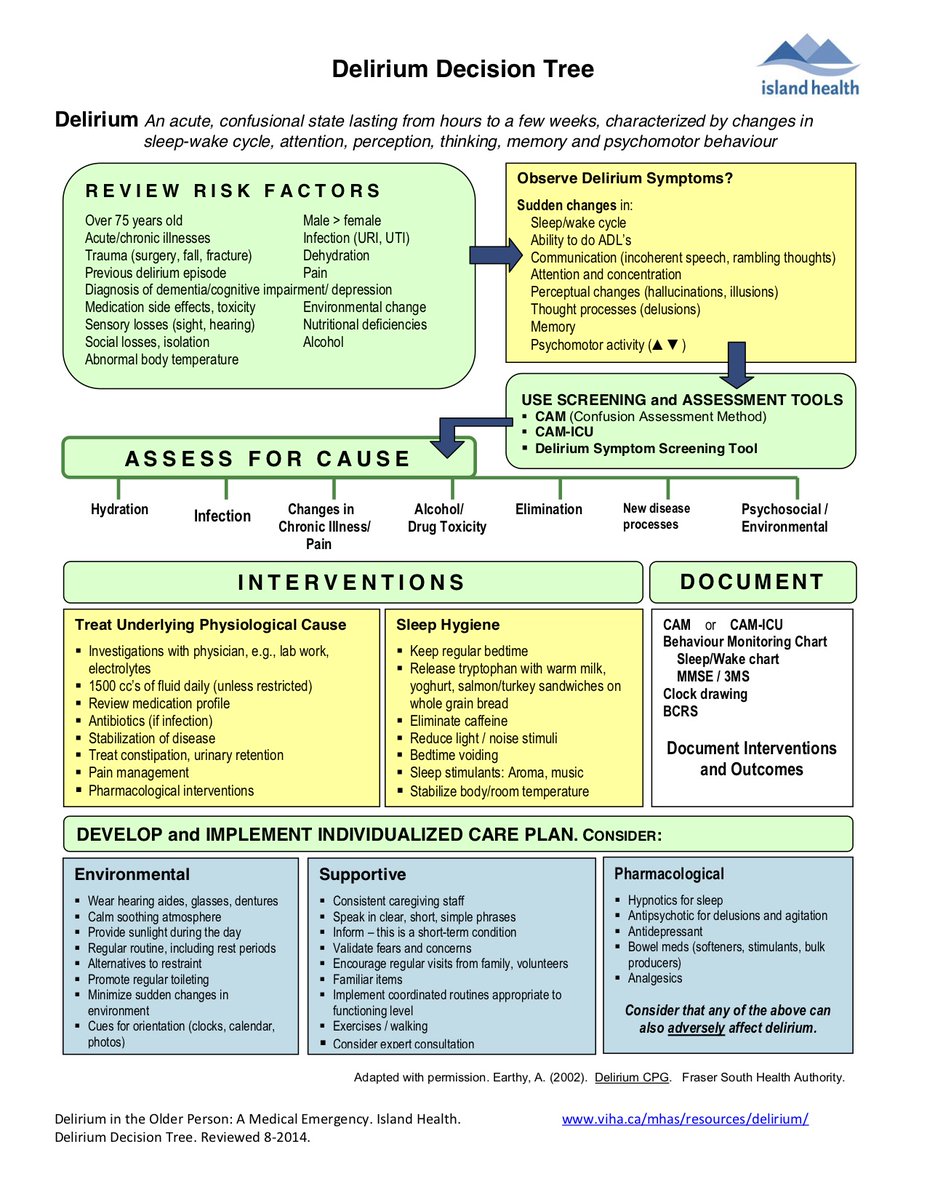
M10: A clinical decision support system built into the EHR to prompt treatments and notify the interdisciplinary team based on CAM-ICU scoring each shift will help with improving icu delirium clinical outcomes #NURS751
M7: A barrier to implementing the SCCM's CPG on delirium prevention is compliance with nursing. Nursing staff may view the changes as increased work without understanding the benefits of the bundle. By monitoring compliance, coaching and education this can be overcome. #NURS751
M6: To implement my CPG on ICU delirium prevention I would use the JBI model @JBIEBHC. Start by synthesizing high quality evidence that we can translate into guidelines by evidence transfer then we can then look to implementing researched based changes #NURS751
M5: There are several CPGs in the area of critical care covering many topics. These serve as a good reference when done thoroughly and when backed by high quality studies to support their rationale. However, each patient may need tailored, individualized care.#NURS751
M4: The SR and MA by Litton et al.(2016) contributed to EBP by reviewing results that earplugs (either as a standalone intervention or as part of a sleep hygiene bundle) decreased ICU delirium. Some studies within the review had high risk of bias, more research is needed.#NURS751
M3: quantitative and qualitive research both contribute to strong EBP and can work complementary in some cases. More important is the strength of the question being asked and the designs/methods of the studies #NURS751
M2: According to the AACN Levels of Evidence, the practice alert falls into level D. Low level evidence recommendation is weak or discretionary. Although the material is peer-reviewed, there needs to be controlled studies, meta-analysis or systematic reviews carried out.#NURS751