The engineer who built Claude Code just dropped a 28-minute video on how to write prompts that actually work.
I've seen $300 courses that don't cover what he shows in the first 10 minutes.
CLAUDE.md files, memory shortcuts, parallel sessions, prompting patterns.
Watch it, then read the guide below on the Claude features 99% of users never find.
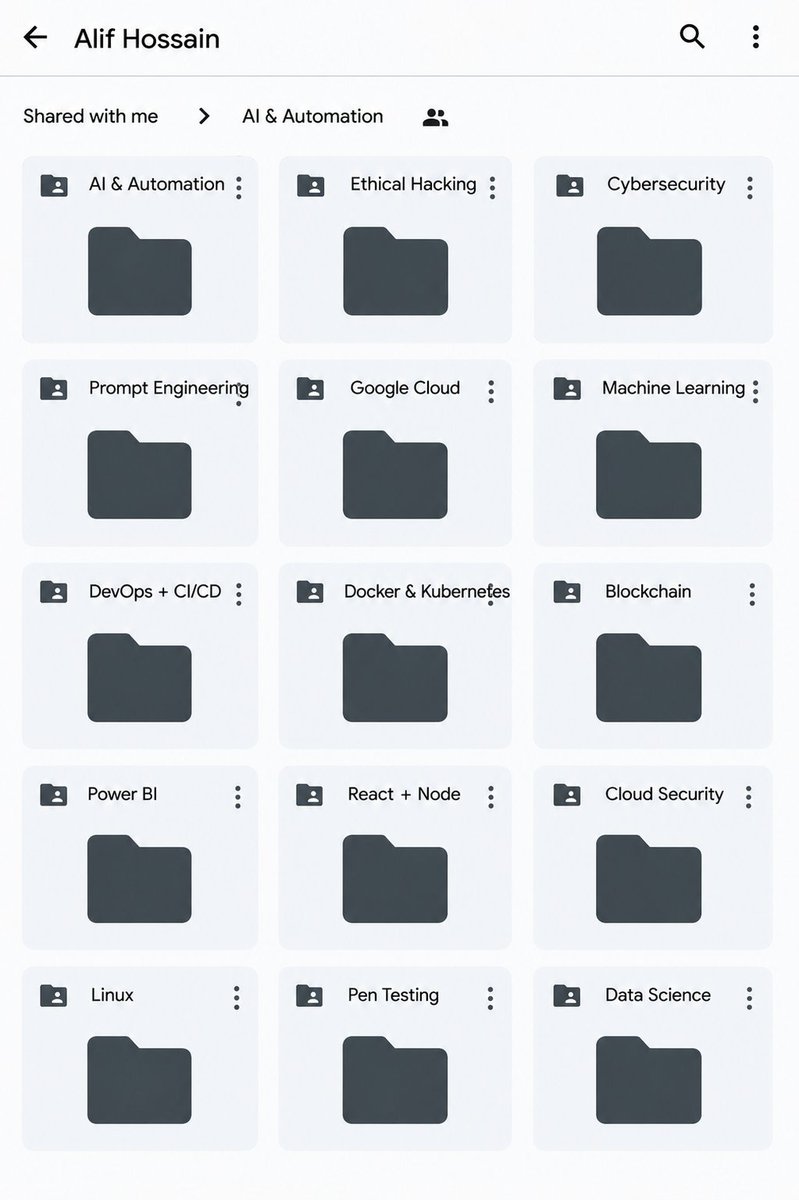
All Paid Courses (Free for First 4500 People)
𝗣𝗮𝗶𝗱 𝗖𝗼𝘂𝗿𝘀𝗲 𝗙𝗥𝗘𝗘 (PART - 3)
1. Artificial Intelligence
2. Machine Learning
3. Prompt Engineering
4. Claude,Chatgpt,Grok
5. Data Analytics
6. AWS Certified
7. Data Science
8. BIG DATA
9. Python
10. Ethical Hacking
(72 Hours only )
Like + RT + comment ' Drive '
Must Follow me so I can DM you.
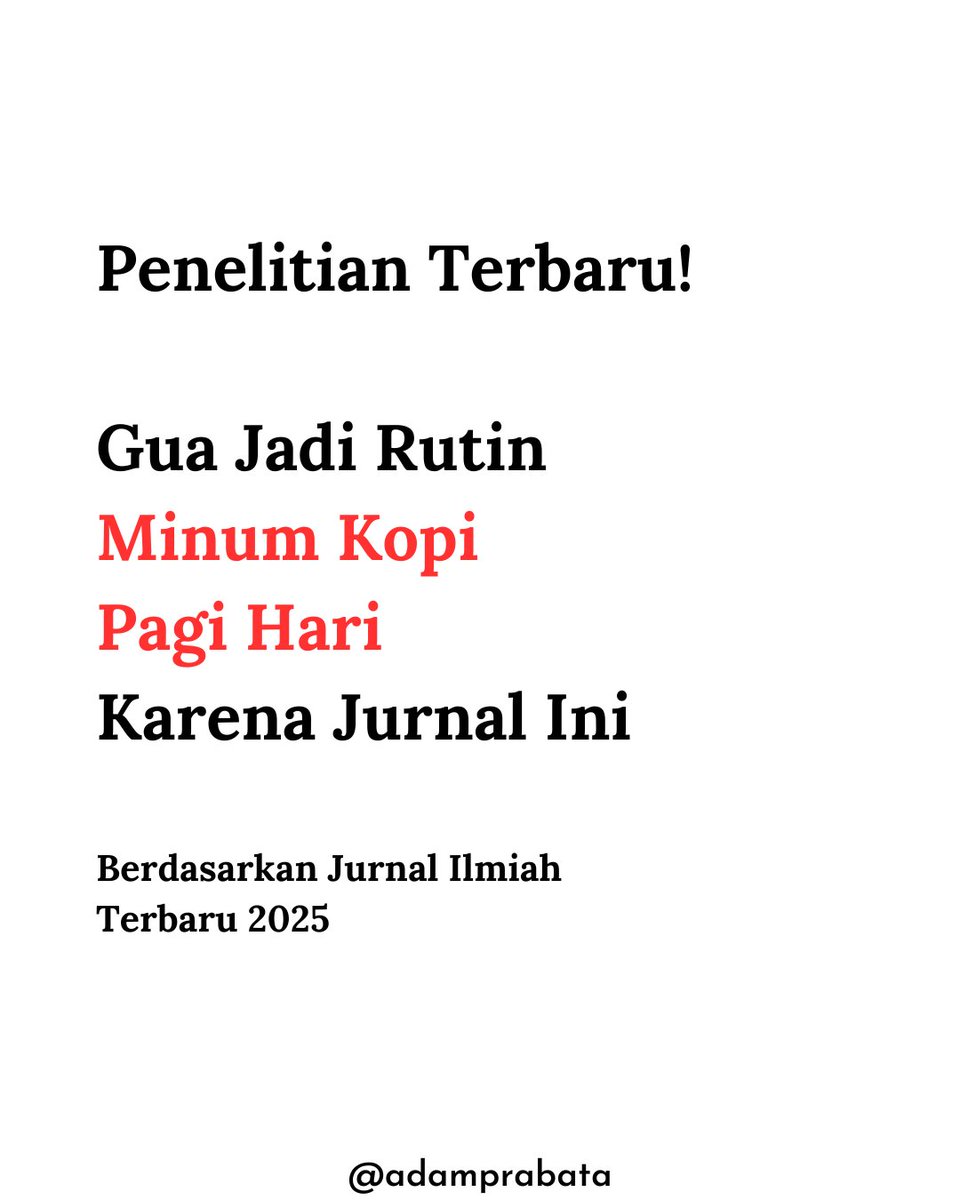
Gua Jadi Rutin Minum Kopi Pagi Karena Jurnal Ini!
Banyak perdebatan kapan sih seharusnya kita minum kopi biar optimal, ada yang bilang pagi hari, bahkan ada yang bilang malam hari pun tidak apa-apa.
Nah ternyata ada penelitian yang bahas tentang timing minum kopi ini.
Yuk kita bahas!
Selama ini kita mikir kopi cuma buat ngusir ngantuk. Ternyata gak disangka-sangka juga punya efek untuk menurunkan risiko penyakit jantung!
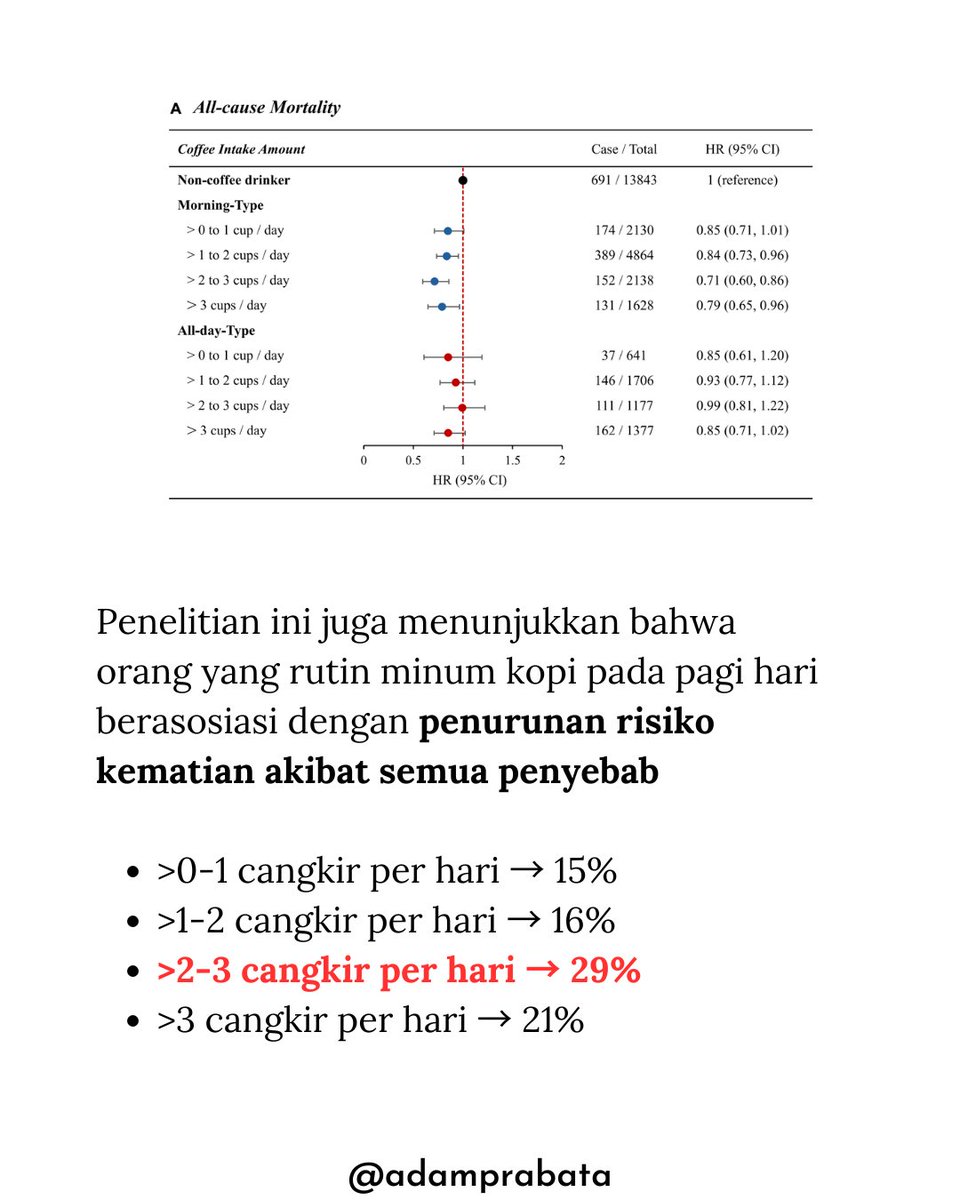
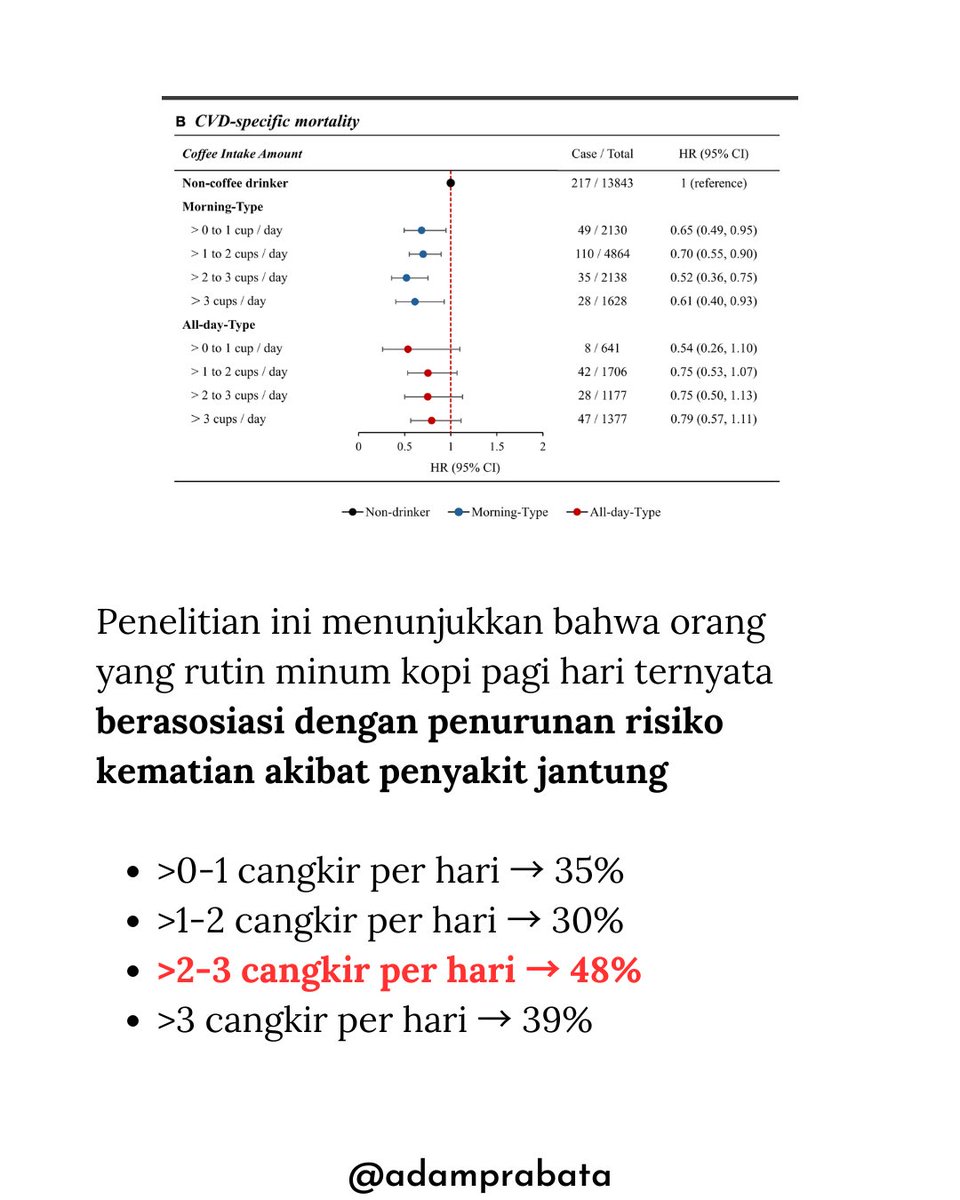
Penelitian menunjukkan bahwa minum kopi pagi-pagi (jam 4 pagi - 12 siang) bisa menurunkan risiko kematian akibat penyakit jantung hingga 48% dan semua penyebab hingga 29%.
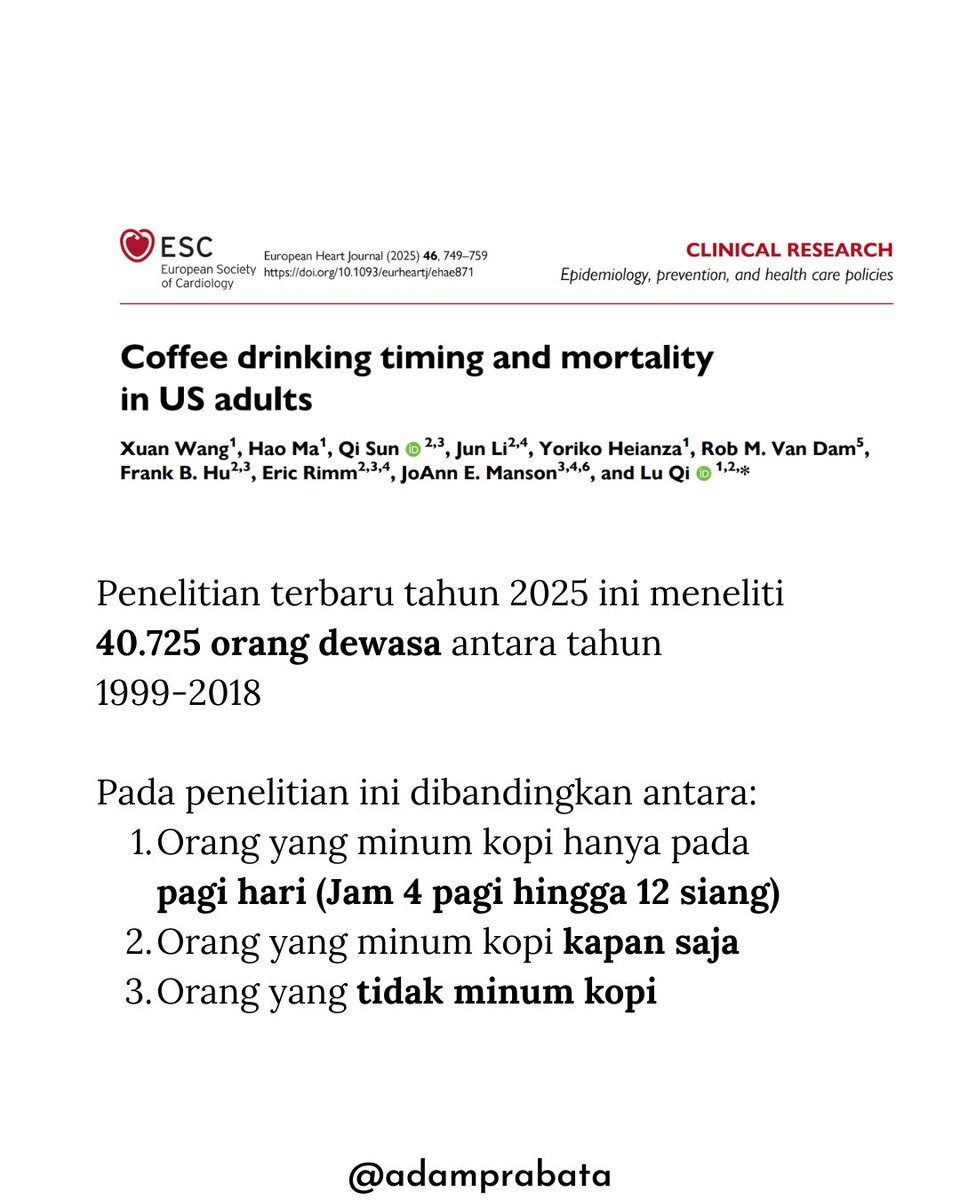
Hasil ini berdasarkan penelitian skala besar dari European Heart Journal (2025), yang meneliti lebih dari 40 ribu orang dewasa selama 20 tahun.
Efek ini dibandingkan antara minum kopi pagi hari dengan minum kopi kapanpun.
Nah karena itu deh, gue pokoknya sebelum jam 12 siang tuh pasti udah minum kopi. Demi kesehatan jantung yang lebih baik kan!
Rafflesia: the giant parasite flower
The world’s largest single flower spends most of its life hidden inside jungle vines as tiny filaments, with no leaves, stems, or roots of its own.
After nearly two years, it bursts open as a five-lobed “corpse flower” that reeks of rotting meat to lure carrion flies.
Recent Oxford-led research warns that most of the 42 known Rafflesia species are now in serious danger of extinction due to habitat loss.
Three chemists just won the 2025 Nobel Prize in Chemistry - for building materials with rooms inside them. At the molecular scale.
The story of metal–organic frameworks (MOFs) - and how they could help save the planet.
🏅 Susumu Kitagawa – Kyoto University.
🏅 Richard Robson – University of Melbourne.
🏅 Omar Yaghi – UC Berkeley.
Their creation? Metal–Organic Frameworks.
Tiny crystalline structures with vast internal space like molecular hotels for gases.
Imagine a material full of microscopic rooms.
Each room can trap, store, or release specific molecules.
💧 Some capture water from desert air.
🌍 Others pull carbon dioxide out of the atmosphere.
☣️ Some even lock away toxic gases.
Chemistry - turned into architecture.
It started in 1989. Richard Robson tried connecting copper ions with a four-armed organic molecule.
The result?
A crystal full of empty cavities - stable in shape, but fragile in spirit.
He saw the potential but couldn’t yet hold it together.
Then came Susumu Kitagawa and Omar Yaghi.
In the 1990s and early 2000s, they cracked the code:
Kitagawa showed gases could move in and out - and predicted flexible frameworks.
Yaghi made them strong, tunable, and stable.
From fragile curiosity → functional material.
Today, scientists have built tens of thousands of MOFs.
They can be engineered for anything:
→ Capturing CO₂
→ Storing hydrogen
→ Filtering PFAS from water
→ Breaking down pollutants
→ Conducting electricity
Each design is a custom molecular tool.
It’s chemistry meeting engineering - atoms organized with the precision of architecture.
These frameworks don’t just exist. They work.
They turn invisible molecules into something we can control.
This isn’t just chemistry.
It’s future infrastructure - built one molecule at a time.
The research papers behind the Nobel Prize:
Susumu Kitagawa's most renowned paper: Functional Porous Coordination Polymers
Richard Robson's most renowned paper: A net-based approach to coordination polymers
Omar M. Yaghi's most renowned paper: Design and synthesis of an exceptionally stable and highly porous metal-organic framework
This year’s chemistry laureate Omar Yaghi was born in Amman, Jordan, in 1965 to parents who were refugees from Palestine. When we spoke to him he shared his story:
“I grew up in a very humble home, we were a dozen of us in one room, sharing it with the cattle that we used to raise. I was born in a family of refugees, and my parents could barely read or write. My father finished sixth grade and my mother couldn’t read or write. It’s quite a journey. Science allows you to do it. Science is the greatest equalising force in the world.
Smart people, talented people, skilled people exist everywhere. That’s why we really should focus on unleashing their potential through providing them with opportunity.”
Today Yaghi shared the 2025 Nobel Prize in Chemistry with Susumu Kitagawa and Richard Robson for their work developing metal–organic frameworks.
Learn more about the prize: https://t.co/4nmszg1ZIR
Through the development of metal–organic frameworks, 2025 chemistry laureates Susumu Kitagawa, Richard Robson and Omar Yaghi have provided chemists with new opportunities for solving some of the challenges we face.
Following the laureates’ groundbreaking discoveries, researchers have created numerous different and functional metal–organic frameworks (MOF). So far, in most cases, the materials have only been used on a small scale. To harness the benefits of MOF materials for humanity, many companies are now investing in their mass production and commercialisation. Some have succeeded. For example, the electronics industry can now use MOF materials to contain some of the toxic gases required to produce semiconductors. Another MOF can instead break down harmful gases, including some that can be used as chemical weapons. Numerous companies are also testing materials that can capture carbon dioxide from factories and power stations, to reduce greenhouse gas emissions.
Some researchers believe that metal–organic frameworks have such huge potential that they will be the material of the twenty-first century.
#NobelPrize