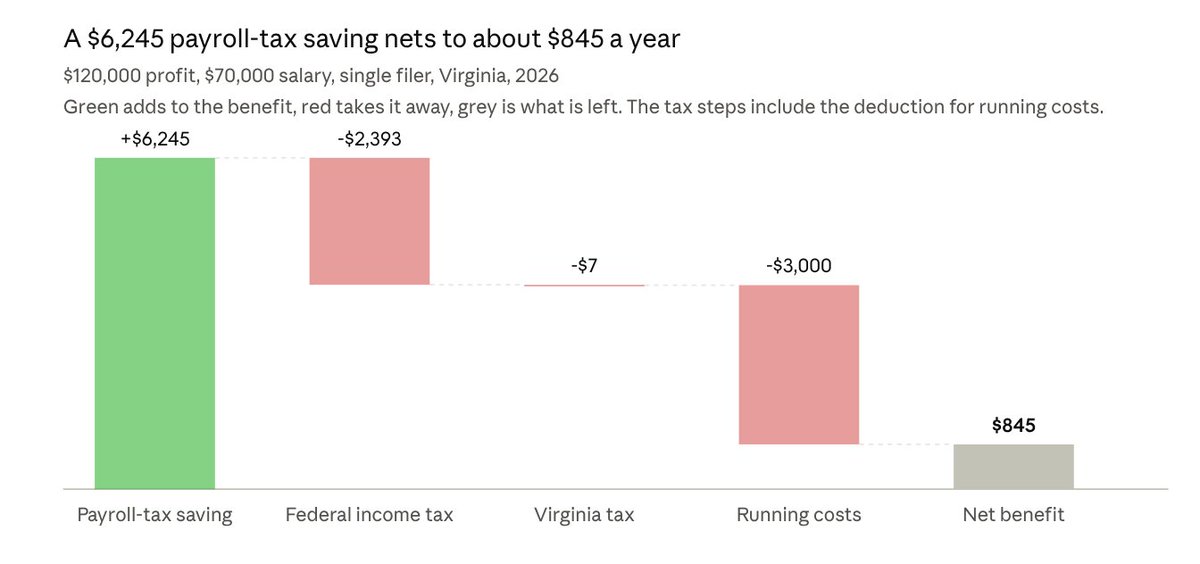
S corp calculators show you one number. Here's the full math for a solo consultant with $120k profit and a $70k salary:
$6,245 payroll-tax saving → about $845/yr net.
Where the other $5,400 goes 🧵
@TKopelman Going $0 salary over the threshold is the worst of both worlds. The 199A cap is 50% of W-2 wages paid, so no payroll can mean basically no QBI deduction, and the reasonable comp exposure is still sitting there
@itsloganjones If you have 1099 income, the solo 401(k) vs SEP gap is bigger than most people expect. At $100k net, SEP tops out around $18.6k. Solo lets you add the $24,500 employee deferral on top
@Nasdaq_Teej Self-employed health insurance gets missed a ton. Just know it can't be more than your net profit, and it's off the table for any month you could've joined a spouse's employer plan
Above the income thresholds it can flip: the deduction may be capped at 50% of W-2 wages the business pays, so salary can help. Run both sides before setting pay.
Free checklist: https://t.co/RMnb22d7sE
Education, not tax advice.
The catch: your S corp W-2 salary isn't QBI. Only the profit left after salary counts, so a higher salary means a smaller QBI base.
Source: IRC §199A(c)(4); Form 8995 instructions
@TKopelman Safe harbor might be the easiest win in there. Last year's AGI was over $150k so it's 110% of last year's tax, and extra W-2 withholding counts as paid evenly through the year. Cranking up withholding on the tech job's last few checks can cover the missed estimates
$80k of Schedule C profit. How much self-employment tax?
$80,000 x 92.35% = $73,880
$73,880 x 15.3% = ~$11,304
Half (~$5,652) is deductible for income tax. The Social Security part stops at $184,500 for 2026.
Source: IRC §§1401, 1402, 164(f); Schedule SE instructions
@benpearlgolf the quarterly thing gets way less stressful once you stop guessing. pay 100% of last year's tax in four equal chunks (110% if AGI was over $150k) and you're penalty-safe even if this year runs hot. more like a utility bill at that point
Myth: "A December truck is a write-off, so it's basically free."
A deduction cuts taxable income, not tax dollar for dollar. At 24%, a $40k deduction saves about $9,600 of federal income tax. And it has to be placed in service by Dec 31.
Source: IRS Pub 946; IRC §179
@WaidsSalad ha, first year is honestly the best time to start, no bad habits yet. Move a chunk of every payment into a separate savings account the day it lands and you're already ahead of a lot of people
@appsnovo@ehuntcpa@anthonypricecpa Zero revenue alone isn't the dealbreaker. Before the business has actually started, those are startup costs: up to $5k deductible the year it opens, the rest spread over 15 years. Once it's operating, a real profit motive plus good records does most of the work.
@maxpashman The S corp one trips people up. "Employee side by Dec 31" really means it has to come out of an actual paycheck by then, so if your last payroll of the year already ran, there's nothing left to defer from.
So a lower salary trims payroll tax but can shrink your retirement deduction. Weigh both when setting a reasonable salary.
Free S corp readiness checklist: https://t.co/LLbNnoL2zt
Education, not tax advice.
With a Solo 401(k) you can also defer up to $24,500 of that salary for 2026 ($8,000 more at 50+). As an S corp owner those deferrals come out of your paychecks, so they run through 2026 payroll.
Source: IRS Notice 2025-67