This Thanksgiving, thank the person who asked the uncomfortable question.
Their feedback might help you build a better communications strategy. Once you’ve finished being mildly annoyed.
Look closer at what you might be missing: https://t.co/xmJq6DRqKu
2026 had other plans. Apparently, mine were decorative.
Third spine surgery. Professional changes. Renewed focus on TCSC. It’s been a crazy year.
Here are five lessons I’m taking into 2027, and into how I approach marketing and communications planning.
New year. New plan. Same assumptions?
Well, that seems worth checking.
Travis Claytor shares five lessons from a year of change to bring into your marketing and communications planning for 2027.
https://t.co/wbVHlgUao2
Marketing promised “effortless support.”
Customer support would like a word.
Before your next campaign, ask what you’re promising, who delivers it, and how people can verify it.
“Sarah will figure it out” is not a resource plan.
Watch before your next planning meeting.
“Effortless support” is a bold campaign promise when customer service learns about it from the ad.
Your reputation management strategy belongs in the campaign brief, calendar, and budget.
Start here: https://t.co/Ly52dW75TI
Your brand needs more than “AI said so.”
Build reputation management into every campaign: check the promise, bring the proof, and listen to customers.
Keep human judgment involved, too.
Confidence is a delivery style. It’s not evidence.
“Everyone else is using AI” is going to have a rough afternoon in the budget meeting.
Saved five hours? Great. What did those hours make possible?
Here’s @TClaytorAPR on connecting AI investment to better work, and better work to business goals.
https://t.co/QoXcK7qAYt
Everyone’s an AI expert. Apparently. 👀
Marketers + communicators, put these in your 2027 plan:
→ Build skills beyond prompting.
→ Give your team a plan beyond “use more AI.”
→ Bring receipts.
Before you check “proficient,” can you show your work?
“We’re using AI” won’t carry the budget meeting forever. Saved five hours? Great. What did those hours make possible? AI value comes from better work that supports business goals.
You bought AI. What did you get?
https://t.co/QoXcK7qAYt
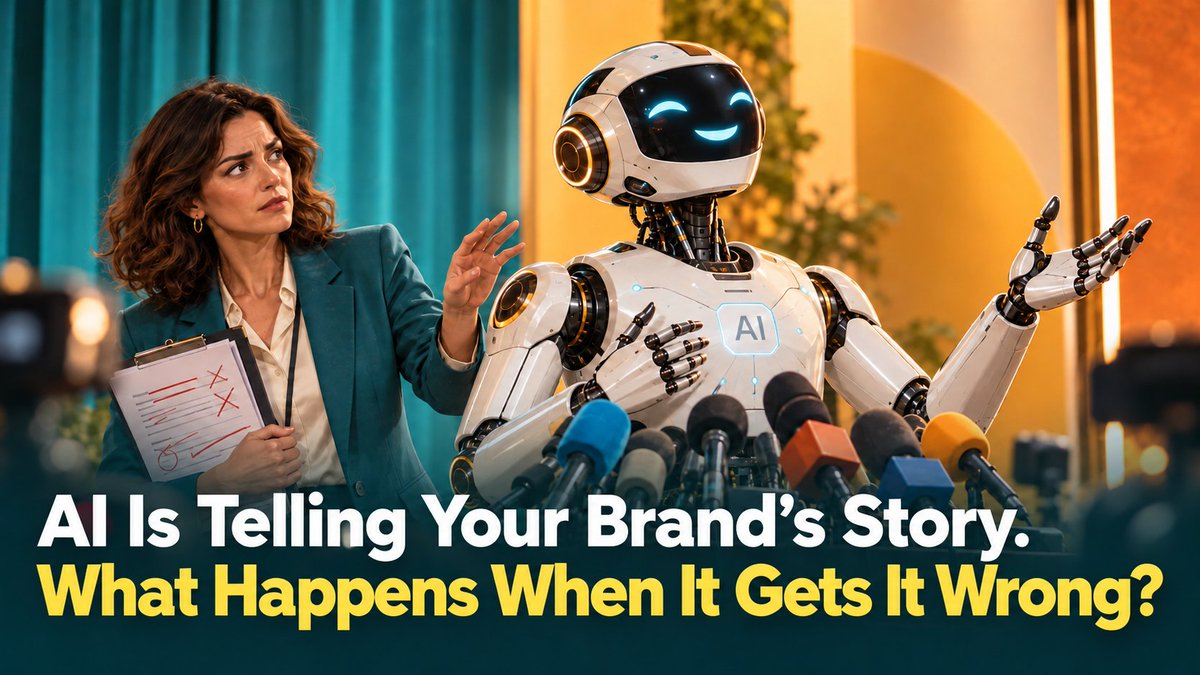
Your brand’s new spokesperson skipped media training. It’s AI.
A wrong answer can cost you a real opportunity. Prepare now: test audience questions, maintain credible facts, and decide who can act.
https://t.co/S10h4LVFhQ
AI wrote it. You approved it.
Now the client asks why it’ll work.
“ChatGPT sounded confident” could make for a long meeting.
Let’s look at why editing the answer isn’t evaluating the thinking.
https://t.co/3b26Q6FmNk
AI wrote the strategy.
You changed three sentences.
Who checked the thinking?
Cognitive surrender puts audience trust and professional judgment at risk. Here are five questions to ask before approving AI-generated work.
https://t.co/3b26Q6FmNk
Great pitch. Where’s the proof?
If your best customer stories live in Dave’s head, customers and AI tools may find only the promises.
Watch our quick take, then try the 3-step, 15-minute evidence check:
https://t.co/L4r05RBrHK
Your website says “exceptional service.” Dave has the proof.
Can customers—or AI tools—find it without a meeting with Dave?
Try our 3-step, 15-minute check of the evidence behind your brand’s pitch.
https://t.co/L4r05RBrHK
No sales call. No rejection email. Just… missing from the shortlist.
AI can help customers narrow their options before they reach you. What does it find about your brand?
Watch the video, then try the exercise:
https://t.co/pZZcTaZoOZ
Your next customer may ask AI to make the first cut. If it finds conflicting details, thin evidence, or unanswered questions, will you make the shortlist? https://t.co/pZZcTaZWEx
Your crisis plan won’t have a page for everything. The HYROX Beijing incident is a perfect example. Crisis readiness isn’t predicting every scenario, it’s giving people the authority, priorities + judgment to act when the plan stops having an answer.
https://t.co/ci0sjVwsTL
A crisis doesn’t build trust, it reveals how much you already have. Quick take on crisis communications, credibility, and the benefit of the doubt.
https://t.co/JUxhs0cjrw