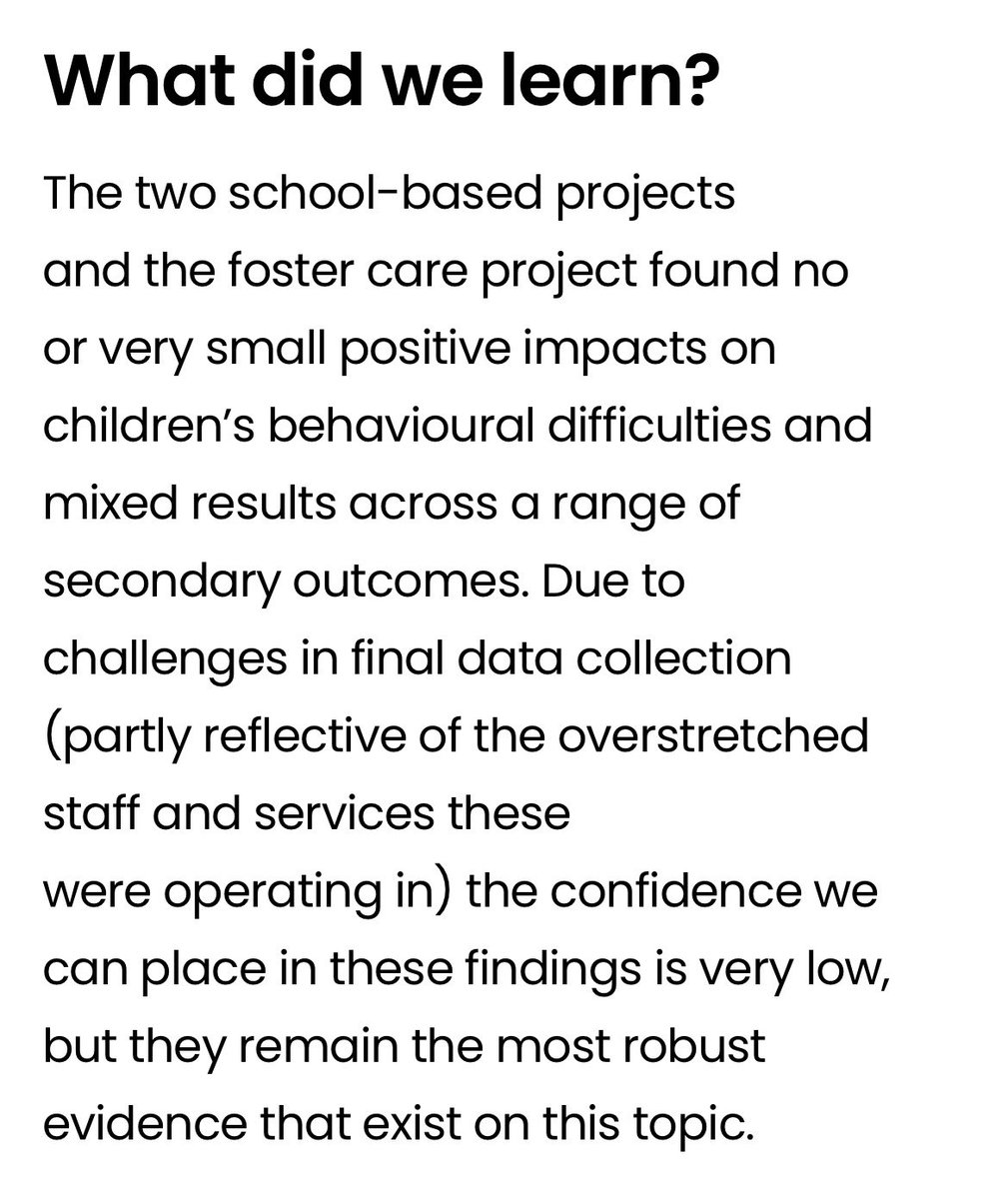
Trauma Informed Practice is extremely common in school discourse, particularly around behaviour. But it’s another area where extreme caution is advised, because the evidence for its effectiveness is still very thin. It *sounds* right (who wouldn’t want to be ‘trauma informed’?) but that doesn’t mean it works.
A recent study funded by the @YouthEndowFund and the Home Office looked at the connection between TIP and children's behaviour and involvement in crime.
@oldandrewuk 1 minute late = 30 minute afterschool detention, 5 minutes is counted as truancy and given an hour afterschool.
I would note however learners are given a 5 minute movement time which is taken off within their break and lunch. We have a 3 lesson day (100 minute lessons)
.@tombennett71 calls for a "national training program for leaders in how they can get the most out of their in-school support processes: the systems, the strategies, the approaches that integrate support with other mainstream school processes...." @tes 1/2
Not talked about enough in the endless chats about how to build relationships in the classroom:
Good teaching
(Can be more than enough without being a comedian, social worker, counsellor, doctor, enrichment leader, psychologist etc etc)
Breaking: @Ofstednews will scrap subject deep dives during ungraded inspections from September, its chief inspector @martyneoliver has announced at #NAHTconf
https://t.co/5x4pk0hItN
Children are excluded for extreme behaviours, not because schools don’t care about them. Really glad to get the chance to stand up for PRUs and AP tonight after the extraordinary slating that some people give them. Special provision is intensive care for highly challenging kids.
There’s a lot of behaviour advice out there from behaviour consultants that appears to be basically ‘be as amazing as I am.’ Problem is, there are 500,000 teachers in the UK alone. A system that requires them all to be inspirational performers isn’t remotely serious or attainable. That’s why we need systems, taught routines, consequences, predictable environments.
Assemblies
The power of consistent messages really can help drive a school forward. Here are a few points for reflection:
1. They are critical for embedding school culture.
2. An assembly helps create a sense of identity and belonging.
3. All leaders should be leading them
SUSPENSIONS. Quick reminder:
1. Schools with challenging intakes need more disciplinary responses than ones without
2. Suspensions are one way to help reduce exclusions
3. Schools that need to suspend, need to suspend
4. If they don’t, the environment gets much worse for children
5. Not all behaviour issues can be resolved by a kind word
6. Criticising a school for above average rates of exclusion, demonstrates a misunderstanding of what ‘averages’ means
7. Don’t shame schools you couldn’t run
FANCY THAT. If you give teachers the option to be honest about what wastes most of their time, behaviour is in the top 3,2,1. But for so long we never really asked.
Ah good, the old toilet debate is back. Here’s a summary of what sensible schools do and think:
1. People have a right to access sanitation
2. That right isn’t unqualified; in institutions we regulate it
3. This is because if we don’t, a minority will abuse their access
4. This leads to bullying, vandalism, and lost learning
5. Therefore we allow it, but with permission
People who don’t manage challenging schools: YOU MONSTER WHAT ABOUT THEIR RIGHTS
People who do: Thank you for your useless input