📌 Transparency & Engagement Commitment
For clarity, integrity, and accountability:
All theological content, arguments, convictions, and posts on this account (@TeachingbridgeM) are authored by me as a human creator. These represent my own study, reflection, prayerful conviction, and formulation as a 1689 Federalist Reformed Baptist lay-theologian.
I occasionally use AI tools only for light formatting, proofreading, grammar checks, or layout efficiency (much like using a grammar checker or word processor). AI does not generate my theology, exegesis, arguments, replies, or any substantive content. This account is not automated, scripted, or bot-operated in any way.
My sole aim here is honest, Scripture-centered dialogue, biblical clarity, and charitable engagement that honors Christ.
I also want to be fully transparent about my online posture.
I haven’t always engaged in a way that reflected the fruit of the Spirit. The speed of social media, frustration in fast exchanges, and the heat of disagreement have at times pulled me into responses that were sharper or less patient than they should have been (even when defending sound doctrine). I’ve learned from those moments and am grateful for the conviction.
Going forward, I am committing to this posture:
- Engage to clarify Scripture and point to Christ, not to “win” arguments or score points.
- Slow down in fast spaces; step back when a platform’s limits (like 280 characters) hinder careful, nuanced discussion.
- Distinguish honest disagreement from bad faith … avoid assuming or assigning motives without clear evidence.
• Refuse to moralize theological differences or weaponize labels like “heresy” or “heretic” as conversation-enders.
- Guard against pride: right doctrine never excuses a wrong spirit. Knowledge puffs up; love builds up (1 Cor 8:1).
- When I fail in tone or charity, own it publicly. Growth in grace matters more than maintaining an image.
I stand by grace alone … sola gratia. If that grace is not visibly shaping my tone, patience, and humility, then my theology (however precise) is not being lived out rightly.
If you see me drift from this commitment, you are welcome (and encouraged) to hold me to it … privately or publicly. Iron sharpens iron when done in love (Prov 27:17).
Union with Christ remains the center. May all we say and how we say it reflect Him.
Grace & peace,
Teaching Bridge Fellowship
@TeachingBridgeM
Demanding a single proof text for a summary category is like asking for a verse that explicitly says “Trinity.” The doctrine is thoroughly biblical even though the term itself is a later theological summary. The real issue is not whether the exact word appears, but whether the concept is taught in Scripture, and it clearly is. See Trinity.
This same “chapter and verse” tactic is often used by groups like Mormons, Jehovah’s Witnesses, Muslims and others, as well as skeptics more broadly. It shifts the discussion away from the full witness of Scripture and reduces it to a narrow standard the Bible itself does not require. See testing doctrine.
We affirm that Scripture teaches the Trinity even though it cannot be reduced to a single proof text. In the same way, means of grace is not an invented idea but a theological category, a faithful summary of what Scripture teaches about how God ordinarily works.
The phrase simply gathers together the ordinary instruments God has appointed to apply His grace to His people. Rather than isolating verses, we look at the whole counsel of God, the forest rather than the individual trees.
Scripture consistently shows that God ordinarily works through:
• The preached Word (Romans 10:17; 2 Timothy 4:2; James 1:18)
• Baptism (Matthew 28:19; Acts 2:38–41; Romans 6:3–4)
• The Lord’s Supper (1 Corinthians 11:23–26; Acts 2:42)
• Prayer and fellowship (Acts 2:42; Ephesians 4:11–16; Hebrews 10:24–25)
These are the means through which the Spirit builds the Church and applies the benefits of Christ. See Ephesians 2:20–22 and Ephesians 4:11–16. We are not inventing categories. We are organizing what Scripture itself teaches so that God’s people can clearly understand and faithfully use what He has given.
And we aim to do so consistently, not only when it is convenient.
I am happy to walk through any of these passages in more detail if you would like.
🌉 TeachingBridge | Confessional Depth
The Visible Church
📖 Ephesians 2:21–22
“In him you also are being built together into a dwelling place for God by the Spirit.”
The New Testament consistently presents the Church as a gathered people.
The 1689 London Baptist Confession describes the visible church as consisting of those who profess faith in Christ and willingly gather under His appointed means of grace.
This reflects Paul's imagery in Ephesians.
The Church is not merely a collection of disconnected believers. It is a people being built together.
The language of building emphasizes order, structure, and unity.
Christ is the cornerstone.
The apostles and prophets provide the doctrinal foundation.
The Spirit performs the work of construction.
The Church therefore belongs to Christ, rests upon apostolic truth, and exists for the glory of God.
#1689LBCF #Church #Ephesians2 #ConfessionalDepth #TeachingBridge
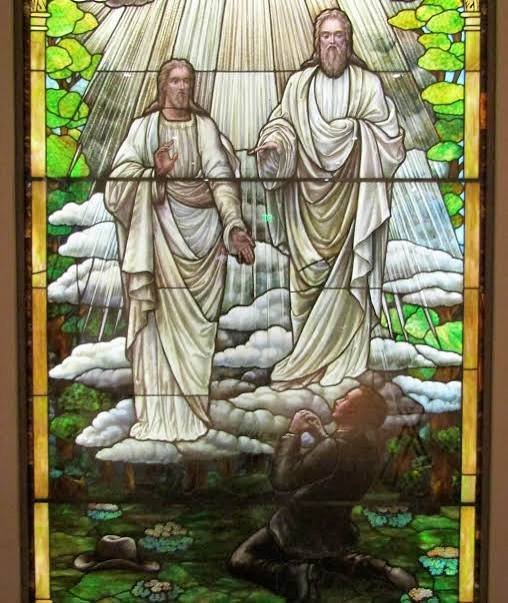
Fellow believers, @LDSLaw recently posted an image of the Father and the Son as two separate personages and claimed that “creedal Christians” experience cognitive dissonance when they see it, falling back on clichés because they supposedly have no answer. This framing is revealing.
The discomfort many Christians feel when seeing that image is not emotional confusion or philosophical panic. It comes from recognizing that the picture reflects a view of God that stands in direct tension with the consistent testimony of Scripture. The Bible presents one God who eternally exists in three persons, Father, Son, and Holy Spirit, without confusion or division. Jesus Himself said, “I and the Father are one” (see John 10:30). The New Testament repeatedly applies divine names, attributes, and worship to the Son in ways that only make sense within a Trinitarian framework. See Trinity.
When someone presents a visual of two distinct gods and then calls the historic Christian understanding “cognitive dissonance,” they are not exposing a weakness in creedal Christianity. They are revealing that their own view has departed from the biblical presentation of God. See biblical monotheism.
As for creeds and confessions, no faithful Christian treats the Nicene Creed, the 1689 London Baptist Confession, or any other human document as ultimate authority. We explicitly confess that Scripture alone is the supreme and final rule. Creeds and confessions are subordinate summaries, helpful and time‑tested guides that kneel beneath the Word. We reference them because they faithfully capture what Scripture teaches, not because they replace it. See 1689 Confession.
The real category mistake here is treating theological identity as if it were as fluid as political affiliation. One can be a poor Republican. One cannot redefine the historic, biblical meaning of “Christian,” which has always included the triune nature of God and the full deity of Christ, without stepping outside the faith once for all delivered to the saints (see Jude 3).
We can speak with clarity and kindness at the same time. But clarity requires us to say that rejecting the biblical doctrine of God is not a minor difference in emphasis. It is a different God and a different gospel. See Galatians 1:6-9.
Stay anchored in the whole counsel of God. The triune God has revealed Himself clearly in His Word. We do not need later prophets or new images to correct what the apostles already gave us.
The creedal "Christian" mind sees this picture and is immediately seized with a cognitive dissonance so frightful and arresting, all they can do is fall back on the tired clichés and defamations that have been sacralized by incessant usage over the decades. They have no answer.
Fellow believers, @ThoughtfulSaint claims there are more eyewitness accounts of the gold plates than of the resurrection of Jesus, and that Christians who push back are “arguing like atheists.” This is a false equivalence dressed up as a gotcha.
The resurrection of Jesus rests on early, multiple, independent lines of evidence. Within just a few years of the events, Paul records a creed in 1 Corinthians 15:3-8 that lists appearances to Peter, the Twelve, more than five hundred brothers and sisters at one time (most of whom were still alive when he wrote), James, all the apostles, and finally to Paul himself. The four Gospels, Acts, and the early church’s willingness to suffer and die for this testimony add further weight. This is public, falsifiable, historically robust testimony.
By contrast, the gold plates rest on the testimony of eleven men — three who claimed to see them with “spiritual eyes” and eight others who were family members or close associates of Joseph Smith. Several later distanced themselves from Smith or the movement. The plates were never examined by neutral parties, never subjected to public scrutiny, and conveniently disappeared. That is not a stronger evidential foundation. It is a much weaker one. See LDS witness claims.
Christians are not “arguing like atheists” when we ask for good evidence. We are refusing to lower the bar for one claim while holding every other religious claim to a normal historical standard. The resurrection is not a private vision granted to a small circle of insiders. It is the central public event of the Christian faith, attested by friend and foe alike in the earliest sources. See historical resurrection evidence.
The 1689 London Baptist Confession confesses that the Scriptures are the sufficient and final authority. We do not need later prophets or new plates to establish what the apostles already delivered. The risen Christ appeared to many, and the testimony has been preserved in the Word He authorized.
Stay anchored in the whole counsel of God. The strength of the Christian claim has never rested on matching the number of signatures on a document. It rests on the empty tomb, the transformed lives of the witnesses, and the power of the gospel that has gone forth into all the world. That testimony stands.
🌉 TeachingBridge | The Human Condition
“The sickness unto death is despair.”
— Søren Kierkegaard, The Sickness Unto Death
Kierkegaard saw that despair is not always visible. It may sit quietly beneath achievement, self-confidence, resignation, religious appearance, or the exhausting effort to become someone other than what we are before God.
But Scripture gives the deeper diagnosis. Man is not autonomous. He is not his own maker, judge, redeemer, or end. The fallen heart either flees from the truth about itself or tries to establish itself apart from God.
The gospel does not merely tell the despairing soul to become authentic. Christ reconciles sinners to God. In Him, guilt is answered by atonement, alienation by peace, weakness by sustaining grace, and death by resurrection hope.
“So we do not lose heart.”
Kierkegaard names the sickness of despair.
Scripture reveals the sin and alienation beneath it.
Christ restores the self by reconciling sinners to God.
Scripture Anchor: 2 Corinthians 4:16–18
#TeachingBridge #ChristCentered #ReformedBaptist #Theology #HumanCondition #GospelHope
🌉 TeachingBridge | Doxological Reflection
Built Together for the Glory of God
📖 Ephesians 2:22
“In him you also are being built together into a dwelling place for God by the Spirit.”
One of the great wonders of redemption is that God delights to dwell among His people.
The Lord who fills heaven and earth gathers redeemed sinners and calls them His dwelling place.
This reality should produce humility.
No believer is the foundation.
No congregation is the architect.
No leader is the cornerstone.
Everything rests upon Christ.
And yet God, in His grace, chooses to build His Church through weak and imperfect people.
Every faithful congregation is evidence of His sustaining mercy.
Every gathering around Word, prayer, fellowship, and worship points to His presence.
The Church is not ultimately about us.
It exists so that God's glory might be displayed through a redeemed people united in Christ and indwelt by the Spirit.
#Ephesians2 #Church #Doxology #GloryOfGod #TeachingBridge
The New Testament marks the true Church by fidelity to the faith once for all delivered to the saints, built on the foundation of the apostles and prophets with Christ Jesus Himself as the cornerstone. See Ephesians 2:20. That foundation was laid in the first century. Paul tells us that all Scripture is breathed out by God and is sufficient to make the man of God complete and equipped for every good work. See 2 Timothy 3:16-17.
When a group adds living apostles with new revelation, baptism for the dead, or restored priesthood keys as necessary marks, the question remains: Are these the tests Scripture itself gives us, as seen in Acts 17:11 and 1 Thessalonians 5:21, or are they later additions that assume what must first be proven from the Bible?
We gladly examine any passage together with open Bibles. But simply declaring that someone’s interpretations are wrong, while refusing to show where Scripture requires those extra institutional elements, does not advance the discussion. The true Church is the assembly of those born again by the Spirit through the Word, holding fast to the gospel the apostles delivered.
That Church belongs to Christ, and He has not left it without the sufficient Word He gave.
Fellow believers, @j_divis is pressing the familiar claim that the true Church must match a specific list of institutional marks, the kind popularized in classic LDS teachings like the “17 Points of the True Church.”
These lists usually include things like having living apostles and prophets today, restored priesthood authority, the exact same organization Christ had, baptism for the dead, and ongoing revelation through a living prophet. The argument is simple: only one church checks every box.
The method is clever but circular.
It begins by defining the true Church according to criteria that already assume the very things in dispute. It assumes a restored institutional priesthood, living apostles with the same authority as the original twelve, and new revelation that supplements or corrects the Bible. Once those criteria are set, the conclusion is guaranteed before the conversation even starts. See circular reasoning.
Scripture gives us a different set of marks for the true Church. It is the assembly of those who have been born again, who hold fast to the apostles’ teaching, who rightly administer the ordinances Christ gave, and who submit to the Word of God as the final authority. The true Church is marked by fidelity to the gospel once for all delivered to the saints, not by the presence of an institutional structure that claims exclusive priesthood keys. See marks of the church and the authority of Scripture.
The New Testament never presents the Church as an organization that would later need to be restored through a new prophet and new scriptures. It presents the Church as built on the foundation of the apostles and prophets, with Christ Jesus Himself as the cornerstone, a foundation laid once in the first century and not needing to be relaid. See Ephesians 2:20.
The 1689 London Baptist Confession confesses this biblical reality. The true Church is the body of Christ, gathered by the Spirit through the Word, marked by the gospel and the ordinances He instituted. It does not require an unbroken institutional line or additional revelation to remain the true Church.
When someone presents a list of points that only their own group can fulfill, the wise response is to go back to the text and ask: Are these the marks Scripture itself gives, or are these marks we have been told must exist? The difference matters. See testing doctrine.
Stay anchored in the whole counsel of God. The true Church belongs to Christ, and He builds it on the truth He has already revealed in His Word. That foundation stands.
https://t.co/LYEvrFimb8
🌉 TeachingBridge | Doctrinal Precision
What the Church Is—and Is Not
📖 Ephesians 2:20
“Built on the foundation of the apostles and prophets, Christ Jesus himself being the cornerstone.”
The Church is often misunderstood.
Some reduce it to a building.
Others reduce it to a social community.
Others treat it as a voluntary organization that exists for personal preference.
Scripture presents something far greater.
The Church is Christ's covenant people gathered around apostolic truth.
Its authority is derived from Christ.
Its doctrine is grounded in Scripture.
Its purpose is the glory of God.
The Church is not sustained by personalities, programs, or cultural relevance.
It stands because Christ is its cornerstone.
When the cornerstone is forgotten, confusion follows.
When Christ remains central, the Church remains stable.
#Ephesians2 #Church #ChristTheCornerstone #Doctrine #TeachingBridge
Good observation. The standard invitation is almost always “Read the Book of Mormon and pray about it.” Far less often are people directed to read the Doctrine and Covenants or the Pearl of Great Price with the same sincere prayer. That selectivity matters.
The Book of Mormon already faces significant historical and archaeological challenges. These include anachronisms involving animals, crops, metallurgy, and technology unknown in pre‑Columbian America, the absence of corroborating evidence for its civilizations and battles, DNA studies showing primarily Asian rather than Near Eastern ancestry for Native Americans, and no evidence for “reformed Egyptian.” See historical claims and archaeological issues.
The other standard works introduce additional layers of difficulty. The Doctrine and Covenants contains evolving doctrines about God, priesthood, and salvation. The Pearl of Great Price includes the Book of Abraham, which Egyptologists universally recognize as unrelated to Abrahamic material. If the goal is truly to test whether the restored gospel is true, why limit the test to one book while setting the others aside? See LDS canon.
Scripture itself calls us to test all things. See 1 Thessalonians 5:21. It commends those who examine claims carefully by the Word. See Acts 17:11. An honest seeker should be free to read the entire LDS canon with open eyes and an open Bible, not just the volume that is presented as the easiest entry point.
The truth can withstand scrutiny. Selective challenges often cannot.
https://t.co/9uTFQvtzHE
@BasedMikeLee The Bible warns us not to follow “another Jesus” (2 Corinthians 11:4). Love for the true Christ compels us to speak clearly about these differences so people can know and trust the real Savior.
It usually continues down this path, more or less. @BasedMikeLee
Person A (Christian): Let’s be precise. Is this the Jesus who has eternally existed as God, the Second Person of the Trinity, uncreated and coequal with the Father?
Person B (LDS): We believe Jesus is divine and the Savior, but He is not coequal in the way creedal Christians teach. He is the literal spirit son of Heavenly Father and a Heavenly Mother. He progressed to become like the Father.
Person A: So in your view, Jesus was once a spirit child who had to progress and become a god?
Person B: Yes. All of us are spirit children of Heavenly Parents. Jesus was the firstborn in the spirit, and Lucifer was also one of the spirit children.
Person A: The Christian Jesus is eternally God, “In the beginning was the Word, and the Word was with God, and the Word was God” (John 1:1). He did not become God; He has always been God. Is that the Jesus you worship?
Person B: We worship Jesus as our Savior and Redeemer. We just do not accept the creedal formulation of the Trinity.
Person A: Next question. In the Christian faith, Jesus is one God with the Father and the Holy Spirit, three distinct Persons sharing one divine essence. In LDS teaching, are the Father, Son, and Holy Ghost three separate beings who are united only in purpose?
Person B: Yes. They are three distinct personages. The Father has a body of flesh and bone, the Son has a body of flesh and bone, and the Holy Ghost is a personage of spirit.
Person A: So in your theology, there are multiple gods, and the Father, Son, and Holy Ghost are separate gods who work together?
Person B: We believe in the Godhead, three beings united in purpose. We do not use the word Trinity the way creedal Christians do.
Person A: The Christian Jesus is fully God and fully man in one person, the eternal Son who took on human nature without ceasing to be God. Was your Jesus once not God?
Person B: Jesus has always been divine in our teachings, but He had to progress and receive a body, just like we will.
Person A: One more key difference. The Christian Jesus offered a substitutionary atonement on the cross that fully satisfied God’s justice for the sins of His people. In LDS teaching, where does the main work of the Atonement take place, and is it sufficient by itself for individual salvation?
Person B: The Atonement took place in both Gethsemane and on the cross. It provides resurrection for all and makes it possible for us to be forgiven, but we must do our part through faith, repentance, baptism, and enduring to the end with the ordinances.
Person A: So in your view, the Atonement is not sufficient by itself, additional works and ordinances are required for full salvation?
Person B: We are saved by grace after all we can do.
Person A: The Christian Jesus is the one and only way of salvation. He is not the spirit brother of Lucifer, nor one god among many. He is the eternal, uncreated Son of God who alone is worthy of worship as God. Would you say that accurately describes the Jesus you worship?
Person B: We love and worship Jesus Christ as our Savior. We just understand Him differently than creedal Christianity does.
Person A: Exactly. We are not talking about the same Jesus.
(Summary) The Christian Jesus is the eternal, uncreated God the Son, one with the Father in divine essence, fully God and fully man, whose finished work on the cross fully atones for the sins of all who believe in Him. The Jesus of Latter-day Saint teaching is a created spirit being who progressed to godhood, the spirit brother of Lucifer, one of three separate gods in the Godhead, whose atonement is not sufficient without additional human works and ordinances.
These are not minor differences in emphasis. They are two fundamentally different understandings of who Jesus is, what He has done, and how we are saved.