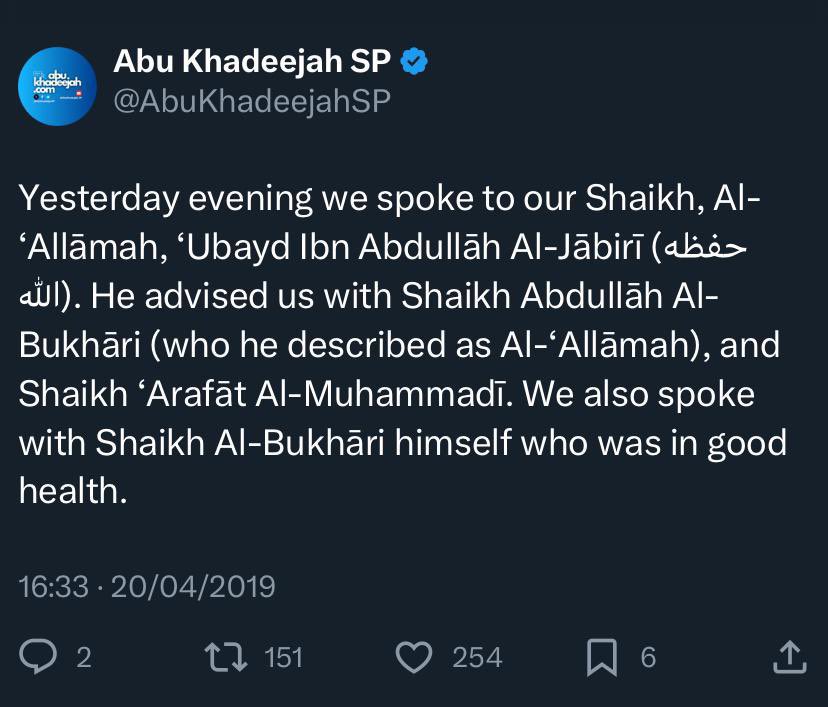
[New and Updated] Praise of Shaykh ʿAbdullaah al-Bukhaari and Shaykh ʿArafāt al-Muhammadi from al-ʿAllaamah Shaykh Rabeeʿ ibn Haadi al-Madkhali and al-ʿAllaamah Shaykh ʿUbayd ibn ʿAbdullaah al-Jaabiri with Public Acknowledgement by Abu Khadeejah ʿAbdul-Waahid (SPUBS)
1.
In this audio, Shaykh al-ʿAllaamah ʿUbayd al-Jaabiri clearly says:
“ʿAbdullaah al-Bukhaari is an ʿAllaamah — wallaahi ʿAllaamah.”
“Shaykh ʿAbdullaah al-Bukhaari — an ʿAllaamah, by Allah an ʿAllaamah — Shaykh ʿUbayd al-Jaabiri”
العنوان العربي: الشيخ عبدالله البخاري علامة والله علامة | الشيخ عبيد الجابري
Link:
https://t.co/pBiF35egrX
2.
In this audio, Shaykh al-ʿAllaamah ʿUbayd al-Jaabiri praises and recommends Shaykh ʿAbdullaah al-Bukhaari explicitly.
“Shaykh ʿUbayd al-Jaabiri’s recommendation of Shaykh ʿAbdullaah al-Bukhaari”
العنوان العربي: تزكية الشيخ عبيد الجابري للشيخ عبد الله البخاري
Link:
https://t.co/vwcdENtzac
3.
In this audio, Shaykh al-ʿAllaamah ʿUbayd al-Jaabiri offers clear praise of Shaykh ʿAbdullaah al-Bukhaari.
“Shaykh ʿUbayd al-Jaabiri’s praise for Shaykh ʿAbdullaah al-Bukhaari”
العنوان العربي: ثناء الشيخ عبيد الجابري على الشيخ عبد الله البخاري
Link:
https://t.co/O9WhZQHvnT
4.
In this audio, Shaykh al-ʿAllaamah ʿUbayd al-Jaabiri counsels taking knowledge from Shaykh ʿAbdullaah al-Bukhaari and Shaykh ʿArafaat al-Muhammadi.
“Counsel to take knowledge from Dr. ʿAbdullaah al-Bukhaari and Dr. ʿArafaat al-Muhammadi — by al-ʿAllaamah ʿUbayd al-Jaabiri”
العنوان العربي: الوصية بأخذ العلم عن الشيخين د. عبدالله البخاري ود. عرفات المحمدي / العلامة عبيد الجابري
Link:
https://t.co/omLMQQNLzl
5.
In this audio, Shaykh al-ʿAllaamah ʿUbayd al-Jaabiri addresses Maktabat as-Salafiyyah (Birmingham) with directive counsel, including recommendation to UK tullab to refer to Shaykh ʿAbdullaah al-Bukhaari and Shaykh ʿArafaat.
“Directive message to Maktabat as-Salafiyyah in Birmingham — Shaykh ʿUbayd al-Jaabiri”
العنوان العربي: كلمة توجيهية إلى المكتبة السلفية في برمنجهام — فضيلة الشيخ عبيد بن عبد الله الجابري
Link:
https://t.co/2WHijUspsR
6.
In this audio, Imaam Rabeeʿ ibn Haadi al-Madkhali praises Shaykh ʿArafaat al-Muhammadi clearly.
“Imām Rabeeʿ’s praise of Shaykh ʿArafaat al-Muhammadi”
العنوان العربي: ثناء الإمام ربيع بن هادي المدخلي على شيخنا عرفات المحمدي
Link:
https://t.co/gb8psrXSXO
7.
In this audio, Imaam Rabeeʿ explicitly praises Shaykh ʿAbdullaah al-Bukhaari.
“Imām Rabeeʿ’s praise of Shaykh ʿAbdullaah al-Bukhaari”
العنوان العربي: ثناء العلامة الإمام بحق ربيع بن هادي المدخلي على الشيخ العلامة عبد الله البخاري
Link:
https://t.co/xgqFIZVh6l
8.
Additional clear praise of Shaykh ʿArafaat al-Muhammadi from Imaam Rabeeʿ.
“Imām Rabeeʿ praising Shaykh ʿArafaat al-Muhammadi”
العنوان العربي: ثناء الإمام ربيع المدخلي على شيخنا عرفات المحمدي
Link:
https://t.co/ODkU7FNKcK
دوافع رفع البلاء ودفعه:
الإيمان بحميع أركانه وواجباته(إن الله يدافع عن الذين آمنوا إن ال��ه لايحب كل خوان كفور)-الإستغفار والتوبة من المعاصي(وماكان الله ليعذبهم وأنت فيهم وماكان الله معذبهم وهم يستغفرون)-التقوى والعمل الصالح والإخلاص(إن الله مع الدين اتقوا والذين هم محسنون)
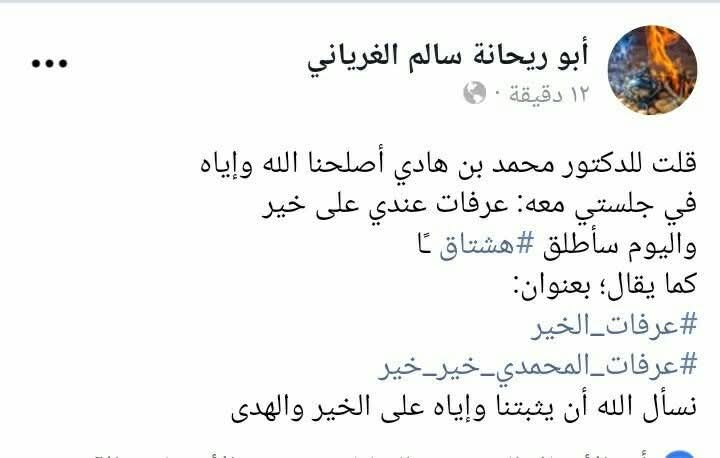
من أين جاءت تسمية الشيخ عرفات بـ(#عرفات_الخير)؟ ومن هو صاحب هذا الوسم كما يقال؟
✍️ هو الشيخ: سالم الغرياني حفظه الله.
(قلت للدكتور محمد بن هادي أصلحنا الله وإياه في جلستي معه: عرفات عندي على خير
واليوم سأطلق #هشتاق ـًا
كما يقال؛ بعنوان:
#عرفات_الخير#عرفات_المحمدي_خير_خير
@abdalbaaaqi@bn_abdjbr My brother, are you able to contact them directly? If not, send an email here to Ustadh Hasan as Somali, perhaps he might give you a reply.
[email protected]
@Arafatbinhassan السلام عليكم ورحمة الله وبركاته
أحسن الله إليكم
وقع عند بعض إخواننا ��يءٌ من الالتباس بسبب ما يُنقل عنكم في أبي عياض أمجد رفيق، وأنكم قلتم فيه: «نحسبه مبتدع». فبعضُهم أخذ بذلك، وبعضُهم توقّف حتى تتبيّن له الأدلّة التي بُني عليها هذا القول. فهل تتفضلون ببيانها؟
جزاكم الله خيرًا
Six things the Prophet ﷺ said to a young Ibn ʿAbbās - words that, if truly pondered upon, can help ease your worries, lift your stress, and bring peace over the things in life you cannot control.
He said;
I was riding behind the Messenger of Allah ﷺ, when he said to me, “Young man, I will teach you some words.
1. Be mindful of Allah and He will protect you.
2. Be mindful of Allah and you will find Him before you.
3. If you ask, ask from Allah. If you seek help, seek help from Allah.
4. Know that if the nations gathered together to benefit you, they could not benefit you unless Allah has decreed it for you.
5. And if the nations gathered together to harm you, they could not harm you unless Allah has decreed it for you.
6. The pens have been lifted and the pages have dried.”
@OmarAsSomali@bn_abdjbr This is not because rectification in every affair must always be tied to one individual. Rather, in this case, because the turning away occurred specifically from Shaykh Abdullah al-Bukhaari.
This is from justice and from correcting the error in the same place it occurred.
@OmarAsSomali@bn_abdjbr Yes, specifically him at this point.
Why? Because the issue is no longer just that they need to return to the scholars in general. Rather, they specifically turned away from Shaykh Abdullah al-Bukhaari. So the rectification must address that specific turning away.
@hnhgbggffd@bn_abdjbr Irrelevant question, it was writen by them and spread by them.
Anwar Wright was asked about it and confirmed it to be valid.
The position contained in it against Abu Iyaad is a verified position of those tullab mentioned in the document.
Thats all that matters.
@OmarAsSomali@bn_abdjbr This is a year-old document, akhi.
You should know that unless they refer this matter back to al-‘Allaamah Abdullah al-Bukhaari for rectification, cooperation in da‘wah will weaken and may become distant or even non-existent. Harsh reality and Allah Knows Best
@hnhgbggffd@bn_abdjbr It is a verified document, and you may contact any of the students mentioned in it to confirm its authenticity, if you wish.
It was released not to cause fitnah, but to put an end to it, just as Abu Muʿaadh and the others have been striving to do.
I advise u to delete ur tweet.
Benefits taken from shauyk Salāh kantoosh Yemeni حفظه الله
In his book where he refutes and corrects innovated principles introduced into usool fiqh by the people of innovation
he refutes the assertion that it is permissible to introduce a third new opinion in a particular matter after the salaf and early scholars had already differed over a particular issue upon two views showing the importance of returning our understanding in issues of fiqh to the early scholars and not coming up with new views that they had not even come with
إعلم عصم الله قلبك من مضلات الفتن أنّ الأصول المبتدعة كثيرة أتى بها الضالون ليكون لهم بها السبيل على من وافقهم في اصلهم ومن هذا الباب تقريرهم جواز احداث قول ��الث فوق خلاف سابق عند المتقدمين وصورة القضية لو ان المتقدمين اختلفوا في قضية ما على قولين فهل يسوغ لمن تاخر ان ياتي بقول ثالث يباين القولين السالفين أم لا ؟
قال ابن النجار وإذا كان مجتهدو عصر اختلفوا في مسألة على قولين حرم احداث قول ثالث مطلقا عند الإمام أحمد رضي الله عنه وأصحابه وعامة الفقهاء
كتاب الأصول المبتدعة في أصول الفقه تأليف الشيخ صلاح كنتوش العدني حفظه الله ص ١٠١٨
Also added benefit from ibn rajab
وليكن الإنسان عَلَى حذر مما حدث بعدهم، فإنَّه حدث بعدهم حوادث كثيرة، وحدث من انتسب إِلَى متابعة السنة والحديث من الظاهرية ونحوهم وهو أشد مخالفة لها لشذوذه عن (الأمة) (١) وانفراده عنهم بفهم يفهمه، أو يأخذ ما لم يأخذ به الأئمة من قبله
كتاب فضل علم السلف على علم الخلف
[ابن رجب الحنبلي]
The Person Who Reaches Ramaḍān and is not Forgiven for His Sins
Abū Hurayrah (رضي الله عنه) reported that the Messenger of Allāh ﷺ said, “May he be humiliated, the man in whose presence I am mentioned, and he does not send Ṣalah upon me. May he be humiliated, the man who sees Ramaḍān come and go, and he is not forgiven. May he be humiliated, the man whose parents grow old in his presence, and they are not a reason for him to enter Paradise.”¹
Concerning this narration, Imām al-Manāwī (رحمه الله) states that “the humiliated person is the one who knows that if only he fought his desires one month each year and performed beneficial acts like fasting and standing in prayer, his past sins would be forgiven, yet he falls short and fails to act, letting the month pass.”²
Further, al-Mubārakfūrī (رحمه الله) states that this person lets the month “come to an end before he is forgiven. Meaning, he did not repent, or he did not value [the month] by exerting himself in acts of obedience.”³
————————
¹ It is collected by al-Tirmidhī in his al-Jāmiʾ (no. 3545) and authenticated by Shaykh al-Albānī in Mishkāt al-Maṣābīḥ (no. 927).
² ʿAbd al-Ra’ūf al-Manāwī, Fayḍ al-Qadīr, vol. 4 (Egypt: al- Maktabah al-Tijariyyah al-Kubra, 1356 AH), 34.
³ Muḥammad b.ʿAbd al-Raḥmān al-Mubārakfurī, Tuḥfah al- Aḥwadhī, vol. 9 (Beirut: Dar al-Kutub al-Ilmiyyah), 372.
EBook: The Condition of the Salaf During Ramaḍān | Compiled and translated by Abū al-Ḥasan Mālik al-Akhḍar | p 5
By the grace of Allāh, we were blessed with the opportunity to take our ʿUmrah group to attend a lecture just before the start of Ramadān delivered by al-ʿAllāmah ʿAbdullāh al-Bukhārī حفظه الله.
As anticipated, students from the University of Madīnah, hailing from many different countries, were present. It was truly a pleasure to meet a number of them after the lecture.
The lecture was immensely beneficial—a powerful reminder about the importance and value of time. The Shaikh’s approach remains precise and focused, enriched with abundant quotations from the Salaf and the great scholars of the past. It is a style we became familiar with and greatly benefitted from during our time studying in Madīnah some 17 years ago, in public classes and at the university itself.
The Shaikh has not changed; he remains devoted to teaching and daʿwah, just as he has consistently been for many years. His sincere concern for his students is clear and evident in his words. It is no surprise that al-ʿAllāmah Rabīʿ and al-ʿAllāmah ʿUbayd praised him and encouraged students to return to and benefit from him.
I sincerely advise our brothers—especially the students in Madīnah—to sit with the Shaikh, learn from him, and seek his guidance and counsel. As for those who attempt to discredit him and steer others away, one must ask: if not him, then who in Madīnah should students turn to and learn from? لا حول ولا قوة إلا بالله.
Pay no attention to those who seek to distance you from the scholars. What a grievous condition they are in.
May Allāh grant us all success.
Abū Mu’adh Taqweem Aslam
1st Ramadān, 1447h
[جنّةُ الدُّنيا]
قال الإمامُ ابنُ رجبٍ:"في الدُّنيا جنّةٌ مُعجَّلةٌ،وهي معرفةُ الله ومحبتُهُ والأُنسُ به والشّوقُ إلى لقائِهِ،وخشيتُهُ وطاعتُهُ. والعلمُ النّافعُ يدلُّ على ذلك"
(شرح حديث ما ذئبان جائعان)(ص٧٩)