https://t.co/xGY9fd612Y Feature Series 3: DRC Mineral Deals — Governance Fragility, Asymmetric Accords, and Collateral Damage -- Is Tshisekedi Trump’s Protégé? [3/3] The entry of major U.S. institutional capital, DFC de-risking mechanisms, and infrastructure funding along the Lobito Corridor offers genuine opportunities to diversify the nation’s investor base, upgrade legacy transport networks, and re-balance a decades-long single-market dependency. However, if these strategic agreements continue to operate as transactional “minerals-for-security” bargains negotiated under conditions of executive opacity and territorial distress, they risk repeating the extraversion patterns of the past.https://t.co/iPiSRRzlOq
https://t.co/EuVSkSL7T1 Tshisekedi est-il le protégé de Trump ? [2/3]
Au-delà des pressions géopolitiques externes et des accords miniers asymétriques, Kinshasa fait face à un mouvement de résistance interne convergent sur trois fronts qui conteste directement la légitimité économique et politique de l’État. Ce contre-front interne réunit des acteurs moraux, politiques et citoyens qui soutiennent que l’opacité des transactions, le bradage des ressources par l’exécutif et la déchéance institutionnelle érodent la souveraineté congolaise de l’intérieur. La question centrale qui résonne dans les cercles politiques et diplomatiques est de savoir si l’alignement transactionnel du président Félix Tshisekedi sur les capitaux occidentaux en a fait le tout nouveau protégé de Washington dans la région, troquant l’autonomie économique à long terme contre une indulgence diplomatique immédiate.
https://t.co/Xkyy2Nal89 Is Tshisekedi Trump’s protégé? [2/3]
Beyond external geopolitical pressures and asymmetric mineral accords, Kinshasa faces a converging three-pronged domestic resistance movement that directly challenges the state’s economic and political legitimacy. This internal counter-front unites moral, political, and grassroots actors who argue that opaque deal-making, executive resource giveaways, and institutional decay are eroding Congolese sovereignty from within. The core question reverberating through political and diplomatic circles is whether President Félix Tshisekedi’s transactional alignment with Western capital has positioned him as Washington’s newest regional protégé, swapping long-term economic autonomy for immediate diplomatic indulgence.
https://t.co/e7csuO6Mjv Feature Series: DRC Mineral Deals — Governance Fragility, Asymmetric Accords, and Collateral Damage | The Extraversion Trap – Disconnecting Foreign Accords from National Development [1/3] || Under the banner of the U.S.-mediated Washington Accords, the United States and the Democratic Republic of the Congo (DRC) have operationalized a Strategic Partnership Agreement (SPA) designed to grant American capital preferential access to the world’s richest copper, cobalt, and lithium deposits. Following years of dominant Chinese presence across the Katanga copper-cobalt belt, Washington’s commercial entry has mobilized near-unprecedented financial architecture.
https://t.co/Hw4lSrK6XI Tshisekedi est-il le protégé de Trump ? [2/3]
Au-delà des pressions géopolitiques externes et des accords miniers asymétriques, Kinshasa fait face à un mouvement de résistance interne convergent sur trois fronts qui conteste directement la légitimité économique et politique de l’État. Ce contre-front interne réunit des acteurs moraux, politiques et citoyens qui soutiennent que l’opacité des transactions, le bradage des ressources par l’exécutif et la déchéance institutionnelle érodent la souveraineté congolaise de l’intérieur. La question centrale qui résonne dans les cercles politiques et diplomatiques est de savoir si l’alignement transactionnel du président Félix Tshisekedi sur les capitaux occidentaux en a fait le tout nouveau protégé de Washington dans la région, troquant l’autonomie économique à long terme contre une indulgence diplomatique immédiate.
https://t.co/EuVSkSL7T1 Tshisekedi est-il le protégé de Trump ? [2/3]
Au-delà des pressions géopolitiques externes et des accords miniers asymétriques, Kinshasa fait face à un mouvement de résistance interne convergent sur trois fronts qui conteste directement la légitimité économique et politique de l’État. Ce contre-front interne réunit des acteurs moraux, politiques et citoyens qui soutiennent que l’opacité des transactions, le bradage des ressources par l’exécutif et la déchéance institutionnelle érodent la souveraineté congolaise de l’intérieur. La question centrale qui résonne dans les cercles politiques et diplomatiques est de savoir si l’alignement transactionnel du président Félix Tshisekedi sur les capitaux occidentaux en a fait le tout nouveau protégé de Washington dans la région, troquant l’autonomie économique à long terme contre une indulgence diplomatique immédiate.
https://t.co/Xkyy2Nal89 Is Tshisekedi Trump’s protégé? [2/3]
Beyond external geopolitical pressures and asymmetric mineral accords, Kinshasa faces a converging three-pronged domestic resistance movement that directly challenges the state’s economic and political legitimacy. This internal counter-front unites moral, political, and grassroots actors who argue that opaque deal-making, executive resource giveaways, and institutional decay are eroding Congolese sovereignty from within. The core question reverberating through political and diplomatic circles is whether President Félix Tshisekedi’s transactional alignment with Western capital has positioned him as Washington’s newest regional protégé, swapping long-term economic autonomy for immediate diplomatic indulgence.
https://t.co/xGY9fd612Y Feature Series 3: DRC Mineral Deals — Governance Fragility, Asymmetric Accords, and Collateral Damage -- Is Tshisekedi Trump’s Protégé? [3/3] The entry of major U.S. institutional capital, DFC de-risking mechanisms, and infrastructure funding along the Lobito Corridor offers genuine opportunities to diversify the nation’s investor base, upgrade legacy transport networks, and re-balance a decades-long single-market dependency. However, if these strategic agreements continue to operate as transactional “minerals-for-security” bargains negotiated under conditions of executive opacity and territorial distress, they risk repeating the extraversion patterns of the past.https://t.co/iPiSRRzlOq
https://t.co/xGY9fd612Y Feature Series 3: DRC Mineral Deals — Governance Fragility, Asymmetric Accords, and Collateral Damage -- Is Tshisekedi Trump’s Protégé? [3/3] The entry of major U.S. institutional capital, DFC de-risking mechanisms, and infrastructure funding along the Lobito Corridor offers genuine opportunities to diversify the nation’s investor base, upgrade legacy transport networks, and re-balance a decades-long single-market dependency. However, if these strategic agreements continue to operate as transactional “minerals-for-security” bargains negotiated under conditions of executive opacity and territorial distress, they risk repeating the extraversion patterns of the past.https://t.co/iPiSRRzlOq
https://t.co/Xkyy2Nal89 Is Tshisekedi Trump’s protégé? [2/3]
Beyond external geopolitical pressures and asymmetric mineral accords, Kinshasa faces a converging three-pronged domestic resistance movement that directly challenges the state’s economic and political legitimacy. This internal counter-front unites moral, political, and grassroots actors who argue that opaque deal-making, executive resource giveaways, and institutional decay are eroding Congolese sovereignty from within. The core question reverberating through political and diplomatic circles is whether President Félix Tshisekedi’s transactional alignment with Western capital has positioned him as Washington’s newest regional protégé, swapping long-term economic autonomy for immediate diplomatic indulgence.
https://t.co/EuVSkSL7T1 Tshisekedi est-il le protégé de Trump ? [2/3]
Au-delà des pressions géopolitiques externes et des accords miniers asymétriques, Kinshasa fait face à un mouvement de résistance interne convergent sur trois fronts qui conteste directement la légitimité économique et politique de l’État. Ce contre-front interne réunit des acteurs moraux, politiques et citoyens qui soutiennent que l’opacité des transactions, le bradage des ressources par l’exécutif et la déchéance institutionnelle érodent la souveraineté congolaise de l’intérieur. La question centrale qui résonne dans les cercles politiques et diplomatiques est de savoir si l’alignement transactionnel du président Félix Tshisekedi sur les capitaux occidentaux en a fait le tout nouveau protégé de Washington dans la région, troquant l’autonomie économique à long terme contre une indulgence diplomatique immédiate.
https://t.co/e7csuO6Mjv Feature Series: DRC Mineral Deals — Governance Fragility, Asymmetric Accords, and Collateral Damage | The Extraversion Trap – Disconnecting Foreign Accords from National Development [1/3] || Under the banner of the U.S.-mediated Washington Accords, the United States and the Democratic Republic of the Congo (DRC) have operationalized a Strategic Partnership Agreement (SPA) designed to grant American capital preferential access to the world’s richest copper, cobalt, and lithium deposits. Following years of dominant Chinese presence across the Katanga copper-cobalt belt, Washington’s commercial entry has mobilized near-unprecedented financial architecture.
https://t.co/S0mXX4Ejy3 Feature Series 2: DRC Mineral Deals — Governance Fragility, Asymmetric Accords, and Collateral Damage | Is Tshisekedi Trump’s protégé? [2/3]
Beyond external geopolitical pressures and asymmetric mineral accords, Kinshasa faces a converging three-pronged domestic resistance movement that directly challenges the state’s economic and political legitimacy. This internal counter-front unites moral, political, and grassroots actors who argue that opaque deal-making, executive resource giveaways, and institutional decay are eroding Congolese sovereignty from within. The core question reverberating through political and diplomatic circles is whether President Félix Tshisekedi’s transactional alignment with Western capital has positioned him as Washington’s newest regional protégé, swapping long-term economic autonomy for immediate diplomatic indulgence.
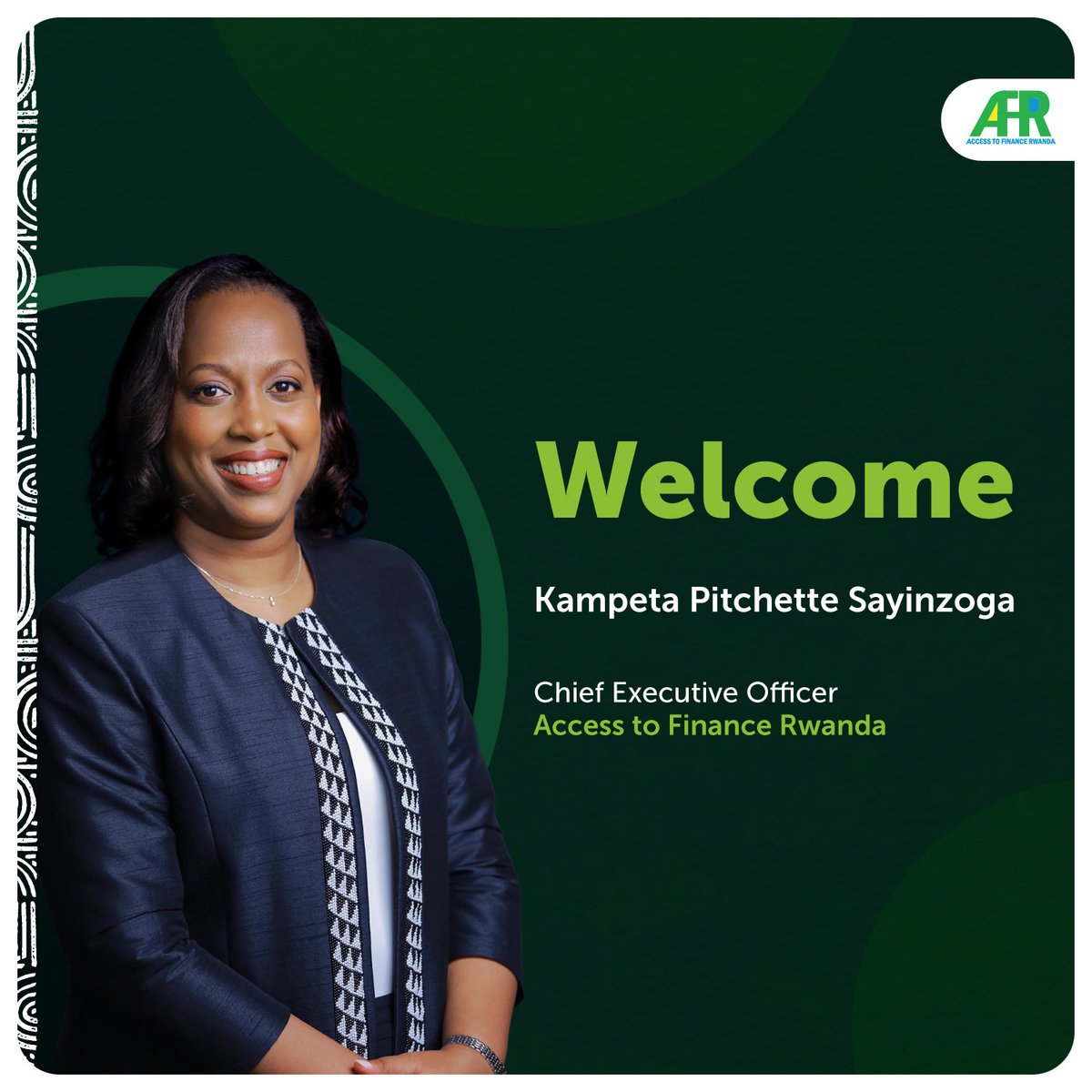
We are delighted to announce the appointment of Kampeta Pitchette Sayinzoga @Ksayinzoga as Chief Executive Officer of @AFRwanda, effective 1 August 2026.
Ms. Kampeta joins AFR at an important moment as we begin implementing our new strategic framework and deepen our contribution to #Rwanda's financial sector.
Her experience in institution building, partnership development and inclusive finance will be invaluable as AFR continues to expand its impact.
Please join us in welcoming Ms. Kampeta to the AFR family.
📢 Request for Proposals (RFP)
📑 RICTA invites qualified consultants to submit proposals for the Development of the RICTA Strategic Plan (2027–2029).
🆔 Tender Reference: 04/RFP/RICTA/ADM/2026
🗓️Submission Deadline: 04 September 2026
📧 Submission Email: [email protected]
Find more information here: https://t.co/OJJ6ENrxa7
https://t.co/Hw4lSrK6XI Tshisekedi est-il le protégé de Trump ? [2/3]
Au-delà des pressions géopolitiques externes et des accords miniers asymétriques, Kinshasa fait face à un mouvement de résistance interne convergent sur trois fronts qui conteste directement la légitimité économique et politique de l’État. Ce contre-front interne réunit des acteurs moraux, politiques et citoyens qui soutiennent que l’opacité des transactions, le bradage des ressources par l’exécutif et la déchéance institutionnelle érodent la souveraineté congolaise de l’intérieur. La question centrale qui résonne dans les cercles politiques et diplomatiques est de savoir si l’alignement transactionnel du président Félix Tshisekedi sur les capitaux occidentaux en a fait le tout nouveau protégé de Washington dans la région, troquant l’autonomie économique à long terme contre une indulgence diplomatique immédiate.