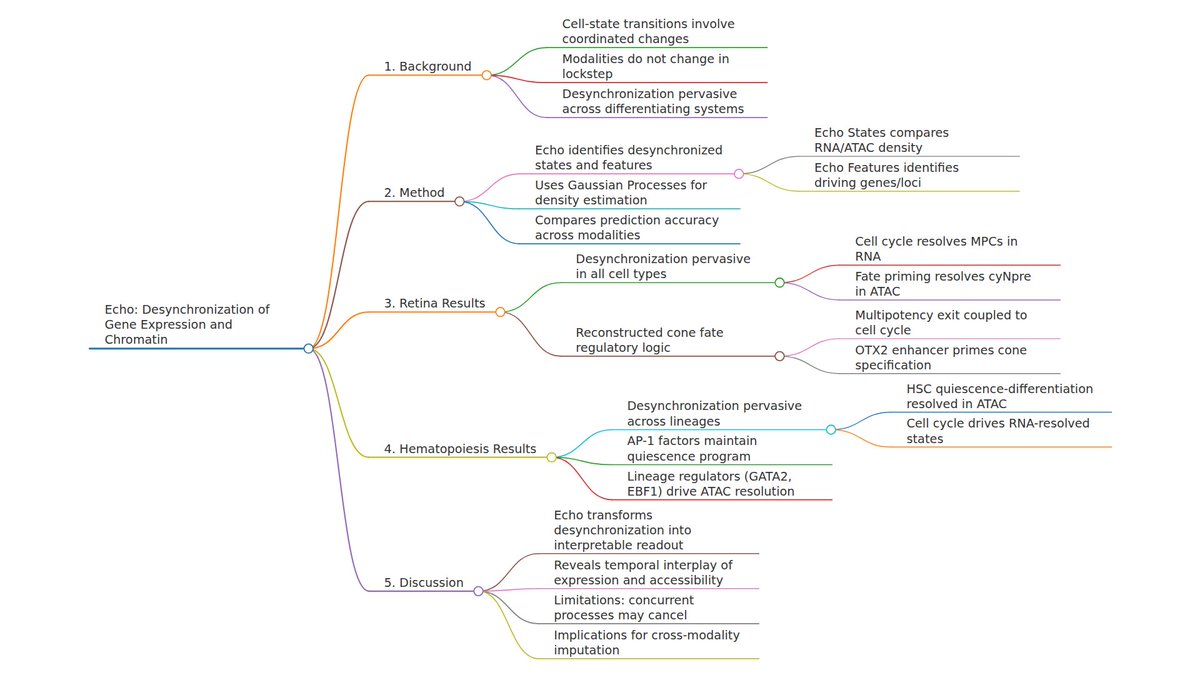
🧵 **Echo just made it possible to pinpoint exactly *when* and *where* gene expression and chromatin accessibility fall out of sync during cell development.** 🧬
Until now, scientists knew that these two processes don’t always change in lockstep—but they couldn’t systematically detect *which* cell states are desynchronized or *what genes* cause it.
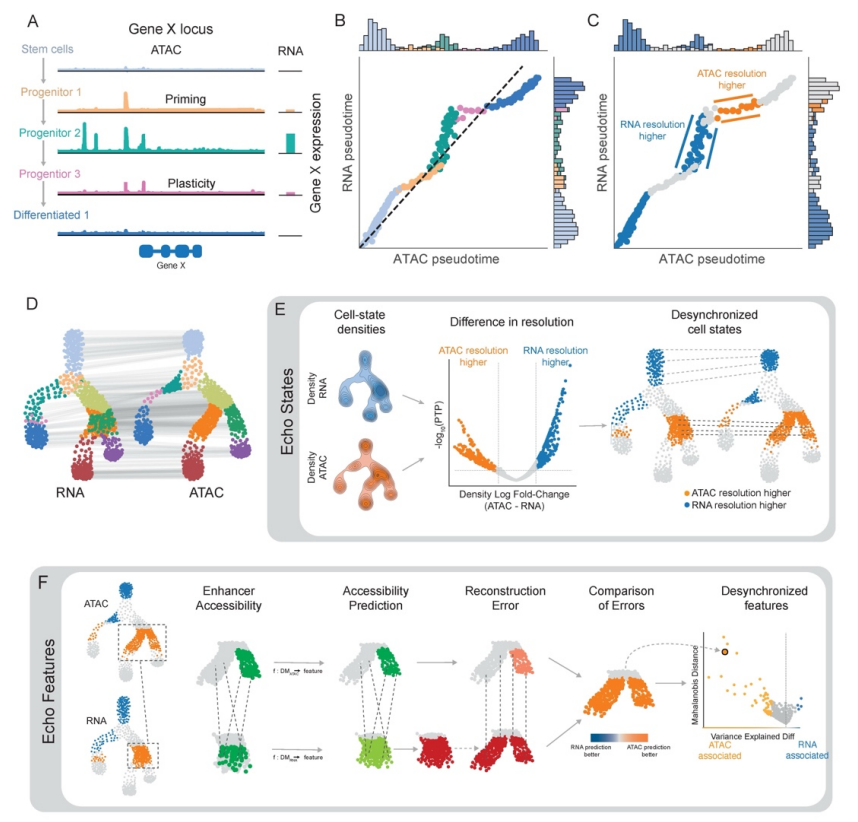
Enter **Echo**: a new statistical framework from Finkbeiner et al. that analyzes paired single-cell RNA + ATAC data to find these mismatches. It compares cell-state density between modalities to flag states where one modality "resolves" the biology better.
Applying Echo to the developing human retina 🧠 revealed something profound: cell cycle genes drive resolution in RNA but not chromatin, while fate-priming (e.g., OTX2 activation) appears in ATAC *before* gene expression. In blood stem cells, the balance between quiescence and differentiation was far clearer in chromatin than in RNA.
This turns single-cell multiomics from a data integration problem into a lens for regulatory logic. ⚡
**Question:** Could Echo make conventional trajectory-inference methods obsolete for systems where RNA and ATAC are fundamentally out of phase? 👇
#Science #Bioinformatics #SingleCell #Multiomics #GeneRegulation #DevelopmentalBiology #Chromatin
📄 Paper: https://t.co/uKRM9sAi8I
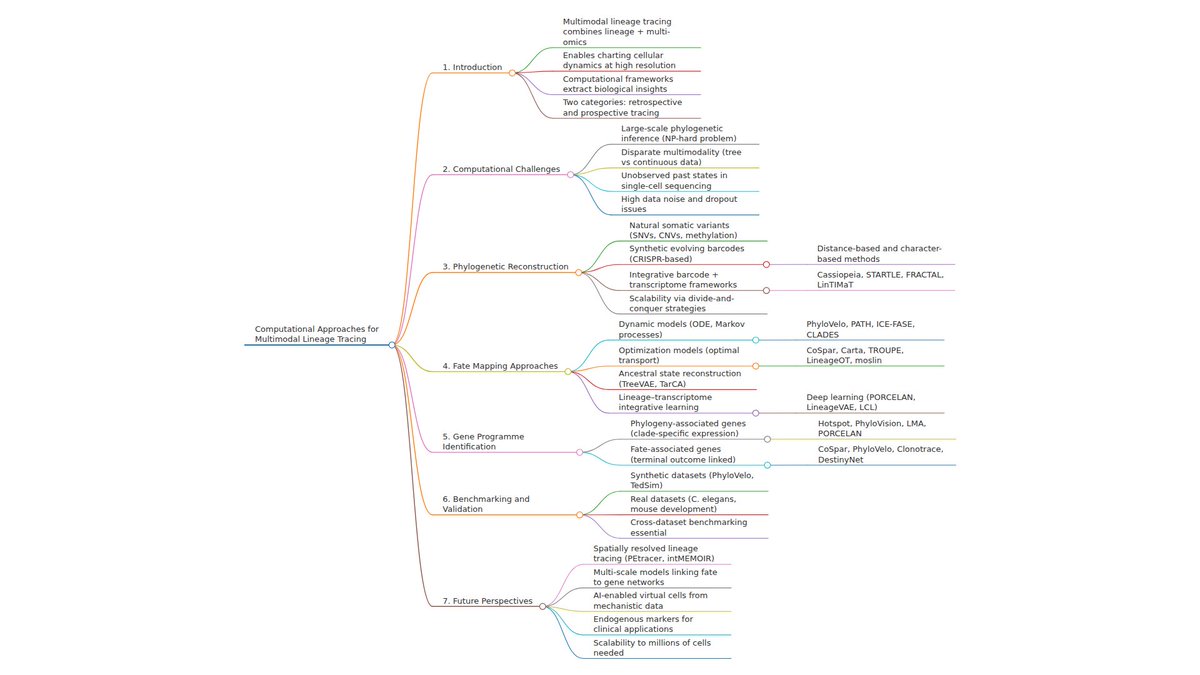
New paper in Nature Reviews Genetics maps the full computational toolkit for multimodal lineage tracing, and it’s a must-read for anyone studying how cells decide their fates. 🧬
The core challenge: lineage data is discrete & tree-structured, while molecular profiles are continuous & high-dimensional. This mismatch has been a major bottleneck.
The authors systematically survey approaches tackling four key problems: large-scale phylogenetic inference, integrating disparate data types, inferring unobserved ancestral states, and handling pervasive noise/dropout.
Key innovations include Cassiopeia (tailored parsimony for CRISPR barcodes), PhyloVelo (lineage-informed RNA velocity), and deep learning frameworks like PORCELAN that jointly learn lineage-expression representations.
🚀 A standout insight: lineage data provides temporal structure that captures causal relationships—potentially shifting AI models from correlation to causality for "virtual cell" frameworks.
Could lineage-informed deep learning finally bridge the gap between correlation and causation in computational biology?
#ComputationalBiology #LineageTracing #SingleCell #Bioinformatics #MachineLearning #CellFate #AIinBiology
📄 Paper: https://t.co/NqDBdQjDjz
Here is the tweet, written from the third-person perspective of a tech influencer.
---
Most drug discovery tools either plan a synthesis route or check for toxicity—never both at the same time. This forces chemists to manually shuttle data between platforms, often missing hazardous intermediates until it’s too late.
SynCraft changes the game. 🧪
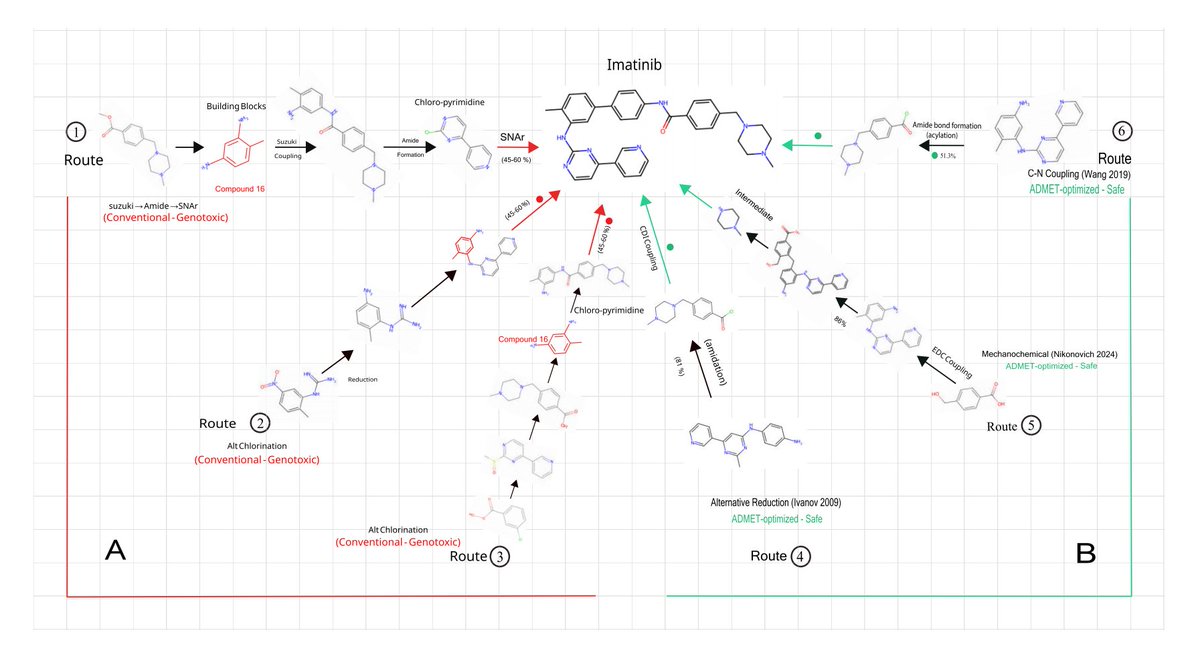
The authors introduce a web server that integrates template-based retrosynthesis with real-time ADMET evaluation in a single automated pipeline. Every intermediate compound generated during route exploration is automatically scored for toxicity, drug-likeness, and synthetic accessibility, with color-coded warnings appearing instantly for risky molecules.
In a case study on imatinib, SynCraft automatically flagged a genotoxic intermediate (4-methyl-1,2-phenylenediamine) that conventional tools like AiZynthFinder missed entirely—detecting a known ICH M7 impurity that has caused real-world drug recalls. ⚠️
The unified workflow cut total analysis time by over 91% compared to manual sequential methods (~84 seconds vs ~1,230 seconds), while evaluating 100% of intermediates across all routes.
Could this spell the end of the “post-hoc toxicity check” and finally close the synthesis-safety disconnect in drug discovery?
#AI #DrugDiscovery #Cheminformatics #ADMET #Retrosynthesis #MachineLearning #SynCraft
📄 Paper: https://t.co/SFjY0VXRQ5
**Current RNA language models have a dirty secret: they’re massively overparameterized, and standard benchmarks are masking it.** 🧵
Most RNA foundation models are evaluated solely on supervised downstream tasks — but as this new study shows, those metrics often reflect *memorization*, not true structural understanding.
Enter **REDIAL** (RNA Embedding perturbation Diagnostics for Language models) — a zero-shot, unsupervised framework that extracts coevolutionary signals directly from a model’s latent space.
What the authors found is sobering:
• Current RNA LMs (like RNA-FM and StructRFM) are severely overparameterized relative to the limited diversity of RNA sequence databases
• Many "successful" structural predictions stem from training set memorization, not learned biophysics
• Layer-wise analysis reveals that neither model uses its full depth efficiently — early layers are often redundant, late layers noisy
The core innovation? REDIAL measures what a model *actually* knows about base-pair couplings without needing any labeled data. A structure-guided pretraining strategy improved signal-to-noise ratios dramatically — particularly for short sequences where coevolution is hardest to detect.
> Is the current "bigger is better" scaling approach fundamentally broken for RNA biology? 🤔
#MachineLearning #RNA #StructuralBiology #Bioinformatics #AIScience #FoundationModels #DeepLearning
📄 Paper: https://t.co/aFdRu06Dwl
**Predicting how a single cell responds to a drug just got a reality check.** 🧬
A massive new benchmark from Radig et al. reveals that many AI models for single-cell perturbation prediction *fail*—sometimes performing worse than a simple linear baseline. The problem? Inconsistent evaluations and fragmented comparisons made it impossible to know which tools actually work.
Enter **scArchon**: a scalable, modular benchmarking framework that tests 9 top models (scGen, CPA, trVAE, CellOT, etc.) across 6 datasets using both statistical AND biological metrics. The key finding? Models with high quantitative scores often **hallucinate** biological pathways—predicting fake gene programs that look real but aren't. 🎭
Top performers like trVAE and scGen showed robust results, but cross-species translation remains an unsolved challenge. The platform is fully reproducible with containerized tools ready to run on your own data.
**Is the field over-relying on metrics that miss biological fidelity?** 🧪
#AI #MachineLearning #SingleCell #Bioinformatics #PerturbationPrediction #scRNAseq #GenomeBiology
📄 Paper: https://t.co/uLf7hSOFUM
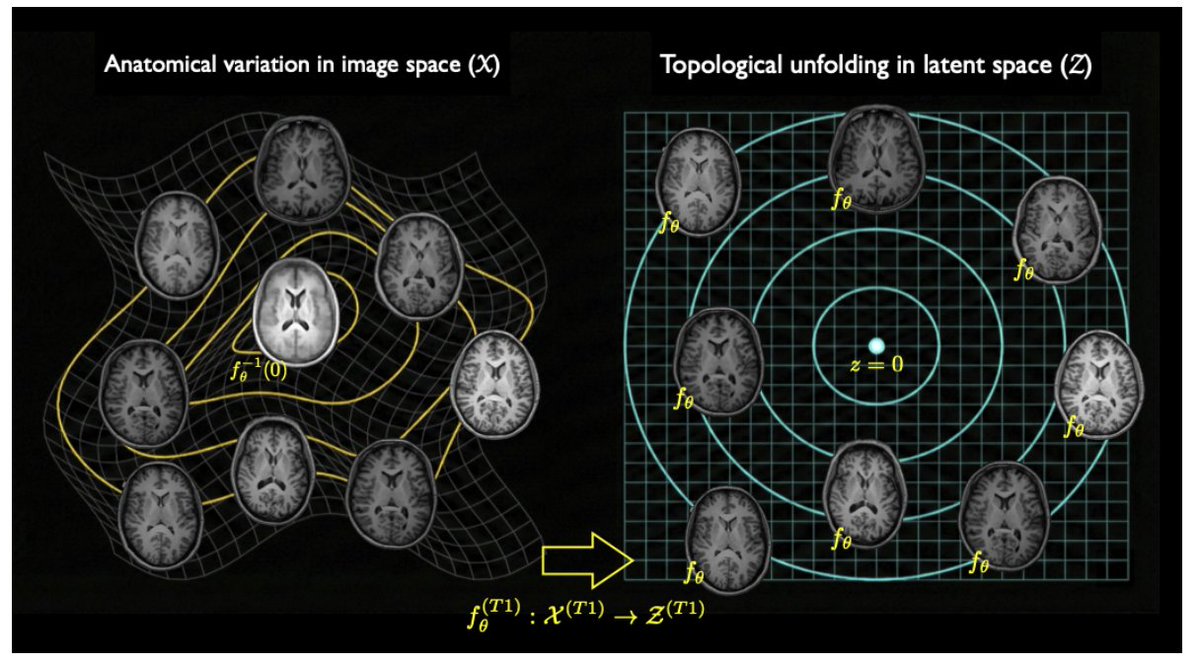
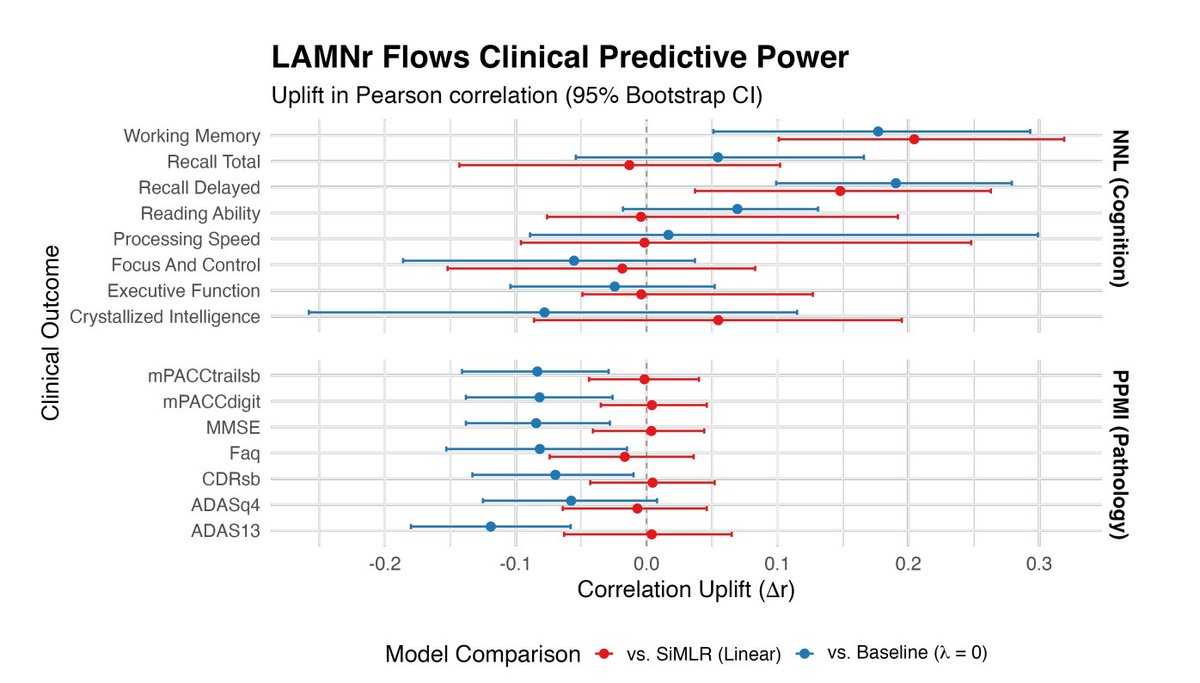
**LAMNr flows achieve up to a +0.19 correlation uplift over linear baselines when predicting cognitive decline, while enabling closed-form cross-modal imputation in a single forward pass.** 🧠
The problem: Standard generative models (VAEs, GANs, diffusion) can't give you exact likelihoods *and* one-shot invertible latent spaces—critical for rigorous anatomical analysis.
The core innovation: The authors introduce Latent-Aligned Multiview Normalizing (LAMNr) flows, which learn shared + private latent subspaces across heterogeneous imaging modalities using alignment losses like VICReg, all while preserving exact log-likelihoods.
Key result: In the NNL cohort, LAMNr flows significantly outperformed linear SiMLR baselines—Working Memory saw a ∆r of +0.177 (q=0.024)—and enabled zero-shot T1→FA imputation via closed-form Gaussian conditioning.
This framework essentially redefines computational anatomy: population templates become the latent origin, geodesics become spherical interpolation, and missing modalities become conditional expectations.
Could this make traditional diffeomorphic registration pipelines obsolete for multimodal analysis? 🔥
#MachineLearning #DeepLearning #MedicalImaging #NormalizingFlows #ComputationalAnatomy #Neuroimaging #AI
📄 Paper: https://t.co/Zq5ySIFvb7
Most single-cell & spatial omics integration methods fall apart when data is incomplete, unpaired, or missing modalities entirely—exactly the mess researchers face in real labs. 🧬
Enter **GAMMI**: a graph-guided framework that rethinks integration as *relational structure learning* instead of relying on fragile cell-to-cell alignment.
The authors built heterogeneous graphs linking cells, genes, & features, then applied contrastive learning with a **missingness-aware** twist—avoiding false negatives from unobserved data. Spatial info isn't just tacked on after; it's baked in as a structural constraint during training.
Result? 🏆 GAMMI consistently beat state-of-the-art across 5 challenging mosaic multi-omics benchmarks, including fully unpaired datasets where other methods collapsed. It preserved biological structure while removing batch effects, even in low-overlap regimes.
Could graph-based relational learning finally make explicit cell-matching methods obsolete? 🔥
#AI #Bioinformatics #SingleCell #SpatialOmics #MultiOmics #DeepLearning #GraphNeuralNetworks
📄 Paper: https://t.co/e88aLMvtKC
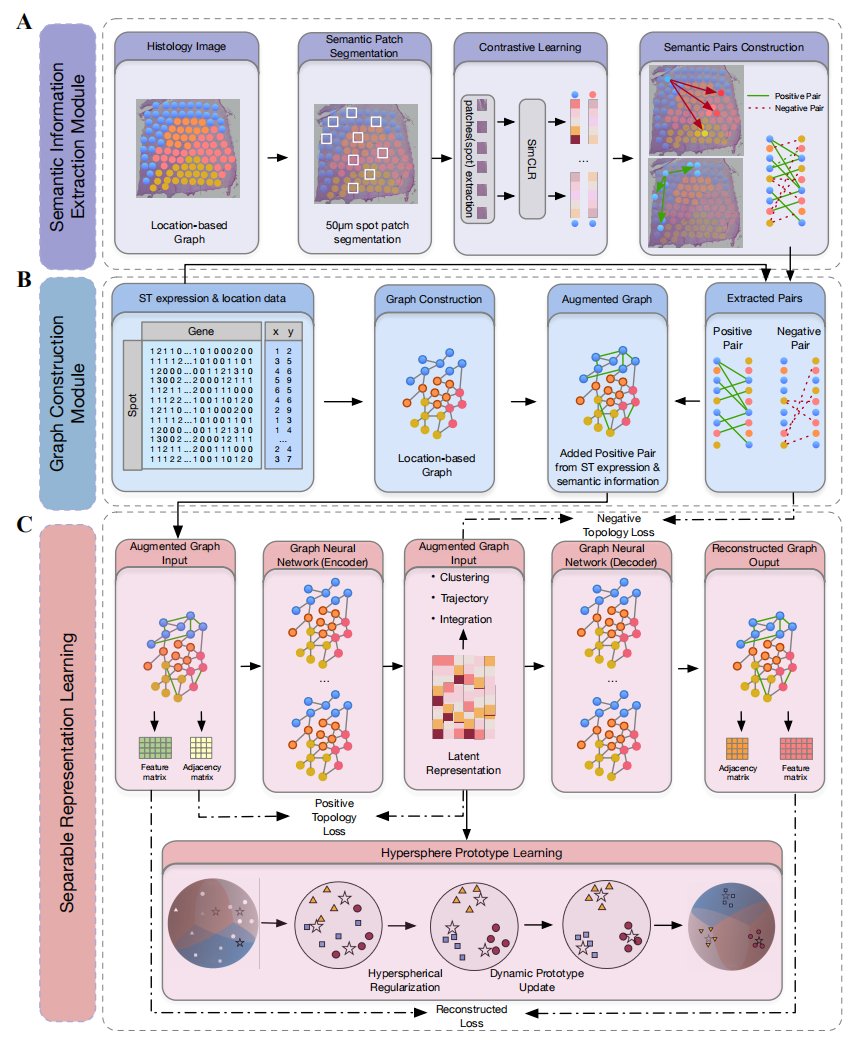
This paper introduces S3RL, a framework that uses a Graph Transformer and hyperspherical prototype clustering to force spatial transcriptomics representations into well-separated clusters on a unit sphere 🧬🌀
The problem: Current methods struggle with blurry tissue boundaries, noisy graphs, and overlapping cell-type clusters in spatial data.
The key innovation: S3RL maps cell spot representations onto a hypersphere with "prototypes" (cluster centers) that are evenly distributed—acting like gravitational anchors that pull similar cells together and push different ones apart. This end-to-end approach combines gene expression, spatial coordinates, and histological image features via a graph that includes both positive and negative edges (telling the model which cells are functionally similar vs. different).
Key result: On the Nanostring lung cancer dataset, S3RL improves clustering accuracy (ARI) by nearly 120% over existing methods. For multi-slice alignment, it achieves over 65% improvement in partial brain slices vs. GraphST.
Biological takeaway: The enhanced data reveals clearer ligand-receptor signaling pathways (e.g., FGF-FGFR, DLL4-NOTCH4) and sharper marker gene boundaries, making cell-cell communication networks more interpretable.
Could forcing representations onto a hyperspherical manifold with evenly spaced prototypes be the missing piece for resolving tissue heterogeneity in spatial transcriptomics?
#AI #MachineLearning #SpatialTranscriptomics #SingleCell #Bioinformatics #GraphTransformer #DeepLearning
📄 Paper: https://t.co/cfMRZHHmc9
**scLASER detects time-dependent cell dynamics with 87.8% sensitivity vs 30.9% for traditional methods—a 3x improvement for rare cell types.** 🧬📊
The problem: Longitudinal single-cell studies track how cellular neighborhoods change over time, but existing methods miss rare cell types & non-linear patterns, and can't estimate study power.
The innovation: The authors built a unified framework that models cellular neighborhood dynamics & simulates realistic longitudinal datasets for power calculation—no more guessing sample sizes.
Key results: In IBD (95,813 cells), scLASER identified treatment-responsive NOTCH3+ stromal cells with AUC >0.92. In COVID-19 (188,181 cells), it revealed 3 distinct T cell activation axes missed by original analyses.
Is this the missing piece for designing cheaper, more powerful longitudinal clinical trials? 🧪
#AI #Bioinformatics #SingleCell #LongitudinalAnalysis #ComputationalBiology #BiomedicalResearch #scRNASeq
📄 Paper: https://t.co/l2nzAkycjo
**Can we finally map metabolism inside individual organelles—without ripping them out of cells? 🧫**
Current methods for studying lysosomal metabolism require isolating organelles, losing their native cellular context. Fluorescence microscopy shows *where* they are, but not *what’s inside* them chemically.
This paper from *Nature Methods* introduces **FILM**—a mid-infrared photothermal microscope that combines IR spectroscopy with fluorescence detection to fingerprint biomolecules inside single lysosomes in living cells and organisms.
The breakthrough? An **optical boxcar demodulation** scheme that cuts photobleaching by 100x, a **self-supervised AI denoiser (SPEND)** that boosts image SNR 26.9x, and a **MCR-LASSO spectral unmixing** algorithm that resolves 8 biomolecular components per lysosome.
The authors uncovered **lipolytic & proteolytic heterogeneity** across lysosomes within the same cell, tracked **early-onset lysosomal dysfunction during aging**, and profiled metabolic changes in lysosomal storage diseases (NPC1KO, C. elegans LSD models) at the single-organelle level.
Finally, FILM works on mitochondria and lipid droplets too. 🔬
**Is this the missing piece for building a high-resolution chemical atlas of every organelle in a living cell?** 👇
#Science #Microscopy #Metabolism #Lysosomes #Bioimaging #InfraredSpectroscopy #NatureMethods
📄 Paper: https://t.co/Y6H8jgcT8k
**🚨 BREAKING: A new unified framework just shattered the performance ceiling for decoding cancer from both tissue images AND molecular data—across 12 cancer types. 🧬🔬**
The authors present **Multi-Embed**, a self-supervised multimodal learning framework that systematically infers and integrates pathological morphologies with multilayer molecular profiles (transcriptomics, epigenomics, proteomics, genomics).
**Core innovation:** Instead of training on small-scale spatial data, Multi-Embed uses a pathology foundation model (UNI) + contrastive learning to align multiscale tissue features with multi-omics in a unified embedding space—without needing end-to-end supervision.
**Key result:** Multi-Embed achieved an average PCC of **0.37** for morphology-to-gene expression inference across 12 TCGA cancer types, significantly outperforming HE2RNA (0.29) & DeepPT (0.32). It also identified new TLS regions missed by previous methods and built spatiotemporal tumor trajectories.
Could this unified embedding approach finally make specialized single-modality pathology models obsolete? 🤔
#AI #MachineLearning #CancerResearch #SpatialTranscriptomics #MultimodalLearning #Pathology #Bioinformatics
📄 Paper: https://t.co/6FHFA884qi
🚨 **Xenium spatial transcriptomics has a dirty secret: massive transcript spillover is contaminating your data.**
This new study in Nature Methods from Bilous et al. presents one of the most comprehensive Xenium datasets to date—41 tissue sections from 27 donors—and systematically dissects technical noise that has been flying under the radar.
The problem? Transcripts from neighboring cells (especially malignant cells) spill over into adjacent cell profiles, creating artificial "doublets." This blurs cell-type boundaries and can lead to false biological conclusions—like seeing T cell exhaustion signals that aren't really there.
The core innovation? **SPLIT**—a simple computational method that uses snRNA-seq references to decompose mixed transcriptomic signals and purify each cell's expression profile.
Key results? SPLIT consistently removed non-specific signals while enhancing true T cell exhaustion signatures (HAVCR2, CTLA4, PDCD1). It also achieved the best cell-type separation compared to other methods, without the massive gene loss seen in alternatives like ResolVI or Ovrlpy.
Targeted panels actually outperformed the 5K panel in sensitivity—a crucial insight for experimental design.
**Could uncorrected transcript spillover be systematically biasing every spatial transcriptomics study published to date?** 🧵
#SpatialTranscriptomics #SingleCell #Bioinformatics #Xenium #CancerResearch #ComputationalBiology #Transcriptomics
📄 Paper: https://t.co/VSg5DQUnV3
No training data? No problem. 🧠
New paper in *Nature Methods* introduces **UDMT**—an unsupervised deep transfer learning method for multi-animal tracking that achieves SOTA performance **without a single manual annotation**.
Here’s the key insight:
Most animal tracking tools require hundreds of manually labeled frames (supervised learning). UDMT instead uses a **bidirectional closed-loop strategy**: track an animal forward in time, then track it **backward** to the starting point. The network trains itself by minimizing the consistency error between forward and backward paths—no labels needed. 🔄
The authors combine this with a spatiotemporal transformer that captures both appearance and temporal dynamics. Three dedicated modules (localization refining, identity correction, automatic parameter tuning) handle crowding, occlusion, and rapid motion that break other trackers.
**Key metric**: UDMT achieves **71.87% HOTA** tracking *10 mice simultaneously*—beating DLC-SuperAnimal by 16% and SLEAP by 22%. Identity switches reduced 13-fold vs pretrained models. The method generalizes across mice, rats, fruit flies, C. elegans, and betta fish.
Could this finally make behavioral neuroscience fully **annotation-free**? 🧪🐭
#AI #MachineLearning #AnimalTracking #ComputationalEthology #Neuroscience #DeepLearning #NatureMethods
📄 Paper: https://t.co/krLxsJ4aIR
Most protein interaction prediction models treat single mutations like minor typos—but biology sees them as rewiring the entire network 🔄
The problem? Existing sequence-based & structure-based tools can't reliably tell whether one amino acid change will break or preserve a protein's ability to talk to its partners. That's the "interaction cliff" challenge.
Enter eSIG-Net: a mutation-centric interaction language model that learns the *difference* between wild-type and mutant sequences—not just the sequences themselves.
🧬 The innovation? Syntax-aware mutation encoding + contrastive learning that forces the model to focus on what actually changes.
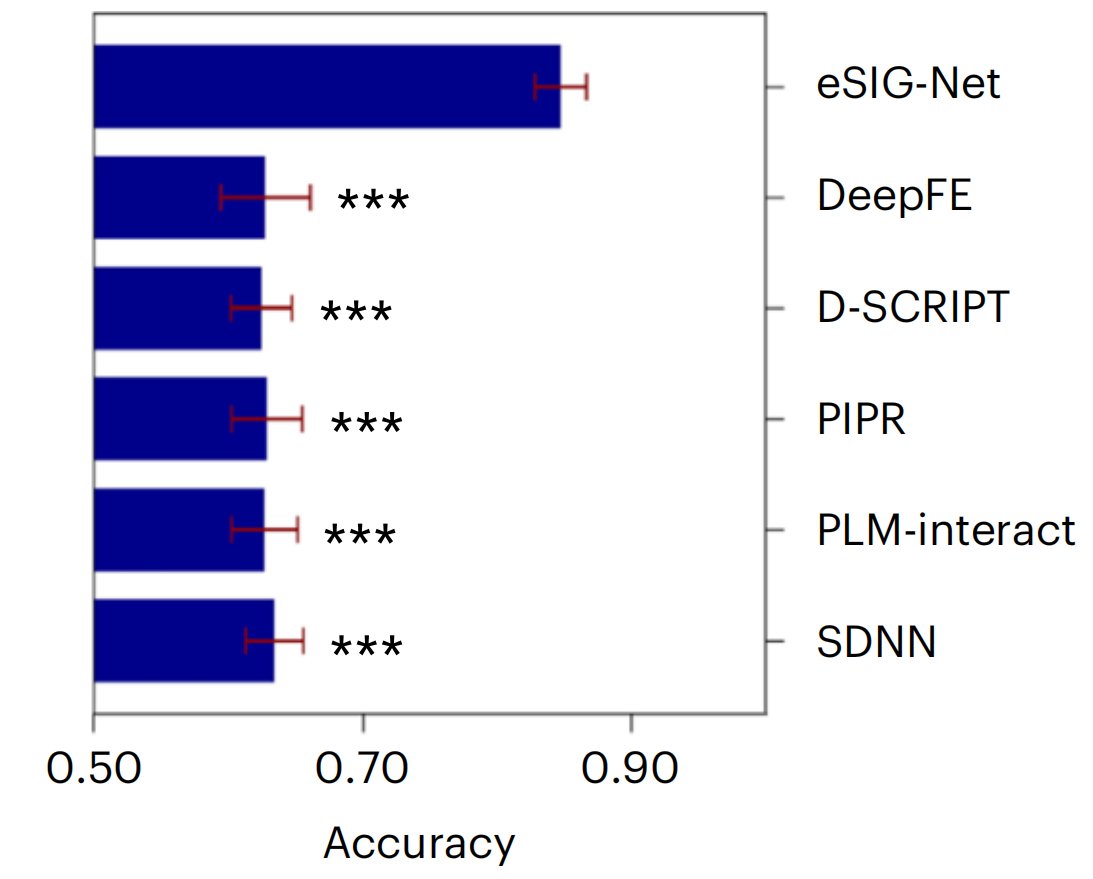
Key result: eSIG-Net hits 85% accuracy on disease mutation PPI datasets—crushing the best alternative (63%) by 22 points. AUC of 0.91 vs. 0.73 for the next best method.
Could this be the missing piece for interpreting those millions of variants of unknown significance sitting in genomic databases?
#AI #Bioinformatics #ProteinInteractions #MutationPrediction #Genomics #MachineLearning #SingleMutations
📄 Paper: https://t.co/9dfJELn4N6
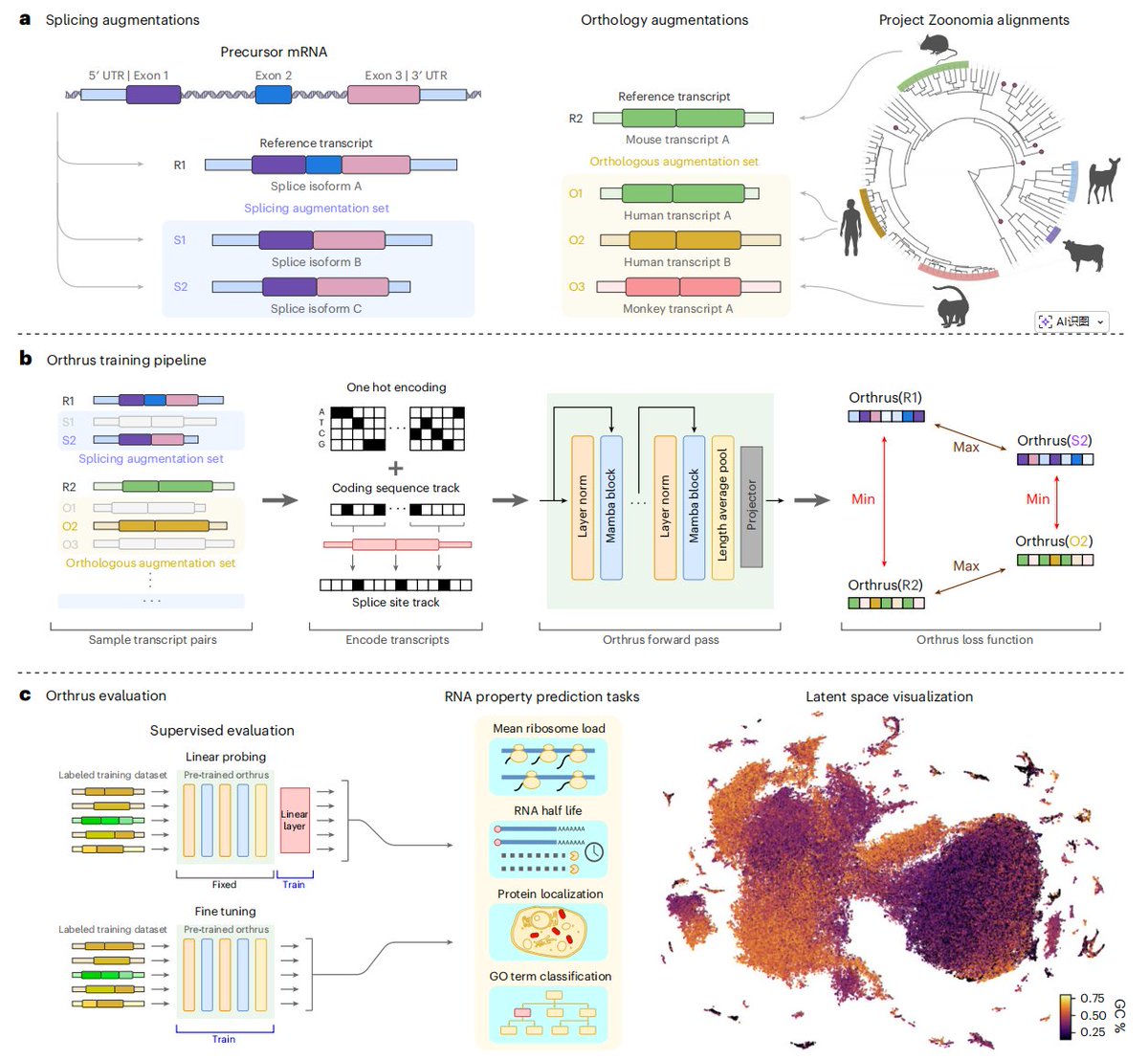
**Orthrus isn't just another genomic AI—it's the first RNA foundation model that actually "understands" biology by learning from evolution itself.** 🧬
The problem: existing genomic models borrow training tricks from NLP (like predicting masked words), but most DNA is non-functional noise. This makes them data-hungry and inefficient for predicting mRNA properties like half-life, translation efficiency, or localization.
**The breakthrough:** The authors trained Orthrus using biologically-inspired contrastive learning—it learns by maximizing similarity between *related* transcripts: splice isoforms from 10 species + orthologous genes from 400+ mammals. This forces the model to focus on what evolution conserved: functional relevance. 🧠
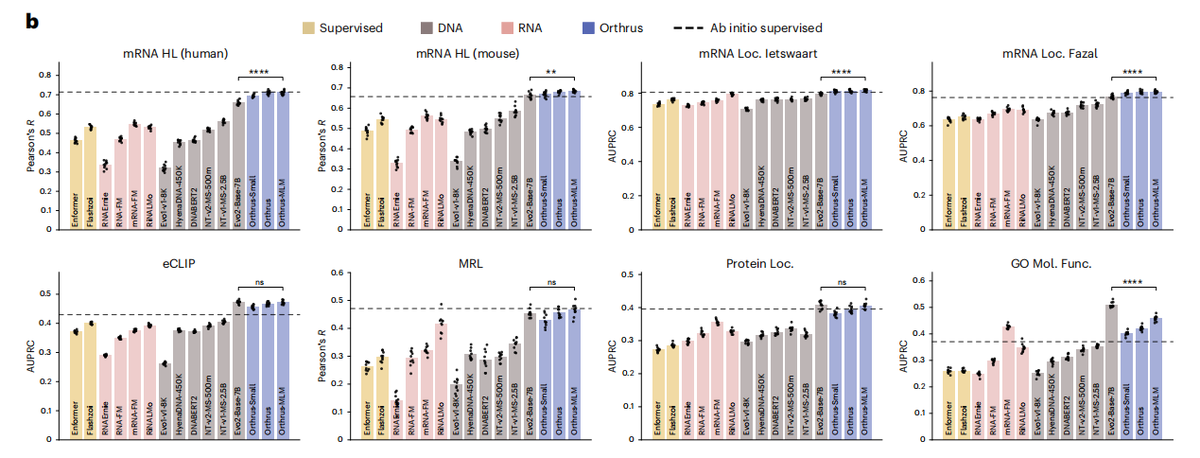
Key result? Orthrus (10M params) matches or outperforms Evo2 (7B params) on 7/8 tasks—a **700× parameter efficiency gain**. Even crazier: a linear probe on Orthrus embeddings beats specialized supervised models, and fine-tuning with just **30 examples** captures 71% of full-data performance.
Could this finally make expensive experimental RNA assays partially obsolete? 🔬
#AI #MachineLearning #Genomics #RNAbiology #FoundationModels #ComputationalBiology #Bioinformatics
📄 Paper: https://t.co/k4sAWNanra
🧵 **Thread: Learning biophysical gene regulation dynamics with Probability Flow Matching**
Single-cell RNA-seq gives us snapshots of the transcriptome, but inferring the underlying *stochastic* gene regulatory dynamics remains a fundamental challenge—most methods either lack mechanistic interpretability or fail to generalize beyond observed conditions.
The paper introduces **Probability Flow Matching (PFM)**, a scalable simulation-free framework that learns biophysically consistent stochastic processes directly from time-resolved single-cell data. The key innovation? PFM leverages flow matching with Chebyshev polynomial interpolation to regress probability flow velocities without expensive ODE solves, while naturally accounting for intrinsic noise and cell proliferation/death. This enables inference in native gene space rather than black-box latent embeddings.
On hematopoiesis datasets, PFM shows that models with similar interpolation accuracy can encode fundamentally different dynamics—only biophysically consistent formulations (e.g., Chemical Langevin Equation) accurately capture lineage transitions, generalize to unseen perturbations, and predict knockout effects (KLF1/FLI1) faithfully. Deterministic models interpolate well but fail mechanistically.
Is biophysical consistency the missing piece for reliable *in silico* perturbation modeling in single-cell biology? 🧬
#AI #MachineLearning #SingleCell #GeneRegulation #ComputationalBiology #FlowMatching #scRNAseq
📄 Paper: [TODO: paste link here]
**New paper drops: feeding AI the "open" parts of the genome just made gene expression prediction a lot smarter.** 🧬🔬
**The problem:** Most sequence-to-expression models only read DNA letters, ignoring a crucial filter—chromatin accessibility (which parts of the genome are actually *open* for business).
**The fix:** Lapohos et al. simply added ATAC-seq data as an extra input channel to a CNN. That’s it. A 5th track alongside the 4 DNA bases.
**The result:** The augmented model significantly outperformed sequence-only or accessibility-only baselines across 12 cell types. It was especially better at predicting expression of *highly variable* genes (the ones that actually define cell identity) and generalized across cell types. Attribution scores in the DNA channels also aligned with accessibility, letting the model learn cell type-specific regulatory motifs like ETS1 and RXRA.
**The kicker?** Fine-tuning a pre-trained sequence-only model with accessibility boosted performance even further. This strategy is portable—any sequence-to-expression architecture can adopt it.
🧠 Is adding a single "context" track the missing piece for decoding cis-regulatory grammar at scale?
#AI #MachineLearning #Genomics #SingleCell #ATACseq #GeneRegulation #Bioinformatics
📄 Paper: [TODO: paste link here]
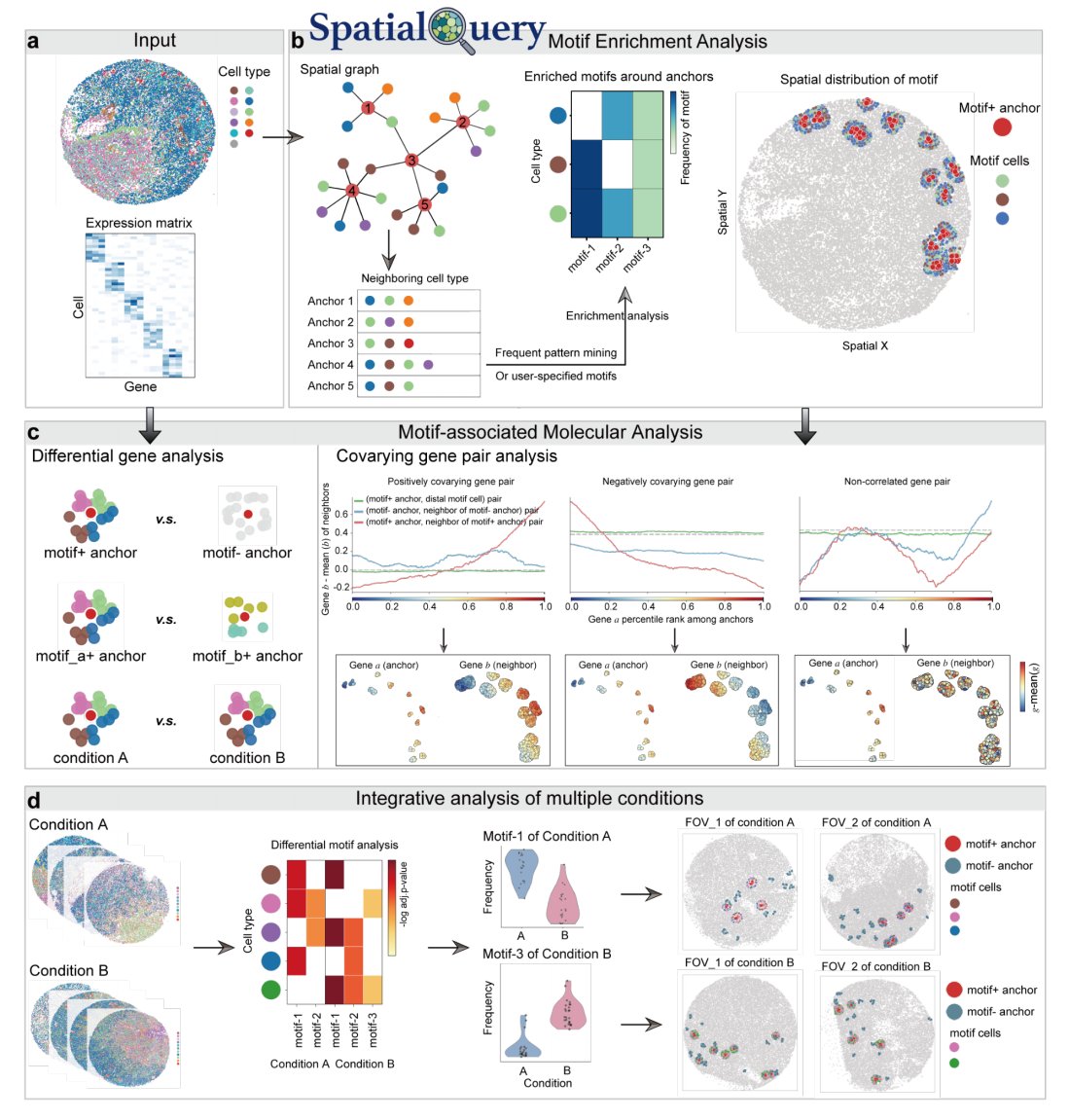
Ever tried to find a “cellular neighborhood” in your spatial data, only to realize the tools for spotting patterns and the tools for understanding their molecular triggers speak completely different languages? 🧬
That’s the problem SpatialQuery solves. Up to now, finding *where* cell types cluster together (the motifs) and figuring out *what genes* change because of that clustering were separate, incompatible workflows.
This study introduces a unified framework that does both. It uses a frequent pattern mining algorithm (FP-Growth) to discover recurrent, statistically enriched multicellular motifs, then runs differential expression and cross-cell covariation analysis directly on those same motifs—bypassing the usual decoupled pipeline. The authors show it works across spatial transcriptomics and proteomics, from discovering cross-germ-layer signaling in a mouse embryo to revealing fibrotic niches in kidney disease.
Key result: The framework ran on a whole-brain atlas of ~8.4 million cells in under 10 minutes. Fast enough to power a web-based interactive portal. ⚡
What’s the catch? The covariation signals are correlational, and in complex tissues like the brain, regional identity can overwhelm the motif signal—requiring careful stratification. Could a tool that finally unifies pattern discovery with molecular profiling make pairwise ligand-receptor analysis a thing of the past? 🤔
#AI #SpatialOmics #Bioinformatics #SingleCell #ComputationalBiology #DeepLearning #DataScience
📄 Paper: https://t.co/UaS8jaTkPh
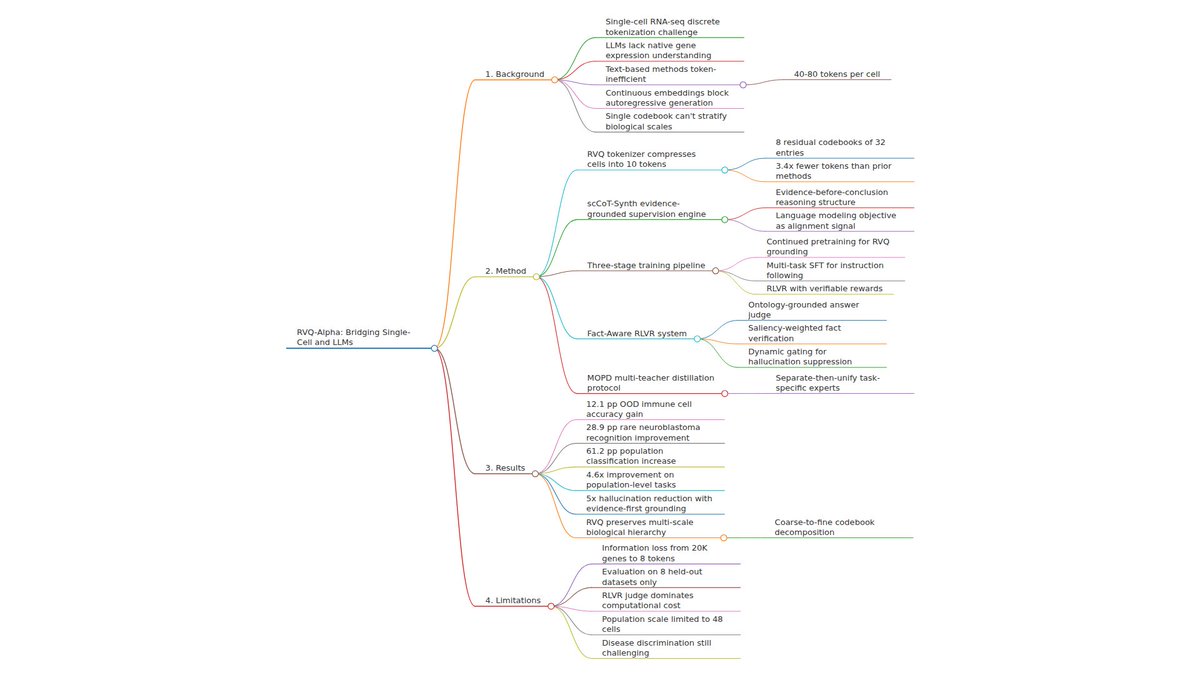
Current methods for single-cell analysis either discard quantitative expression data or require too many tokens for LLM processing — a fundamental gap that prevents true cell understanding and generation. 🧬
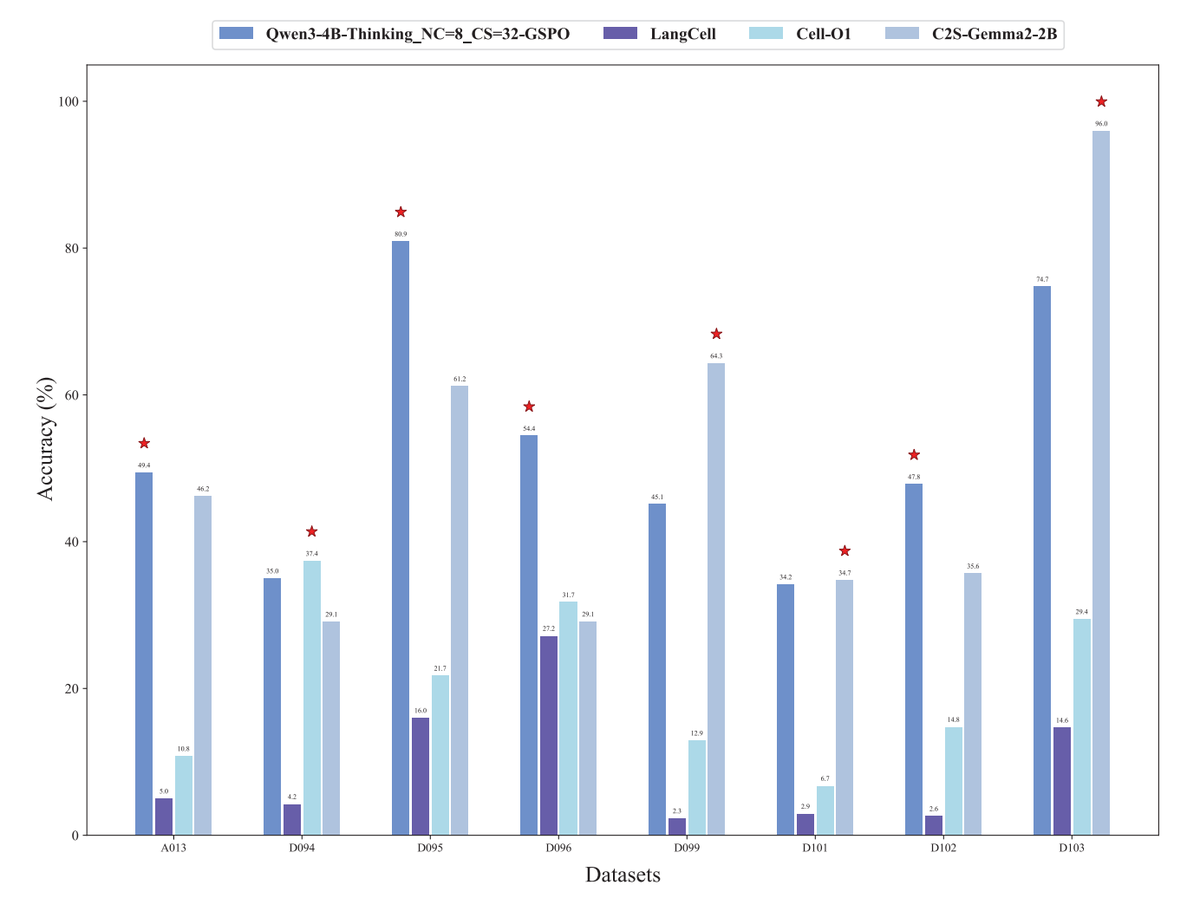
This paper introduces RVQ-Alpha, a framework that bridges single-cell transcriptomics with LLMs via Residual Vector Quantization (RVQ). The key innovation: compressing each cell’s gene expression into just 10 discrete tokens (3.4× fewer than prior methods) that sit directly in the LLM’s vocabulary. The system then uses "evidence-before-conclusion" reasoning with verifiable reinforcement learning to ground biological claims in actual expression data — reducing hallucinations by more than 5×.
Built on Qwen3-4B, the model achieves 82.8% accuracy on out-of-distribution immune cells (+12.1 pp) and rare neuroblastoma recognition jumps from 36.1% to 65.0%. Population-level cell-type classification improves 4.6×.
Could this finally make the "AI Virtual Cell" a reality? 🤖
#AI #MachineLearning #SingleCell #Transcriptomics #LLM #Bioinformatics #CellBiology
📄 Paper: https://t.co/yn0CJBqaPC









![Tech_Bioinfo's tweet photo. 🧵 **Thread: Learning biophysical gene regulation dynamics with Probability Flow Matching**
Single-cell RNA-seq gives us snapshots of the transcriptome, but inferring the underlying *stochastic* gene regulatory dynamics remains a fundamental challenge—most methods either lack mechanistic interpretability or fail to generalize beyond observed conditions.
The paper introduces **Probability Flow Matching (PFM)**, a scalable simulation-free framework that learns biophysically consistent stochastic processes directly from time-resolved single-cell data. The key innovation? PFM leverages flow matching with Chebyshev polynomial interpolation to regress probability flow velocities without expensive ODE solves, while naturally accounting for intrinsic noise and cell proliferation/death. This enables inference in native gene space rather than black-box latent embeddings.
On hematopoiesis datasets, PFM shows that models with similar interpolation accuracy can encode fundamentally different dynamics—only biophysically consistent formulations (e.g., Chemical Langevin Equation) accurately capture lineage transitions, generalize to unseen perturbations, and predict knockout effects (KLF1/FLI1) faithfully. Deterministic models interpolate well but fail mechanistically.
Is biophysical consistency the missing piece for reliable *in silico* perturbation modeling in single-cell biology? 🧬
#AI #MachineLearning #SingleCell #GeneRegulation #ComputationalBiology #FlowMatching #scRNAseq
📄 Paper: [TODO: paste link here]](https://pbs.twimg.com/media/HHJClwabEAAQBwQ.jpg)
![Tech_Bioinfo's tweet photo. 🧵 **Thread: Learning biophysical gene regulation dynamics with Probability Flow Matching**
Single-cell RNA-seq gives us snapshots of the transcriptome, but inferring the underlying *stochastic* gene regulatory dynamics remains a fundamental challenge—most methods either lack mechanistic interpretability or fail to generalize beyond observed conditions.
The paper introduces **Probability Flow Matching (PFM)**, a scalable simulation-free framework that learns biophysically consistent stochastic processes directly from time-resolved single-cell data. The key innovation? PFM leverages flow matching with Chebyshev polynomial interpolation to regress probability flow velocities without expensive ODE solves, while naturally accounting for intrinsic noise and cell proliferation/death. This enables inference in native gene space rather than black-box latent embeddings.
On hematopoiesis datasets, PFM shows that models with similar interpolation accuracy can encode fundamentally different dynamics—only biophysically consistent formulations (e.g., Chemical Langevin Equation) accurately capture lineage transitions, generalize to unseen perturbations, and predict knockout effects (KLF1/FLI1) faithfully. Deterministic models interpolate well but fail mechanistically.
Is biophysical consistency the missing piece for reliable *in silico* perturbation modeling in single-cell biology? 🧬
#AI #MachineLearning #SingleCell #GeneRegulation #ComputationalBiology #FlowMatching #scRNAseq
📄 Paper: [TODO: paste link here]](https://pbs.twimg.com/media/HHJCjkZaIAA-ZXm.jpg)
![Tech_Bioinfo's tweet photo. **New paper drops: feeding AI the "open" parts of the genome just made gene expression prediction a lot smarter.** 🧬🔬
**The problem:** Most sequence-to-expression models only read DNA letters, ignoring a crucial filter—chromatin accessibility (which parts of the genome are actually *open* for business).
**The fix:** Lapohos et al. simply added ATAC-seq data as an extra input channel to a CNN. That’s it. A 5th track alongside the 4 DNA bases.
**The result:** The augmented model significantly outperformed sequence-only or accessibility-only baselines across 12 cell types. It was especially better at predicting expression of *highly variable* genes (the ones that actually define cell identity) and generalized across cell types. Attribution scores in the DNA channels also aligned with accessibility, letting the model learn cell type-specific regulatory motifs like ETS1 and RXRA.
**The kicker?** Fine-tuning a pre-trained sequence-only model with accessibility boosted performance even further. This strategy is portable—any sequence-to-expression architecture can adopt it.
🧠 Is adding a single "context" track the missing piece for decoding cis-regulatory grammar at scale?
#AI #MachineLearning #Genomics #SingleCell #ATACseq #GeneRegulation #Bioinformatics
📄 Paper: [TODO: paste link here]](https://pbs.twimg.com/media/HHCdIECaQAA6KFT.png)
![Tech_Bioinfo's tweet photo. **New paper drops: feeding AI the "open" parts of the genome just made gene expression prediction a lot smarter.** 🧬🔬
**The problem:** Most sequence-to-expression models only read DNA letters, ignoring a crucial filter—chromatin accessibility (which parts of the genome are actually *open* for business).
**The fix:** Lapohos et al. simply added ATAC-seq data as an extra input channel to a CNN. That’s it. A 5th track alongside the 4 DNA bases.
**The result:** The augmented model significantly outperformed sequence-only or accessibility-only baselines across 12 cell types. It was especially better at predicting expression of *highly variable* genes (the ones that actually define cell identity) and generalized across cell types. Attribution scores in the DNA channels also aligned with accessibility, letting the model learn cell type-specific regulatory motifs like ETS1 and RXRA.
**The kicker?** Fine-tuning a pre-trained sequence-only model with accessibility boosted performance even further. This strategy is portable—any sequence-to-expression architecture can adopt it.
🧠 Is adding a single "context" track the missing piece for decoding cis-regulatory grammar at scale?
#AI #MachineLearning #Genomics #SingleCell #ATACseq #GeneRegulation #Bioinformatics
📄 Paper: [TODO: paste link here]](https://pbs.twimg.com/media/HHCdFcbaYAAjDVL.jpg)











![Tech_Bioinfo's tweet photo. 🧵 **Thread: Learning biophysical gene regulation dynamics with Probability Flow Matching**
Single-cell RNA-seq gives us snapshots of the transcriptome, but inferring the underlying *stochastic* gene regulatory dynamics remains a fundamental challenge—most methods either lack mechanistic interpretability or fail to generalize beyond observed conditions.
The paper introduces **Probability Flow Matching (PFM)**, a scalable simulation-free framework that learns biophysically consistent stochastic processes directly from time-resolved single-cell data. The key innovation? PFM leverages flow matching with Chebyshev polynomial interpolation to regress probability flow velocities without expensive ODE solves, while naturally accounting for intrinsic noise and cell proliferation/death. This enables inference in native gene space rather than black-box latent embeddings.
On hematopoiesis datasets, PFM shows that models with similar interpolation accuracy can encode fundamentally different dynamics—only biophysically consistent formulations (e.g., Chemical Langevin Equation) accurately capture lineage transitions, generalize to unseen perturbations, and predict knockout effects (KLF1/FLI1) faithfully. Deterministic models interpolate well but fail mechanistically.
Is biophysical consistency the missing piece for reliable *in silico* perturbation modeling in single-cell biology? 🧬
#AI #MachineLearning #SingleCell #GeneRegulation #ComputationalBiology #FlowMatching #scRNAseq
📄 Paper: [TODO: paste link here]](https://pbs.twimg.com/media/HHJCnwzbsAIEPaG.jpg)
![Tech_Bioinfo's tweet photo. **New paper drops: feeding AI the "open" parts of the genome just made gene expression prediction a lot smarter.** 🧬🔬
**The problem:** Most sequence-to-expression models only read DNA letters, ignoring a crucial filter—chromatin accessibility (which parts of the genome are actually *open* for business).
**The fix:** Lapohos et al. simply added ATAC-seq data as an extra input channel to a CNN. That’s it. A 5th track alongside the 4 DNA bases.
**The result:** The augmented model significantly outperformed sequence-only or accessibility-only baselines across 12 cell types. It was especially better at predicting expression of *highly variable* genes (the ones that actually define cell identity) and generalized across cell types. Attribution scores in the DNA channels also aligned with accessibility, letting the model learn cell type-specific regulatory motifs like ETS1 and RXRA.
**The kicker?** Fine-tuning a pre-trained sequence-only model with accessibility boosted performance even further. This strategy is portable—any sequence-to-expression architecture can adopt it.
🧠 Is adding a single "context" track the missing piece for decoding cis-regulatory grammar at scale?
#AI #MachineLearning #Genomics #SingleCell #ATACseq #GeneRegulation #Bioinformatics
📄 Paper: [TODO: paste link here]](https://pbs.twimg.com/media/HHCdOMCb0AA11Io.jpg)