House of Wisdom (HOW), a private Bangkok club for business owners and senior executives, brought together chief executives and founders from industries including property, e-commerce, healthcare and media on Nov. 19 for "When the Sh*t Hits the Fan: Leadership When Everything Goes Wrong." The two-hour forum, held at Kingbridge Hall in the Rama III district, started from a blunt premise: crises rarely announce themselves, and the standard playbook often fails when they arrive.
.
The audience read like a cross-section of Thai corporate power. In the room were Maneerut Anulomsombut, chief executive of Sea (Thailand), which runs Shopee and Garena; Nuttaphong Kunakornwong, chief executive of property developer SC Asset Corporation; Dr. Chairat Panthuraamphorn, chief executive of the Samitivej and BNH hospital groups; Siriwat Wongjarukorn, chief executive of IT services company MFEC; Sittichoke Nopchinabutr, president of the mobile business at Thai Samsung Electronics; Vichai Kulsomphob, chief executive of Saha Pathana Inter-Holding; and Dr. Dittapong Boonamphon, founder of S Spine Hospital. Television host Vuthithorn "Woody" Milintachinda, who runs production company Woody World, was also among the guests.
.
The speakers were chosen for having lived through a breakdown rather than studied one.
.
Continue reading 👉 https://t.co/Tih2TaDuWk
Dentsu and Techsauce Unite to Shape Thailand’s Future as Thailand and Japan Mark 140 Years of Relations 🇹🇭🇯🇵
Dentsu Thailand and Techsauce are joining forces to bring Dentsu Future Mandala Thailand Ver., dentsu’s proprietary foresight and business design tool, into a wider dialogue with Thailand’s business and innovation ecosystem.
🔎 Future Mandala maps 60 shifts shaping Thailand’s future across 4 dimensions:
• Social Demographics
• Society & Economy
• City & Environment
• Infrastructure & Technology
The aim is to help businesses anticipate long-term shifts and translate them into future business, service, and innovation opportunities, including ones that may be hard to see from within a single organisation or industry.
🚀 Through a dedicated dialogue session and accelerator program, Techsauce will bring together organisations from across its technology, startup, and business ecosystem, while dentsu applies Future Mandala and facilitates the conversation.
📌 Applications are now open to organisations from all industries.
#Techsauce #dentsu #FutureMandala #Accelerator #Foresight #ThailandJapan140
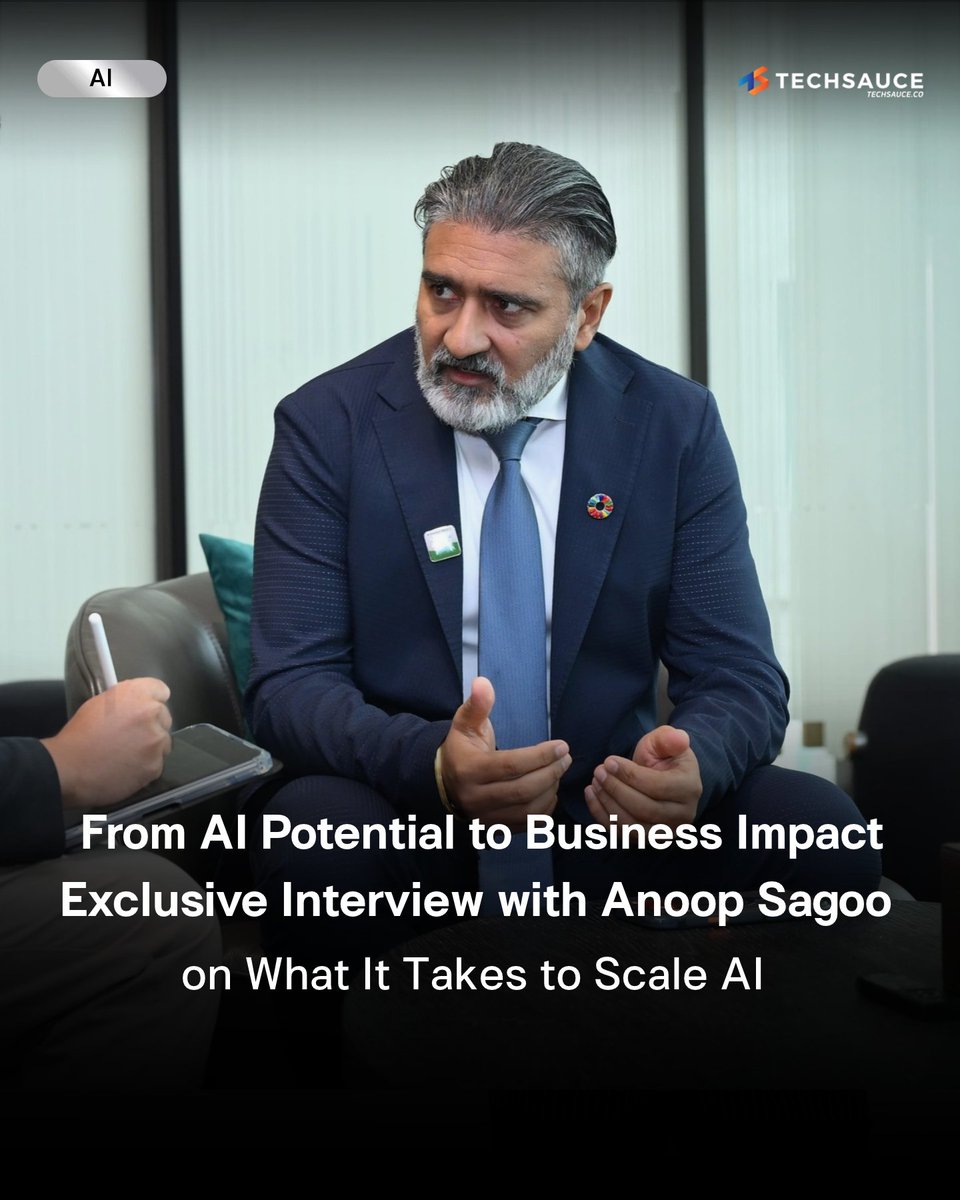
From AI Potential to Business Impact, Anoop Sagoo on What It Takes to Scale AI
As businesses move beyond AI experimentation, scaling its impact requires more than technology. Accenture Southeast Asia CEO Anoop Sagoodiscusses the importance of leadership alignment, business context, responsible governance and measuring AI by the value it creates.
As organizations move from experimenting with AI to applying it across the business, the challenge is no longer simply what the technology can do. It is how businesses can put AI to work in ways that deliver meaningful results. That requires leaders to look beyond individual tools and consider the people, processes, data and governance needed to make AI work at scale.
Speaking with Techsauce after the KBank x Techsauce: EMPOWER THE FUTURE ECONOMY forum, Anoop Sagoo, CEO of Accenture Southeast Asia, highlighted the importance of leadership, clear communication and understanding business context. While AI can provide sophisticated analysis and support decision-making, organizations still need people to set direction, make judgments and take responsibility for outcomes.
Read full article here : https://t.co/oy4PBsyKm8
When Oranuch Lerdsuwankij went looking for a guide to building a startup ecosystem in 2011, she went browsing in a bookstore and picked up a book about startups in Asia. It covered several Southeast Asian countries, including Indonesia, Singapore and Vietnam, but Thailand was not among them. For Oranuch, now Chief Executive Officer and Co-founder of Techsauce Media Co., Ltd., that omission became the problem she set out to fix.
She told the story at Thailand Tech Talent Connect 2026, in a talk titled “Techsauce: More Than a Conference, a Platform of Pride for Thailand,” to an audience of developers and researchers competing in the program. Her message was that Techsauce works as a platform that people in technology can use to get Thai work noticed, and that the mission she took on 15 years ago now extends beyond startups to research and deep tech.
.
Oranuch has spent about 25 years in the technology industry. She graduated with an engineering degree shortly after the 1997 Asian financial crisis, known in Thailand as the Tom Yum Kung crisis, when the economy was weak and the word “startup” was not yet in use. Software companies and large corporations that hired programmers made up the industry. She chose to gain experience first as an engineer at a mobile operator, then left when she was 28 or 29 to start businesses with friends.
.
There were two ventures: a digital marketing platform, which was later sold to a foreign company, and a digital agency. Those years showed her how hard it was for a Thai tech startup to raise money. Few people in Thailand knew what a startup was, so founders had to fly to Singapore, Japan and South Korea in search of funding.
.
That experience left her with a question: how could investors be brought to Thailand, so that startups and researchers could meet them without traveling abroad? When the book she turned to for answers did not mention Thailand, she resolved to put the country on that map.
.
Read more: https://t.co/BDin0h1ZO5
Many people once knew a dozen phone numbers by heart, then lost that ability when their phones began remembering for them. Dr. Kanapon Phumratprapin, Executive Director of Health at Home Co., Ltd., raised this familiar experience with a live audience to make a larger point. The same fading, he warned, is now happening to skills that matter far more, as people hand their thinking and decision-making over to AI.
.
That warning came from the panel “AI & ME: The New Rules of Living and Working” at Sustainability Expo 2026, ASEAN’s largest sustainability expo, held under the concept “Sufficiency for Sustainability.” The session brought together three speakers from different worlds: Kantima Lerlertyuttitham, Deputy Chief Executive Officer and Chief Corporate Officer of Advanced Info Service Plc. (AIS), who spoke from the perspective of a large enterprise; Oranuch Lerdsuwankij, Chief Executive Officer of Techsauce Media Co., Ltd., who drew on her work in technology media; and Dr. Kanapon, who represented medicine and health technology. Despite their different vantage points, their answers converged on one idea: the new rules of living with AI have little to do with how much or how fast people use it. The real test is whether people stay in charge of deciding what AI does and what they keep doing themselves.
.
All three already use AI every day. Kantima relies on it to process information that she once had to gather from many sources. Oranuch has AI summarize the 400 to 500 emails that reach her inbox daily, and she is training an AI assistant named Momo on her own experience so that it can advise her team in the future. Dr. Kanapon admitted that although he uses AI for coding and prototyping, the task he gives it most often is explaining the backstory of whatever online drama is in the news.
.
Read more: https://t.co/EuM8Al4Qb2
SCBX, a leading financial technology group in Thailand, has launched “SCBX Quantum Outlook 2026 — The Unfiltered Truth of Quantum,” highlighting that quantum computing is not only a threat to data encryption but also has the potential to create new value for financial services. The report calls on Thai organizations to prepare both to protect their data and to capitalize on business opportunities through five priorities: identifying business problems, preparing data security, developing talent, building partnerships and tracking technological progress. SCBX aims to bridge research and practical applications while beginning its transition to quantum-safe security, laying the foundations for Thailand to help develop the technology rather than simply wait to adopt it.
The report sets out five priorities to help Thai organizations prepare for the quantum era:
1. Identify critical business problems. Select two or three complex problems for which current computing methods offer only approximate solutions.
2. Prioritize data protection. Map the use of encryption across the organization, prioritizing long-lived customer data, payment systems and digital identity.
3. Build talent before investing in hardware. Give engineers and data scientists opportunities to develop quantum skills.
4. Build partnerships. Work with universities, cloud providers and industry partners to access expertise and technology without having to own the hardware.
5. Track verifiable progress. Evaluate machine reliability, error-correction capabilities and independently verified results.
Read full article : https://t.co/724J6Kq3CH
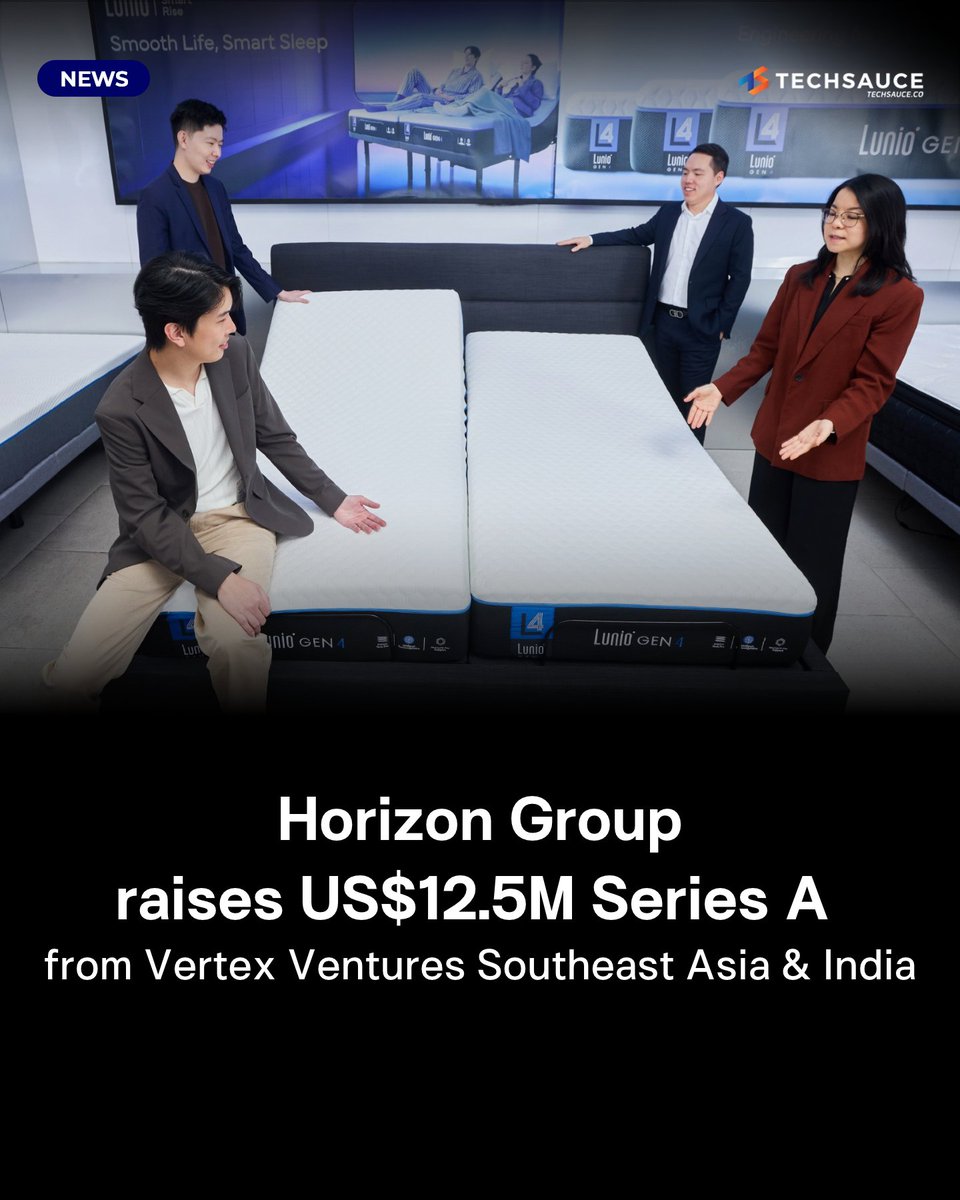
Horizon Group, a consumer wellness company behind its flagship brand, Lunio, has raised US$12.5 million in its Series A funding round from Vertex Ventures Southeast Asia & India, the sole investor in the round. With operations across Thailand, Taiwan, Vietnam and Malaysia, Horizon will use the investment to accelerate product development and expand Lunio beyond sleep into ergonomics, recovery and beauty, and drive its expansion across Asia-Pacific.
https://t.co/X9QH4ieYjP
At gamescom asia x Thailand Game Show 2026, the largest game exhibition in ASEAN, held at the Queen Sirikit National Convention Center from October 29 to 30, one pavilion brought together 10 game and technology companies from South Korea under the name KOREA-GAME INNOVATION HUB. All of them came with the same goal: finding partners who can help take their business into Thailand and Southeast Asia.
.
The pavilion was located in the event's Business-to-Business (B2B) zone. It was organized by the Korea Artificial Intelligence & Software Industry Association (KOSA) and Megazone Cloud under the Large-Small Business Joint Overseas Expansion Support Program, which helps large Korean companies and smaller ones expand overseas together. As a result, the participating companies covered almost the entire game industry value chain, from game developers, a sports gaming platform, a sound studio and a publisher to payment and anti-cheat solutions. Beyond showcasing their products, each company also held one-on-one business meetings with Thai game companies and publishers to explore partnership opportunities in the region.
.
Techsauce visited all 10 booths to learn what each company brought to the show, what it is focusing on, and how it sees opportunities in Thailand. Although their businesses differ widely, almost every booth gave a similar answer when asked what kind of partner they were looking for: 'a partner who understands the players and the culture of this market'.
.
Read more: https://t.co/O9MaA1E5l8
Betagro Public Company Limited, a leading integrated food company in Thailand, has acquired a majority stake in Freshket, a digital food supply platform for the hotel, restaurant and catering (HORECA) sector. The investment was made through Betagro Ventures, and financial terms were not disclosed. Betagro described the deal as its entry into FoodTech.
Betagro says the acquisition extends its food ecosystem from production through to digital distribution. It pairs Betagro's internationally certified food production and nationwide logistics network with Freshket's proprietary platform, which Betagro expects to strengthen its foodservice business and speed up the expansion of its digital distribution channels.
Freshket, which describes itself as Thailand's leading digital food supply platform for HORECA, was founded in 2017. It connects farmers and producers directly with foodservice businesses through an end-to-end supply chain, and the companies say its customers use it to streamline logistics, reduce food waste and gain more transparency across their supply chains. According to the companies, the platform offers more than 10,000 products to over 20,000 operators, with delivery accuracy above 98.5%.
Freshket is also pursuing several growth strategies. It plans to expand its range of imported products, including seafood, premium Japanese ingredients, cheese and butter. It also plans to extend its service area, which currently covers Bangkok, Pattaya, Hua Hin and Khon Kaen, to the Greater Bangkok area and major regional cities. It will also upgrade its cold-chain logistics to maintain product quality throughout delivery.
Read full article here : https://t.co/Mfqftzd1HZ
Twenty-two years ago, Werner Vogels would not have guessed he would spend this long at one company. By his own account, he came close to not joining Amazon at all.
Vogels was an academic who had spent years reasoning about some of the hardest problems in distributed systems. When Amazon, then known primarily as an online bookstore, approached him, his first instinct was to say no. He eventually took the meeting and changed his mind. He joined in September 2004 and has been CTO since January 2005.
Today, as VP and CTO of Amazon, he has spent 22 years at the company. In that time he has watched cloud computing go from a novelty to infrastructure, watched AWS and serverless take shape, and is now watching generative AI let one person build a working prototype in a single night.
Vogels told Techsauce that if you had asked his younger self whether he would stay at one company for more than 20 years, the answer would have been 'no.' What kept him there, he said, is that Amazon is different every year.
Techsauce sat down with him in Bangkok on October 6 during his visit to Thailand. The conversation was about the latest of those changes. AI is making work faster, and it is also changing how software gets built, how organizations operate, and what developers are for.
Read full article :https://t.co/oYEFyUZWoY
CVI's third Pink Economy report finds a majority of sampled political insiders back an LGBTQ+ Prime Minister and sets out what to build next
Canvas Ventures International (CVI) calls on Bangkok to become a "Pink Valley" by 2030. Its third annual report, Proof & Power: Thailand's Pink Economy, 2026, finds that 64 percent of the surveyed people who work in and around Thai politics back an LGBTQ+ Prime Minister, and none oppose.
Across its twenty signals and its Ecosystem Map, the report finds a Pink Economy with the people, the demand and the support already in place. CVI puts the economic activity linked to it at about US$10.3 billion in 2025 and projects it to approach US$20 billion by 2030. That counts all the money that moves through hotels, clinics, events, shops and creative work because of the community. The opportunity for founders and investors is to build what connects that activity to capital.
Read full article : https://t.co/3wk5NOLn4p
The 21st Eco Expo Asia 2026, jointly organised by the Hong Kong Trade Development Council (HKTDC) and Messe Frankfurt (HK) Ltd and co-organised by the Environment and Ecology Bureau of the Government of the Hong Kong Special Administrative Region (HKSAR), opened today for a four-day run (26 to 29 October) at AsiaWorld-Expo. Held under the theme ‘Connecting the World for a Sustainable Future’, this year’s Expo brings together over 340 exhibitors from 15 countries and regions. Some 200 senior officials and representatives of semi-official organisations from the Chinese Mainland, Hong Kong, Belt and Road and ASEAN countries will attend, further strengthening international exchange and ties.
.
HKTDC Executive Director Sophia Chong said:
“Hong Kong’s first Five Year Plan and the latest Policy Address both call for building a green and liveable city, to inject fresh momentum into the development of the green sector. As an important green trade platform in the region, Eco Expo Asia gathers innovative green technologies, products and solutions from around the world, fostering exchange and cooperation among governments, businesses, investors and research institutions. International participation has also grown this year, with Indonesia, Laos, the Philippines, Thailand and Vietnam joining for the first time. Through the Expo, we hope to harness Hong Kong’s strengths as an international business centre and smart green technology hub, promoting cross-region collaboration and enabling enterprises to enter new markets and unlock fresh opportunities.”
.
Tse Chin wan, Secretary for Environment and Ecology, said, “The nation embarks on its 15th Five-Year Plan, and the HKSAR’s first Five-Year Plan proactively aligns with national development strategies, with green transformation and development of a green and liveable city as its key directions. Hong Kong will continue to leverage its roles of “super connector” and a “super value-adder” to foster regional and international green cooperation. In this year’s Expo, the Environment and Ecology Bureau and the Ministry of Ecology and Environment jointly organise the Belt and Road Green Innovation Conference in Hong Kong on 26 October for the first time. Holding the two events concurrently fully harnesses the synergy. I am sure the Expo will inspire innovation and open up business collaboration opportunity, giving fresh impetus to a sustainable green future!”
.
The Eco Expo Asia welcome ceremony will be held tomorrow (27 October). Tse Chin‑wan, Secretary for Environment and Ecology, Sophia Chong, HKTDC Executive Director, and Jack Wong, Deputy General Manager of Messe Frankfurt (HK) Ltd, among other guests, will attend the ceremony.
.
Read more: https://t.co/9Z7ZTqIGeI
.
#EcoExpo2026
SCB 10X, the disruptive technology investment arm of SCBX Group, announced its investment in Tasklet, an AI agent platform that enables businesses to automate complex workflows and delegate operational tasks to AI agents. Tasklet has raised an additional $12.8 million in funding, with participation from investors including Union Square Ventures, 359 Capital, Uncorrelated, Robinhood Ventures, Rakesh Agrawal, Patrick and John Collison, and others.
Tasklet is building an AI-powered platform designed to help businesses move beyond AI assistants toward AI agents that can take action and execute real work. The platform allows users to describe business processes in natural language, while AI agents connect with business applications, data sources, and tools to perform tasks autonomously.
Founded by Andrew Lee and Jonny Dimond, Tasklet draws on the team's experience building Shortwave, an AI-powered email platform. Andrew previously co-founded Firebase, which was acquired by Google in 2014. The company was created around a broader vision for AI agents that can move beyond assisting with individual tasks and instead take responsibility for ongoing work across business systems.
Tasklet is designed around persistent agents that can take ongoing responsibility for work. Each agent can connect to business tools and data, respond to events and schedules, retain relevant context through memory, and operate across applications and browser environments. For enterprise use, Tasklet also provides organizational controls, permissions, guardrails and security capabilities designed to support deployment in real business workflows.
Read more : https://t.co/AbY4b0KBQD
"I think it's worse than you describe. I think it's Formula 1 at night without maybe brakes in the cars."
.
That was how Anthropic co-founder Jack Clark responded when IMF Managing Director Kristalina Georgieva compared AI to a Formula 1 race that needs barriers and safety standards. The exchange took place during the "AI and the Global Economy: From Risk to Opportunity" panel at the IMF-World Bank Annual Meetings in Bangkok.
.
Clark argued that AI needs what any race car needs: telemetry, lights to see the road, and brakes that actually work. For AI, that means shared standards, disclosure, and safeguards that can be evaluated. He also noted that the toys he buys for his children are regulated more than the superintelligence he works on.
.
The panel, which also included Tiff Macklem (Bank of Canada), Tobias Meyer (DHL Group), and Ayesha Khanna (Addo AI), discussed who benefits from AI, why individual productivity gains have yet to transform companies, and why countries that use AI also need the right to test it.
.
Read more: https://t.co/7xZhjNOJdT
Where will jobs come from for the 1.2 billion young people who will turn 18 over the next 15 years?
.
At the opening session of the 2026 IMF-World Bank Group Annual Meetings in Bangkok, Ajay Banga (World Bank Group), Tharman Shanmugaratnam (President of Singapore), and Kristalina Georgieva (IMF) looked beyond the usual fears about AI and pointed to Small AI: simple tools that fit local needs and work even on a 3G phone.
.
Banga described a nurse in Indonesia who can have a rash assessed by a doctor who oversees 20 clinics, and a farmer in India who cannot read but can photograph a leaf to identify a plant disease and order the right pesticide for 25 rupees.
.
Tharman warned that economies are growing while jobs are not keeping up, and that new graduates are losing the first rung of the career ladder. Georgieva shared IMF estimates that AI could affect 40% of jobs worldwide and laid out three things governments should do now.
.
Read more: https://t.co/ttzSPFuFB4
At Techsauce Global Summit 2026, students at Enterprise Lab took on real business challenges with technology. One of the challenges was CP AXTRA’s Retail and AI Challenge. CP AXTRA, the operator of Makro and Lotus's, asked students to address customer experience, merchandise management, demand forecasting, and supply chain management.
As a co-host, CP AXTRA brought real retail challenges into the competition and saw how a new generation approaches them: how they frame problems, use data and technology, and develop ideas that differ from existing approaches.
After the judging session, Tirayu Songvetkasem, Chief Digital Officer of CP AXTRA and one of the judges for the challenge, told Techsauce that applying AI effectively begins with understanding business processes and caring enough about a problem to follow it through to the end. In retail, changing one point can affect many others, from products, prices, and stores to delivery and customer experience.
Read full article : https://t.co/3B1nPhrTDG
Cloudflare’s Volker Rath: As AI Weakens Traditional Defenses, Security Teams Must Stop Acting Like Police
.
The network, identity, and application defenses that organizations have spent years investing in are becoming less effective than they used to be. According to Volker Rath, Field Chief Information Security Officer (Field CISO) at Cloudflare, organizations first need to accept that reality, because AI on the attacker’s side now works faster and more automatically than traditional controls can handle.
.
Techsauce spoke with Rath during GovWare 2026 in Singapore, held as part of Singapore International Cyber Week (SICW) 2026. Throughout the conversation, Rath kept coming back to one idea: security tends to go wrong when we treat it as a technical problem. In many areas, the technology already has an answer. What still needs fixing is how people think and how organizations run their processes, whether the issue is defending against AI-era threats, managing shadow AI, or governing AI agents.
.
Read more: https://t.co/mfQIudC13K