🚨 Qualcomm May Be Planning Its Biggest AI Move Yet
Reports suggest that Qualcomm is in advanced talks to acquire Tenstorrent for an estimated $8–10 billion, potentially making it one of the largest AI semiconductor deals of 2026.
Why does this matter? 🧵👇
🔹 A Major Push Into Data Center AI
Qualcomm has long dominated mobile processors through Snapdragon, but the future growth opportunity lies in AI infrastructure. Acquiring Tenstorrent would give Qualcomm a faster path into the rapidly expanding data center AI market, where demand for AI training and inference hardware continues to surge.
🔹 A Big Win for RISC-V
Tenstorrent is one of the leading companies building AI accelerators based on the open-source RISC-V architecture. If the acquisition happens, it would be a strong vote of confidence in RISC-V as a serious alternative in high-performance computing and AI workloads.
🔹 Elite Engineering Talent
One of Tenstorrent’s biggest assets is its CEO, Jim Keller, widely regarded as one of the most influential chip architects in the industry. His experience spans AMD Zen processors, Tesla's AI chips, Apple silicon, and DEC Alpha. Bringing Keller and his team into Qualcomm could significantly accelerate the company's AI ambitions.
🔹 Strategic Diversification
Qualcomm has been working to reduce its reliance on the cyclical smartphone market by expanding into AI, automotive, and data center technologies. The Tenstorrent acquisition would fit perfectly into that long-term strategy.
⚠️ But There Are Risks
• Negotiations are still ongoing, and no agreement has been finalized.
• The final valuation could change significantly.
• Regulatory approval may be required.
• Integrating a startup into a global semiconductor giant is never easy.
• Jim Keller’s long-term role after an acquisition remains uncertain.
📈 Market Reaction
Investors appeared optimistic, with Qualcomm shares reportedly rising more than 4% after news of the discussions emerged, reflecting confidence in the company's AI expansion strategy.
💡 Bottom Line
Whether the deal closes or not, the reported Qualcomm–Tenstorrent talks show how intense the race for AI hardware leadership has become. Semiconductor companies are increasingly competing not only for market share, but also for AI talent, advanced chip architectures, and the infrastructure that will power the next generation of artificial intelligence.
for more info :https://t.co/KRxcfm6qOY
@TechWhirlUlt@MicrosoftvApple@ChaitanyaOnTech@Qualcomm@qualcomm_in@Akashak4020
feel free to put comments down and your opinion can be expressed
#Qualcomm #Tenstorrent #AI #ArtificialIntelligence #Semiconductors #RISCV #DataCenter #ChipDesign #JimKeller #TechNews #AIInfrastructure #HPC #Innovation #Technology #FutureOfAI
Norway is being one of the most cautious countries when it comes to AI in early education.
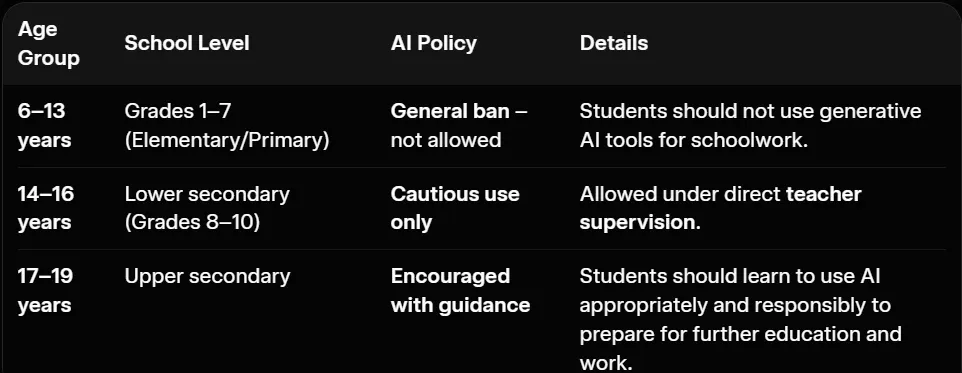
Starting this August, the government is imposing a near-total ban on generative AI tools (like ChatGPT) for elementary school kids aged 6–13. Students aged 14–16 can only use it under direct teacher supervision, while older teens (17–19) are encouraged to learn responsible use.
Prime Minister Jonas Gahr Støre said, "The most important thing in school is that our children learn to read, write, and do mathematics.” He warned that uncritical AI use risks kids skipping essential learning steps.
This follows Norway’s successful 2024 smartphone ban in schools (which reduced bullying and improved grades) and comes amid falling PISA scores. The country is now shifting back toward physical books, handwriting, and foundational skills before introducing AI.
It’s one of the stricter approaches in the West as more countries rethink how much AI belongs in early classrooms.
Paste for more info: https://t.co/5sVsYn7xrw
@TechWhirlUlt@ChaitanyaOnTech@MicrosoftvApple
Norway is being one of the most cautious countries when it comes to AI in early education.
Starting this August, the government is imposing a near-total ban on generative AI tools (like ChatGPT) for elementary school kids aged 6–13. Students aged 14–16 can only use it under direct teacher supervision, while older teens (17–19) are encouraged to learn responsible use.
Prime Minister Jonas Gahr Støre said, "The most important thing in school is that our children learn to read, write, and do mathematics.” He warned that uncritical AI use risks kids skipping essential learning steps.
This follows Norway’s successful 2024 smartphone ban in schools (which reduced bullying and improved grades) and comes amid falling PISA scores. The country is now shifting back toward physical books, handwriting, and foundational skills before introducing AI.
It’s one of the stricter approaches in the West as more countries rethink how much AI belongs in early classrooms.
Paste for more info: https://t.co/5sVsYn7xrw
@TechWhirlUlt@ChaitanyaOnTech@MicrosoftvApple
Detailed Summary: Meta Employees Push Back Against Zuckerberg’s AI Hackathon Plan
Around June 12, 2026, Meta CEO Mark Zuckerberg sent an internal memo announcing a large companywide AI hackathon scheduled for July 14–16, 2026. The event is focused exclusively on AI innovation. Leadership presented it as an opportunity to foster cross-team collaboration, encourage creative projects, and improve morale during a period of significant organizational change. This would be the first companywide hackathon since Meta carried out major layoffs earlier in the year.
The announcement quickly triggered strong negative reactions in Meta’s internal forums, which are accessible to around 70,000 employees. Many employees described the hackathon as tone-deaf and poorly timed. They argued that the company is undergoing too many disruptive changes for such an event to feel appropriate or useful.
Main Reasons for Employee Opposition
Employees cited several practical and cultural concerns:
Heavy workloads and staff shortages: Following approximately 8,000 layoffs, remaining teams are stretched thin. Many employees say they are already working at full capacity just to maintain regular operations.
Aggressive performance goals: Teams are expected to deliver more with fewer people, leaving little room for additional activities.
Lack of incentive: A common complaint is that hackathon projects do not count toward performance reviews or career progression.
No available time: Numerous employees stated they have “no bandwidth” for extracurricular work on top of their existing responsibilities.
Cultural shift: Some posted that Meta no longer supports a genuine hackathon culture, with one widely supported comment stating, “I’m not sure that this company supports a hackathon culture anymore.”
Popular internal comments included: “I’m literally preoccupied with keeping the lights on for my team. I have no incentive to participate.”
Broader Context at Meta
The hackathon backlash is part of wider frustration stemming from Meta’s rapid transformation into an AI-first company. In recent months, Meta has reorganized teams and reassigned thousands of employees into AI-related roles. One major example is the new Applied AI unit, which now includes around 6,500 engineers and product managers. Many of these employees were moved into the unit without much choice. They describe the work — such as generating puzzles and coding problems to train and test AI models — as repetitive, “soul-crushing,” and a poor use of their skills. Some have referred to it as “the gulag.”
In addition to the layoffs and reassignments, employees have raised concerns about increased monitoring through internal tools that track keystrokes and mouse movements for AI training purposes (this program was later scaled back following significant pushback and a petition signed by over 1,600 employees). These changes have contributed to declining morale and reduced trust in leadership.
Leadership’s Response
In the same internal memo, Mark Zuckerberg acknowledged that the company has “made mistakes” during its AI-driven organizational changes. He stated that he wants to provide more stability going forward and reaffirmed that there will be no more mass layoffs this year. He positioned the hackathon, along with increased budgets for team events, as initiatives to improve collaboration and morale. Other senior executives have also publicly recognized that the current environment has been “difficult” and “brutal” for employees.
Overall Takeaway
The strong resistance to the AI hackathon highlights a clear disconnect between Meta’s leadership vision and the day-to-day experience of its employees. While the company is making heavy investments in AI technologies and infrastructure, many employees feel that the speed of this transformation has come at a significant personal and professional cost — including job losses, unwanted role changes, heavier workloads, and a decline in workplace culture.
The hackathon, intended as a morale-boosting and collaborative event, has instead become a symbol of the tension between aggressive AI ambitions and employee well-being. This situation reflects a broader challenge facing Meta and the wider tech industry: how to balance rapid technological advancement with the need to maintain trust, manageable workloads, and genuine employee engagement.
for more info check
https://t.co/KjxN1F4JbJ
@TechWhirlUlt@MicrosoftvApple@ChaitanyaOnTech
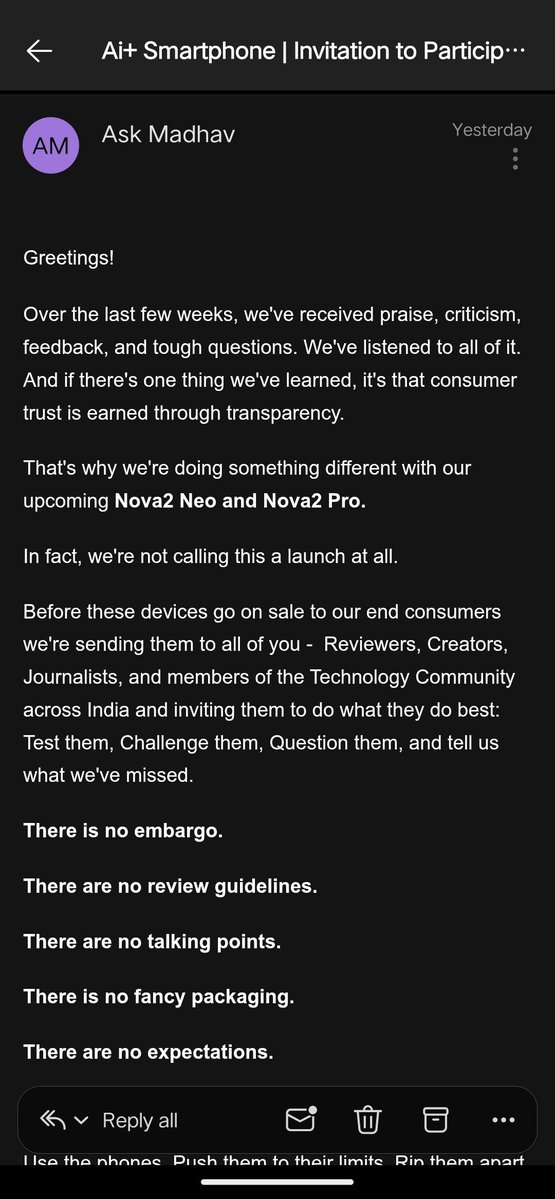
We are delighted to share that our project has been selected for the Open Project Review by AI+ India! 🚀
A heartfelt thank you to the AI+ team for recognizing our work and providing us with this valuable opportunity. We are excited to present our project, learn from industry experts, and receive constructive feedback that will help us grow further.
Looking forward to an inspiring review session and meaningful interactions with fellow innovators.
@MadhavSheth1
#AIPlus #OpenProjectReview #Innovation #ArtificialIntelligence #Technology #StartupIndia #Grateful
🚨 Microsoft has uncovered Crypto Clipper (detected as CryptoBandits), a lightweight Windows malware that’s part cryptocurrency clipper, part self-propagating worm, and part backdoor.
It continuously scans the clipboard every 500ms for 12/24-word seed phrases, private keys, and wallet addresses (BTC, ETH, Tron, Monero). When found, it silently replaces the victim’s address with an attacker-controlled one — stealing funds on the next transaction.
It also captures screenshots, exfiltrates stolen data, and uses a bundled portable Tor client (ugate.exe) + local SOCKS5 proxy (localhost:9050) to communicate with hidden .onion C2 servers for full anonymity.
Worse: it supports remote code execution via EVAL commands, turning it into a persistent backdoor for further attacks. It spreads via malicious .lnk shortcuts on USB drives and auto-infects new drives plugged in. Persistence via scheduled tasks. Active since Feb 2026.
Microsoft Defender detects it as Trojan:Win32/CryptoBandits.A/B.
Protect yourself:
Disable AutoRun/AutoPlay for USBs
Never plug in unknown drives
Use hardware wallets
Always manually verify the first & last characters of addresses before sending
This is no ordinary clipper—it's a stealthy, Tor-powered, USB-worm backdoor targeting crypto users.
For more info
https://t.co/KJrGW1Lk9z
@TechWhirlUlt@ChaitanyaOnTech@Microsoft@MicrosoftvApple
🚨 Microsoft has uncovered Crypto Clipper (detected as CryptoBandits), a lightweight Windows malware that’s part cryptocurrency clipper, part self-propagating worm, and part backdoor.
It continuously scans the clipboard every 500ms for 12/24-word seed phrases, private keys, and wallet addresses (BTC, ETH, Tron, Monero). When found, it silently replaces the victim’s address with an attacker-controlled one — stealing funds on the next transaction.
It also captures screenshots, exfiltrates stolen data, and uses a bundled portable Tor client (ugate.exe) + local SOCKS5 proxy (localhost:9050) to communicate with hidden .onion C2 servers for full anonymity.
Worse: it supports remote code execution via EVAL commands, turning it into a persistent backdoor for further attacks. It spreads via malicious .lnk shortcuts on USB drives and auto-infects new drives plugged in. Persistence via scheduled tasks. Active since Feb 2026.
Microsoft Defender detects it as Trojan:Win32/CryptoBandits.A/B.
Protect yourself:
Disable AutoRun/AutoPlay for USBs
Never plug in unknown drives
Use hardware wallets
Always manually verify the first & last characters of addresses before sending
This is no ordinary clipper—it's a stealthy, Tor-powered, USB-worm backdoor targeting crypto users.
For more info
https://t.co/KJrGW1Lk9z
@TechWhirlUlt@ChaitanyaOnTech@Microsoft@MicrosoftvApple
We are delighted to share that our project has been selected for the Open Project Review by AI+ India! 🚀
A heartfelt thank you to the AI+ team for recognizing our work and providing us with this valuable opportunity. We are excited to present our project, learn from industry experts, and receive constructive feedback that will help us grow further.
Looking forward to an inspiring review session and meaningful interactions with fellow innovators.
@MadhavSheth1
#AIPlus #OpenProjectReview #Innovation #ArtificialIntelligence #Technology #StartupIndia #Grateful