I built a dashboard to explore the last 25+ years of @nytimes coverage. 1.5B words, 2.2M articles, 26K reporters. It's fascinating to look at the world’s preeminent news organization not as daily stories but as patterns of attention, ebbing and flowing. https://t.co/CoE22qsBtb
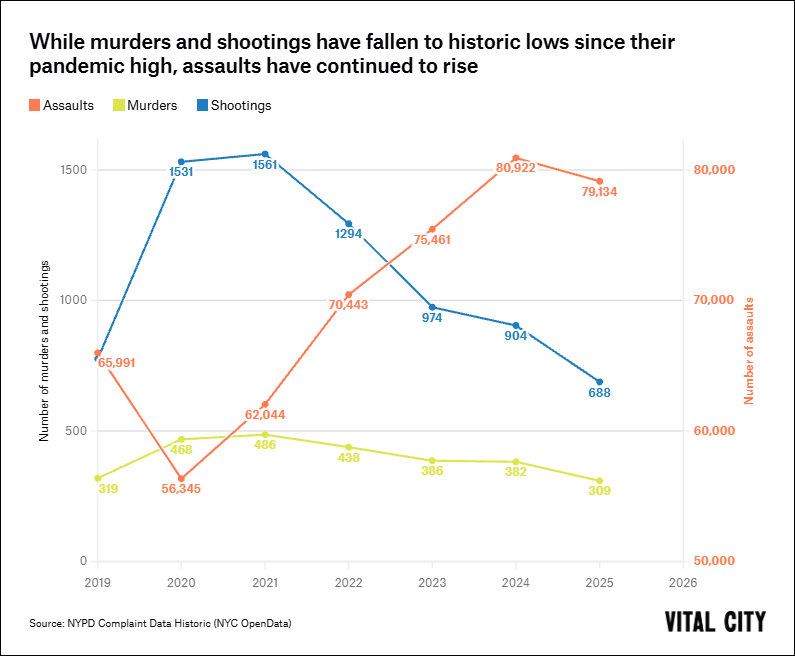
There is a striking anomaly in NYC’s otherwise broad decline in serious crime: assaults, tens of thousands more than pre-pandemic. 👇 is the most detailed exploration I’ve yet seen of the many factors driving them (particularly DV + aging offenders who aren’t desisting).
Through June, New York City had its fewest murders and shootings ever for the first half of a year. Assaults are the exception: up 20% since 2019, with felony assaults up 43%.
I am devastated by this news. Helen was the queen of public health reporting. She knew her stuff. Pressed relentlessly for answers. Meticulous in documenting how officials were ducking questions. And always considerate to colleagues and competitors alike. https://t.co/BNfEpJaX2U
Key change: after nearly ten years reporting on policy, I'm going to spend a stint helping write it instead. Grateful for the opportunity to serve the people of New York as Deputy Policy Director in the executive chamber of @GovKathyHochul. Wish me luck.
The thing is: nobody has a playbook. "I wish we did have an evidence-based menu," @mitchprinstein told me, "but we don't." @drJoshS, who helped write the opioid spending principles, warned that without one "a lot of money will be spent on things that sound good but don't work."
Meta is paying states up to $17 billion for hooking kids on Instagram & Facebook...but where will that money go? I read the fine print: most states don't say. About 70% is left for officials to spend however they like. Gift link to my story for @nytimes 🧵https://t.co/O9hQRtruhZ
.@NC_Governor Josh Stein helped write those opioid terms as NC attorney general. Even he sees the risk this time: "It is real easy to get distracted by other budgetary needs." He's told his team to find strategies that "move the needle on teen mental health."
America has a long history of public punishment, but one we thought we had left behind many years ago. Here’s a clip from @LynnNovick's upcoming series "Crime and Punishment in America," premiering Nov 16 on @PBS.
Inbox: Kathy Hochul is signing on the federal tax credit for student scholarships — unlocking millions of dollars for New York school chidren.
Huge kudos to the governor for bucking the unions and saying yes.
If you want to understand what this means, read @dany_egorov@CityJournal: https://t.co/mbzoictPXQ
I appreciated @jenniferdoleac's observations about innovative ways of addressing campus sexual assault, among them a means of letting survivors file time-stamped reports "in escrow" while they consider their options. In @VitalCityNYC https://t.co/GY7h8S0lY3
Devastating research by @abicadams and co-authors about the lifelong impacts of rape. Using Finnish data, they found survivors are less likely to finish college, with steepest declines among the *most* academically talented. In @VitalCityNYC: https://t.co/UTSk6aSKnc
Schools are neither ambitious nor imaginative enough in preventing campus sexual assault. Smart + timely piece by Biz Rasich in @VitalCityNYC detailing how @RiceUniversity redesigned how students live and socialize, reducing apparent rates of assault. https://t.co/QZPd38zRtQ