A coach replaced goals with execution agreements and buy in with alignment.
Her team went 10 and 2 last weekend and won a championship.
Language is not soft. Language is the system. @BTDMovement@tedfujimoto
Your IQ can work against you. Pattern recognition builds speed, but it can trap leaders in old neural pathways that cap growth. Neuroleadership upgrades the operating system, not the intellect. #Neuroleadership#BuiltToDeliver@BTDMovement@tedfujimoto
No one taught him. He watched and figured it out. That’s how intelligence forms. Research from Columbia and Meta shows the same in AI. In leadership, exposure drives insight. Not instruction. That’s Neuroleadership. #BuiltToDeliver@BTDMovement@tedfujimoto
The future belongs to humans who master:
• Questioning
• Taste
• Iteration
• Composition
• Allocation
• Integrity
When the world gets more artificial,
we must get more human.
What skill would you add to this list?
NVIDIA CEO Jensen Huang just said the quiet part out loud about what the education system will never admit.
For a century, we built humans to think like calculators.
The algorithm made that skillset obsolete overnight.
Huang: “The definition of smart is somebody who’s intelligent, solve problems, technical. But I find that that’s a commodity. And we’re about to prove that artificial intelligence is able to handle that part easiest.”
Software engineering was supposed to be the safe play.
Superintelligence cleared it first.
The SAT was supposed to measure intelligence. It was measuring the ability to follow instructions. Raw technical processing isn’t a competitive edge anymore. It’s the floor the machine stepped over before you woke up.
The question isn’t what you can calculate.
It’s what you can see before the data shows up.
Huang: “People who are able to see around corners are truly, truly smart. And their value is incredible. To be able to preempt problems before they show up, just because you feel the vibe.”
That vibe isn’t magic.
It’s the collision of first principles, human empathy, and lived experience no model can fake.
Huang: “That vibe came from a combination of data, analysis, first principle, life experience, wisdom, sensing other people.”
The operators who see around corners will command the AI.
The ones waiting for dashboards to update will be replaced by it.
Huang: “I think long term the definition of smart is someone who sits at that intersection of being technically astute, but human empathy and having the ability to infer the unspoken, around the corners, the unknowables.”
The unspoken variables are the new leverage.
The human psychology inside a market. The invisible friction in a negotiation. The instinct to build something nobody asked for yet.
You can’t spreadsheet your way there. You can’t prompt your way to that perception. It comes from decades of watching what doesn’t show up in the metrics.
Huang: “And that person might actually score horribly on the SAT.”
The future doesn’t belong to people who memorized answers.
It belongs to people who sense the questions before anyone thinks to ask.
The old system tested your ability to follow orders. The new one tests your ability to move through the unknown. And the machine can’t help you with that part.
That part is entirely on you.
Public debate about Texas should be grounded in facts, not slogans.
A recent policy brief from the Stanford Institute for Economic Policy Research compared the economic models of Texas and California. The research highlights that Texas has taken a fundamentally different path—lower taxes, lighter regulation, and a smaller government footprint. In 2019, state and local governments in California spent about $16,145 per resident, while Texas spent about $10,024 per resident. That means California’s public sector is roughly 60% larger per capita than Texas’.
Source: Stanford Institute for Economic Policy Research, A Tale of Two States: Contrasting Economic Policy in California and Texas.
Those choices matter. Texas has experienced stronger population growth, job creation, and business relocation than most states over the past decade. Families and companies continue to move here because opportunity is easier to pursue and the cost of living remains more manageable than in many other large states.
That does not mean Texas is perfect. Every state has areas where it must improve. But the data show that Texas’ economic framework has created one of the strongest growth engines in the country, and protecting that advantage should remain a priority.
The real challenge for Texas leadership is not tearing down what works. It is building on it—strengthening education, infrastructure, and workforce opportunity while preserving the pro-growth environment that has made Texas a place people want to live, work, and invest.
Serious leadership requires focusing on outcomes and evidence. Texans deserve that level of conversation about our state’s future.
Our perceptions are shaped—and often biased—by what happens inside our own brains. We each interpret reality through our existing mental pathways.
Alignment is shared eyesight—people seeing the same things together.
When leaders talk about “getting buy-in,” it usually means they’re trying to sell something others don’t yet see. In that moment, people are being asked to blindly trust someone else’s interpretation of reality—or they push back and fight it.
Real alignment isn’t buy-in. It’s when people can see it for themselves.
Grateful moment. Dr. Kevin Brown sent me this photo. Neuroleadership, the UHCL Doctoral Program in Educational Leadership, and this crazy Latino made it into the TASA magazine reaching school districts across Texas. The journey is just beginning. #Neuroleadership@tedfujimoto
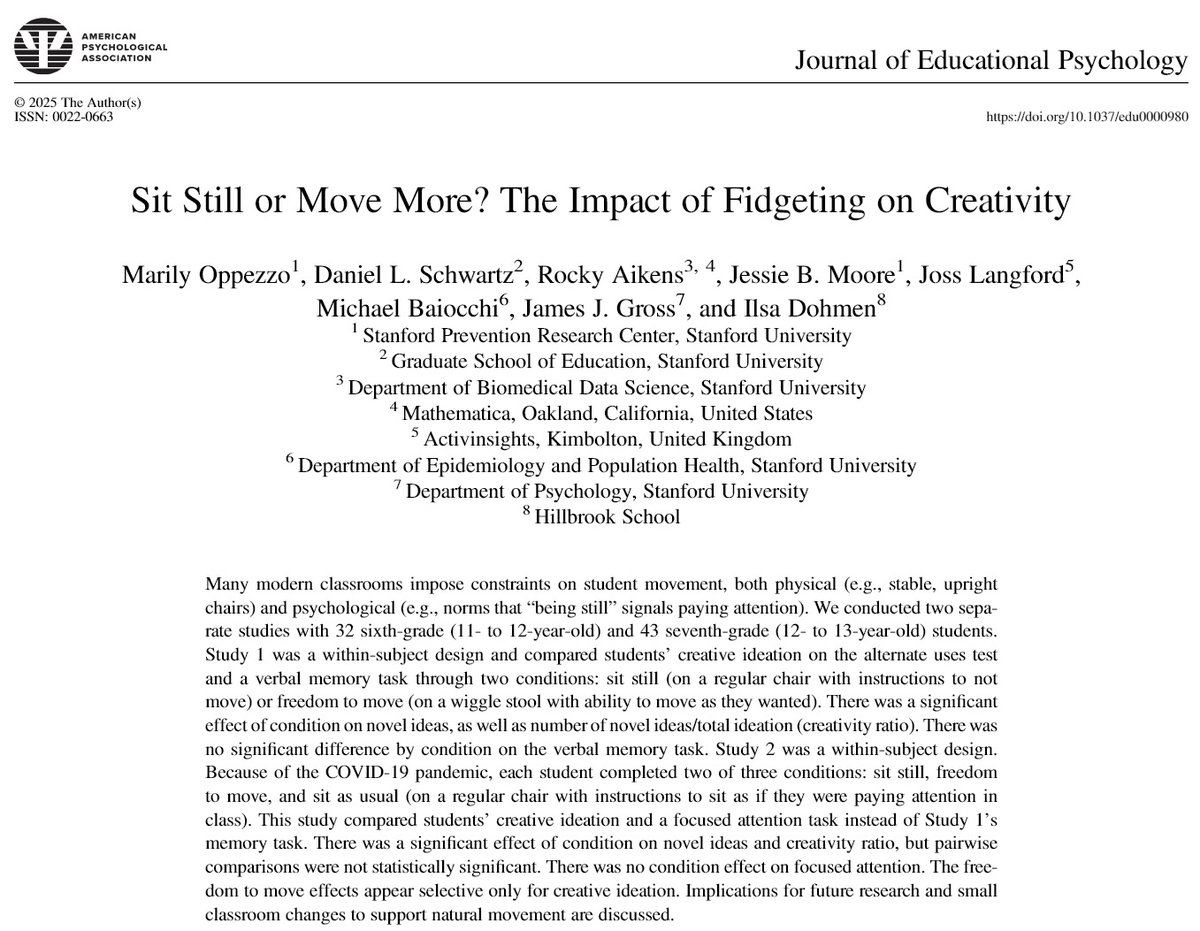
Telling kids to sit still doesn’t build discipline. It stifles imagination.
Evidence: When students are given freedom to fidget and wiggle in their seats, they pay just as much attention—and generate more creative ideas.
Physical activity unlocks mental agility.
Looking forward to hearing Adam Grant this morning. Proud to represent the Board of California Federal Credit Union at America’s Credit Union Government Advocacy Conference in DC #GAC2026.
🔬Adam Grant, an acclaimed organizational psychologist and bestselling author, will explore the science of motivation, generosity, rethinking, and potential during today’s #GAC2026 general session. Keynote sponsored by Clutch.
Your voice and your vote matter to ensure that #CreditUnion champions are on Capitol Hill. Visit https://t.co/PgOswmxO5t to check your registration status, find your polling place, and more! #GAC2026#CreditUnionsVote
I am delighted to be a board representative of the California Federal Credit Union at #gac2026, where nearly 6000 credit union advocates will gather in Washington, D.C. #inspiration#advocacy#creditunions
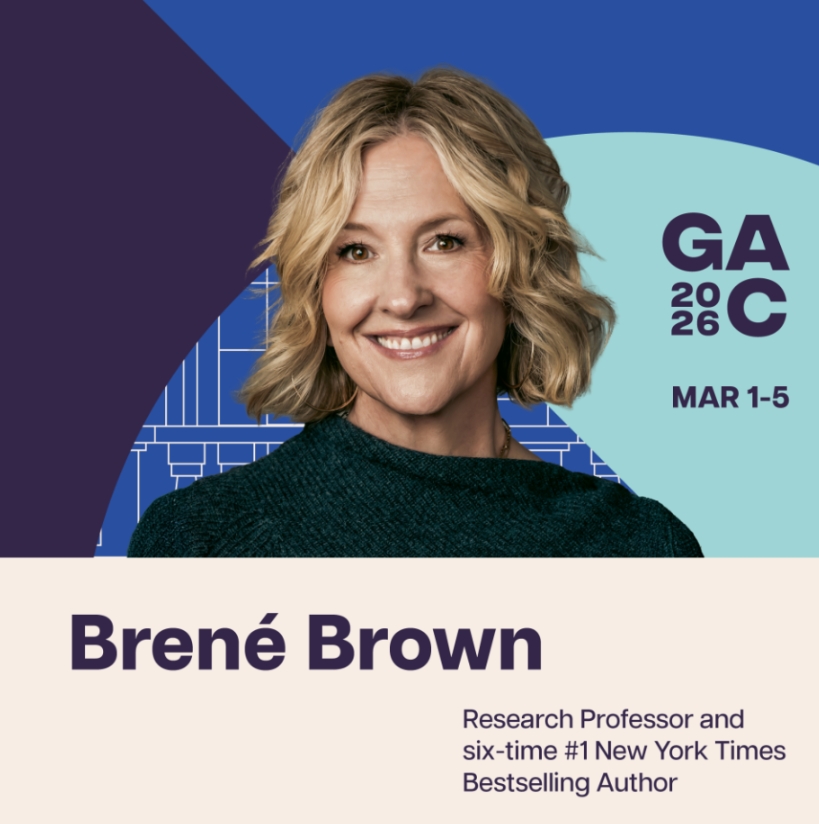
✨Dr. Brené Brown, six-time #1 NYT bestselling author and research professor, will share practical tools for building trust and resilience that leads to confidence during today’s #GAC2026 general session. Keynote sponsored by InvestiFi.
Thank you to the 100+ leaders already registered for our March 5 Neuroliteracy Training. This work strengthens how we think, decide, and lead in complex systems. If you haven’t registered, join us here: https://t.co/ZipKk2vGWe
#Neuroliteracy#UHCL@UHClearLake@tedfujimoto
Another day in the office.
Leadership isn’t personality. It’s a cognitive system.
Built to Deliver applies systematic neuroleadership to strengthen execution in public & higher ed.
https://t.co/Nka63YnbqB
#BuiltToDeliver#Neuroleadership@tedfujimoto@BTDMovement
Leadership is changing. The old ways no longer match how the brain works.
Join Ted Fujimoto and me for a Neuroleadership conversation.
March 5, 5:00 pm Central. One hour on Zoom.
Register: https://t.co/ZipKk2weLM
#Neuroleadership@tedfujimoto@UHClearLake
I don’t usually write annual letters. I wrote this one because the conversations I’ve been having with leaders over the past year felt different.
Link to Letter--> https://t.co/Iuw48Ww8O0
Across education, investment, real estate, media and entertainment, financial services, and technology, I kept hearing the same concern: the ground is shifting faster than our institutions are built to adapt. Demographic changes, AI, capital constraints, and execution risk aren’t abstract ideas—they’re showing up in boardrooms, communities, and leadership teams every day.
This letter isn’t about predictions or big ideas. It’s about what we’re actually seeing in the work—and why I’ve come to believe that durable value comes from backing the right teams with the capacity and perspective to navigate complexity, confront reality, and adapt as conditions change.
Inside, I reflect on the release of Built to Deliver, our recent work on AI and education, and lessons learned from organizations that have created lasting social impact and investor value over decades. More than anything, it’s an honest reflection on leadership when the stakes are real and the answers aren’t obvious.
If you’re leading an organization—or backing one—and feeling the weight of these changes, I hope this is worth a few minutes of your time.