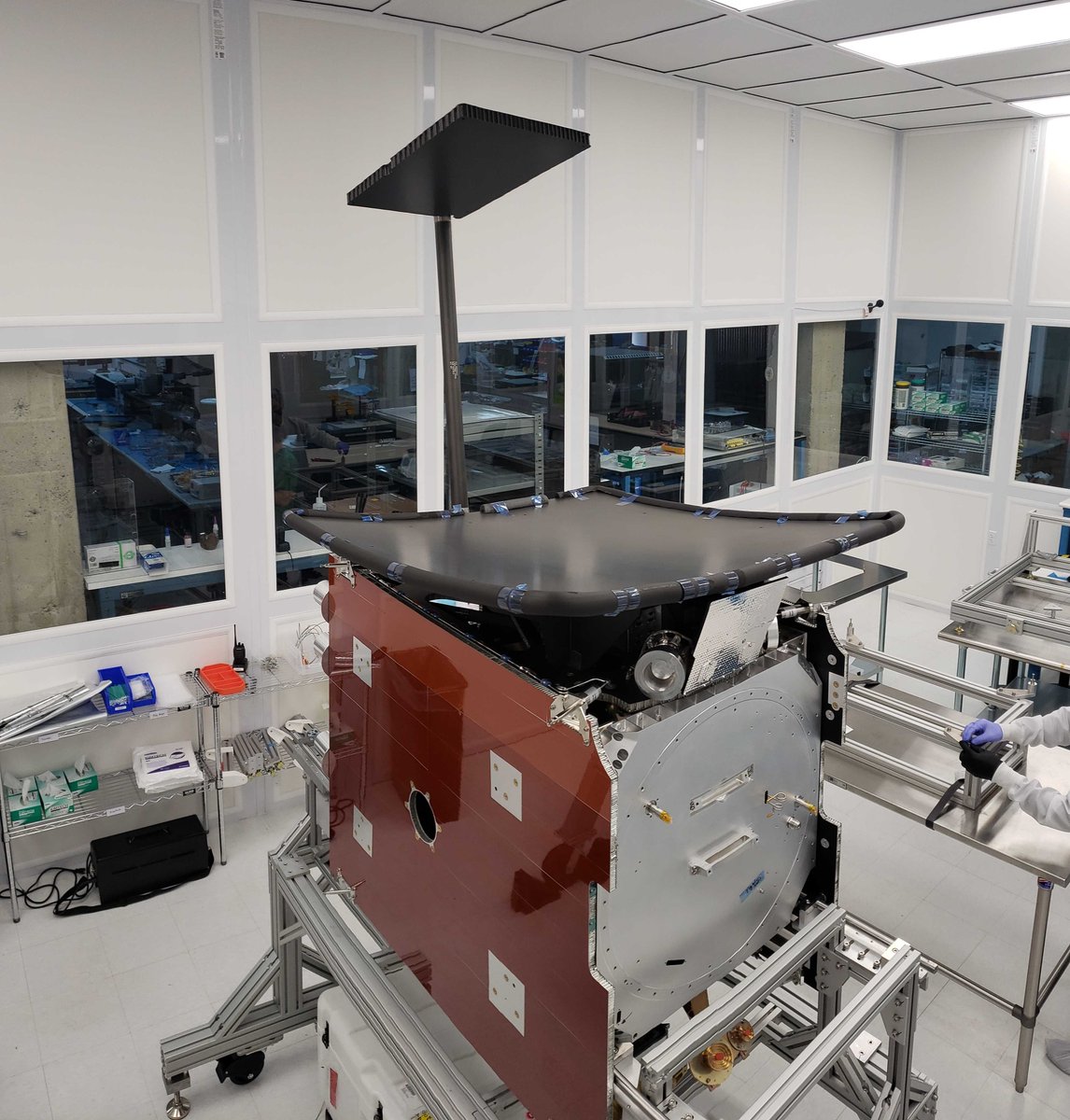
I am pleased to announce that I have joined ORBITInsure's advisory board and look forward to providing strategic insight as they build the Risk Intelligence Layer for the Space economy
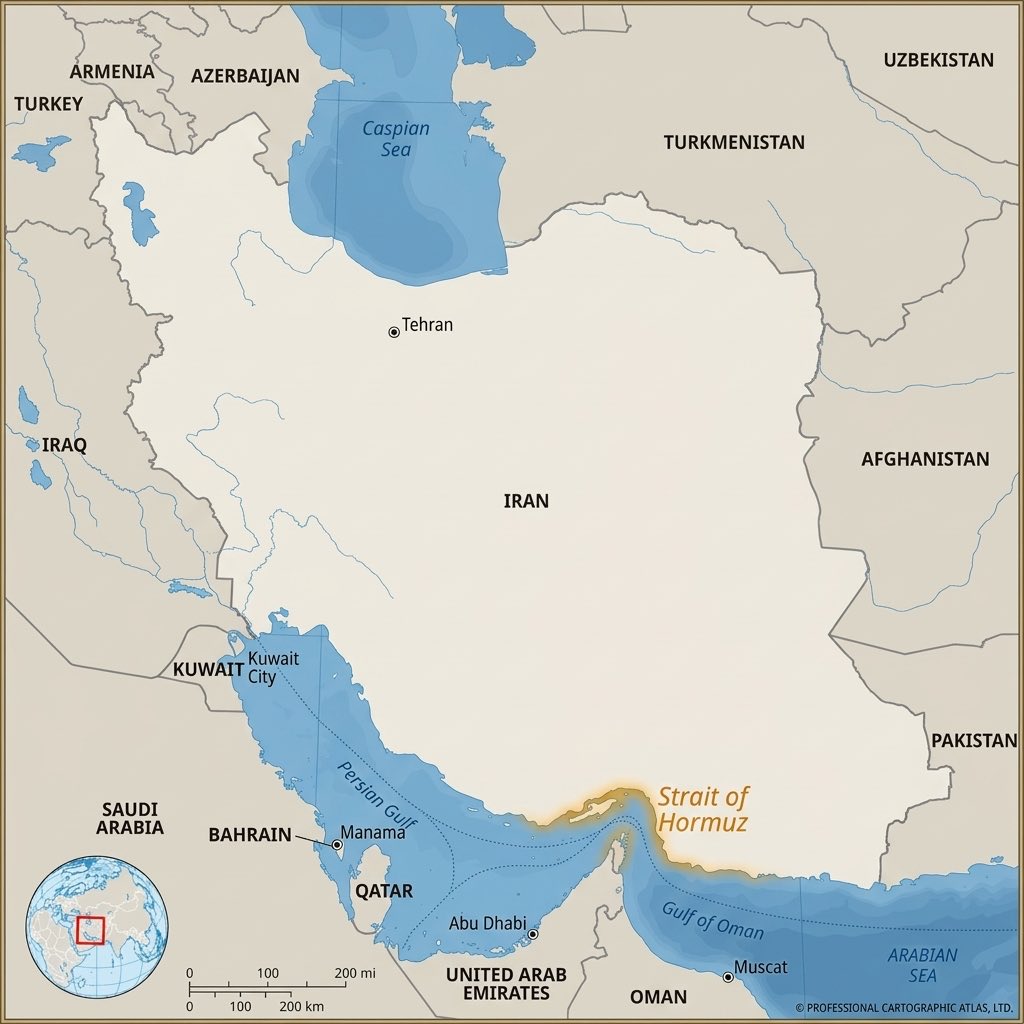
Citrini Research sent an analyst to Oman with $15,000 in cash, recording sunglasses, a smuggled camera, and Cuban cigars for networking. The analyst signed a pledge to Omani authorities not to gather intelligence, then got on a boat and sailed to within 18 miles of the Iranian coast. What he saw contradicts every headline about the Strait of Hormuz being closed.
Approximately 50 percent of tanker traffic in the strait is missing from public AIS tracking systems. The vessels are not missing because they sank. They are missing because they turned off their transponders, spoofed their GPS coordinates to broadcast false positions, duplicated the identity codes of decommissioned ships, switched to low-power transmission mode, or swapped identities with nearby vessels. The result is an electronic fog through which physical ships move crude to Asian ports while the tracking systems that Bloomberg terminals rely on show an empty waterway. More than $3 billion in crude has been transported through the strait since the war began, primarily to China, much of it under Iranian terms, paid in yuan or cryptocurrency.
The strait is not closed. It is filtered. Iran decides who passes and who does not. Ships that pay the IRGC toll and accept escort through the Larak corridor transit under the electronic fog. Ships that refuse are turned away or attacked. The “closure” that drove Brent to $115 and Aramco’s OSP to a record $19.50 premium is a selective blockade operating behind spoofed transponder data that makes it look total when it is not.
Brent dropped from approximately $115 to the $108 range as the report circulated. The market had priced in a complete shutdown. The reality is a controlled chokepoint generating toll revenue while maintaining the appearance of total disruption to maximise the scarcity premium on every barrel that gets through. Iran is running two operations simultaneously: a blockade for the cameras and a toll booth behind the blockade for the revenue. The opacity is the product. The fear is the markup.
The techniques are not sophisticated. Going dark requires flipping a switch. GPS spoofing requires a $500 device injecting false coordinates into the transponder’s GPS input. Identity theft requires typing a different MMSI number into the AIS configuration screen. Low-power mode requires switching from 12.5 watts to 1 watt. These are not state-level cyber operations. They are the maritime equivalent of turning off your phone’s location services. The ghost fleet runs on technology any ship’s officer can deploy in minutes.
The 50 percent blind spot means every estimate of Hormuz disruption based on public AIS data, every IEA shortfall calculation, every Goldman Sachs supply model, and every insurance premium derived from vessel tracking is working with half the picture. The other half is sailing in the dark, loaded with crude, headed for Chinese refineries, paying the IRGC in the currency of the country that ships sodium perchlorate to fill the missiles that the same IRGC fires at Israeli cities.
The strait the world thinks is closed is open for business. The price of admission is invisibility. And the entity collecting the toll in yuan while demanding war compensation in the ten-point response is profiting from the blockade it claims is absolute, selling passage through the chokepoint it says will “never return to its former state,” and funding the war with the revenue from the peace it refuses to sign.
https://t.co/dAOBBMsgDS
Citrini Research sent an analyst to Oman with $15,000 in cash, recording sunglasses, a smuggled camera, and Cuban cigars for networking. The analyst signed a pledge to Omani authorities not to gather intelligence, then got on a boat and sailed to within 18 miles of the Iranian coast. What he saw contradicts every headline about the Strait of Hormuz being closed.
Approximately 50 percent of tanker traffic in the strait is missing from public AIS tracking systems. The vessels are not missing because they sank. They are missing because they turned off their transponders, spoofed their GPS coordinates to broadcast false positions, duplicated the identity codes of decommissioned ships, switched to low-power transmission mode, or swapped identities with nearby vessels. The result is an electronic fog through which physical ships move crude to Asian ports while the tracking systems that Bloomberg terminals rely on show an empty waterway. More than $3 billion in crude has been transported through the strait since the war began, primarily to China, much of it under Iranian terms, paid in yuan or cryptocurrency.
The strait is not closed. It is filtered. Iran decides who passes and who does not. Ships that pay the IRGC toll and accept escort through the Larak corridor transit under the electronic fog. Ships that refuse are turned away or attacked. The “closure” that drove Brent to $115 and Aramco’s OSP to a record $19.50 premium is a selective blockade operating behind spoofed transponder data that makes it look total when it is not.
Brent dropped from approximately $115 to the $108 range as the report circulated. The market had priced in a complete shutdown. The reality is a controlled chokepoint generating toll revenue while maintaining the appearance of total disruption to maximise the scarcity premium on every barrel that gets through. Iran is running two operations simultaneously: a blockade for the cameras and a toll booth behind the blockade for the revenue. The opacity is the product. The fear is the markup.
The techniques are not sophisticated. Going dark requires flipping a switch. GPS spoofing requires a $500 device injecting false coordinates into the transponder’s GPS input. Identity theft requires typing a different MMSI number into the AIS configuration screen. Low-power mode requires switching from 12.5 watts to 1 watt. These are not state-level cyber operations. They are the maritime equivalent of turning off your phone’s location services. The ghost fleet runs on technology any ship’s officer can deploy in minutes.
The 50 percent blind spot means every estimate of Hormuz disruption based on public AIS data, every IEA shortfall calculation, every Goldman Sachs supply model, and every insurance premium derived from vessel tracking is working with half the picture. The other half is sailing in the dark, loaded with crude, headed for Chinese refineries, paying the IRGC in the currency of the country that ships sodium perchlorate to fill the missiles that the same IRGC fires at Israeli cities.
The strait the world thinks is closed is open for business. The price of admission is invisibility. And the entity collecting the toll in yuan while demanding war compensation in the ten-point response is profiting from the blockade it claims is absolute, selling passage through the chokepoint it says will “never return to its former state,” and funding the war with the revenue from the peace it refuses to sign.
https://t.co/dAOBBMsgDS
This is the most important piece of technology analysis published since the war began. Read every word. My good friend @veronken just connected a chain that nobody in Silicon Valley, Wall Street, or the Pentagon has connected in a single document.
The chain: a missile hits a gas facility in Qatar. The gas facility produces helium as a byproduct of LNG liquefaction. Qatar produces 33 percent of the world’s helium. All three Ras Laffan helium plants have been offline since March 2. QatarEnergy’s CEO confirmed the strikes reduced helium export capacity by 14 percent with repairs taking three to five years. One-third of the world’s supply of a gas that cannot be manufactured, only extracted from billion-year geological decay, removed from the market by the same missiles that took out 17 percent of global LNG.
Helium is not a balloon gas. It is the most critical process gas in chipmaking. Its thermal conductivity is six times nitrogen. In plasma etching, the step that carves nanoscale circuits into silicon, there is no deployed substitute at scale. The chips do not get made without helium. The AI does not train without the chips.
South Korea imports 64.7 percent of its helium from Qatar. South Korea is home to SK Hynix, which holds 62 percent of the global High Bandwidth Memory market, the single component NVIDIA cannot build an H100 or Blackwell without. NVIDIA accounts for 27 percent of SK Hynix’s total revenue. The $54.6 billion HBM market that Bank of America calls a 2026 supercycle depends on fabs that are now losing their helium, their oil, and their LNG from the same chokepoint simultaneously. Seoul imposed fuel rationing on March 25. QatarEnergy declared force majeure on South Korean LNG contracts on March 24.
Here is where Veron’s analysis goes beyond anything I have seen from Fortune, Bloomberg, Fitch, or any institutional research desk. South Korea does not just make the memory. South Korea builds the ships. Korean shipyards delivered 83.8 percent of global LNG carriers over the past five years. They hold two-thirds of the global orderbook. The world needs more LNG carriers to replace Qatar’s lost output. The country that builds those carriers is the same country being energy-starved by the loss of that output. The feedback loop is closed. The energy crisis hits the shipyards. The shipyard delays worsen the energy crisis. The energy crisis hits the fabs. The fab delays worsen the AI supply chain. One country. Three vulnerabilities. One chokepoint.
The buffers are real and Veron states them honestly. SK Hynix holds six months of stockpile. Samsung’s recycling system cuts consumption 18 percent. Over 70 percent of leading fabs recycle 80 to 95 percent of process helium. These buy time. Not immunity. If the strait reopens within 60 days, the supply chain exhales. If closure extends past six months, stockpiles thin and the structural deficit has no solution because the US cannot rapidly scale and Russia’s Amur plant faces sanctions.
This is the Nitrogen Trap applied to silicon. The same thesis this series demonstrated for diesel, sulfuric acid, and fertiliser now applies to the noble gas that makes AI physically possible. Jensen Huang’s roadmap runs on atoms before it runs on bits. The atoms are helium. The helium comes from Qatar. Qatar is offline. And the country that fabricates the memory and builds the replacement ships is being triple-starved by the same strait that Fink says determines whether we get $40 oil or $150 oil.
Read @veronken’s X Article. It is the best piece of supply chain analysis I have seen this year so far. The AI boom was built on an assumption so fundamental nobody stated it: that the physical world would cooperate. The physical world has stopped cooperating. The atoms are stuck. And the bits cannot move without them.