We welcome the public oral hearing at @achpr_cadhp on 14 May, filed by Legal Action Worldwide (LAW) and partners, spotlighting Ethiopia’s widespread human rights violations during the Tigray war- violations that persist despite the COHA signed in Nov 2022.
#Tigray: Mekelle Islamic council urges muslim residents of Mekelle to stand with displaced Tigrayans
The Islamic Council of Mekelle has called on the Muslim community in the city to join Friday’s protest in solidarity with the internally displaced people of Tigray in Mekelle.
#Tigray: Interim administration decides to shut down public sectors on Friday
Most public sectors in Mekelle, the capital of Tigray will be halted on Friday as authorities decided to shut down to allow full participation in the mass protest.
Read more:👇🏾 https://t.co/n3LYWRH5BF
Irob Anina Civil Society will take part in the mass protests taking place in Mekelle and Geneva. These demonstrations are a unified cry for justice, dignity, and action.
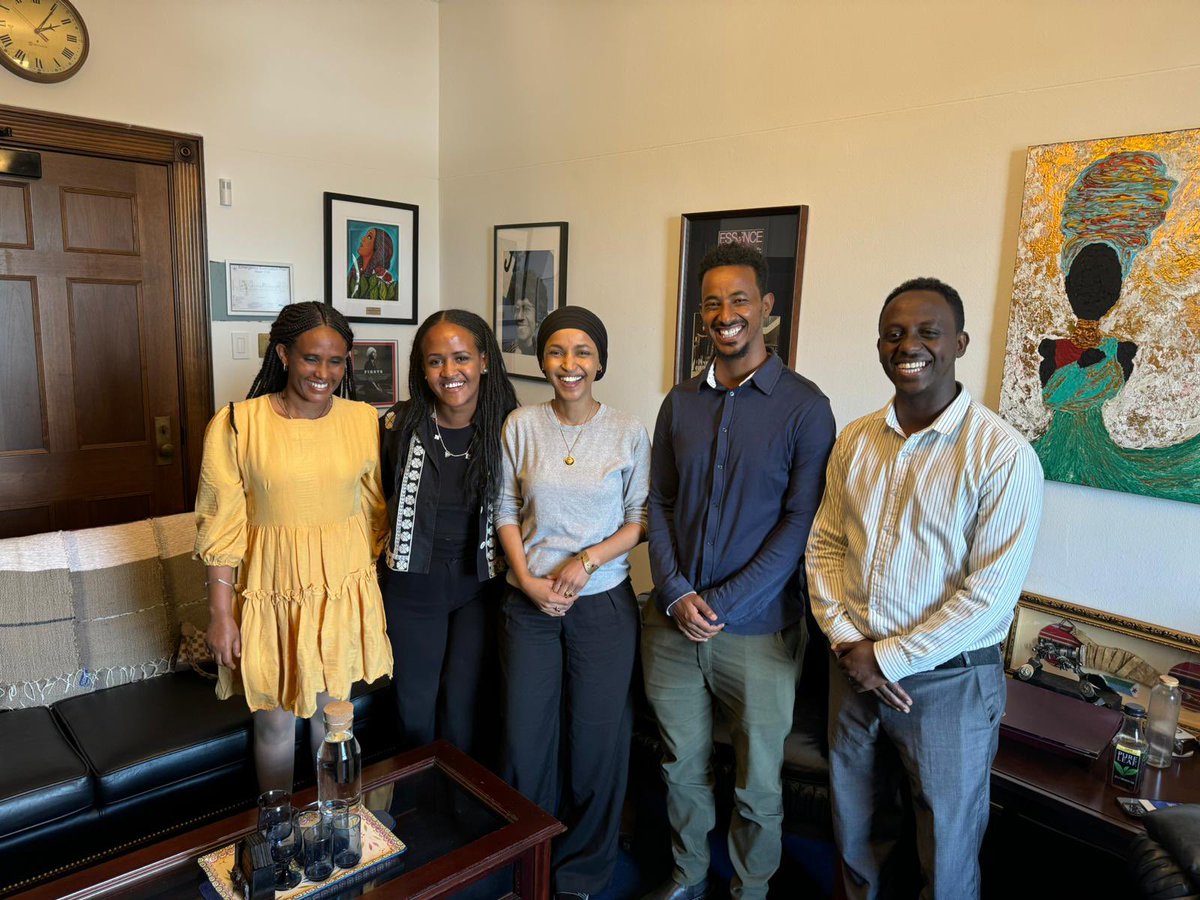
For the past month, our team has been in the United States, with witnesses and victims of the conflict working in close partnership with multiple organizations and institutions. We’ve met with policymakers, advocates, and international institutions to elevate the very same demands that will be at the heart of these protests.
We are calling for the immediate and safe return of all displaced Tigrayans. Families have spent five rainy seasons in makeshift shelters. This must end. People must go home.
We demand full, unhindered access to humanitarian aid. Communities in need cannot survive on promises.
We demand accountability from all responsible actors the Tigray Interim Administration, the Tigray People’s Liberation Front, the Federal government of Ethiopia, and international stakeholders. Those who signed the Pretoria agreement and other relevant frameworks must act. Silence is complicity.
We urge all civil society groups, justice seekers, and global allies to join us. Stand in solidarity.
@TsilalCSWT@OmnaTigray
Tsilal Civil Society of Western Tigray Urges Full Implementation of Pretoria Agreement in Letters to U.S., U.K., and UAE Embassies
Date: June 14, 2025
The Tsilal Civil Society of Western Tigray (TCSWT) has formally addressed urgent letters to the embassies of the United States of America, the United Kingdom, and the United Arab Emirates in Addis Ababa, calling on them to ensure the full and immediate implementation of the Pretoria Peace Agreement.
In the letter sent to those embassies , the civil society group warns of an unfolding humanitarian and political disaster as hundreds of thousands of displaced Tigrayans, uprooted from Western Tigray, continue to suffer in overcrowded, undignified camps with no access to justice or safe return. The group emphasizes that the situation is growing more volatile by the hour, particularly after IDPs stormed the TIRA president’s office in Mekelle on June 11–12, 2025, out of desperation and frustration. The group warns that these civilians, now preparing to march back to their homeland unprotected, are facing the imminent risk of bloodshed.
The letter identifies the root of this crisis as the failure of the international community to enforce the Pretoria Agreement, which was brokered to end the war and ensure the return of displaced civilians. The letter highlights three key ongoing violations:
1.Ongoing Illegal Occupation – The Ethiopian Federal Government continues its illegal control of Western Tigray, violating the Cessation of Hostilities Agreement (CoHA).
2.Control by Amhara Forces – Amhara regional forces are obstructing the safe and dignified return of Tigrayan IDPs by maintaining military control over the area.
3.Normalization of Impunity – Silence from international actors has encouraged further ethnic cleansing and entrenched a culture of impunity.
The Tsilal Civil Society warns that this crisis is not caused by lack of capacity, but rather by political willful neglect. The displaced Tigrayans are now caught in a dire dilemma:
•Remain in refugee camps, exposed to disease, hunger, and despair; or
•Return home unprotected, risking massacres and further atrocities.
The letter is a passionate plea for the international guarantors of the Pretoria Agreement to uphold their moral and legal responsibility to enforce peace, protect civilians, and prevent renewed conflict. The group also calls for the creation of an international protection mechanism to facilitate the safe return of Tigrayan IDPs to their homes in Western Tigray.
“This tragic state of affairs was entirely preventable,” the letter states. “It stems from one unmistakable failure: the international community’s inability or unwillingness to enforce the Pretoria Peace Agreement that you brokered.”
The Tsilal Civil Society of Western Tigray is urging embassies and international powers to act swiftly to avert a new wave of violence, ethnic cleansing, and regional destabilization.
To: The Embassy of the United Arab Emirates @UAEthio@MFATurkiye
This is not a diplomatic letter. It is a moral indictment, a witness testimony, and a record for history.
We write to you on behalf of the Civil Society of Western Tigray (CSWT), a human rights organization
1/2
Pretoria Is Failing: The World Must Demand Ethiopia Comply With Its Peace Deal
June 11, 2025 As demonstrations unfolded today in both Mekelle and Washington, D.C., one truth was made unmistakably clear: Ethiopia’s future depends on its ability to confront the unresolved consequences of the genocidal war in Tigray and to finally choose a path of genuine peace, justice, and constitutional governance.
Thousands of internally displaced Tigrayans (IDPs) marched through the streets of Mekelle, demanding their right to return home. Across the Atlantic, Tigrian diaspora communities gathered in front of the U.S. State Department, echoing the same calls: restore Tigray’s constitutionally guaranteed territories, ensure the safe return of the displaced, uphold the Pretoria Agreement in full, and deliver justice for the victims of war crimes.
Yet the federal government of Ethiopia remains reluctant to take even these basic steps toward peace. The continued occupation of Tigray’s lands by armed forces in violation of the constitution, the prolonged displacement of civilians, and the lack of accountability for atrocities perpetrated during the war these realities fuel instability, resentment, and the risk of renewed conflict.
A Clear Path Forward
If Ethiopia is serious about moving beyond war and embarking on a peaceful national transition, the following actions are not optional they are urgent imperatives:
1. Respect the Constitution and Restore Tigray’s Territories
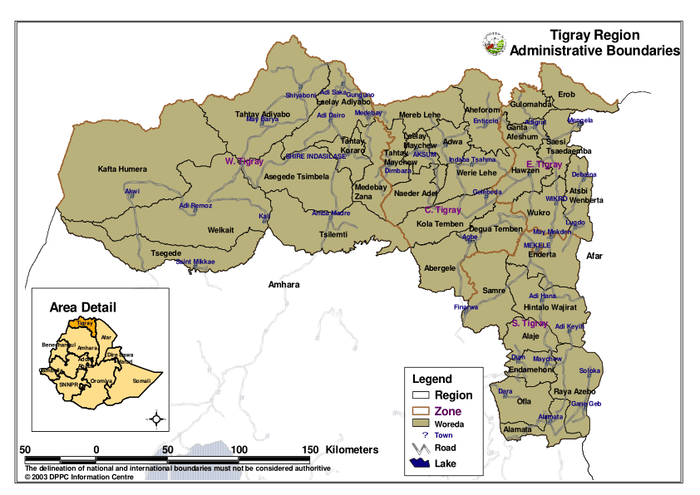
Ethiopia’s federal constitution guarantees the territorial integrity of its regional states. The continued presence of occupying forces in Western, Northwestern, and parts of Southern Tigray is a blatant violation of this constitutional principle and of the Pretoria peace agreement. The government must order the immediate withdrawal of these forces and facilitate the unconditional return of Tigray’s territories to their rightful status.
2. Ensure the Safe Return of Displaced Tigrayans
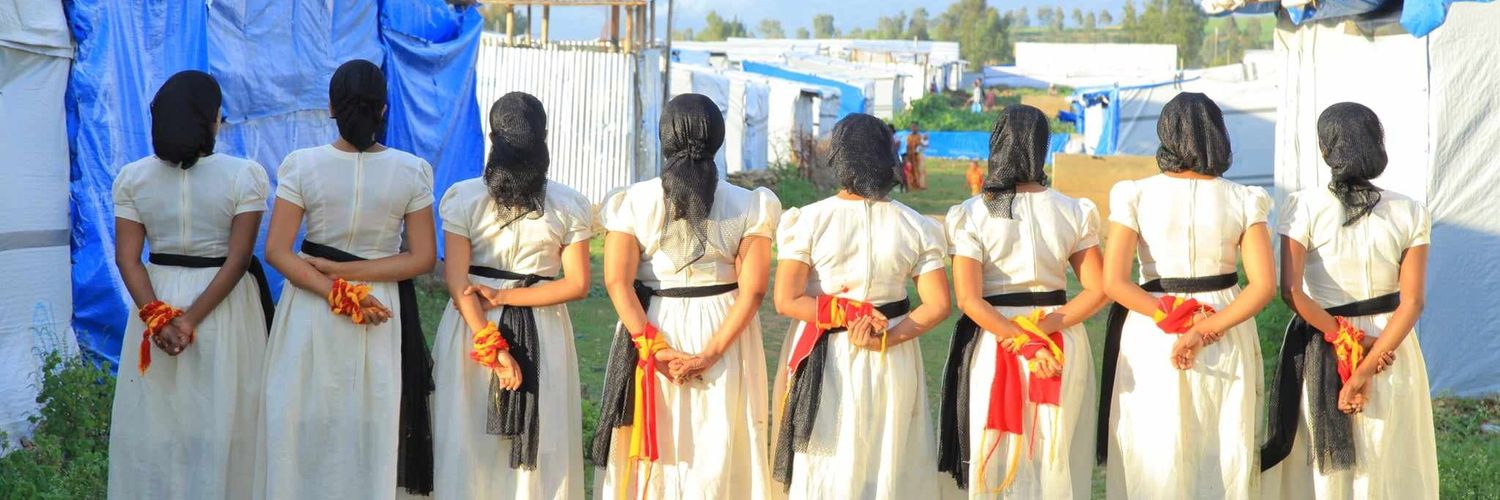
Hundreds of thousands of Tigrayans remain displaced in camps, many enduring their fifth rainy season in tents, as documented by today’s protests. Their return home is not merely a political demand it is a human right. A government committed to peace would prioritize this effort, supported by robust security guarantees and international monitoring.
3. Deliver Justice and Accountability
No peace process can succeed if justice is ignored. The atrocities committed during the Tigray war including mass killings, sexual violence, and destruction of civilian infrastructure must be addressed through independent investigations and prosecutions. Ethiopia must allow and cooperate with international mechanisms to ensure credible justice.
4. Launch a Genuine Reconstruction Partnership
Tigray’s infrastructure lies in ruins, its economy shattered. Ethiopia’s government must partner with international organizations and donors to design and implement a transparent, needs-driven reconstruction plan. Rebuilding Tigray is not only a moral obligation—it is essential for national reconciliation and economic recovery.
5. Foster Inclusive National Dialogue
Beyond Tigray, Ethiopia faces broader political fractures that require healing. A truly inclusive national dialogue—one that respects the voices of all regions and opposition groups—is needed to chart a democratic path forward and prevent future conflicts.
6. Pursue a Developmental Relationship with Eritrea That Benefits All
Finally, Ethiopia must shift away from seeing Eritrea as a partner in war and towards a partner in peace and development. Just as Ethiopia has pursued cooperative economic relationships with Kenya and other neighbors, it should support efforts for a developmental relationship between Tigray, Eritrea, and the Ethiopian state.
Such a relationship—built on mutual respect, trade, cross-border infrastructure, and cultural ties—can unlock enormous potential for the Horn of Africa. Tigray, with its geographic position and historic ties to Eritrea, can become a key bridge in fostering economic cooperation and regional stability. But this vision is impossible without first ending occupation, restoring trust, and honoring commitments under the Pretoria Agreement.
The Stakes Are High
Today’s coordinated protests in Mekelle and in the diaspora are not isolated events. They reflect the growing impatience of a people who have seen promises broken, agreements ignored, and justice denied. The longer the federal government delays in addressing these fundamental issues, the greater the risk that grievances will fester and Ethiopia will slide once again into violence.
The international community must not look away. As Tigrian demonstrators in Washington rightly declared: “This is a moral issue and a humanitarian emergency.” Ethiopia’s international partners including the United States must press for full implementation of the Pretoria Agreement, constitutional compliance, and meaningful accountability.
Ultimately, peace is not declared by signing an agreement it is built by actions that restore rights, rebuild lives, and reconcile communities. If Ethiopia’s leaders truly wish to stop war and transition toward a peaceful future, the roadmap is clear. What remains to be seen is whether they will summon the political will to follow it.
Update The protest has entered the Office of the President. Protesters declared that unless they receive a concrete response to their demands, they will not vacate the premises.
#Ethiopia: Protests planned to demand return of displaced #Tigrayans before fifth rainy season in tents
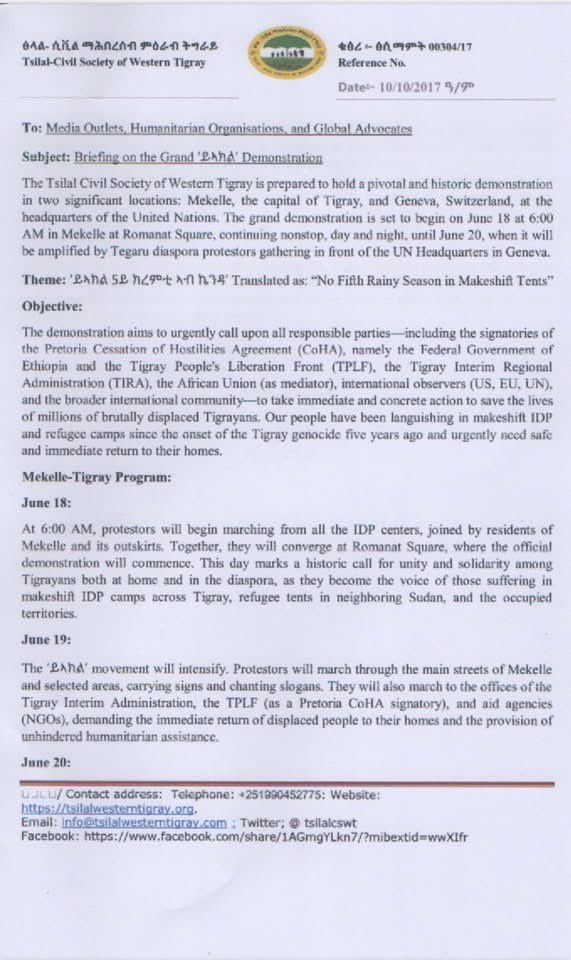
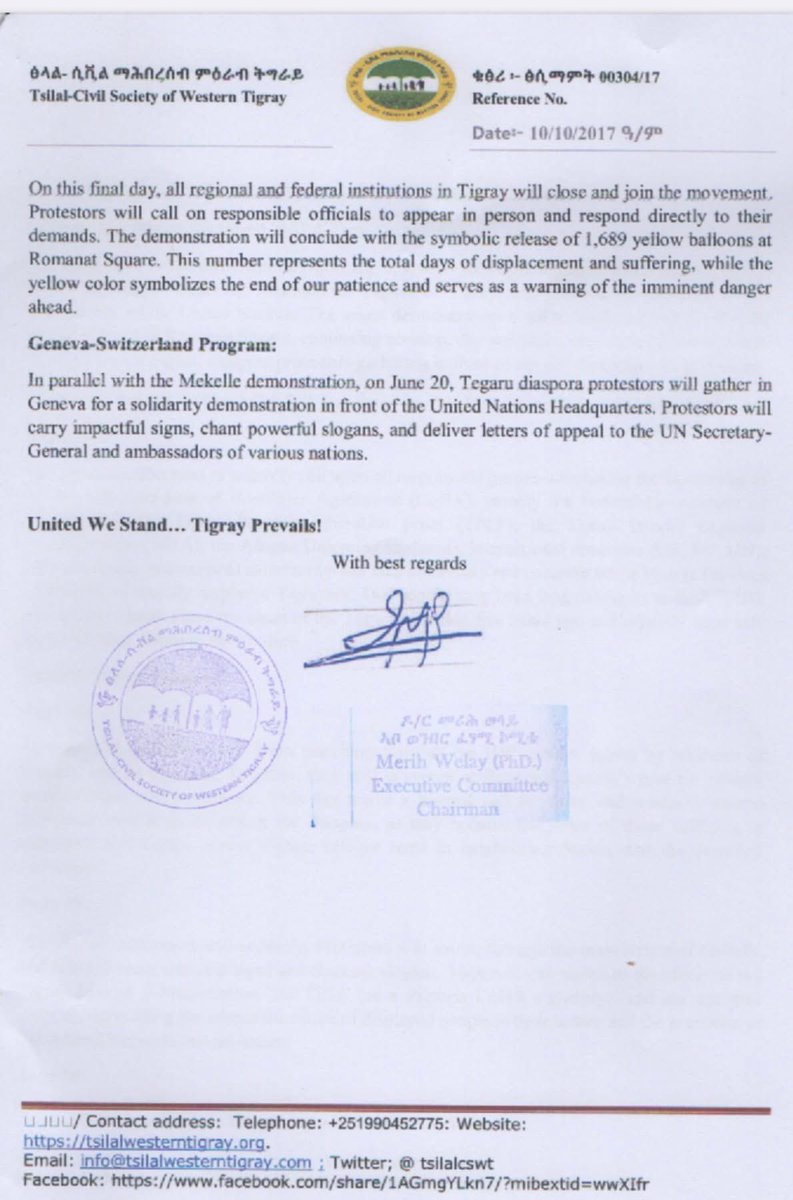
Protests are planned to take place in Mekelle and Geneva next week, from June 18-20, 2025, under the rallying cry "Enough of Spending Rainy Seasons in Tents."
Spearheaded by the Tsilal Western Tigray Civil Society, the protest demonstrations are expected to center their messages to demand the urgent return of hundreds of thousands displaced Tigrayans who remained scattered as IDPs and refugees for a fifth rainy season in temporary shelters. Organizers said the goal is to pressure both signatories and brokers of the Pretoria Agreement, including the Ethiopian federal government and the international community, to facilitate their safe return before winter.
The planned protests build on a similar demonstration held in January across various Tigrayan cities and towns, where participants chanted slogans like "Return us to our homes" and highlighted the dire conditions faced by displaced persons, including hunger, lack of medical care, and inadequate aid. Despite pledges from the Tigray interim administration to prioritize IDP return, including President Tadesse's acknowledgement of the crisis and failure of previous return efforts due to poor security, displaced Tigrayans remain in 99 makeshift camps.
The humanitarian situation is particularly severe in camps located in Adwa, Adigrat, Shire, and Axum, with reports of rising hunger-related deaths, especially among vulnerable groups. Wolay Berhe, IDP coordinator in Shire, reported nearly 300 deaths in one center over three months due to hunger and lack of medical care.
While a small group of IDPs were returned to Tselemti in July last year, subsequent reports by Addis Standard revealed many were re-displaced due to a lack of promised support.
This ongoing crisis is particularly severe in Western Tigray where crimes against humanity and ethnic cleansing have been documented during the two-year brutal war in the region.
https://t.co/fGQQ1jQSL6
Victims of the Tigray conflict file the first-ever criminal complaint in Germany against senior Ethiopian and Eritrean government and military officials
https://t.co/lddxNZP0ET
Tsilal Civil Society of Western #Tigray Condemns ENDF for the Unconstitutional Designation of "Welkayt Tsegedes Setit Humera Zone," Seeks Retraction
----
Mekelle, December 2024 (Tigray Mass Media Agency) Tsilal Civil Society of Western Tigray, local civil society group focused on addressing challenging issues affecting the people of Western Tigray, issued a strongly worded letter to the Ethiopian National Defense Force (ENDF), expressing its disappointment over the unconstitutional designation of "Welkayt Tsegedes Setit Humera Zone" on a social media platform managed by the institution.
In the letter, the civil society accused the ENDF of engaging in unlawful activities in collaboration with other forces, particularly in areas of Western Tigray under the control of Amhara forces. The group cited concerns about the ENDF’s alleged deviation from its constitutional mandate following the 2020 war.
The civil society highlighted a controversial statement published by the ENDF on its official Facebook page on February 11, 2024. According to the letter, the ENDF referred to an "imaginary" district named "Wolkait Tsegede Setit Humera Zone," which, the society argues, does not exist in the constitutions of either the Tigray or Amhara regions as derived from Ethiopia's national constitution. The group called on the ENDF to retract this statement and provide clarity, emphasizing that such actions are harmful to national unity.
The letter further alleged that the ENDF has been involved in training militias from Amhara in Western Tigray, citing a December 21, 2024, Facebook post by the ENDF as evidence. The civil society claimed this act violates the Pretoria and Nairobi peace agreements, which mandated the withdrawal of non-ENDF forces and sought to restore Tigray’s territorial integrity to its pre-war status. “It is shameful to train and arm militants in Tigray’s territory instead of adhering to the agreements,” the letter stated.
The civil society voiced concerns over the impact of these actions on the 1.5 million displaced individuals from Western Tigray. The letter argued that renaming the area as "Wolkait Tsegede Setit Humera Zone" and arming militias accused of atrocities is a "heartbreaking" development for those seeking to return to their homes. “These actions betray the trust of the people and exacerbate tensions, jeopardizing the prospects for lasting peace,” the statement read.
The civil society urged the ENDF to use the original name "Western Tigray" and halt the training and arming of non-native forces. It argued that the security and peace of the region should be preserved by the native population rather than by external forces unfamiliar with the area.
The letter concluded by condemning what it described as discriminatory practices by the ENDF and calling for inclusive measures that promote trust and national unity. The ENDF has yet to respond to the allegations.
#Ethiopia: #Tigray IDPs rally for return to homeland amid mounting hardships; three-day protest demands immediate action
Internally Displaced Persons (#IDPs) in Tigray launched a three-day peaceful demonstration in #Mekelle, rallying for their immediate return to their homes after years of displacement. Organized by the Tsilal Western Tigray Civil Society, the protest, titled Yak’el (“Enough is Enough”), aims to spotlight the severe challenges faced by IDPs, including hunger, lack of medical care, and inadequate humanitarian aid.
Protesters, gathered at Romanat Square, expressed their frustrations with slogans such as “Return us to our homes” and “Living in tents is enough.” Leaders of the movement, like Tsegay Tetemke, emphasized that despite the Pretoria Peace Agreement's promises, the suffering continues unabated. “People are dying from hunger and the absence of aid. We urge leaders to end political games and fully implement the agreement,” he said. Many participants, like Kidan Girmay, shared personal stories of loss and hardship, urging both the Ethiopian government and international actors to act decisively to facilitate their return.
https://t.co/hv4oJEmDvE