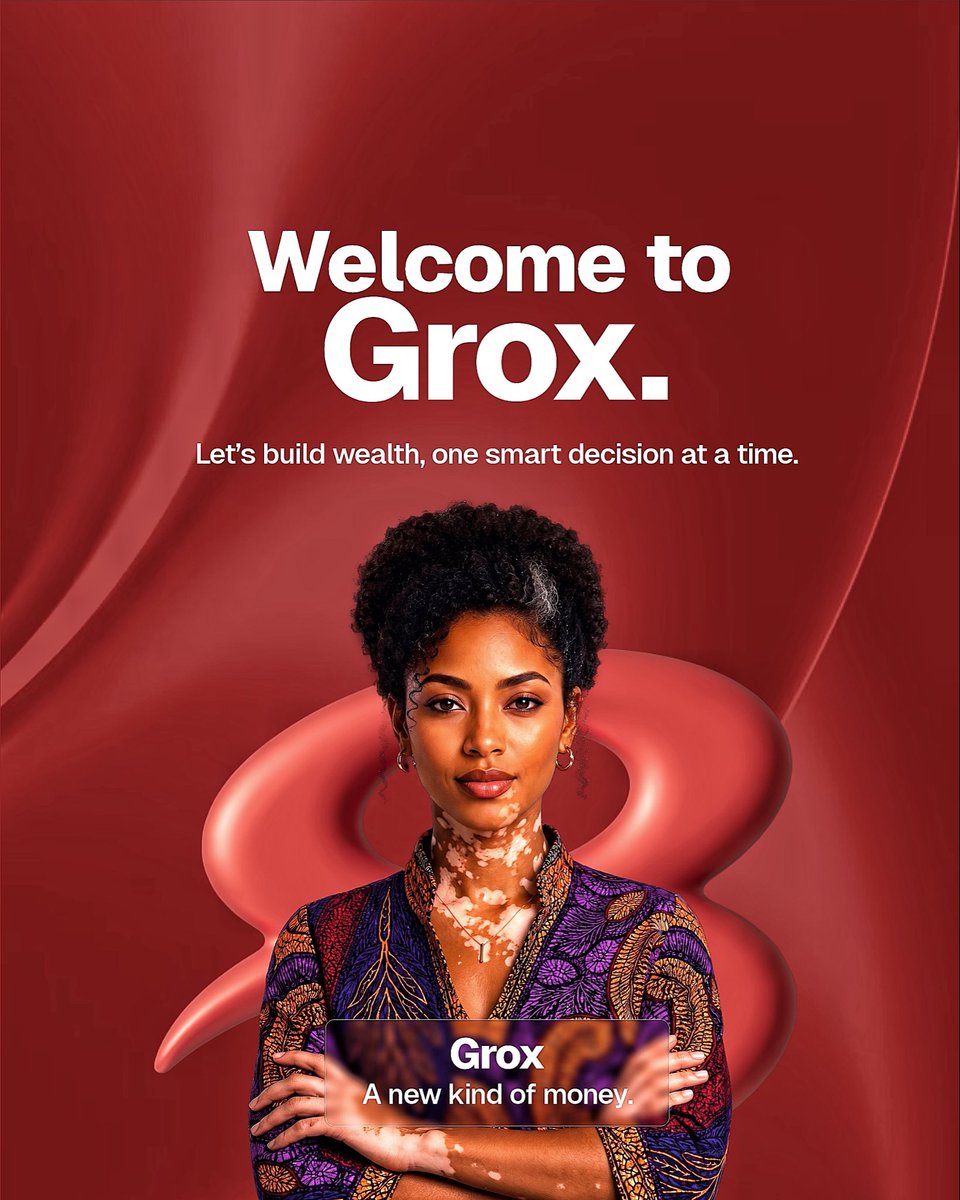
“Is Grox a scam?”
Fair question.
When money is involved, you should question everything.
That’s why FAQ Friday is here, straight answers to the questions you actually have about Grox.
Swipe through. Then ask us yours. 👀
#FAQFriday#grox
You have the questions. Zuri has the keys. 🔑
Welcome to #FAQFriday by Grox.
Every Friday, ask Zuri about wealth, money, investing, cross-border payments and more.
Drop your question below. 👇 Your question could be next Friday’s answer.
#askzuri#grox
3/ We didn't start Grox to make that cycle faster or cheaper. We started it to end it.
4/ Today, meet Zuri. The start of a different conversation about who actually gets to build wealth in Africa, and why it hasn't been you yet.
Watch this space.
Your wealth journey doesn't start with money. It starts with someone finally being straight with you about why the door was closed in the first place.
That's Zuri's job now. Step one, meet her.
#askzuri#grox
1/ The diaspora sends over $100B home to Africa every year.
Almost none of it becomes wealth.
2/ It arrives. It gets spent. The cycle resets. Every generation starts from zero again. That's not sending money home. That's treading water.
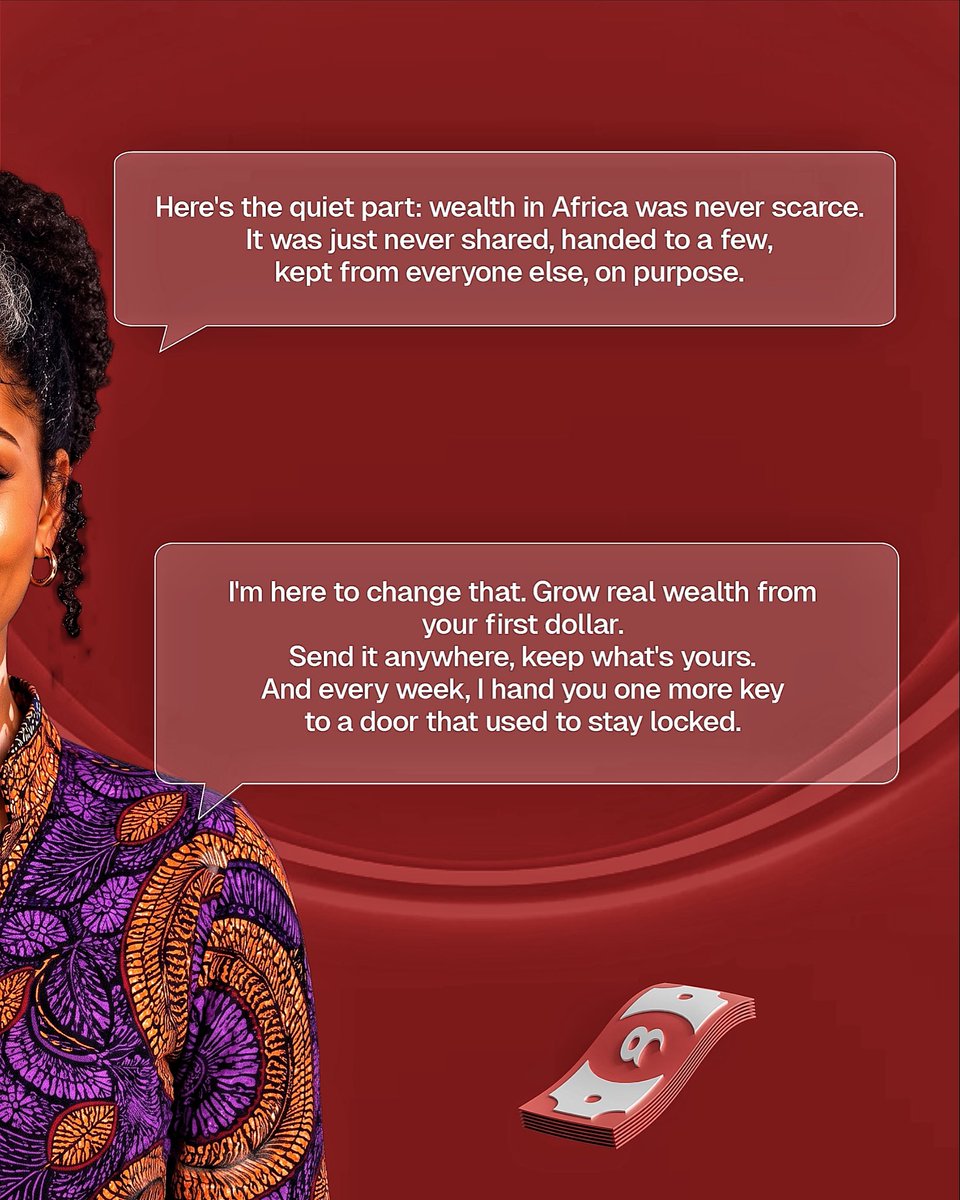
Africa holds so much untapped wealth and fertile ground where smart capital could truly flourish.
Yet it’s still locked away by a few. Time for that to shift.
@usegroxofficial
Today, we celebrate a visionary leader, a builder, and a firm believer in Africa’s future
On behalf of the entire Grox family, we wish you a year filled with wisdom, growth, good health, and even greater impact.
Happy Birthday, Tobi. 🎉
From all of us at Grox
Eid Mubarak 🌙✨
May this season bring peace to our homes, clarity to our hearts, and abundance to our future.
As we celebrate faith, sacrifice, and togetherness, we are reminded that the strongest communities are built on trust, generosity, and shared progress.
Every child deserves a future that feels safe. 🤍
Today is more than a celebration. It is a reminder of the kind of Africa we must continue building , one where children can dream freely, grow confidently, and live without fear.
Failed at one startup along the way. Learned more from that than from any of the wins. Now building the one I always wanted to exist.
Grox is Robinhood for the African wealth economy. The wealth stack for the 95% the global financial system shut out.
10yrs+ building, scaling, and disrupting African fintech. Helped scale two YC-backed fintechs from scratch. Led the acquisition of the last company I ran as CEO in 2024.
@hthieblot I'm Tobi, founder of Grox. The simplest way to describe us: Robinhood for the African wealth economy. A managed multi-asset fund, a borderless payment rail, and a $1 on-chain wealth token, in one app. https://t.co/gOKKzZRJDd
This OpenAI $2M tokens-for-equity deal with YC S26 is one of the most insane, predatory, and straight-up dumb-as-fuck moves I’ve seen in the AI startup game. Founders are lining up to hand over precious equity for “compute credits” that they’ll burn through on overpriced tokens while OpenAI laughs all the way to the cap table. Let’s break down why this is financial and strategic suicide for most teams. 🧵
1/ First, the math is fucked. OpenAI is valuing their tokens at full retail — that shiny $2M number evaporates fast when you’re doing real agentic work or heavy reasoning. Frontier models still cost $5–30+/million output tokens. Meanwhile, Grok, Gemini Flash, DeepSeek, Groq, and open routers deliver 60-98% cheaper effective costs for the majority of traffic.
Your “tokenmaxxing” phase burns cash-equivalent on premium models that competitors match or beat for pennies. Optimized startups route 60-80% to fast/cheap models + caching + speculative decoding. Why give equity for something you could buy cheaper on the open market?
2/ Equity is your most sacred, non-renewable resource. You’re diluting for compute — a commodity that’s crashing in price every quarter. This isn’t like raising at a fair valuation; it’s an uncapped SAFE where OpenAI gets upside on your success while their marginal cost for those tokens is a fraction of retail.
Sam and crew get a portfolio of YC’s best AI bets, usage data, prompt insights, and potential idea flow. You get locked into their ecosystem with a ticking clock before prices drop further or better models emerge elsewhere. Classic vendor lock-in dressed as generosity.
3/ The “tokenmaxxing” advice itself is dangerously stupid for 0→1 startups. “Burn expensive tokens freely to find PMF!” Sure, iterate fast — but doing it exclusively on OpenAI’s premium stack encourages laziness. Real winners build routers from day one, test across providers, and focus on architecture, not raw spend volume.
Post-PMF distillation? Cute, but the post even admits your moat can’t be a fine-tune because the next frontier model resets everything. So you’re giving away equity for temporary acceleration that smart teams achieve cheaper through discipline.
4/ Incentives are completely misaligned. OpenAI wants you tokenmaxxing their models to justify their valuation and gather data. YC gets deal flow and hype. Founders get distracted chasing metrics that don’t equal revenue.
We’ve seen this movie: over-reliance on one provider leads to nasty surprises (rate limits, price hikes, policy changes). Many teams already report 10x+ savings by multi-vendor setups. Taking this deal signals you didn’t do basic market diligence on the AI compute commoditization happening in real time.
5/ Edge cases make it even worse. Privacy-sensitive apps, regulated industries, or latency-critical products can’t always live in OpenAI’s walled garden. If you fail to hit PMF (most don’t), you wasted dilution for nothing. If you succeed big? OpenAI owns a slice and has visibility into your secret sauce.
This isn’t partnership — it’s a clever equity grab exploiting FOMO in an AI gold rush. Cash is flexible. Multi-provider credits are negotiable. Building efficient systems early creates actual moats.
Founders: Run the numbers. Model your projected burn across providers. Talk to lawyers about the SAFE. Compare to just raising more cash and shopping around. This deal looks generous until you realize you’re trading ownership for depreciating tokens in a market racing to zero on price.
It’s not criminal, but it’s close to the line on exploiting hype. Extremely online “tokenmaxxing” culture is peak startup theater. Focus on users, product, and unit economics instead of maximizing any single vendor’s usage.
Smart teams will politely decline or negotiate hard. The dumb money is taking it as-is.
What am I missing? Founders in the batch — thoughts?