Scientific and technological change is happening faster than ever. Innovations like artificial intelligence, human reproductive genetic technologies, and environmental technologies are advancing quickly, and public conversations and media coverage about them are often moving faster than careful thinking about their deeper moral implications.
https://t.co/1HPkTjPvLW
Art critics have historically dismissed text within paintings as a sign of artistic failure, proof that the image couldn't convey the message on its own.
New research is testing whether 16th-century Reformation artists were actually doing it intentionally to enhance memory, emotion, and understanding.
Learn more: https://t.co/DO6u10diIT
84% of the global population identifies with a religious faith. And yet, when international development organizations design programs in education, health, and poverty, faith communities are still often the last ones called.
Grantee Katherine Marshall has spent her career working at the intersection of faith and development. Her current research, spanning four countries, asks a practical question: how do we bring faith communities into development planning as genuine partners, not afterthoughts?
The answers are reshaping how global organizations think about whose knowledge counts.
Learn more about this project: https://t.co/TEeP1AvMHz
59% of Americans say science and religion are in conflict. But only 30% say that conflict applies to their own beliefs.
The gap between what people think everyone else believes, and what they themselves believe, may be one of the most overlooked drivers of public confusion about science and faith.
Grantee Fern Elsdon-Baker is leading a global study to investigate why the conflict narrative persists, and what it actually obscures. The story is more complicated and more hopeful than the headlines suggest.
Learn more about this project: https://t.co/dTKN67A2LF
Across cultures and centuries, people describe a longing that ordinary appetites cannot satisfy. Grantee Fiona Ellis is asking what kind of desire that is, and where it points.
Learn more: https://t.co/sUwiXxBdCp
Diversity, on its own, is just a fact of demographics. Pluralism is what happens when those differences are actively engaged toward a positive end.
Grantee Katie Bringman Baxter sees college campuses as ideal sites to make that shift. Her team is building the Learning and Action Bridge, a digital multi-faith toolkit designed to help students, chaplains, faculty, and administrators move from coexistence to constructive collaboration. The aim is what scholars call covenantal pluralism: legal equality, neighborly solidarity, and serious engagement across religious lines.
Learn more about this project: https://t.co/zZni1DuFqi
Visitors had a stronger emotional reaction to the pictorial sacred art in the Basilica than to the non-figurative pieces in the garden. Sometimes the reaction was even negative.
But the non-figurative pieces are what they remembered.
Grantee Robin Jensen and her team are using real chapel and museum settings, iPads, and virtual reality to study how space and form shape spiritual experience. The relationship between what moves us and what stays with us may be more different than we think.
Learn more about this project: https://t.co/5gwIxmqWnn
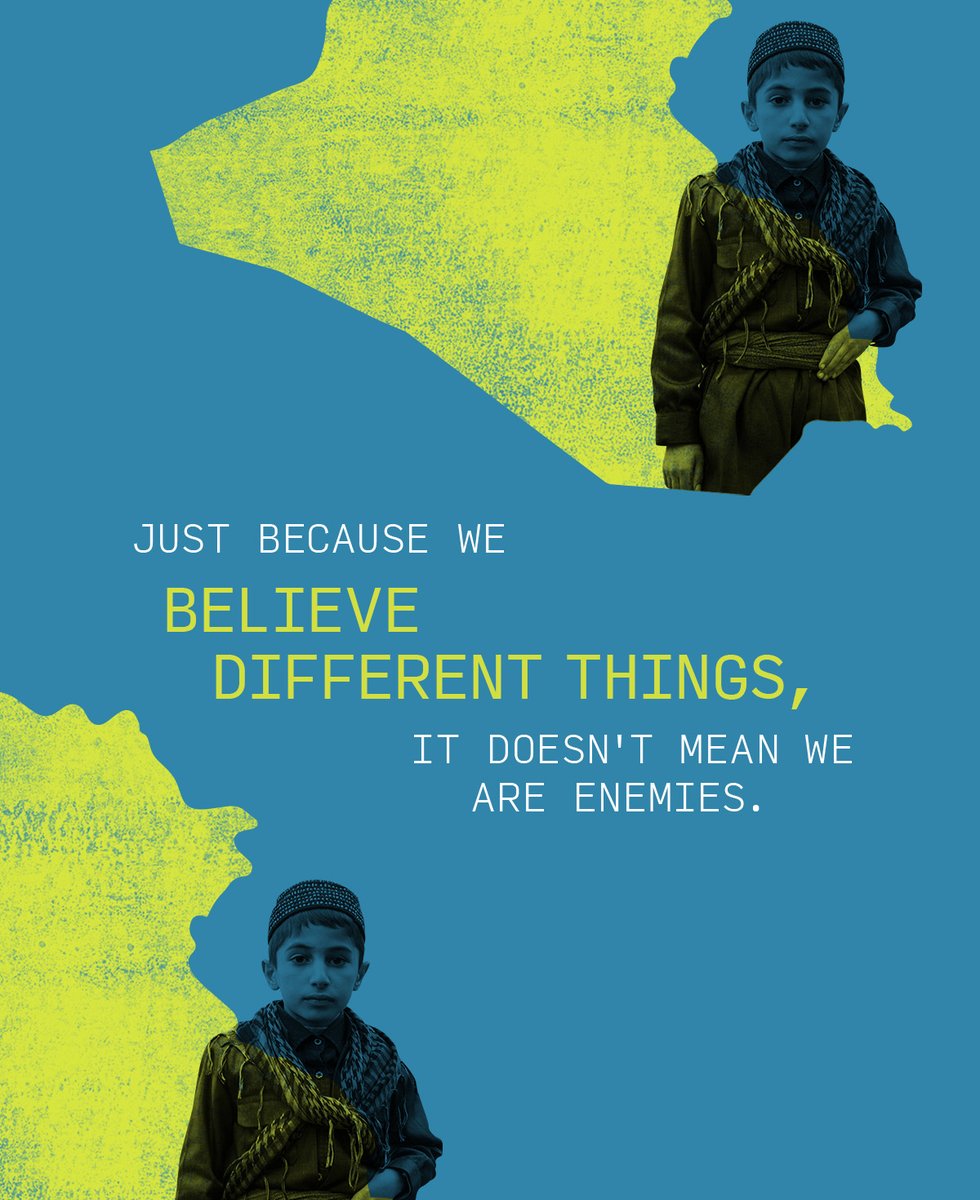
In a city still rebuilding after ISIS, 400 to 600 teachers in Mosul are learning to do something quietly radical: teach dignity and difference as everyday subjects.
Grantee Tina Ramirez is leading the work. Her conviction is that lasting pluralism is not the result of treaties or programs but of children growing up in classrooms where they are taught to recognize one another's humanity.
Learn more about this project: https://t.co/fqMjGGtpCv
Over the centuries, humankind has exponentially expanded our understanding of science, technology, and medicine. But what about the spiritual world?
Could the next great frontier be the unseen world of spiritual realities that surround us?
Our Expanding Possibilities Series is a spotlight interview with leading thinkers on their work in relation to our ongoing quest for new spiritual information.
Grantee Tyler VanderWeele, Ph.D., is the John L. Loeb and Frances Lehman Loeb Professor of Epidemiology in the Departments of Epidemiology and Biostatistics at the Harvard T.H. Chan School of Public Health, and Director of the Human Flourishing Program and Co-Director of the Initiative on Health, Spirituality, and Religion at Harvard University.
Read Tyler VanderWeele's Q&A: https://t.co/jTrZ5FITbt
As tribalism and nationalism rise globally, can the arts help us recover the capacity to see one another?
Grantee Kelly James Clark is bringing philosophers, theologians, psychologists, and neuroscientists across three countries together to find out.
Learn more about this project: https://t.co/3YkCNVRNAm
A soccer field of tropical forest is lost every six seconds. And the places richest in biodiversity often overlap with the places facing the worst poverty.
Conservation and economic development have long been treated as separate missions, sometimes even competing ones. Grantee Josh Yates is leading a research collaborative to change that.
The CARE model integrates ecotourism, satellite imagery, and locally-led enterprise to make conservation financially sustainable. The first pilot is underway in Uganda's Budongo Forest, near Murchison Falls.
Learn more about this project: https://t.co/uxBzuYnhSR
Science and religion have been the two most prevalent meaning-making systems throughout history. And yet, while they continue to be, our world and its inhabitants continue to change at warp speed. How does this impact the way in which people today find meaning? Interact with one another? Make changes for future generations?
Watch more: https://t.co/BBI6iJOWiQ
Across faith traditions, every group named honesty as a top virtue. The shared ground may be wider than the public conversation suggests.
Learn more: https://t.co/z3R2jlEVHj
Step inside a cathedral, a mosque, or a temple and something happens to your brain. A measurable shift away from your default mental state.
Grantee Julio Bermudez is using EEG and biometric tools to map exactly what sacred architecture does to the human body. Spiritual experience may not be only about belief.
Learn more about this project: https://t.co/M782zUewSQ
All of humanity should address the problems facing all of humanity. But the field of existential risk has a perspective problem.
Grantee Caroline Tee and her colleagues are working to close that gap. Through long-term fieldwork embedded in Muslim communities in France and the UK, their team is documenting how Islamic traditions engage with existential threats, including climate change, pandemics, and technological disruption. The range of responses, from deep optimism to genuine alarm, reveals a richness that the field has largely overlooked.
Solving global challenges requires perspectives that go beyond any single cultural or scientific tradition.
Learn more about this project: https://t.co/FcHbDPRgol
Individuals who engaged in “spirituality” — including the practice of religion and meditation — were significantly less prone to hazardous use of alcohol, marijuana, tobacco, and other drugs, new research from #Harvard suggests
#churchnews#churchtimes
https://t.co/sipkY9sMtI
An international team of academics led by Grantee Garrick Allen of @UofGlasgow has successfully recovered 42 lost pages from one of the world's most important early New Testament manuscripts: Codex H.
https://t.co/tVwv8LF0LV
6 out of 10 K-12 teachers in all provinces of Indonesia hold intolerant religious views. In a nation of 270 million people from more than 1,300 ethnic groups, that's not just a statistic. It's a warning.
Grantee Matius Ho and his team are responding with the Cross-Cultural Religious Literacy Program. This nationwide initiative has already reached more than 9,000 teachers across 37 provinces, partnering with 30 organizations representing multiple faith traditions.
Learn more about this project: https://t.co/wZdGz1iiwm
At some point, life knocks all of us down. But why do some people recover quickly while others struggle for years?
Grantee Jer Clifton at @Penn believes part of the answer lies in beliefs we rarely examine: deep assumptions about whether the world is safe, enticing, or alive.
His research at the Primals Project identified 26 distinct "primal world beliefs" that shape mental health, resilience, and well-being. Preliminary data from more than 4,500 participants show these beliefs are stronger predictors of life outcomes than demographics.
Learn more about this project: https://t.co/E2vtc1yx9f