I appreciate that I don't post much anymore, but there's been a real surge of activity at the other place. So I think I'll be spending more time there from now on. You can find me there as @templum.bsky.social
This took way longer than I intended it to, but I finally got round to finishing an article about the temple at Pagans Hill. If you're interested in rural temples during the end of the Roman West I think you'll enjoy it
https://t.co/SpFEWFUidt
Some figurative sculpture was on display - a hippocamp on a decorative frieze recently found at Irthlingborough, and a crudely carved Hercules found at Higham Ferrers. Neither usually visible to the public @TemplumData
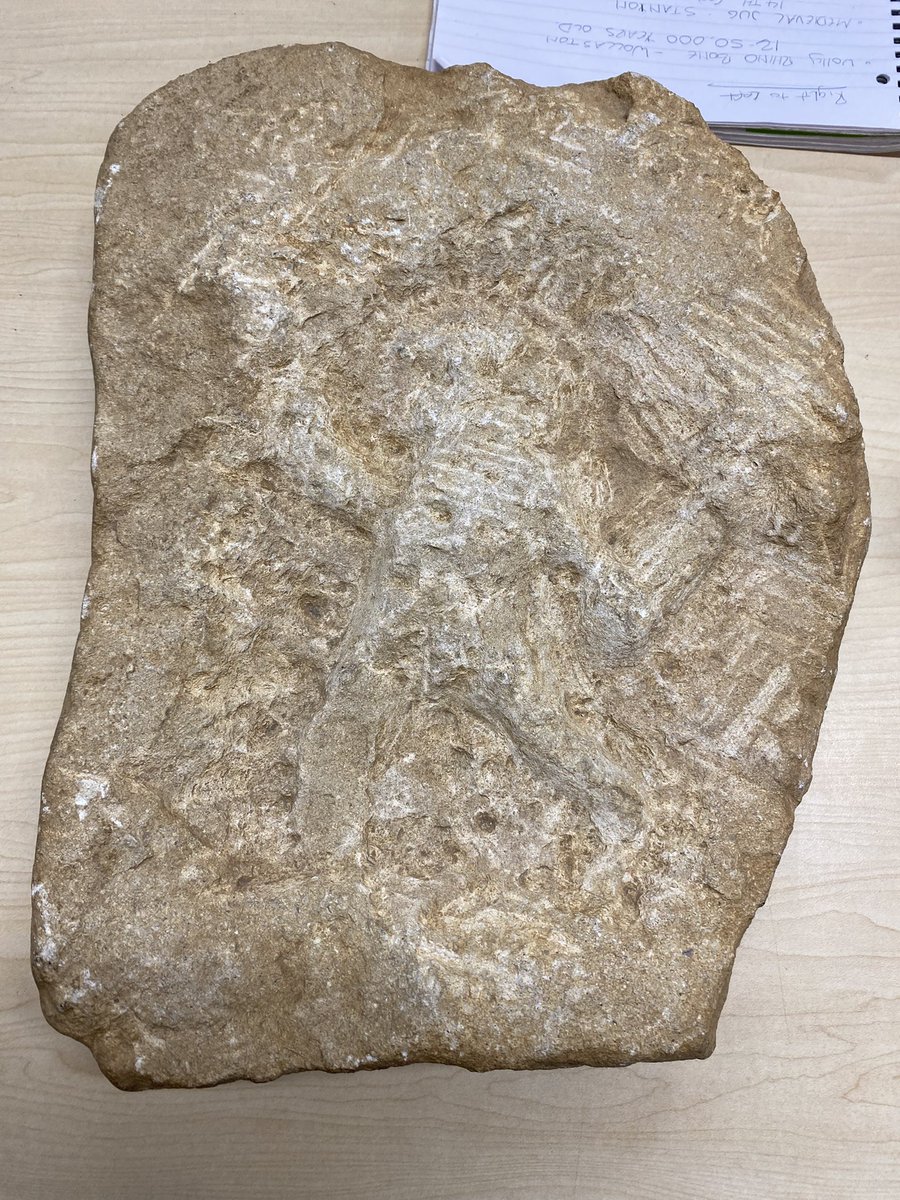
As today marks the start of Chinese Year of the Snake... it's a good time to show off perhaps our most enigmatic sculpture - the serpent stone. Both the Chinese and the Romans associated snakes with prosperity, among many other things.
#RomanSiteSaturday
The nymphaeum (shrine to a water nymph) at Chedworth roman villa in Glos. A spring was channelled into an octagonal basin [sound on] which then supplied the villa's kitchen, baths and... 1/2
🏛 I had the pleasure of getting a tour of the Uncovering #Roman Carlisle project at Carlisle Cricket Club, where the brilliant team are excavating an enormous administrative building with huge bath-house, roads, and a fascinating monumental area that might include large shrines!
Pádraigín Riggs about the storyteller Tomás Ó Cathasaigh in @IrishTimes:
https://t.co/FMY5jiZuc2
The volume Sgéalta ó Thomás Ó Cathasaigh will be the subject of the Irish Texts Society’s Annual Seminar:
9 November
@UCC @uccsmghaeilge
@DrFrancisYoung@pighilltweets I've thought about it! And maybe I will eventually, but I can't help but think that they'll be a nightmare to find and validate
An excellent lecture by @urbanprehisto on
*Housing the future dead: the new British wave of long barrow construction*
at the 2024 @BU_ArchAnth @PrehistSociety annual Pitt Rivers lecture tonight (with a nice tribute to the late great Tim Darvill at the beginning)
#Archaeology
This striking Iron Age bone comb was made from a horse metapodial bone, recovered during excavations by Wessex Archaeology at Harwell, Oxfordshire. The seemingly human face that looks back at us is a highly unusual form of decoration for this object type & period! #WildWednesdays
This looks interesting, it's interesting to think about what the overlap between mortuary architecture and practices is with late temple/shrine architecture. I'd love to compare this to Blair's Anglo-Saxon pagan shrines and their prototypes. https://t.co/sGdRXILzTr




![Brittunculus410's tweet photo. #RomanSiteSaturday
The nymphaeum (shrine to a water nymph) at Chedworth roman villa in Glos. A spring was channelled into an octagonal basin [sound on] which then supplied the villa's kitchen, baths and... 1/2 https://t.co/iGx2ohhSI7](https://pbs.twimg.com/media/Gb8_nSIWEAAcRsg.jpg)


![Brittunculus410's tweet photo. #RomanSiteSaturday
The nymphaeum (shrine to a water nymph) at Chedworth roman villa in Glos. A spring was channelled into an octagonal basin [sound on] which then supplied the villa's kitchen, baths and... 1/2 https://t.co/iGx2ohhSI7](https://pbs.twimg.com/media/Gb8_pnmXoAANYFw.jpg)


