I’ve been in crypto long enough to watch entire cycles come and go.
I first got into Bitcoin around 2014, then became much more active during the Ethereum era in 2017. After that I moved through BNB Chain, Polygon, and other ecosystems, always following where the builders, communities, and opportunities were going. By 2023, I was deep into Solana, managing more than 100 wallets across Phantom and different setups.
At one point, my portfolio reached around $150K.
Then crypto humbled me.
A huge part of it disappeared through rug pulls, bad entries, dead projects, and holding positions too long because I kept thinking the next move would recover the last loss.
Over the years, I also worked on projects with different internet teams, but we never built anything with the intention of rugging people. To me, memes were supposed to be fun, experimental, and sometimes powerful enough to create communities or push movements. I never wanted to run a pump-and-dump just to turn other people into exit liquidity.
Most of what I made came from supporting other projects early, taking risks, and sometimes just being lucky.
And whenever I had good wins, I tried to share some of them with street children and less fortunate people I met, because money felt more meaningful when it could actually help somebody.
But there’s one thing crypto taught me the hard way:
Luck can build your bag faster than discipline can protect it.
From BTC → ETH → BNB → Polygon → Solana, I learned that you can spend years studying crypto, survive multiple chains, build a six-figure portfolio—and still lose almost everything when greed, bad timing, and rug pulls hit at the same time.
Crypto gave me opportunities I never thought I’d have.
It also taught me one of the most expensive lessons of my life:
Making money and keeping money are two completely different skills.
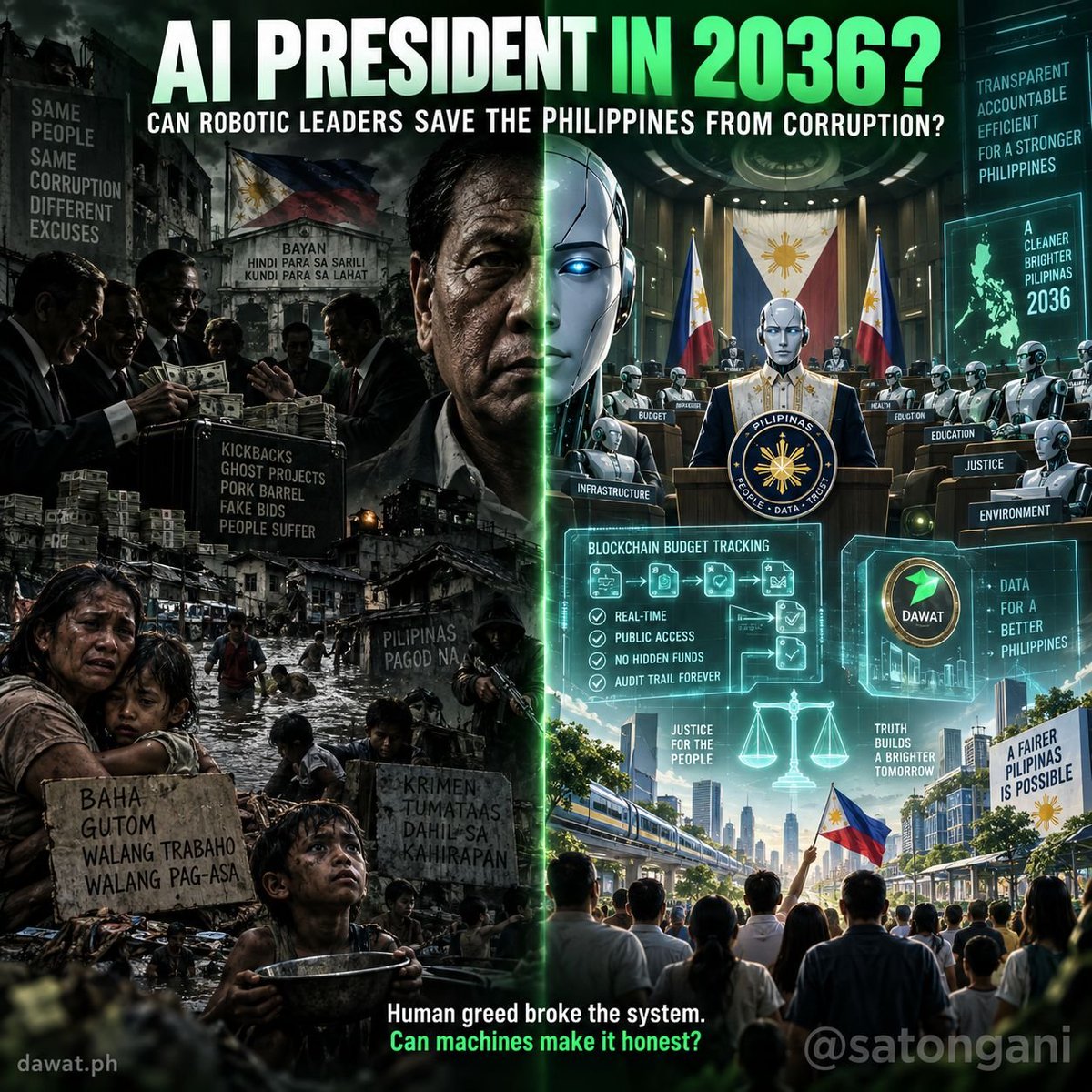
WHAT IF THE PHILIPPINES ELECTED AN AI PRESIDENT AND A ROBOTIC PARLIAMENT IN 2036?
One of the Philippines’ oldest problems is painfully human: people with power can be tempted by money, connections, political favors, kickbacks, family interests and self-preservation.
We see the consequences when public money meant for roads, flood control, hospitals, schools and communities gets lost to corruption, ghost projects or questionable contracts. The ongoing flood-control cases alone show how enormous the stakes can become when public spending is allegedly abused.
So here’s a future thought experiment.
What if, by 2036, Filipinos still elect representatives—but beside them sits a robotic parliament powered by AI?
Every peso entering government could be tracked automatically with Blockchain AI.
Every contract could be compared against market prices.
Every politician’s vote, budget insertion, procurement decision and conflict of interest could be logged permanently.
An AI system could instantly flag:
Why did this bridge suddenly cost ₱2 billion?
Why does this contractor keep winning?
Why was this project paid for but never built?
Why did this official’s declared wealth suddenly explode?
Where did the money go?
No palakasan.
No padrino.
No midnight deletion of records.
No “nakalimutan ko.”
The machine remembers everything.
Imagine an AI President whose job is not to enrich itself, protect a dynasty or reward friends because it has no family business, mansion, campaign donor or personal bank account.
Its instructions could be simple:
Reduce poverty.
Feed the hungry.
Create jobs.
Build infrastructure.
Protect public money.
Reward honest work.
Punish corruption through lawful institutions.
And imagine robotic or AI-assisted legislators analyzing every proposed law before a vote—showing citizens exactly who benefits, who pays, what it costs and whether hidden provisions were inserted.
This would not magically solve everything. Poverty, education, inequality, crime, insurgency, unemployment and regional conflicts have complicated causes beyond corruption alone.
And there is an even darker danger:
Who controls the AI?
A corrupt politician controlling the machine could be worse than a corrupt politician alone. Biased data could create biased decisions. Surveillance could become authoritarian. An AI government without constitutional limits, human rights, courts, transparency and human oversight could become a digital dictatorship.
That is why perhaps the future is not AI replacing democracy.
Maybe it is AI watching democracy.
Humans still choose the direction of the country. Courts still protect rights. Citizens still vote. But machines continuously audit the money, expose suspicious patterns and make government records difficult to manipulate.
Interestingly, the Philippines is already debating national AI-governance frameworks, while the Supreme Court has adopted a framework emphasizing human-centered augmented intelligence rather than uncontrolled automated authority.
Under the current Constitution, a literal robot could not simply become President: the presidency requires a natural-born Filipino citizen who is a registered voter and meets the constitutional age and residency requirements. Changing that would require fundamental constitutional change.
So maybe 2036 Philippines looks less like a robot sitting in Malacañang—and more like something potentially more useful:
Human democracy.
Machine transparency.
Blockchain records.
AI auditors.
Public money visible in real time.
Because the ultimate goal should not be to make machines powerful.
It should be to make corruption harder for humans to hide.
REP. MARCOS, GUSTONG PAGMULTAHIN HANGGANG ₱50-M ANG MGA SOCIAL MEDIA PLATFORMS
Inihain nina House Speaker Faustino “Bojie” Dy III, Senior Deputy Speaker Ferdinand “Dinand” Hernandez, at Majority Leader Ferdinand Alexander “Sandro” Marcos ang House Bill No. 9965 o Children’s Social Media Safety Act, na naglalayong papanagutin ang mga social media platforms na mabibigong sumunod sa child online safety standards.
Sa ilalim ng panukala, maaaring pagmultahin ng hanggang ₱50 milyon ang mga platform na hindi sumusunod sa requirements gaya ng age verification, parental controls, safeguards laban sa harmful content, at iba pang proteksyon para sa mga menor de edad. Para sa paulit-ulit at seryosong violations, maaari ring magkaroon ng temporary restriction o pagbabawal sa operasyon sa Pilipinas, subject to due process.
Ipagbabawal din sa mga batang below 13 years old ang paggawa o paggamit ng social media accounts. Para naman sa mga edad 13 hanggang below 18, kailangan ang verifiable parental or guardian consent at tuloy-tuloy na supervision.
Kasama rin sa panukala ang mas mahigpit na privacy settings para sa mga bata, restrictions sa geolocation at financial transactions, stronger controls laban sa harmful recommendations, at transparency requirements para sa algorithms na ginagamit ng mga platform.
Sa ngayon, ang HB 9965 ay pending pa sa House Committee on Welfare of Children.
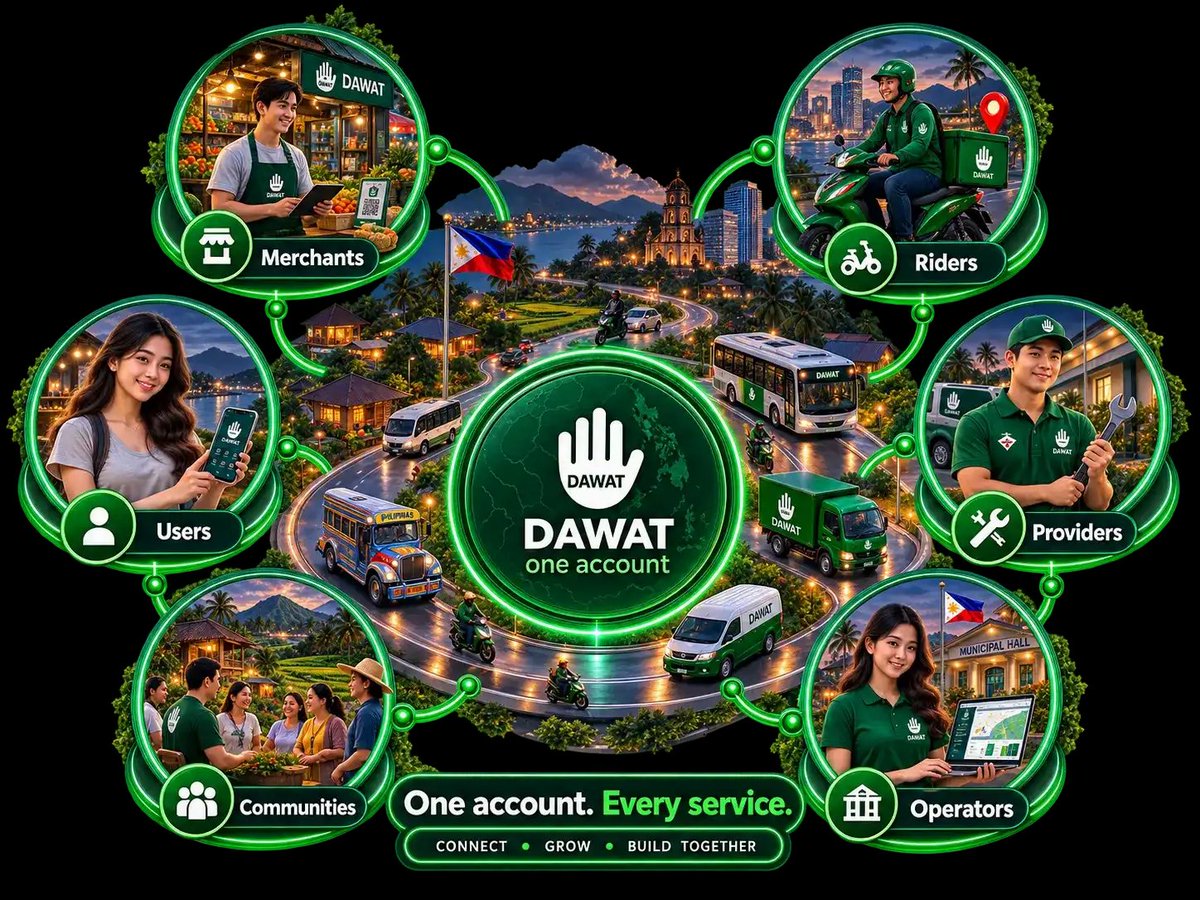
i'm so tired teaching these filipinos crypto since early 2014, so it's better to build them a platform where they can actually use and spend crypto inside as utility or reward. https://t.co/Rwaiilh2ZD