Tera Wallet is now live on @RobinhoodApp’s Robinhood Chain.
CA: 0x3c12e57fa7817a86ce7c254db9ea5fe639e233f8
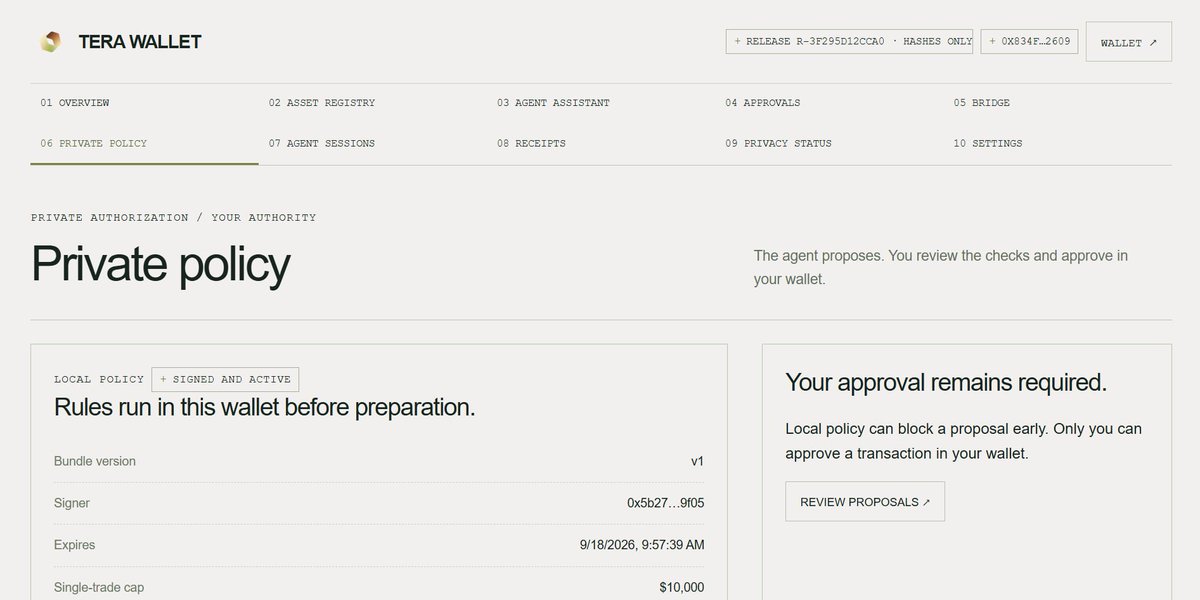
Tokenized stocks can trade around the clock, but the trade behind the chart still needs to make sense. Tera Wallet checks the asset, the price and the limits you set before the transaction moves from your wallet.
Tech vids coming up next. $TERA
USDG should not have to sit idle.
This weekend, we’re sharing an early look at Tera Earn.
A private, owner-controlled way to put your USDG to work onchain, with nothing moving until you approve it.
Stay close.
Tera Mobile MVP is now live.
An early native wallet built to test self custody, local approvals, and onchain workflows before the full public release.
The Android preview is available now.
The main Tera app is coming to Google Play and the App Store.
Download the APK:
https://t.co/e0mYDEMvUF
Staking is coming to Tera Wallet.
We could rush it out for a headline. We would rather get the model, safeguards and experience right first.
More when it is ready.
One RPC endpoint can link every account you check. Same browser, same connection, same minute.
Tera can now spread account reads across endpoints run by separate operators, so one provider sees one account instead of the full set.
It is not anonymity. Your assigned operator still sees that account, and providers can correlate requests if they compare IP data. Signing never uses these endpoints.
https://t.co/MtNN4iMe2n
One RPC endpoint answering for all your accounts learns they're all you. Same connection, same session, same minute.
Tera can now spread reads across endpoints run by different operators. Each one sees one account instead of the set.
What it doesn't do, written into the source: it doesn't hide you from the operator you're assigned to, and it does nothing against operators who compare notes your IP is the same for every read. Protection against one party, not against collusion.
Signing never goes near it.
Commit: https://t.co/MtNN4iMe2n
Update: Tera Wallet can now send agent requests through Oblivious HTTP.
A separate relay sees your IP, not what you asked. Tera sees what you asked, not your IP. The wallet refuses a relay that points back to the Tera API.
It is off by default. Turn it on when you want the extra privacy layer.
https://t.co/VND8AyMhWh
We said we'd burn.
200M $TERA tokens GONE forever.
Every word we speak, we back it up.
AMA today · 11 AM EST
come ask us everything.
$TERA
https://t.co/aZJnUufQo6
Another 26.7M TERA.
The 200M $TERA target is getting closer.
No noise. Just continued execution.
Onchain proof below.
https://t.co/Emv09Y30L2
https://t.co/WZkLhInZHx
Web wallets ask you to trust their JavaScript.
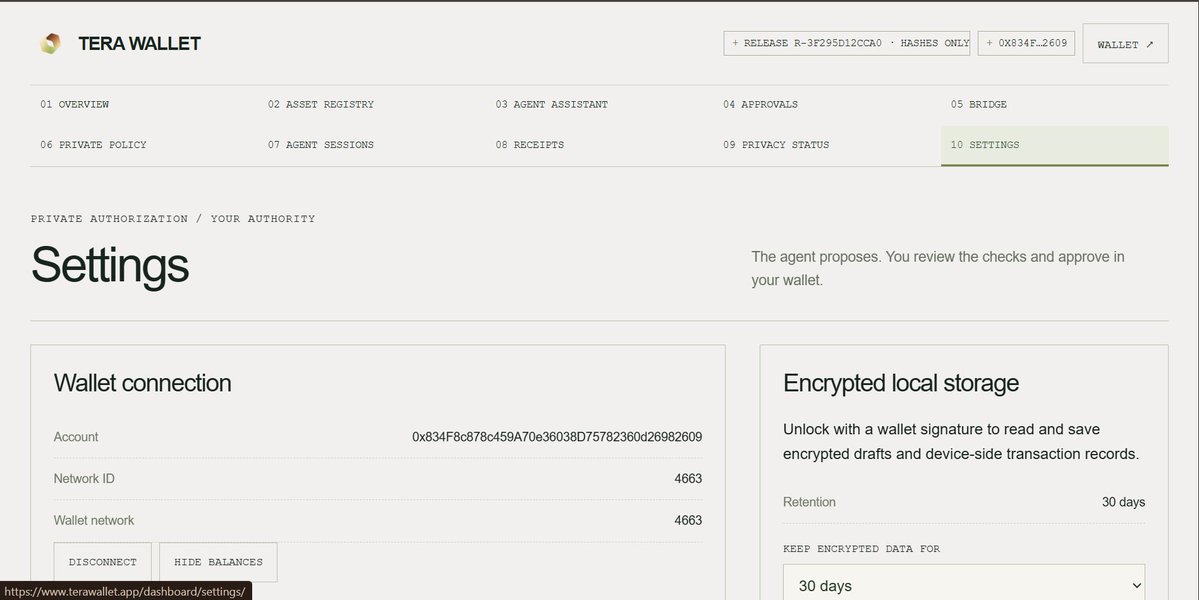
Tera publishes SHA-256 hashes for wallet modules and checks served files. One byte off, it names the file.
A hacked site could replace the checker. Published hashes can still be verified outside Tera.
https://t.co/1XBLbBFldC
You've watched us burn 144.9M+ tokens in 24 hours.
Now ask us anything.
🎙 Tera Wallet AMA
📅 Tomorrow · 11 AM EST
Come ready. We answer everything.
$TERA
Every web wallet asks you to trust that the JavaScript it served you today is the JavaScript it published. Almost none of them give you a way to check.
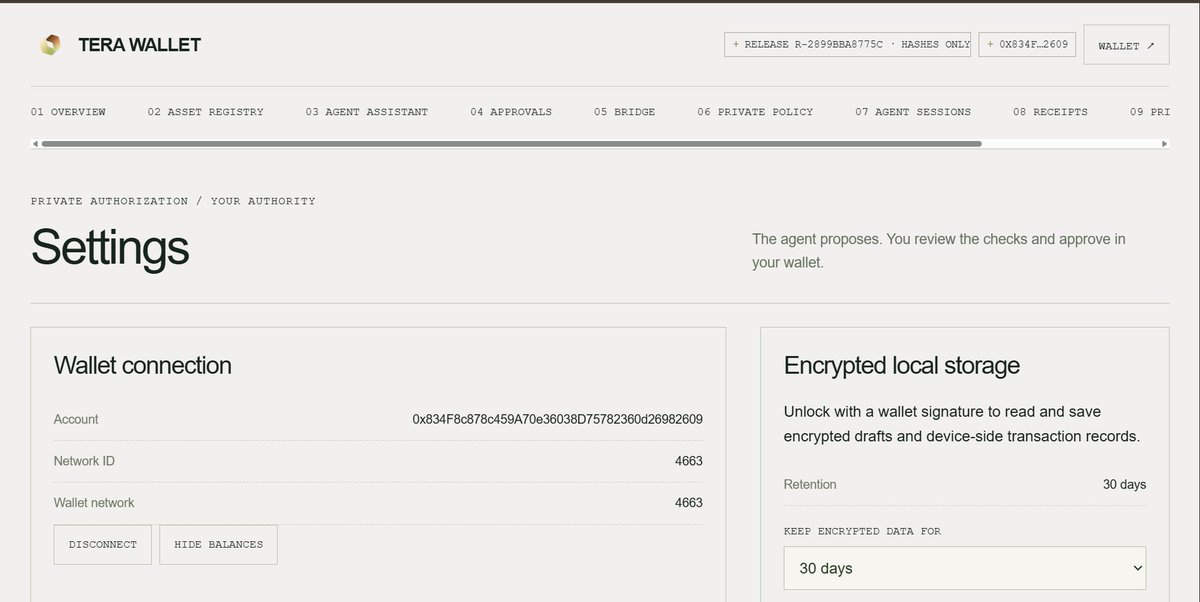
Tera now publishes a build manifest, SHA-256 for every wallet module and checks itself against it on load. Header badge tells you the release you're running. One byte off and it goes red and names the file.
The release id is derived from the file list itself, so you can recompute it from a checkout. No trust in our build machine required.
What it does not do: it can't hash the code already running in your tab, and it can't save you from an origin that's been taken over whoever replaces a module can replace the checker. That's why Signal shipped Code Verify as a browser extension.
The published hashes are the part that survives that. Fetch a file, hash it, compare. The panel gives you the one-liner.
▎ curl -s https://t.co/F1wPZaRfZT | openssl dgst -binary -sha256 | openssl base64 -A
https://t.co/mKRzvC9tgQ
RWA trades can fail for reasons a normal wallet will not show you: the asset is unsupported, the route has no liquidity, the quote has expired or you are not eligible to receive it.
Tera checks those conditions before sending anything to your wallet for approval.
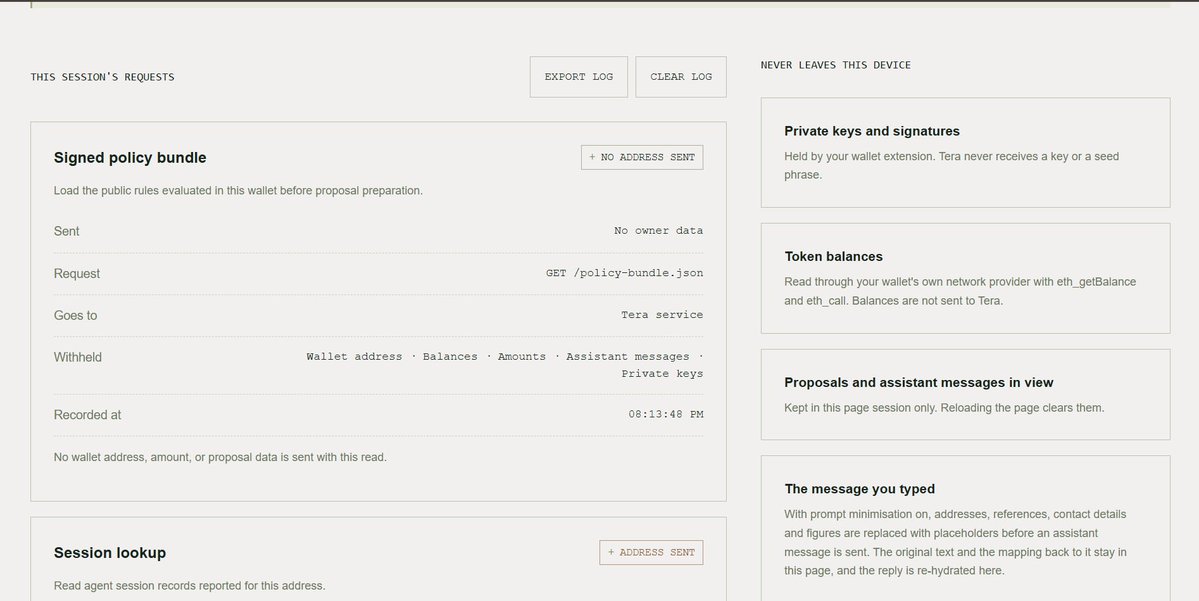
Your wallet's privacy page tells you what the app collects. It never tells you who else is in the room.
Tera now names all eight. The page host. Our API. The RPC your wallet extension quietly picks for you. The model provider. Relay. The explorer you click through to. And the chain itself.
Each row: what it learns, what it doesn't get, what you can do about it.
Two of the eight never see your network address, Tera's server makes those calls. Two more are marked "not counted here," because your wallet extension opens its own connections and this page genuinely cannot see them. Reporting that as zero would be a lie with better optics.
Last row is the chain. Public, permanent, linkable. Nothing in this wallet changes that yet, and the panel says so out loud.
https://t.co/EFXaAmzlXx
One signature. One vault key. Forever.
That was a bad design.
Tera Wallet’s encrypted vault can now rotate keys, so a signature from an old key epoch cannot open the new one. You can also add a passphrase, export an encrypted vault to another device or create threshold recovery shares.
One thing worth saying plainly: any required number of recovery-share holders can rebuild the vault without you, and you will not be notified. Recovery is useful, but it is never magic.
https://t.co/3z5chhwk8T