The very beginning of https://t.co/284rvWCPar is live.
It’s just a landing page and a mailing list sign-up right now, but it’s the first step toward a community seed exchange for games like Minecraft and Civilization.
Sign up to follow the journey: #indiedev#minecraft#civ
That means more software, not less and likely more demand for people who can define problems, guide systems, and turn ideas into working products.
AI won't reduce software engineering. It'll make software ubiquitous.
When something becomes dramatically cheaper to produce, we tend to consume more of it. As software creation approaches zero marginal cost, we'll build software for problems we previously ignored.
"If you rewrite from scratch, you inherit the business rules but lose the scars that taught you where they break."
Stop trying to eliminate technical debt. You can’t. The only choice is: do you garden deliberately, or wait until the system chokes?
https://t.co/PIL7wavzYo
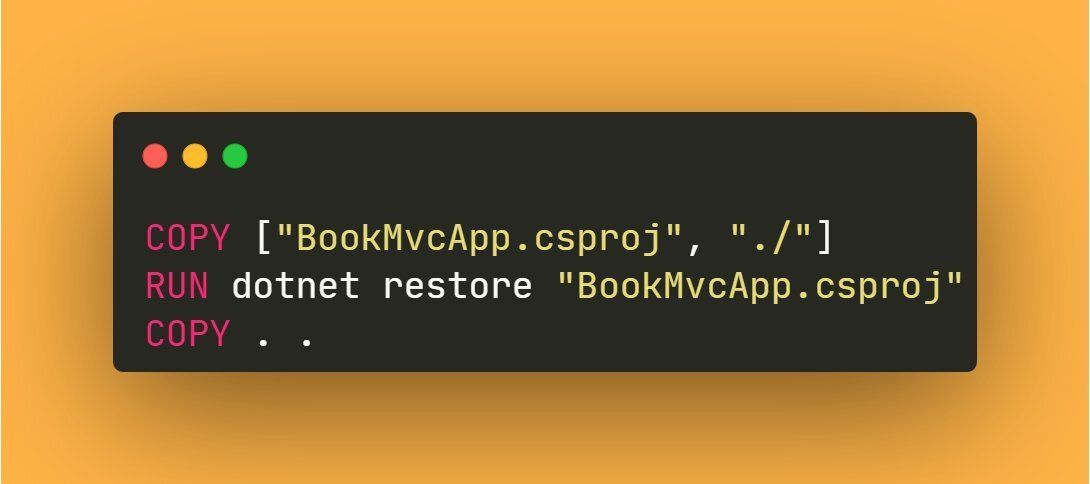
If your source code changes but your dependencies don’t, Docker can skip re-running the dotnet restore step because the .csproj layer didn’t change.
Learn more .NET Docker best practices in my video here:
https://t.co/1E8JLxZnKM
💡 .NET Docker Pro Tip 💡
Copy your .csproj and restore before copying the rest of your app.
Docker will cache dependencies between builds so your next build is lightning-fast!
When you build a Docker image, Docker caches each layer in your Dockerfile. If a layer and everything above it don’t change, Docker reuses the cached layers in future builds.
Every enterprise system hits a threshold where velocity slows and risk explodes. It’s not the tools or the senior devs—it’s the physics of complexity.
From the Green Field honeymoon to the False Exit of a rewrite, here are the 6 stages of technical debt. https://t.co/PIL7wavzYo
You should never have to ask: “Did you run the tests?”
Just let GitHub Actions do it for you.
✅ Runs tests on every PR
🗨️ Posts results automatically
🔒 Blocks merges if they fail
Here’s how to set it up in under 5 minutes: https://t.co/HQCKcTRWCi
Managing front-end libraries in .NET is painful.
NuGet’s great for backend packages but for client-side dependencies, it’s… rough. Here’s a better approach 👇
Use npm + Gulp to automate front-end dependency management. No more manual copying to wwwroot.
Speed up your .NET Docker builds.
1️⃣ Copy your .csproj
2️⃣ Run dotnet restore
3️⃣ Copy the rest of your app
Docker caches dependencies between builds so future builds are way faster.
Checkout my video on how to containerize a .NET and SQL Server app: https://t.co/1E8JLxZnKM
Technical debt isn't a mistake or a lack of discipline. It’s the shadow cast by progress.
You don’t "finish" a codebase; you garden it. If you don't make time to prune the weeds, the garden eventually chooses what breaks and who burns out.
https://t.co/PIL7wavzYo
Treat your tests like a gate, not a suggestion.
You can make GitHub Actions run .NET test on every pull request and publish results as a comment.
Combine with branch protection → you physically can’t merge failing code.
Tutorial: https://t.co/HQCKcTRWCi
Managing front-end libraries in .NET is painful.
NuGet’s great for backend packages but for client-side dependencies, it’s… rough. Here’s a better approach 👇
Use npm + Gulp to automate front-end dependency management. No more manual copying to wwwroot.
Best practice for .NET Dockerfiles:
Always copy your .csproj and run dotnet restore before copying the rest.
This isolates dependency changes so Docker can reuse cached layers across builds dramatically cutting rebuild time.
You should never have to ask: “Did you run the tests?”
Just let GitHub Actions do it for you.
✅ Runs tests on every PR
🗨️ Posts results automatically
🔒 Blocks merges if they fail
Here’s how to set it up in under 5 minutes: https://t.co/HQCKcTRWCi