The official account of the Ternary Pathway Community. Journeying through life on the Ternary Pathway. Being #mindful, following nature, and journeying together
A couple of weeks late, but here we are:
Blog post - Review and Reflection on Viraneut (The Tide of Practising Love).
https://t.co/LSDD1dqX1J
Leave a like and comment your thoughts!
#blog#blogger#kibtisk#kibtiskway#love#agape#agapelove
It's not too late to give us some feedback on the new Kibtisk Hub website!
Click on the link below to let us know your thoughts! 😊
https://t.co/z26eL45okJ
Ready to receive feedback on the Kibtisk Hub website!
Like or RT this post or DM me to receive the link to the form and let me know your thoughts!
#feedback#kibtisk
@rob_heighton Once I realised the dates were different for eah tweet, it became even more enjoyable. Especially because I am a Brit who owns a very good washer-dryer
@LanguageCrawler Unrelated to the tweet, but it just occurred to me that I recognise your profile picture for the first time. My kanji learning is clearly paying off.
Also, yes, the power of life and death lies in the comma.
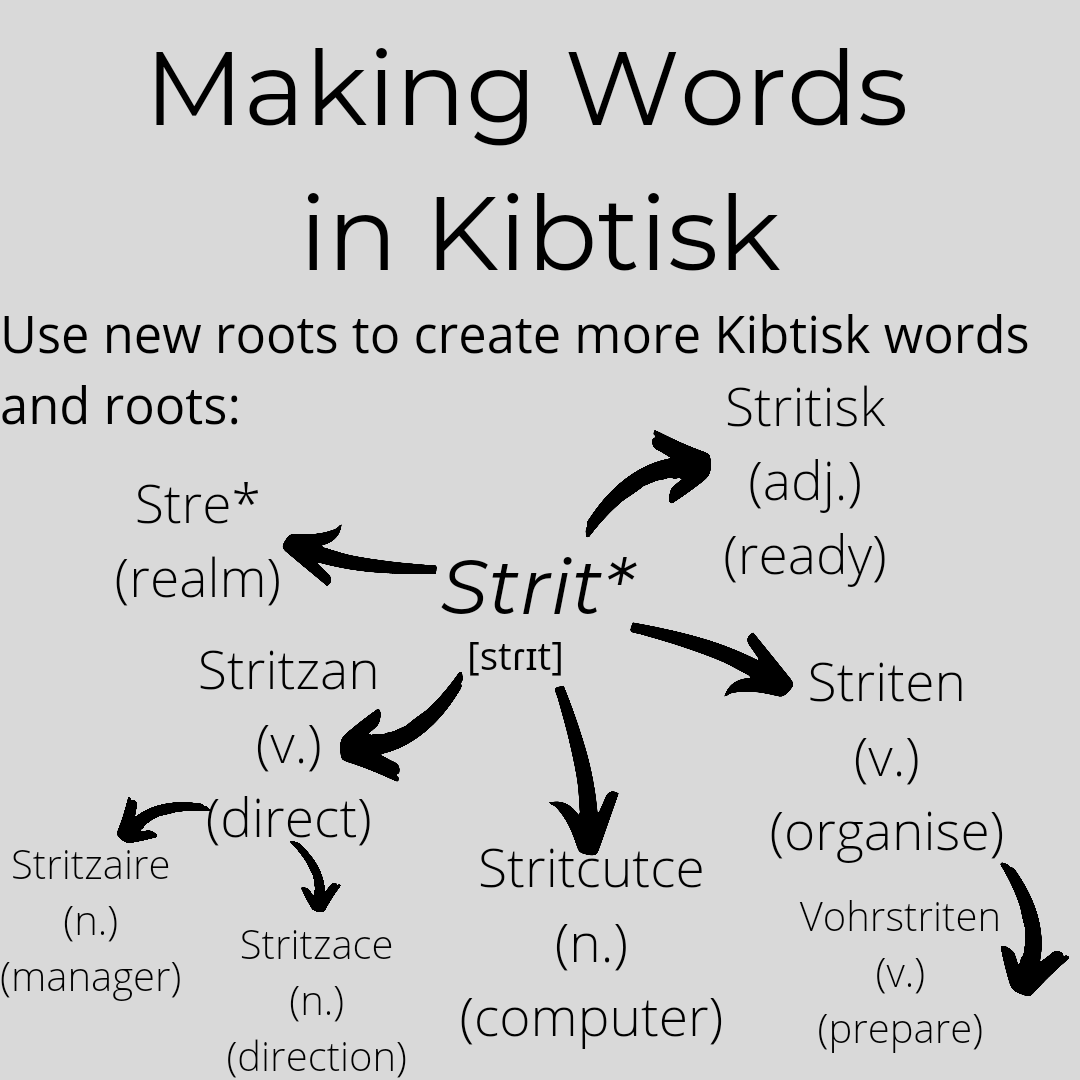
Affixes are then added in order to build words, including using existing words to create compound words with a new meaning (an example of this in the image is "vohrstriten").
This makes Kibtisk approachable and accessible yet still a foreign language.
#kibtisk#conlang
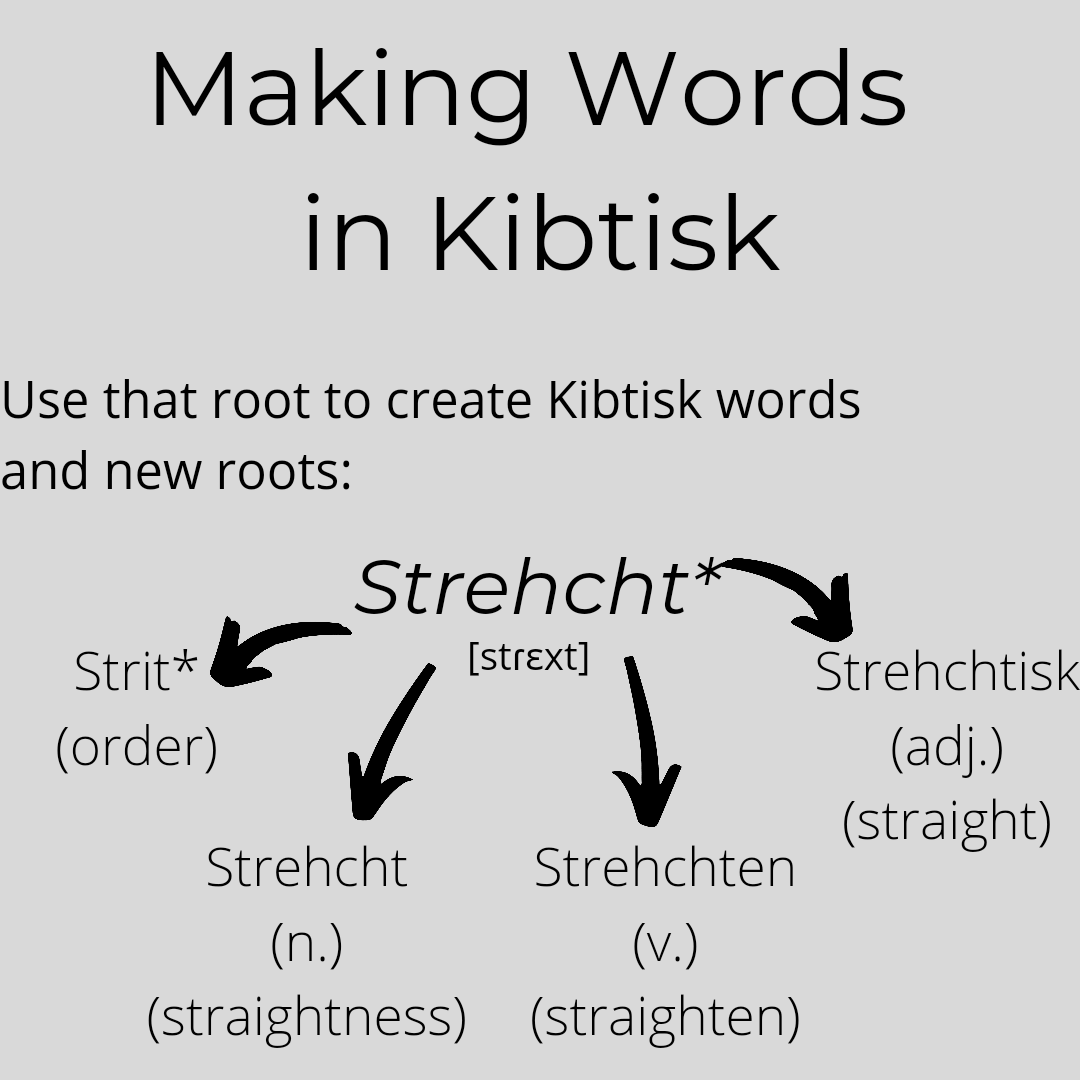
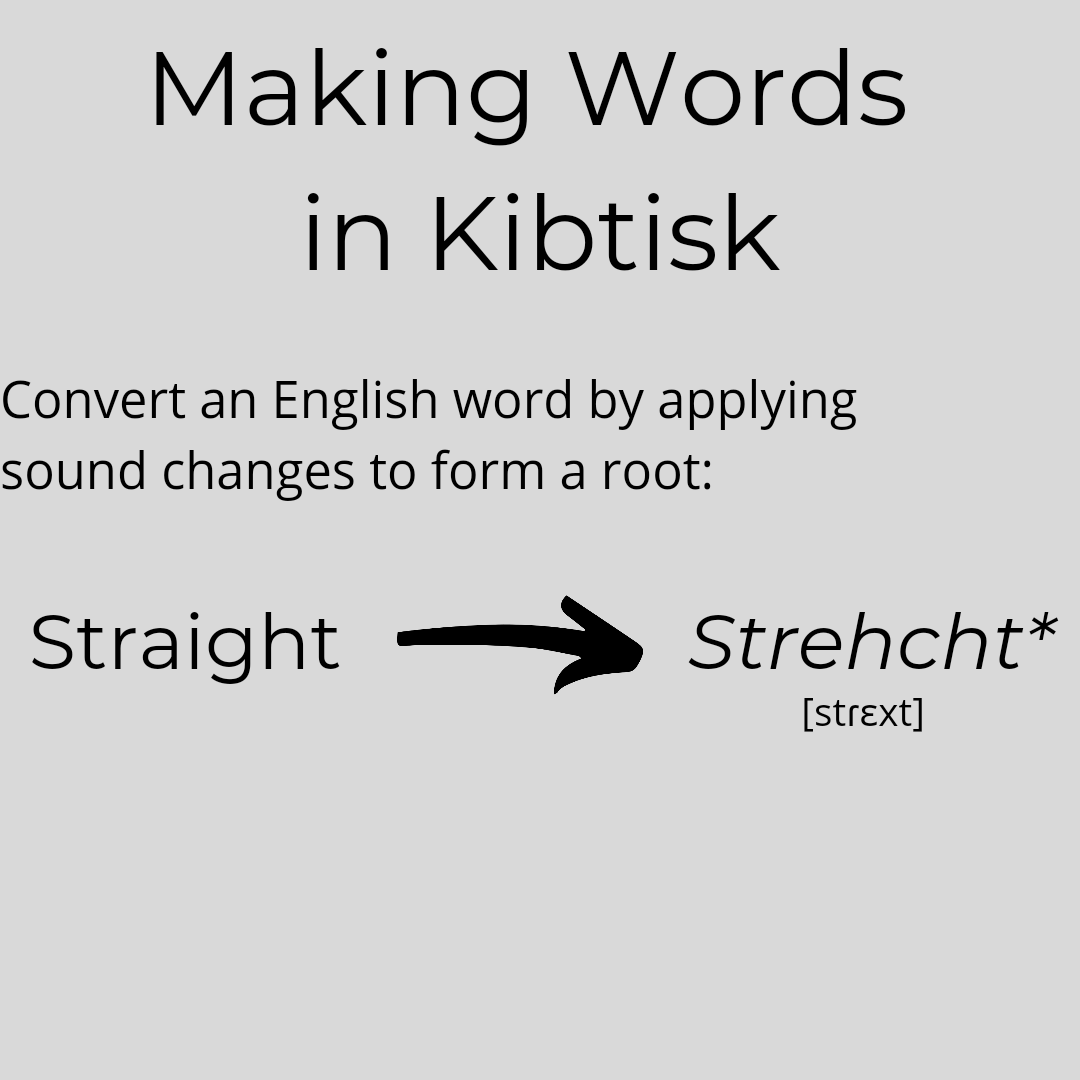
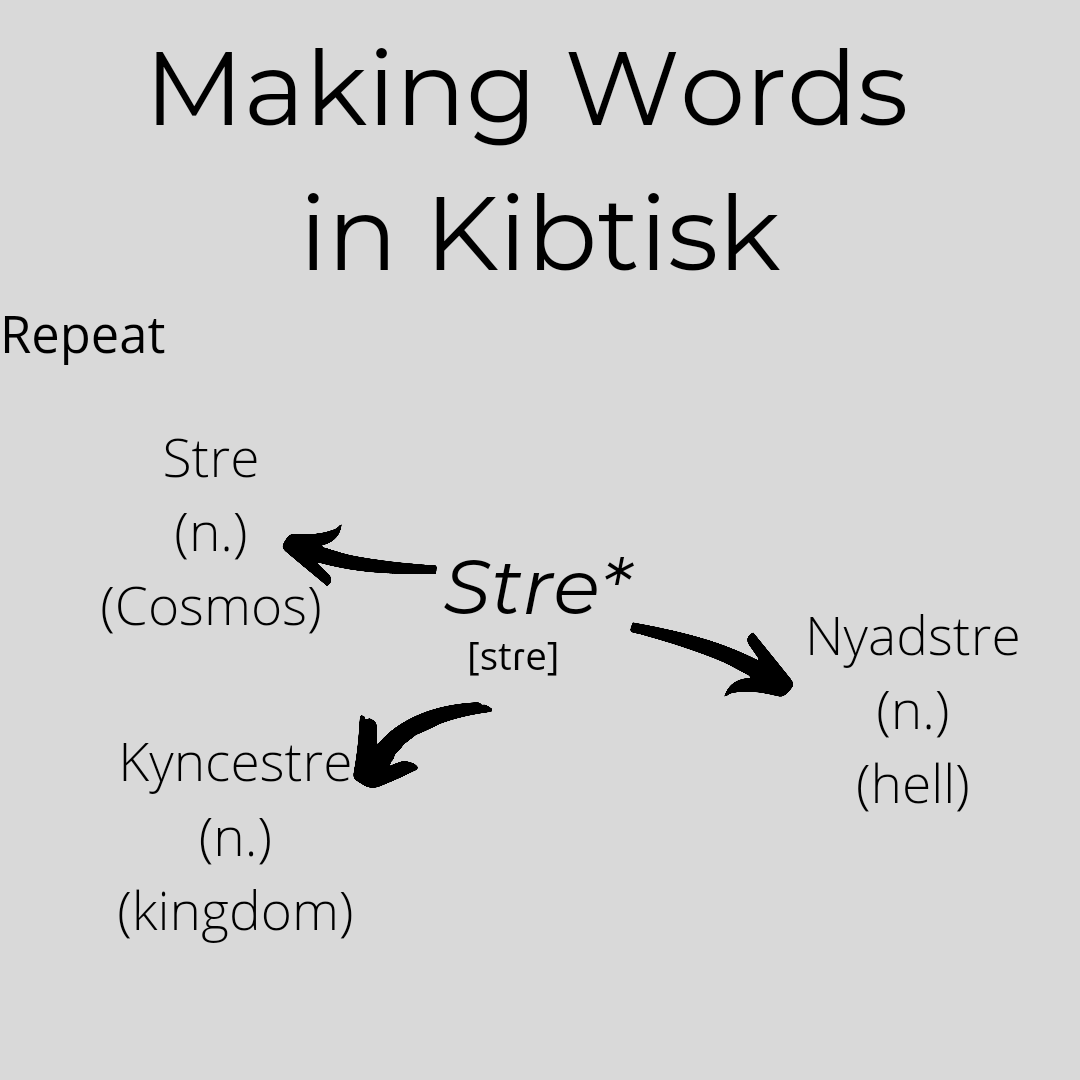
Making Words in Kibtisk.
An example of how words in Kibtisk are made, using the root 'strehcht' which is perhaps the most expansive of roots as so many words come from it, including 2 additional roots. Most Kibtisk words do not develop an additional root from them, let alone 2!
Kibtisk roots are usually formed by applying a series of sound changes to English and then pronouncing the result according to Kibtisk pronunciation in order to make a new word.
This Saturday, the National Museum of Language USA @LanguageGeeks is hosting a free online lecture about constructed languages with University of Calgary researcher Dr. Joseph Windsor @LingJWWindsor.
Sat. July 24, 2–4pm EST. Register on Eventbrite. https://t.co/y5bc6lA31N
@LinguistJosh@blaise420 I had a similar thing the opposite way around. I learnt to read Russian and then could read a lot of Greek (in caps) fairly quickly. I remember when I started learning to read Greek that I only had to learn 4 letters and all the miniscule
Ardzýn meditation: a quick how to guide.
The main introspective meditation form in the Kibtisk Way. It can be translated as 'soul-seeing' or 'self-examination'.
Find out more at: https://t.co/PVejqnFd4a