Brigadier Matshidiso Kgoadi, Sunnyside Station Commander who drove her officer to commit suicide recently because of her bullying behavior has been arrested for allegedly giving tenders to her Children during COVID 19 pandemic.
I got into Harvard because I built an AI platform to help families in informal settlements design and build dignified homes.
I can’t afford the fees, so I’m walking across South Africa to meet the families I’m fighting for and raise the funds.
A walk for home.
Corruption personified.
R2,4m salary.
Hires a jobless friend with R1,5m salary.
Receives 2 cars for ANCWL - gives them to her children.
Hires a nanny on State payroll
- instructs nanny to give half of salary to Tolashe daughter.
If this appears on your Timeline Kindly Repost! This is Mazwi Mpumelelo Khubheka, he was kidnapped after Refusing to sell his spaza shop to Pakistani Spaza shops owners. Nearly a month has passed since the kidnapping of Mazwi, Mazwi was targeted after opening a spaza shop!
South Africa’s economic policy is built on a lie that the government “needs” income taxes to survive. This lie is repeated by economists, journalists, and politicians alike, yet it is glaringly false.
To be blunt, the South African state literally issues the rand. Every rand in circulation is produced by the government. There is no scenario in which the treasury “runs out of money.” None.
Yet, the Treasury and its legion of economists continue to propagate fearmongering narratives about deficits, revenue shortfalls, and unsustainable spending, as if the state were a household counting pennies. This is intellectual dishonesty masquerading as policy.
At the centre of this deception is income tax. We are told it is essential for funding schools, hospitals, and social grants, but this is a carefully constructed illusion.
In reality, income taxes are not about arithmetic at all; they are a tool of the maintenance of elite interests. By insisting that the state cannot spend without first collecting rands from the public, the government convinces citizens that public services are constrained by some natural law, rather than by choices made by those in power.
Meanwhile, 60% of South Africans live in poverty, struggling to acquire rands for survival. Here, the argument that income taxes are necessary to “create demand for the currency” collapses. The demand for rands already exists, as the poor need them simply to buy food, electricity, and transport and they really do not have them.
And then there is borrowing. Here the government borrows its own currency from domestic banks, pension funds and wealthy individuals, paying interest to these entities that are already hoarding rands.
Basically, interest on domestic debt is entirely a policy choice, not a cost of money. The country has institutionalised a system in which the state borrows from the wealthy and pays them for the privilege, all to satisfy the imaginary constraints of a conventional fiscal worldview. Remove this ritual, and tens of billions in unnecessary interest vanish overnight. Yet Treasury officials cling to these practices as if they were divinely mandated.
The “fiscal problem” we are told exists is a manufactured one. The Treasury warns that the state cannot spend without taxing first, yet it ignores the fact that spending can always precede taxation, and that rands can be issued to fund social priorities directly. The state is not poor; it has voluntarily tied its hands to please markets.
A common retort is that “even though the government can produce rands, printing too much too fast is risky, with inflation, currency depreciation, investor flight.”
But this is a strawman. No one argues that the state should just flood the economy with rands indiscriminately. Money is quantifiable. The government knows the cost of a school, a hospital, a teacher’s salary, or a housing project.
Spending can and should be calibrated to real resources and capacity. Inflation emerges when too many rands chase too few goods, but if you direct rands toward mobilising idle labour and unbuilt infrastructure, that is not provoking inflation; it is productive.
Likewise, claims about exchange-rate collapse or investor panic are not laws of nature, but political dynamics that can be managed with regulation and central bank interventions, just as wealthy economies do.
History shows this clearly. During Japan’s window guidance period (roughly 1950s–1980s), the Bank of Japan used direct credit controls, essentially telling banks how much they could lend and to whom.
Between 1961 and 1991, the BOJ set lending targets for selected banks, steering credit toward manufacturing, infrastructure and export industries.
Between 1957 and 1973, the country’s GNP grew at around 10%. Investment in capital equipment, which averaged about 11% of GNP in the prewar years, rose to 20% in the 1950s and surpassed 30% by the late 1960s and 1970s.
The key insight is that when money creation is channelled into expanding productive capacity rather than speculation, you increase the goods and services available.
The Japan case proves that direct credit allocation can support rapid growth without hyperinflation when it is targeted at real economic expansion rather than financialisation.
In South Africa, on the other hand, the strawman is economists pretending the choice is between “fiscal responsibility” and hyperinflationary chaos. The eites insist that it’s either Treasury and SARB continue doing exactly what they are doing, or there will be an automatic runaway inflation death spiral.
The truth, however, is that the real choice is between a system that creates money to fuel private financial profits, while accepting mass unemployment and degraded public assets as a “necessary constraint” and a system that creates money to directly serve public purpose.
South Africa could fund public services, social grants, healthcare, education, and infrastructure with rands it creates itself with no borrowing and no magical “shortages.”
The Treasury’s warnings of collapse, deficits, and fiscal chaos are just political theatre designed to maintain the illusion that the state’s power is limited by some external arithmetic law. It is not. The power exists; it has always existed. What is lacking is the courage to exercise it for the benefit of ordinary people instead of wealthy elites.
As Henry Ford once said, “It is well enough that the people of the nation do not understand our banking and monetary system, for if they did, I believe there would be a revolution before tomorrow morning.”
Now, to be clear, the government will not abandon this fiction because it preserves the illusion of scarcity, which protects elite wealth and disciplines the majority into compliance.
To admit that the state can create and direct rands at will would expose the political choices that sustain inequality. That revelation would empower citizens to demand redistribution on a scale that threatens entrenched interests.
And so the charade continues. Markets are appeased and the population is kept in line by the story that the state’s hands are tied. The trajectory will not change, not because it cannot, but because those in power will not allow it to.
Black South Africans don’t think a lot about ownership.
To them, a bank is just a bank, a service.
Not that it doesn’t matter who owns it, but that they don’t think of it as having owners, just like they don’t think about the robot at the intersection in that way.
It’s just “there” to provide a service and they just appreciate it.
The concept of ownership, equity, and control over such entities doesn’t factor into their everyday thinking, and this is not accidental:
Generations of exclusion from ownership of land, capital, and enterprise has shaped a mindset where ownership isn’t instinctively expected or envisioned.
Colonial systems didn’t just exclude Black people physically, they shut them out of the economic architecture.
But much more practically today, when you’re in survival mode dealing with unemployment and limited access to capital, you don’t have the luxury to think about shareholding or equity.
The focus is on: “Does this thing work for me?” Capitec becomes “the bank I can actually open an account with”, not “the bank I can own a piece of”.
Black South Africans have a service-oriented mindset that says, “If it works for me, I use it. I don’t think about who owns it.”
Ownership isn’t front-of-mind because the system has never positioned them as owners.
Institutions like Capitec and AVBOB are seen as utilities, not economic engines owned by stakeholders, making billions of Black consumers.
Natives subconsciously view many private services as if they’re public utilities, “it’s just there” even though it’s a private company making a fortune. The line between public and private becomes blurred when your daily experience doesn’t include access to power or capital.
The dominant mode in the Black community is consumption, not capital formation.
Of course, marketing plays a role. Banks like Capitec market themselves as being “for the people”. That branding is successful. They become seen as a service provider, not a profit-driven corporation. That perception distances users from the idea that someone, somewhere, is owning and profiting.
Now let’s quickly contrast this with Boer Economic Strategy in the 1940s–1970s:
Their mentality was that even if you struggle financially, it’s your duty to sacrifice to become a shareholder, to own your institutions and build collective economic power.
Boers went from being a poor White rural class to controlling significant portions of the South African economy, within two generations, through a coordinated ownership culture.
There’s also a massive gap in financial education, and it’s not just about saving and budgeting, it’s about understanding how systems work, who profits, and why ownership matters. Because that knowledge isn’t seeded, natives see the surface, not the structure.
Until Black South Africans stop seeing economic structures as “just there” or “affordable” and start asking “Who owns this? Why don’t I?”, they’ll keep getting the short end and remain consumers in a system that sees them as cash flow, not stakeholders.
COO SUSPENDED
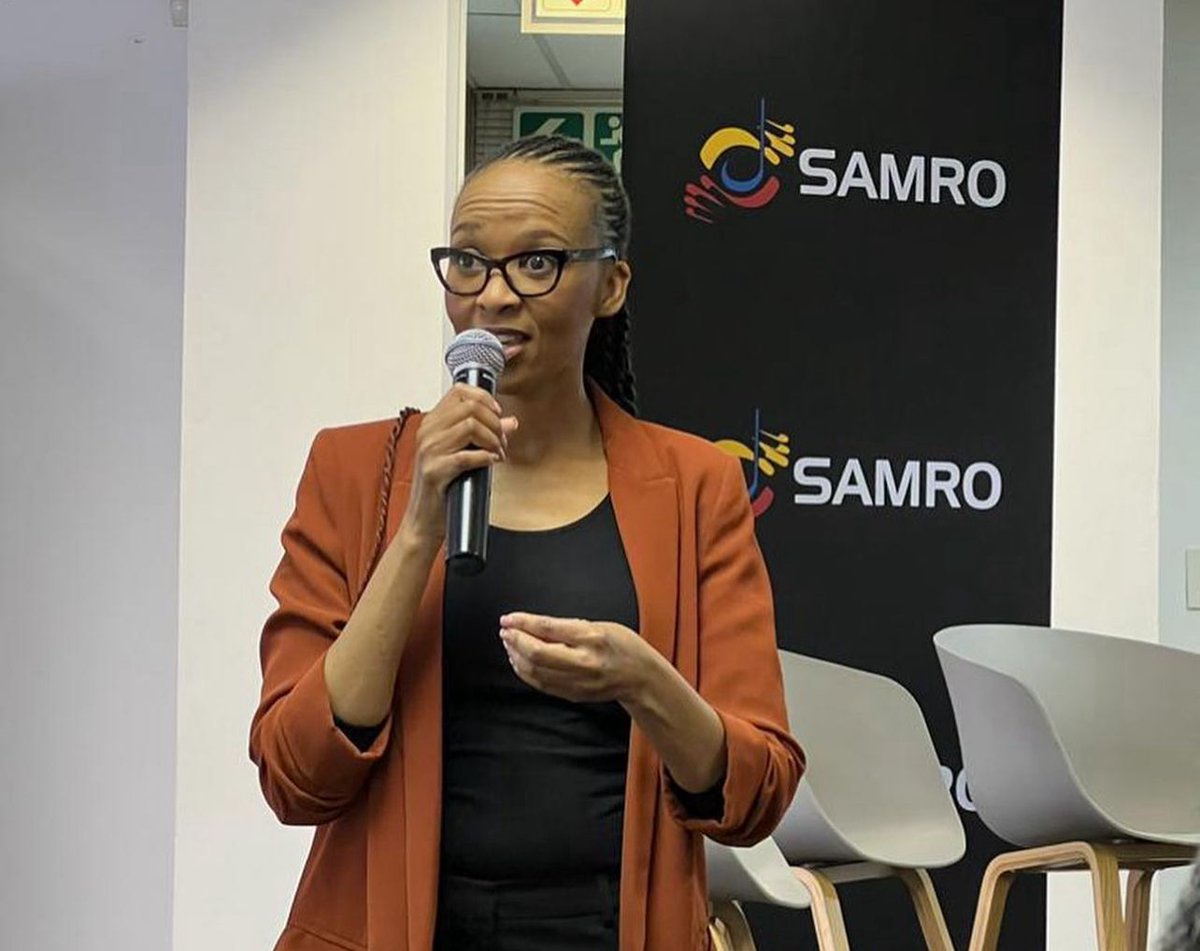
A storm is brewing at Southern African Music Rights Organisation (Samro) as its Chief Operating Officer, Mpho Mofikoe, is suspended after allegedly exposing over R90-million in suspicious spending and fraud.
She is said to have uncovered R30-million spent on board perks, alongside R60-million in questionable claims, triggering a forensic probe. But instead of receiving support, Mofikoe now faces accusations and pressure from within.
(Pictured - Samro COO, Mpho Mofikoe)
Here's more to the story - https://t.co/DPGh8Fmc5B
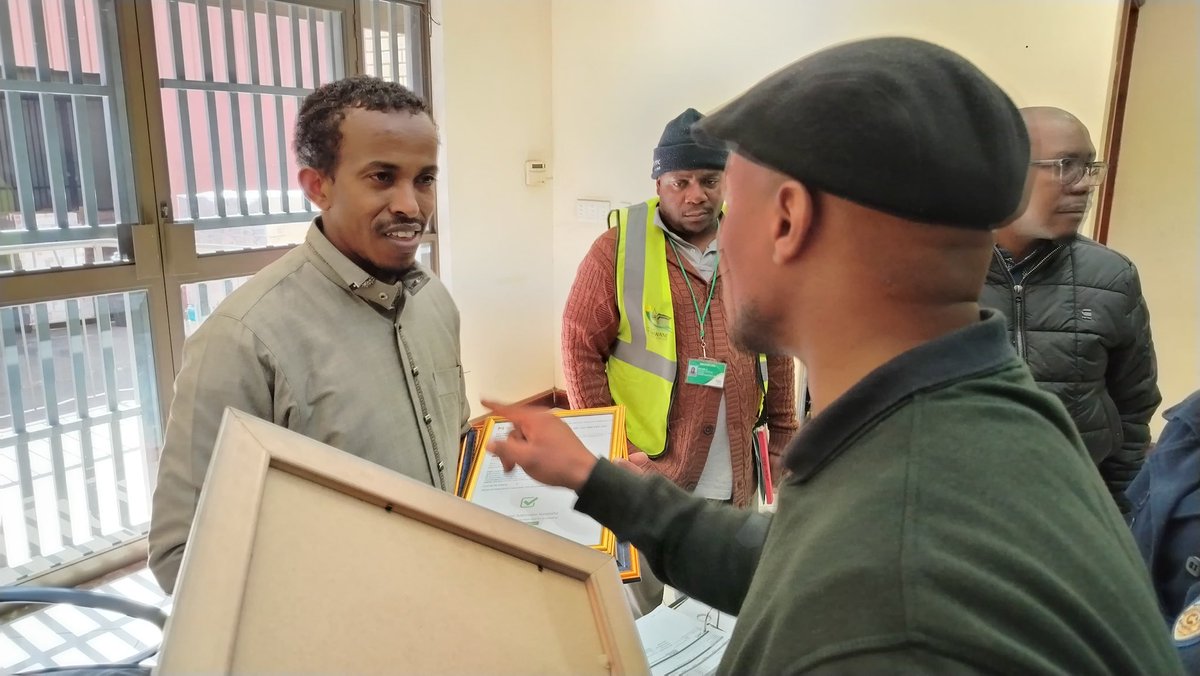
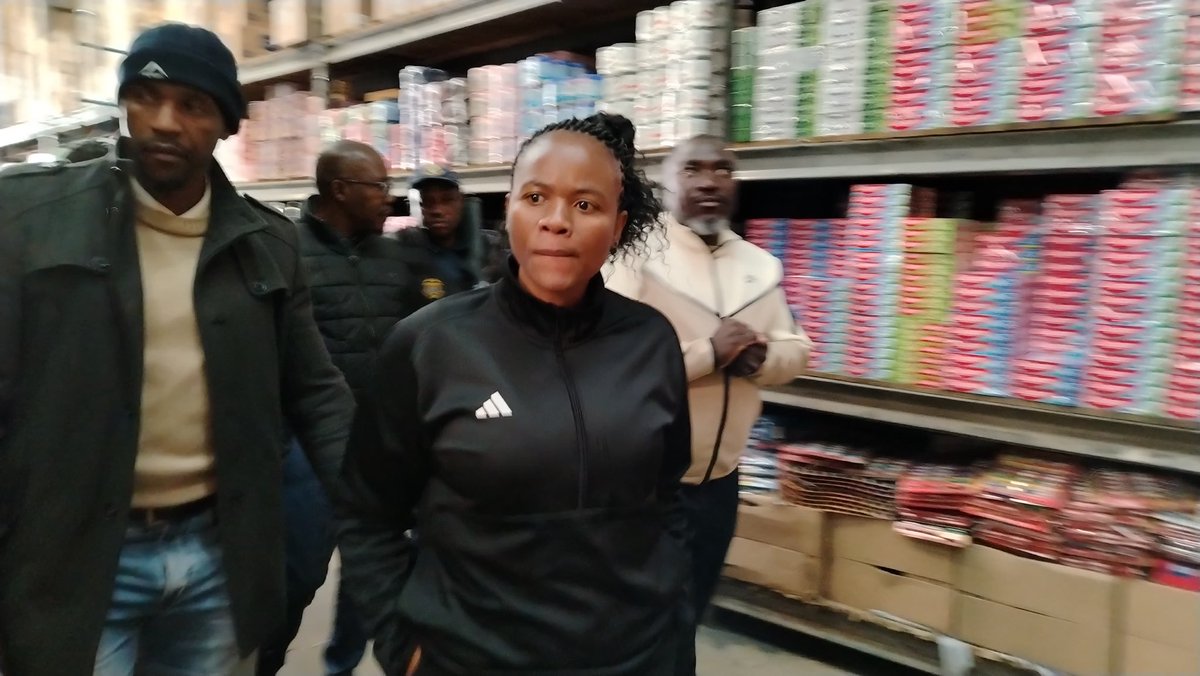
We shutdown SaveMore Cash and Carry - a grocery wholesale warehouse run by Somalians that’s operating illegally without trading license and health certificates. This warehouse, in Pretoria West, operates in an area that’s been demarcated only residential housing. The owners managed to build this operation across three properties. @CityTshwane