“Not since the days of slavery have there been so many people who feel entitled to what other people have produced as there are in the modern welfare state, whether in Western Europe or on this side of the Atlantic.”
— Thomas Sowell
Let’s zoom out and look at what the climate movement is actually asking of us.
They’re asking us to dismantle the fossil fuel energy system that has produced the greatest abundance in human history. Because of a byproduct called CO2—a plant food that NASA satellites show has contributed to 50% more green cover across the globe.
All because of a fear that extreme weather like droughts, hurricanes, and flooding will get worse, sea-levels will rise steeply, and crops will suffer. But the empirical data from the last 40 years shows none of that is actually happening. Crop yields are at record highs, extreme weather shows no change, and sea-level is rising at a steady 3mm/year.
Still, the argument goes, maybe someday in the future things could get worse. So we need to spend trillions transitioning off reliable, abundant, energy-dense fossil fuels onto unreliable, land-hungry technologies like solar and wind.
We have to do this with taxpayer money. Not because voters chose it—but because governments are mandating it.
And here’s the kicker: it won’t even work. The countries adopting net-zero goals represent a fraction of global emissions. China and India are still developing fossil fuels as fast as they can—and cheap energy is pulling our manufacturing straight to them. Every country that guts its fossil fuel infrastructure will make itself poorer, hollow out its industrial base, and kill jobs—while global emissions keep rising.
Oh, and because solar and wind are intermittent, we still need backup gas and oil infrastructure on standby for when the wind stops blowing or the sun stops shining. So we’re paying for both systems.
And nuclear—the most energy-dense, reliable, zero-emission power source we have—is also off the table.
Did I get that right?
Has it never occurred to you that one of the main reasons that’s true (largely) is that the UK is no longer subject to the sort of Brussels’ prudential regulatory regimes that have already stymied AI in the European Union and are turning the EU into a mid-tech backwater? No? Never?
For all politicians use the dignity of the Nowak family as the reason why we shouldn’t let their son’s murder be “divisive”, it’s worth remembering the Digwa family were still stirring up division and hate *inside the court* by shouting at the Nowaks that they are racist.
That's wonderful however could you please clarify:
How many jobs that used to exist no longer exist because of Net Zero?
How many jobs that would have been created in Britain have not been created because of Net Zero?
What portion of consumer and industrial energy prices do Net Zero taxes and related costs make up?
Had we not pursued Net Zero, would we be lifting sanctions on Russian energy exports as we're currently doing?
And finally, what impact has been made on global CO2 emissions as a result of our pursuit of Net Zero?
Remember that the Henry Nowak case happened maybe 100,000 times (or more) with the victims of the Muslim grooming gangs
“I’ve been raped”
“I don’t think you have, mate”
The only difference is that there weren’t cameras to record every incident of rape, torture and murder
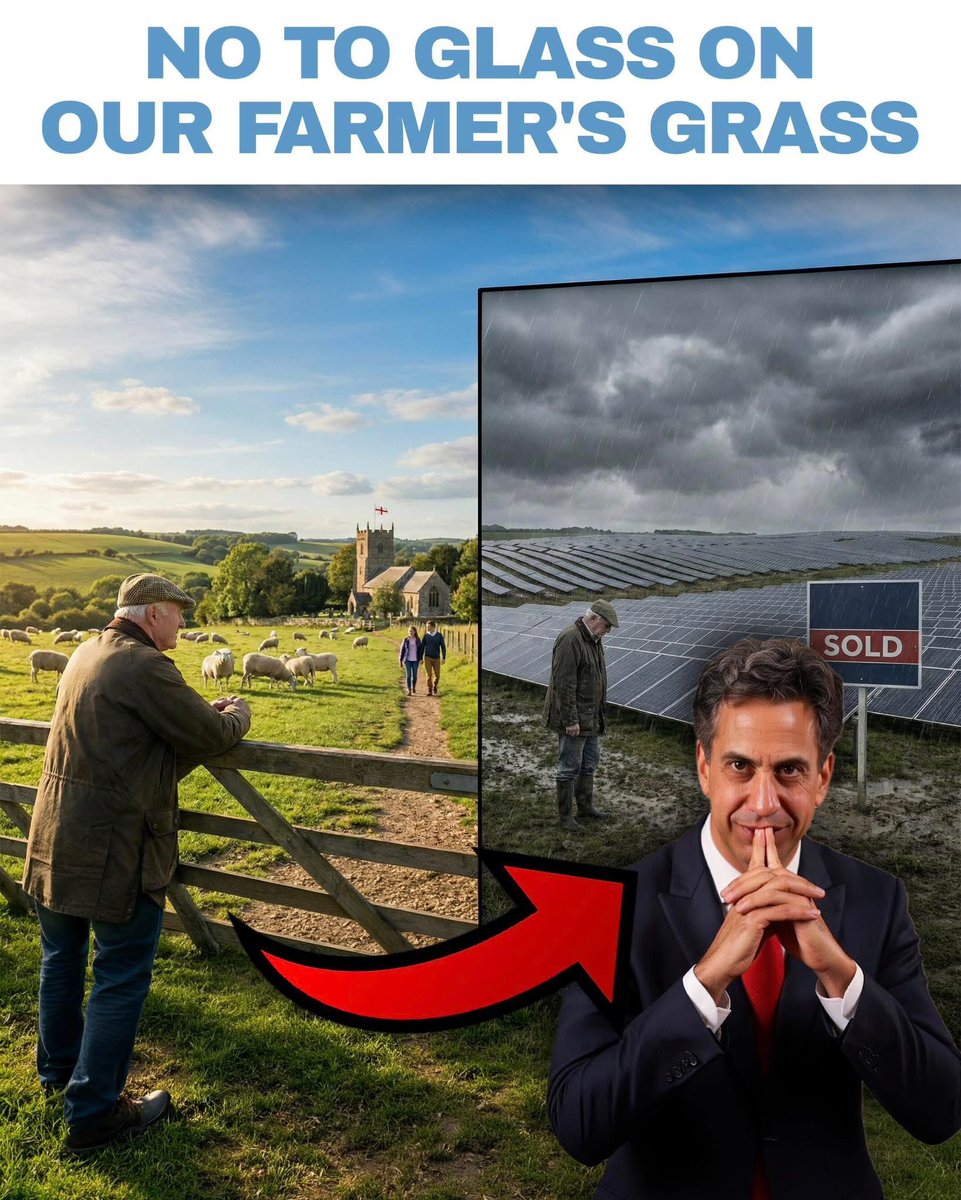
A tenant farmer in the Cairngorms says land that sold for £500 an acre a few years ago now goes for £5,000. He is being moved off ground his family has worked for generations, because he cannot outbid the people buying it. The buyers are corporations, and they have no intention of farming a single acre of it.
Here is how the trick works. A company keeps emitting carbon exactly as before. Same factories, same flights, same supply chain, same product. Then it buys a Scottish hillside, plants some trees, and announces to the world that it is now carbon neutral, or, if it is feeling brave, carbon negative. The emissions never fell. It simply bought a landscape to point at.
Take BrewDog. In 2020 it bought a 9,300-acre Highland estate, propped up with public grant money, and promised a million trees and the crown of the world's first carbon negative beer business, removing twice the carbon it emitted, forever. By 2023 roughly half of the 500,000 trees it had managed to plant were dead, killed by drought, with critics noting the planting was drying out the peat and releasing carbon of its own. The advertising regulator ruled its carbon-negative claims misleading. In 2024 it quietly dropped the badge and dismissed the entire carbon credit market as a flood of cheap schemes whose benefit was "questionable, maybe even non-existent." Then it sold the estate to a firm whose actual business is selling carbon offsets.
That is the whole model in one story. Public money in. Dead trees out. A green halo worn for four years and then dropped. The farmer who used to be on that land, gone. The hillside passed to a company that exists purely to sell other people the right to keep polluting.
This is no fringe case. In one recent year, half of every estate sold in Scotland went to investment funds, corporations and charitable trusts rather than anyone who would farm it. A third of the deals for plantable land are now done off-market, in secret, precisely so the local community never gets the chance to bid.
So this is what net zero looks like on the ground. A man who produced food is priced out of his own glen. A corporation that produced emissions buys the glen, calls itself a force for good, and sells the carbon. The land stops feeding anyone. Nobody's emissions actually went down by a gram.
The food was real. The farmer was real. The carbon saving is a line in a slide deck.
And we have somehow decided the villain in all this is the man with the sheep.
I spent a large part of yesterday trying to explain to people who supposedly are proponents of science what a "confounding variable" is.
Rather than say the same thing again today to about 100 people in about 100 different replies, I'm going to write it all in one place, here.
When scientists do science, in the form of an experiment or study, they will ultimately write it up in a standard report format containing the same sections:
Abstract
Introduction
Method
Results
Discussion
References
One of the most important aspects of the Discussion is a critical analysis of what was done. What went well, what could have been done better, what should be done next time. In particular, the authors attempt to identify if there are any "confounders" which may have influenced the results and rendered them invalid.
Let's take the example of a medicine in a clinical trial. We might, if we are ethical scientists, want to study whether a particular medicine causes adverse effects to those taking it before letting it loose in the wild. So we might recruit some people for a trial, and divide them into two groups. The first receives the actual medicine, the second receives a placebo. We might then monitor the recruits for a few months (or, preferably, a much longer period) on a daily basis and note any illnesses suffered in both groups.
We would then do a statistical analysis on the results from the two groups. If the results of that analysis showed that there was no statistical difference in the levels and types of illness suffered in the two groups, we might then conclude that no adverse effects were caused by the medicine. If, on the other hand, there was a significant difference between the two groups, that would point towards the need for further study and might lead us to conclude that the medicine was the cause of the difference.
The key thing here with our experimental design is that we want to make sure that the two groups in the study - the experimental group who receive the medicine and the control group who do not - are, in every other way, identical. Because if they're not, those differences might have caused the effect we observed, rather than the differences we created in our experiment.
What factors might make these two groups different?
1. Age differences. If one group was older, we might expect they might suffer more illness than the younger group.
2. Gender. Dependent on the medicine, males or females might be more affected. If the groups weren't balanced for gender, this might distort the reported illness results.
3. Health differences. If one group had poorer general health than the other at the beginning of the trial, we might expect them to report more illness during the trial.
These are all examples of "confounding variables". Factors which we did not control but which might influence the outcome and render our results invalid.
So in our experimental design we would want to make sure the experimental group and the control group are closely matched for age, gender and health status.
Which brings me onto climate change.
Climate scientists contend that Carbon Dioxide created by human activity in the industrial age is causing global atmospheric temperatures to increase.
As evidence, they point to an increase in global atmospheric temperatures over the last 200 years or so.
So far so good. Temperatures have, broadly, risen during that time. There are plenty of other things to criticise about this hypothesis and about climate "science" in general but that is for another time.
Yesterday we saw, all over the media, headlines about new record May temperatures of 35 degrees at Kew and Heathrow, and below the headlines was text saying that experts were saying this was another example of evidence of how the climate is warming.
Now I don't deny that it's been hot the last couple of days - where I am it has been around 32 degrees - so I don't doubt that the May record may have been broken somewhere in the country.
But the specific problem I have is with the temperatures at Heathrow and Kew, or indeed anywhere close to London or a big urban area being used as the evidence that the May record has been broken,or that they are evidence of atmospheric warming.
Why? Because of a confounding variable.
When we say a temperature record has been broken, we need to make sure we are comparing apples with apples. So not only do we need to compare temperatures that were measured in the same site using the same type of equipment in both instances - we need to make sure that the sites themselves have not changed.
We know that modern urban areas create a "heat island" effect. The expanses of heat-retaining materials like concrete, asphalt and cement retain heat during the day and release it slowly overnight, leading to higher daytime and nighttime temperatures. Added to which are the many buildings and vehicles in urban areas generating their own heat. All of this means that temperatures in, or close to, an urban area are typically several degrees warmer than in countryside some distance away.
Given the expansion and urbanisation of London over the last century, this effect will only have grown over time.
Arup measured this effect in London and concluded that temperatures there are often 4.5 degrees hotter than in the surrounding countryside (see first comment for link).
This effect obviously varies between different parts of London, as shown on the heat map, and reduces as you move away from central London, but even at Kew, the effect is estimated to cause temperatures to be 0.9 degrees higher than would be the case if Kew was sited in the countryside.
And Heathrow clearly creates its own heat island effect given the scale of the airport and the big expanses of heat absorbing materials there.
So if we are going to use temperatures measured in, or close to, London as evidence of atmospheric warming, we have a problem. We have a significant confounding variable. The warming caused by the heat island effect is going to add to any warming in the atmosphere, and give us an exaggerated result.
You can perhaps forgive tabloid newspapers for running headlines about this, just quoting the raw temperatures measured. They want to make money and it being very hot outside is a great news story. And urban areas becoming increasingly hot in summer is an issue in its own right.
But what is unforgiveable is people who claim to be scientists using these measurements as evidence of atmospheric warming, when there's such a glaring confounding variable influencing the data.
How would a proper scientist deal with this confounder?
Well, they might say "from now on, we will only use temperatures from rural weather stations which are not subject to urban heat island effects, and we will only declare records on the basis of those measurements"
And they might say "we will not use temperature measurements from areas subject to urban heat island effects as evidence of atmospheric warming".
But the Met Office and the climate science people aren't saying that. They're going with the artificially inflated temperatures. Because they have an agenda to push, a vast Net Zero industry to sustain, research grants to chase, and any evidence, however shonky, which backs up the global warming narrative is welcome.
This isn't science!
I've just read Blair's essay in full. There's a few self-evident bangers in there and it's mostly a warning against backsliding into socialism and the decrepitude of leftism. He offers some direction for a Labour government, prioritising growth, but I get the sense he's not really got anything real to say. He's not really speaking to my concerns; that Britain is turning into a lawless, squalid shit tip with ineffectual government, a decrepit police and justice system, a shredded social contract, chaotic public finances, and a politics riven with sectarianism and corruption - and he doesn't acknowledge that parts of Britain now look like a foreign country entirely - that will never resemble his multicultural nirvana.
Blair's "radical centrism" doesn't speak to any of this this at all. His essay is a plea to maintain the status quo, seemingly oblivious to how rapidly and seriously the country is deteriorating. For this, he has no answers, and wouldn't raise these issues since he'd have to acknowledging his own role in bringing us to this unhappy place. On that basis, much though I enjoy reading sharp thoughtful prose, Mr Blair can still fuck off as far away as the James Webb telescope can see.
This will be a somewhat indulgent post, but... fuck it!
There is a quote, written by Edmund Burke in 1790 in Reflections on the Revolution in France, that I often turn around in my mind. Many of you will know it.
"Society is a contract between those who are living, those who are dead, and those who are yet to be born."
And another from the same text, that hits harder in light of the data we've seen this week on the exodus of our disillusioned young...
"It is no wonder therefore, that with these ideas of every thing in their constitution and government at home, either in church or state, as illegitimate and usurped, or at best as a vain mockery, they look abroad with an eager and passionate enthusiasm."
Burke wrote that in 1790. What amazes me, is that he could have written it this morning... a Britain straining under debt, institutions losing legitimacy, and a young generation looking abroad. The parallel is striking.
And this should act as a warning. Because what came after, in his Britain, was not pretty at all. We saw decades of state repression, 22 years of war with France, the national debt more than tripled, and a generation who either left, were crushed, or grew old waiting for the reform that finally came in 1832. 42 years after Burke wrote his piece. The country muddled through. But the muddle was long, and the bill fell on everyone in ways we would struggle to imagine in the 21st century.
Today we learned the country borrowed £24.3 billion in April. The second highest April on record. Beaten only by April 2020, when we were locked down in a pandemic.
Debt interest alone was £10.3 billion. A record opening month for any financial year. We are now spending over £110 billion a year servicing our debt. Bigger than the entire schools budget for England. We pay our creditors more than we pay to educate the next generation.
That's the trigger for this post. Not the point.
I'll be honest. A lot of what gets posted here about the state of the country reads like entertainment. I've written plenty of it myself. And writing about it is, in itself, demoralising. I understand entirely how it tips people into apathy. The problems are so vast, so interlinked, so long in the making, that it can feel like there is no stopping this train. Whatever you say, however carefully you lay out the numbers, the train rolls on.
But there is a weight to all of this. As a dad, husband, son, brother, friend and citizen, I'm deeply concerned. It feels like we're all watching a train crash in slow motion.
I've spent months pulling at threads. Borrowing. Gilts. QE losses. The OBR. Major projects. Local authorities. Tax receipts. Productivity. Demographics. Youth employment. Every single one leads to the same place. Compounding liabilities. Poor planning. Mismanagement that has metastasised. Decay. Wealth and talent quietly walking out the door.
Look at the government's own major projects portfolio. Hundreds of billions in flight, with a growing list rated red on their own traffic light system. Leadership turning over on almost every programme. HS2 is the beacon for failed state capacity. A disaster so big we have lost words for it, and yet we look on as it rolls forward because we're committed now. Cancelling the whole sorry mess would cost the same as finishing it. So of course it must be completed.
Look at local authorities. A lengthening queue of section 114 notices. Many more sitting one bad year away from one. Reserves drained. SEND budgets out of control. Adult social care eating everything in sight. The state of the roads tells you the story before the balance sheet does.
Pull all of this together and you arrive somewhere uncomfortable.
We are heading for a major fiscal crisis. Not in some distant decade. Soon.
I know the reflex. "We've had crises before, we'll muddle through." We probably will, to some degree. But like Burke's Britain? This feels like the big one to me. The one that rewrites the contract Burke described.
There is no serious financial acumen at the top of this country. No long-term plan. No vision beyond the next electoral cycle. Borrowing costs grind higher. Growth refuses to show up, despite the government proclaiming that cash injections through tax and borrowing constitute growth. And the only lever anyone is willing to pull is more tax. On work. On savings. On wealth. On the very people and businesses we need to help fix the country.
The country is already being hammered. The answer offered is to take more.
And then there are the young.
Youth unemployment continues rising. Graduates are locked out of the quality jobs they were told would be waiting for them on the other side of the rainbow. Starter homes are priced for the generation above them. Rents are devouring their wages to the point where they have nothing left. A social contract that promised them a stake, a chance, a future, is quietly handing them a bill instead.
They are starting to leave. In growing numbers. And who can blame them. The brightest and the ones with the means leave first. Often the ones we would most need to help build Britain's future.
I have a young son, and I am worried about his future. To the point where my wife and I are wondering whether leaving is the best thing for him. Not something we want to do. We were born here, grew up here, our family is here. But when I look at how the country is governed, the prospects on the horizon, and the major problems we ignore, I'm not all that hopeful. No politician can even articulate a vision for where this country could go, let alone where it's going. And whilst I expect we'll stay, for our families, I fully understand the desire to leave that is leading to a growing number of young people leaving these shores.
The social contract Burke wrote about is not being honoured.
The dead left an abundant legacy. The living are drawing down every form of capital they inherited. The young and unborn will be asked to pay the bill. The dead built the institutions we are now hollowing out. And somewhere in the middle, we have decided to extract everything we can for ourselves, and to hell with future generations.
It is not fine. It will be seen as THE disaster of the 21st century.
This is a country heading faster and faster towards a wall. We’ve got both hands off the wheel, foot pressing down on the gas. And the people in the back seat are our children and grandchildren.