According to local sources, Ethiopian Air Force headquarters in Debre Zeit (Bishoftu) was reportedly hit by a missile strike on Monday evening. Initial reports indicate significant damage to military infrastructure and assets inside the base.
Military facilities in the area had also been targeted previously, with reported kamikaze drone strikes on Harar Meda Airbase on September 27.
The Wrong Question: How Do You Solve a Problem Like #Ethiopia?
The Sound of Music was one of my favorite movies as a child. Like many films that stay with us long after childhood, it offered far more than entertainment. It carried lessons about courage, conscience, leadership, responsibility and resilience, and, perhaps most importantly, about questioning whether the problem we think we are trying to solve is actually the problem we should be addressing.
One scene comes to mind when I read the torrent of commentary surrounding #Ethiopia today. The nuns gather together and sing, “How do you solve a problem like Maria?” They are not really asking how to punish Maria. She is restless, unconventional and poorly suited to the role the institution has assigned to her. The deeper lesson is that perhaps the problem is not Maria at all, but the assumption that she must somehow be made to fit.
The international community is asking a familiar question today: How do you solve a problem like #Ethiopia? It was a question raised repeatedly in conversations on the margins of the recently concluded UN General Assembly High-Level Week. But perhaps the more useful question is whether we have been asking the wrong question for decades.
Perhaps #Ethiopia is not a problem to be “solved” through successive rounds of external intervention, strategic partnerships, security arrangements and political accommodation. Perhaps the harder question is whether the international community has spent decades managing the consequences of #Ethiopia’s internal political crises while avoiding more fundamental questions of accountability, sovereignty, international law and the political choices that produced them.
The problem is not #Ethiopia, nor the #Ethiopian people. It is a pattern of international engagement, indeed, a pattern of strategic accommodation, in which successive governments in Addis Ababa have been treated as strategically indispensable, while those same governments have repeatedly learned to turn that perceived importance into political capital. What has often been presented as pragmatic engagement may instead have helped perpetuate a cycle in which strategic utility becomes a substitute for accountability.
This is not a story of innocent #Ethiopian leaders manipulated by outside powers. Hardly. Successive governments have understood how to convert #Ethiopia’s size, location, population and military capacity into external political, military and financial support when doing so served their interests. Powerful external relationships have been cultivated and recalibrated as circumstances changed. The tragedy is that these bargains have too often been struck by political elites and pursued for political advantage, while ordinary #Ethiopians have borne much of the human and economic cost.
The history is uncomfortable. During the Cold War, #Ethiopia became an arena in which competing great-power interests intersected with the calculations of successive governments in Addis Ababa. #Ethiopian troops were deployed to fight in Korea alongside the United States and its allies. Later, #Ethiopia became a major security partner for Western powers in the post-9/11 environment. The TPLF-led government developed particularly close security relationships with Western governments, while the Prosperity Party has likewise cultivated external relationships around security, economic reform and regional diplomacy.
The governments were profoundly different and should not be conflated. Haile Selassie, the Derg, the TPLF-led government and the Prosperity Party emerged from different political circumstances and pursued different policies. Yet there was a recurring structural feature: #Ethiopia’s perceived strategic importance created incentives for external powers to preserve relationships with the government of the day, even when doing so complicated the pursuit of accountability.
That is the deeper problem. When a government is regarded as indispensable to regional security, counterterrorism, migration management, economic interests or geopolitical competition, political, military and financial support can continue despite credible concerns about repression, human rights violations or conduct toward neighboring States. Strategic cooperation can then become a political shield. Principles proclaimed as universal begin to look negotiable when enforcing them against a strategically useful government carries a geopolitical cost.
The result is not merely inconsistency. It can create a cycle in which outside powers repeatedly manage the consequences of policies they have helped enable rather than confronting the choices that produced those consequences.
For the people of the Horn, this is not an abstract academic problem. Conflict, displacement, destroyed livelihoods and political violence have repeatedly exacted a terrible human cost inside #Ethiopia and across its borders. #Eritreans, Sudanese, Somalis and others have lived with the consequences of decisions made in Addis Ababa as well as decisions made in distant foreign capitals. This is why the present moment should be understood through a wider historical lens.
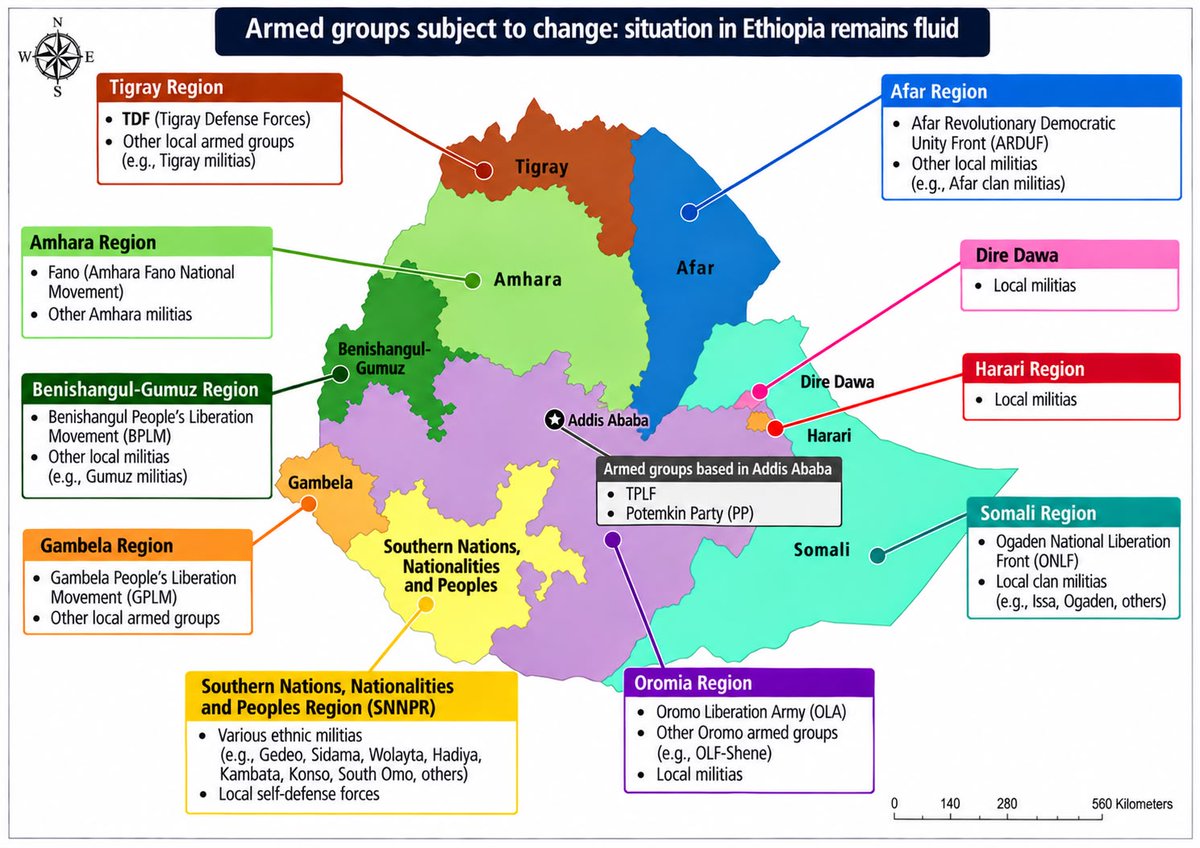
#Ethiopia again faces serious internal political and security challenges. Armed confrontations, political fragmentation and humanitarian pressures are unfolding simultaneously. Its relationship with several neighbors has also become increasingly strained. Yet there is a familiar danger: that international actors once again treat the government in Addis Ababa as the “indispensable party” whose concerns must be accommodated, rather than asking whether its own political choices are contributing to the instability it claims to be confronting.
For people across the #Horn, the pattern is familiar: crisis, international concern, diplomatic engagement, strategic accommodation, external assistance, temporary stabilization, and renewed crisis. At some point, the question must shift from how to manage the latest #Ethiopian crisis to why the same cycle keeps recurring.
That is not an argument for abandoning #Ethiopia. The #Ethiopian people deserve humanitarian assistance, development, constructive diplomacy and peace. But support for a people should never become immunity for a government. Strategic partnership should never become diplomatic indulgence. Geopolitical importance should never become a license to disregard international law or the sovereignty of neighboring States.
That principle is particularly relevant to the increasingly prominent discourse surrounding #Eritrea and the Red Sea. #Ethiopia’s interests can be pursued through negotiated commercial arrangements, infrastructure investment, port agreements, transit corridors and mutually beneficial regional integration. #Ethiopia is not without regional options. There is nothing in international law that transforms being landlocked into a right to the territory, ports or sovereign maritime assets of another State. Nor does strategic dependence on a particular corridor create unilateral entitlement to that corridor.
The legal principle is straightforward. The United Nations Charter rests on sovereign equality, territorial integrity, political independence and the prohibition of the threat or use of force. These are not diplomatic decorations to be displayed when convenient. They are foundational principles of the international order. A State cannot acquire rights over another State’s territory because it considers access strategically important. Nor can regional integration credibly be built by challenging the sovereignty of the neighbors with whom integration is supposedly to be achieved.
The more fundamental question for international actors, therefore, should be why #Ethiopia’s quest for maritime access is increasingly being presented as though it necessarily requires an extraordinary political solution. The solution to a geographical constraint is cooperation, not the creation of a new sovereign entitlement.
The same discipline should apply to the increasingly persistent effort in some quarters to construct an “#Ethiopia–#Eritrea crisis.” Nomenclature is not evidence. Calling something a crisis does not establish that a crisis exists, any more than repeatedly predicting confrontation proves that the other party caused it. Serious allegations concerning #Eritrea’s intentions or conduct require evidence, attribution and independent corroboration. They cannot responsibly be established through insinuation, selective chronology or the convenient conversion of speculation into fact.
The questions for international actors should be elementary: Who is making the claim? What evidence supports it? Has it been independently corroborated? What facts have been omitted? Whose interests does the narrative serve? And does amplifying it reduce tensions, or create incentives for further confrontation? These are not unreasonable demands. They are the minimum requirements of serious diplomacy.
There is an uncomfortable irony in the present allocation of attention. Ethiopia faces multiple internal political and security challenges, including an increasingly internecine conflict marked by armed confrontations, political fragmentation, and serious humanitarian consequences across the country. Critics argue that policies pursued by the Prosperity Party government have contributed to, and in some cases deepened, these divisions, including by weakening or fragmenting political opposition.
Yet some analyses appear more interested in discovering an #Eritrean storyline than in examining the fires already burning inside #Ethiopia. There is another dimension to this imbalance that deserves attention. Much of the prevailing narrative about Eritrea did not emerge in a political vacuum. It was shaped over decades by successive Ethiopian governments and amplified by a network of international partners, policy institutions and advocacy organizations that adopted, repeated or built upon Ethiopia’s framing of Eritrea.
That history matters. Claims repeated often enough can acquire the appearance of settled fact, even when their evidentiary basis, context and political origins are rarely revisited. This is not an argument that Eritrea should be shielded from scrutiny, nor that every allegation against it is unfounded. It is an argument for intellectual honesty: narratives produced by states and their strategic partners are not neutral historical records.
They must be examined, sourced and tested against evidence as rigorously as any competing account. In the present moment, when Ethiopia itself is confronting profound internal political and security challenges, reviving an established narrative in which Eritrea is cast as the convenient source of regional instability risks explaining away Ethiopia’s own unresolved problems rather than explaining them.
These conflicts have domestic histories, domestic actors and domestic grievances. They cannot simply be outsourced to #Eritrea by assertion. Nor will inserting #Eritrea into the narrative resolve #Ethiopia’s internal problems. To the many “researchers” now producing narratives about #Eritrea that conveniently reinforce the preferred framing of Prime Minister Abiy’s government, the message should be simple: scrutinize the evidence, question the premises and resist the temptation to turn political narratives into analytical conclusions. When a house has several fires, blaming the neighbor for the smoke may be convenient politics. It is hardly serious analysis.
There is also a growing ecosystem of conflict entrepreneurs, political actors, analysts, institutions, lobbyists, commentators and digital influencers, whose relevance can become intertwined with the continuation of conflict narratives. The incentive can be remarkably simple: conflict generates relevance. Grievance becomes content; suspicion becomes analysis; speculation becomes prediction; prediction becomes policy advice; and policy advice becomes another justification for speculation. In such an ecosystem, peace can become strangely bad for business.
The people of the Horn should not become raw material for another conference circuit, another institutional career or another social-media following. They are sovereign people, not case studies, commodities or props in someone else’s geopolitical project. The international community must therefore resist false symmetry. There is a fundamental difference between a genuine bilateral dispute and the political construction of one. Internal #Ethiopian political and security problems should not be transformed into an external #Eritrean problem simply because doing so is politically convenient.
#Eritrea’s refusal to mirror inflammatory rhetoric with inflammatory rhetoric should not be mistaken for escalation. Indeed, demonstrated restraint can itself be a contribution to regional stability. In a region too often driven by escalation and inflammatory rhetoric, choosing not to mirror provocation can help prevent tensions from becoming conflict.
The international community can make an equally important contribution by refusing to manufacture symmetry where the evidence does not establish it. It should focus attention on the political and humanitarian realities unfolding inside #Ethiopia while making clear that #Ethiopia’s internal difficulties cannot be resolved by creating external disputes.
This requires a different international policy. External partners should support the #Ethiopian people without providing any government a blank cheque. Diplomatic and economic leverage should be used before conflicts become wars, not merely after the killing begins. International engagement should also become more consistent about the distinction between supporting a country and shielding its government.
Humanitarian assistance should reach people. Development assistance should strengthen institutions and communities. Diplomacy should encourage political accommodation rather than reward escalation. Security cooperation should be conditioned by respect for international law. And relationships with governments should not become exemptions from standards that the international community claims to apply universally.
The deeper choice is therefore not whether the international community should support #Ethiopia. It should. The choice is whether it continues to treat #Ethiopia primarily as a strategic asset whose government must be kept sufficiently stable to serve external interests, or whether it engages #Ethiopia as a country whose long-term stability depends on accountable institutions, peaceful politics, respect for international law and respect for its neighbors.
The latter approach is harder. It offers fewer convenient alliances and fewer shortcuts. It may require difficult conversations with governments that powerful states consider strategically useful. It may require external actors to acknowledge that some policies previously described as pragmatic have produced unintended consequences. But it offers something the previous approach has repeatedly failed to deliver: the possibility of breaking the cycle.
And perhaps that is the final lesson I took from a movie I loved as a child. The answer was never really about “solving” Maria. It was about recognizing that the original assumptions were inadequate and finding a better way forward.
The people of the Horn should not once again be made to pay the price for the excesses of another failed #Ethiopian political order. Nor should neighboring States be expected to surrender their sovereignty, security or legal rights to compensate for #Ethiopia’s internal political difficulties.
So perhaps the real question is not, “How do you solve a problem like #Ethiopia?” It is: What must the international community do differently so that the #Ethiopian people, and the peoples of the wider Horn, are no longer asked to pay the price for bargains made by political elites with outside powers?
The way forward is therefore neither abandonment nor indulgence. It is a harder bargain: support the people, scrutinize the government, enforce the law, verify the facts, respect sovereignty, and make assistance reinforce peace rather than political impunity. #Ethiopia does not need another patron willing to look away. It needs partners willing to tell the truth. And the Horn does not need another crisis manufactured for strategic convenience, institutional relevance or political survival.
Calling a spade a spade is not taking sides. It is taking human life, and international law, seriously.
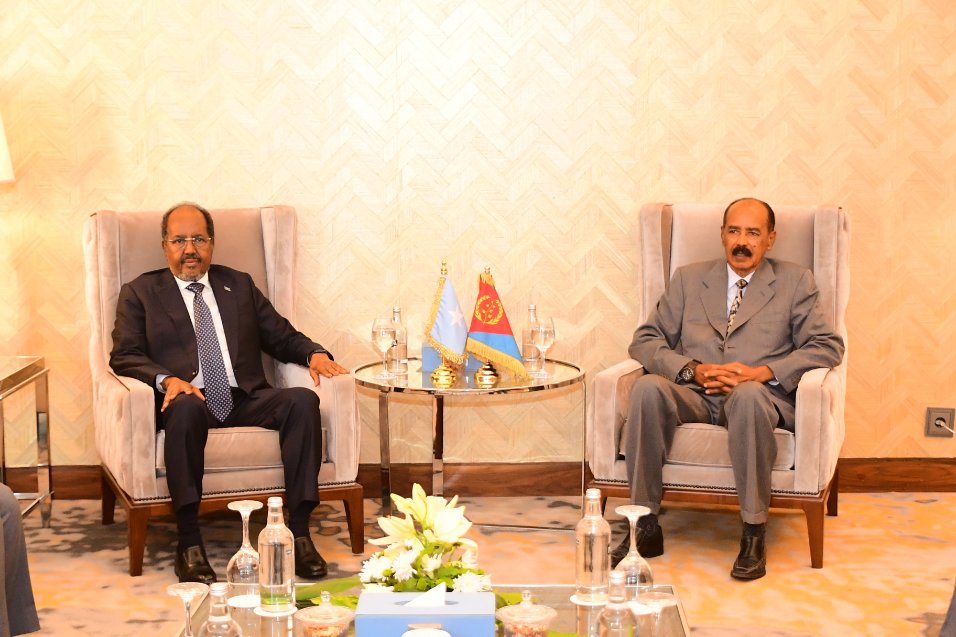
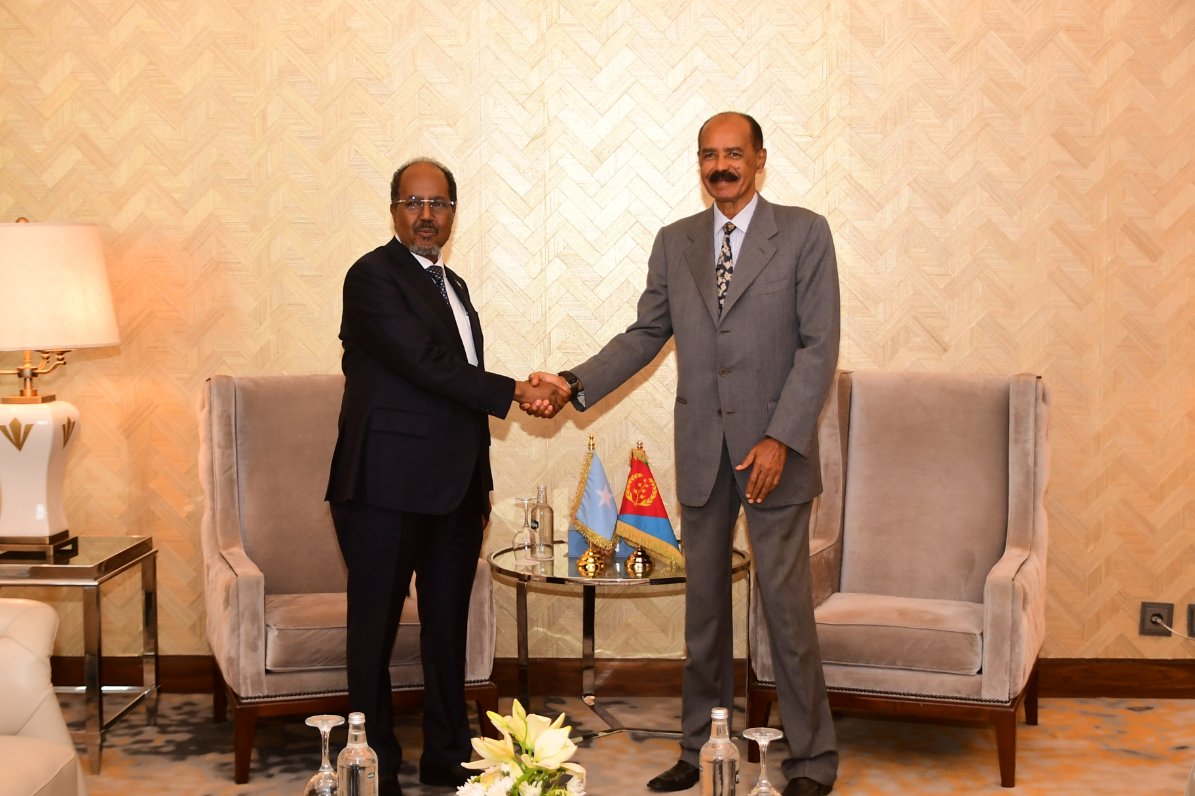
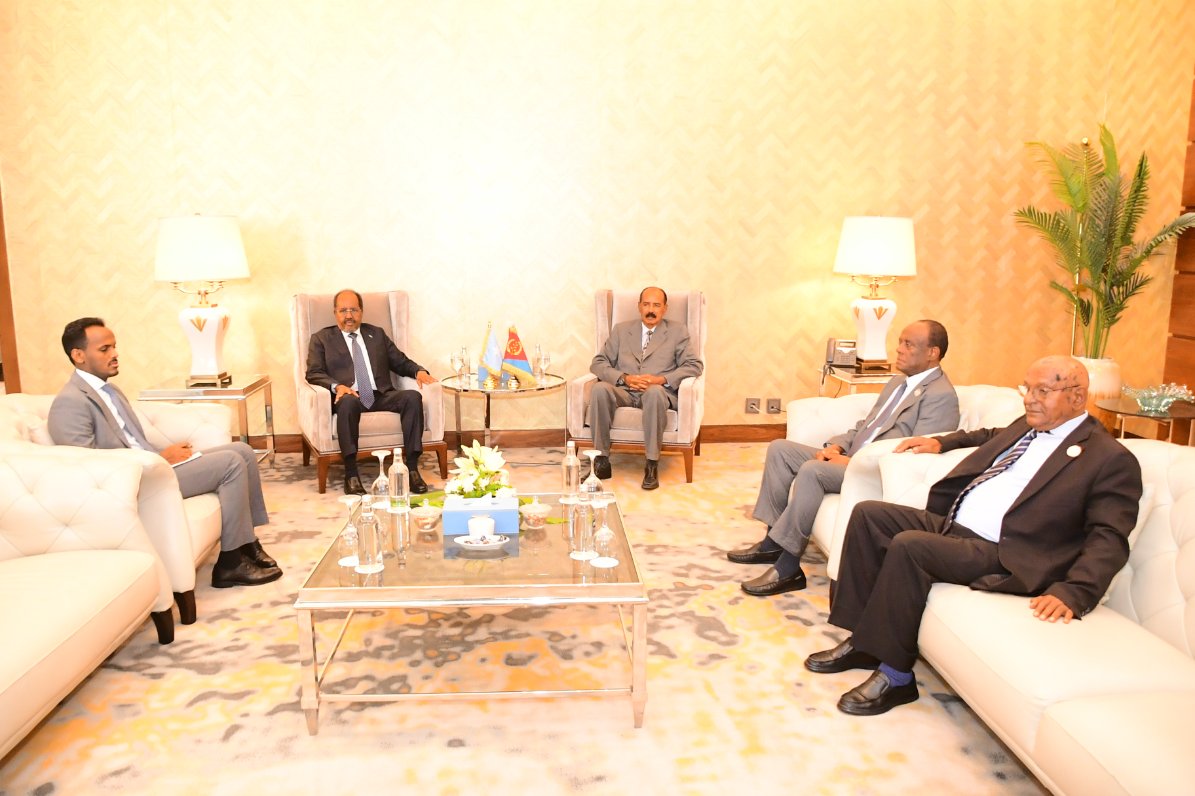
President Isaias Afwerki met, in the mid-morning hours today in Alamien, with H.E. Hassan Sheikh Mohamud, the President of the Federal Republic of Somalia, for extensive talks on bilateral and other matters of vital importance to both countries.
The two Heads of State underlined the imperative of consolidating a conducive political climate that rejects external agendas of interreference so as to safeguard and guarantee the territorial integrity, stability, and peace of Somalia and the unity of its people.
President Isaias further remarked that Federal governance architectures in Somalia and other countries in our region have often failed to meet the peoples' hopes and aspirations for unity and cohesion. Political frameworks that polarize socio-economic, religious and ethnic differences to foment perennial crises and that encourage foreign interventions ought to be supplanted by citizenship-based governance architectures.
President Hassan Sheikh Mohamud, for his part, conveyed his gratitude to President Isaias Afwerki and the Eritrean people for their firm stance and support to the Government and people of Somalia.
Potemkin Party's characteristic behaviour of speaking with a forked tongue is again in full display.
In a Press Statement issued by the Ethiopian Foreign Ministry today in an apparent reaction to the El-Alamien Declaration, the PP pays lip-service to the pursuit of "peaceful engagement, mutual respect, and regional cooperation". It further urges "all regional actors to address shared challenges through constructive dialogue, partnership, and adherence to the principles of good neighborliness...".
But this is the crux of the matter.
The Potemkin Party's duplicitous antics aside, the prevailing tension that has gripped the Horn of Africa region emanates precisely from its perilous acts perpetrated over the past years and that violate international law and the prospects and opportunities of healthy regional cooperation.
Indeed, these are the poignant facts:
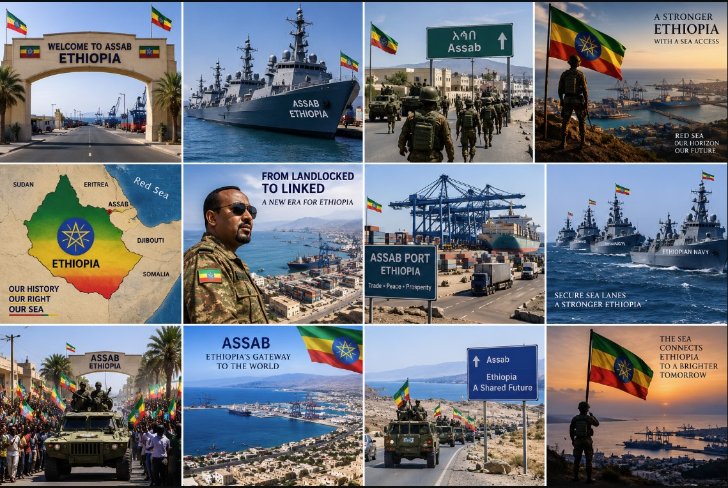
1. Ethiopia enjoys unfettered access to all ports in the Horn of Africa. In what can be termed as a "buyers market", it has extensive latitude to enter into mutually beneficial commercial agreements with all the coastal countries concerned. But the Potemkin Party chose to violate international law and the principles of good neighborliness to pursue an agenda of aggression and war against Eritrea to "acquire sovereign access to the sea".
2. As spelled out in previous public statements by its Foreign Ministry, the invasion of the Eritrean port of Assab must include the southern coastal zone too. In the PP's convoluted logic: "without the protective depth offered by the Dahlak islands, Assab remains an exposed coastal facility vulnerable to hostile naval power... any enduring arrangement for Ethiopia must therefore consider a dual reality: access to the coast and the strategic depth required to protect that access".
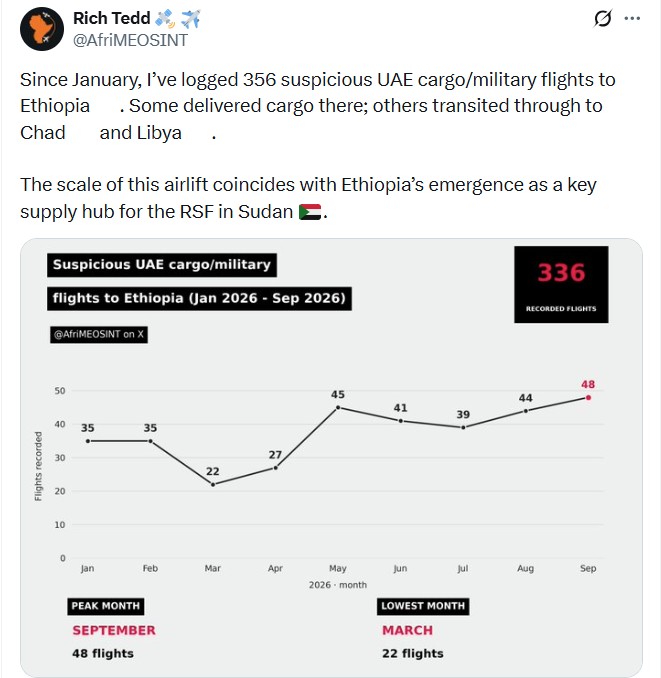
3. Similarly, the Potemkin Party has fomented unnecessary and avoidable tensions with Somalia and Sudan through willful acts that breach international law and impede regional cooperation. The illicit MOU that it signed with Somaliland in flagrant breach of Somalia's sovereignty and territorial integrity; the all-rounded support that it continues to provide to the RSF under the bidding of the UAE are deplorable acts that have jeopardized regional peace and security.
Finally, Ethiopia's insinuation that some geographic proximity to the Red Sea entitles it with the rights and responsibilities of the littoral States is too ludicrous and hollow in purely legal terms to merit response.
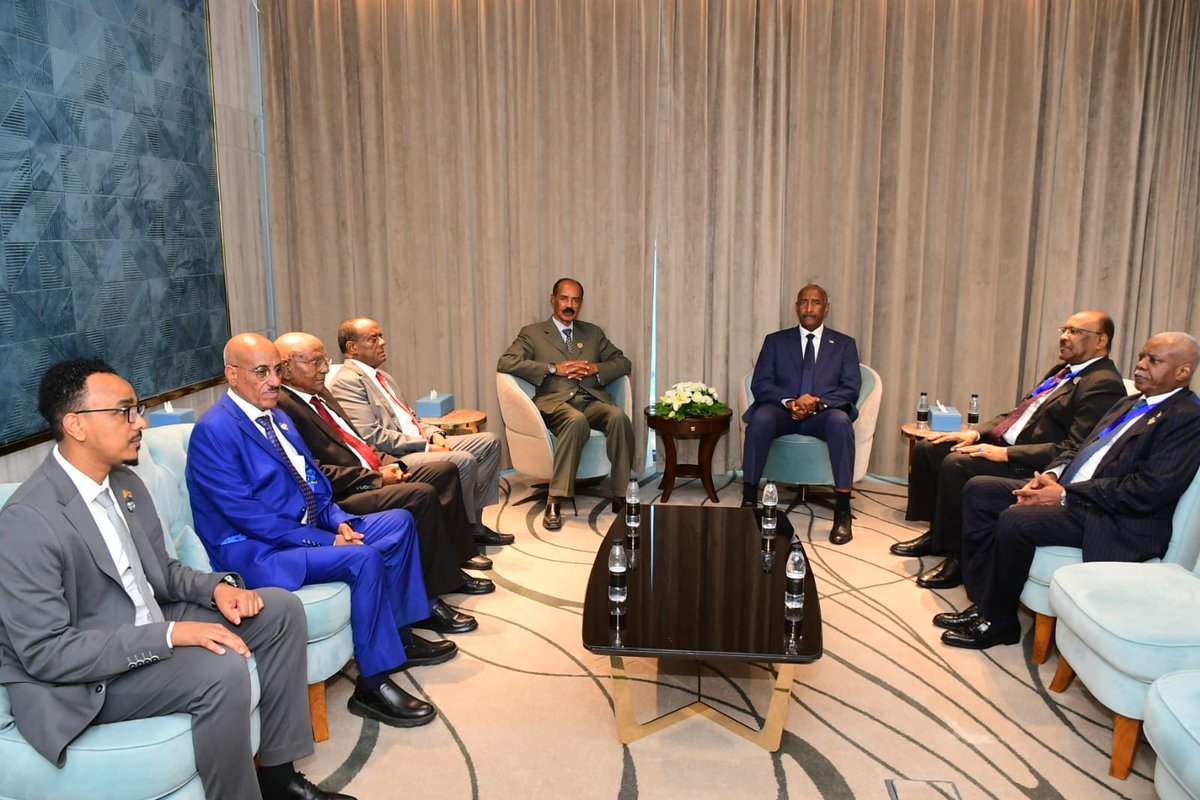
Chairman of Sudan's Sovereignty Council, Abdel Fattah al-Burhan, met with Eritrean President Isaias Afwerki on the sidelines of the quadrilateral consultative summit held in Alamein, Egypt.
President Isaias Afwerki met, yesterday afternoon in Alamien, with General Abdel Fattah al-Burhan, the Chairman of Sudan’s Sovereignty Council, for extensive discussion on bilateral relations as well as regional and international matters of mutual interest to both countries.
The meeting, which took place on the margins of the Quadrilateral Consultative Summit, is part and parcel of the regular consultations held between the leaders on bilateral and other broad issues of mutual interest.
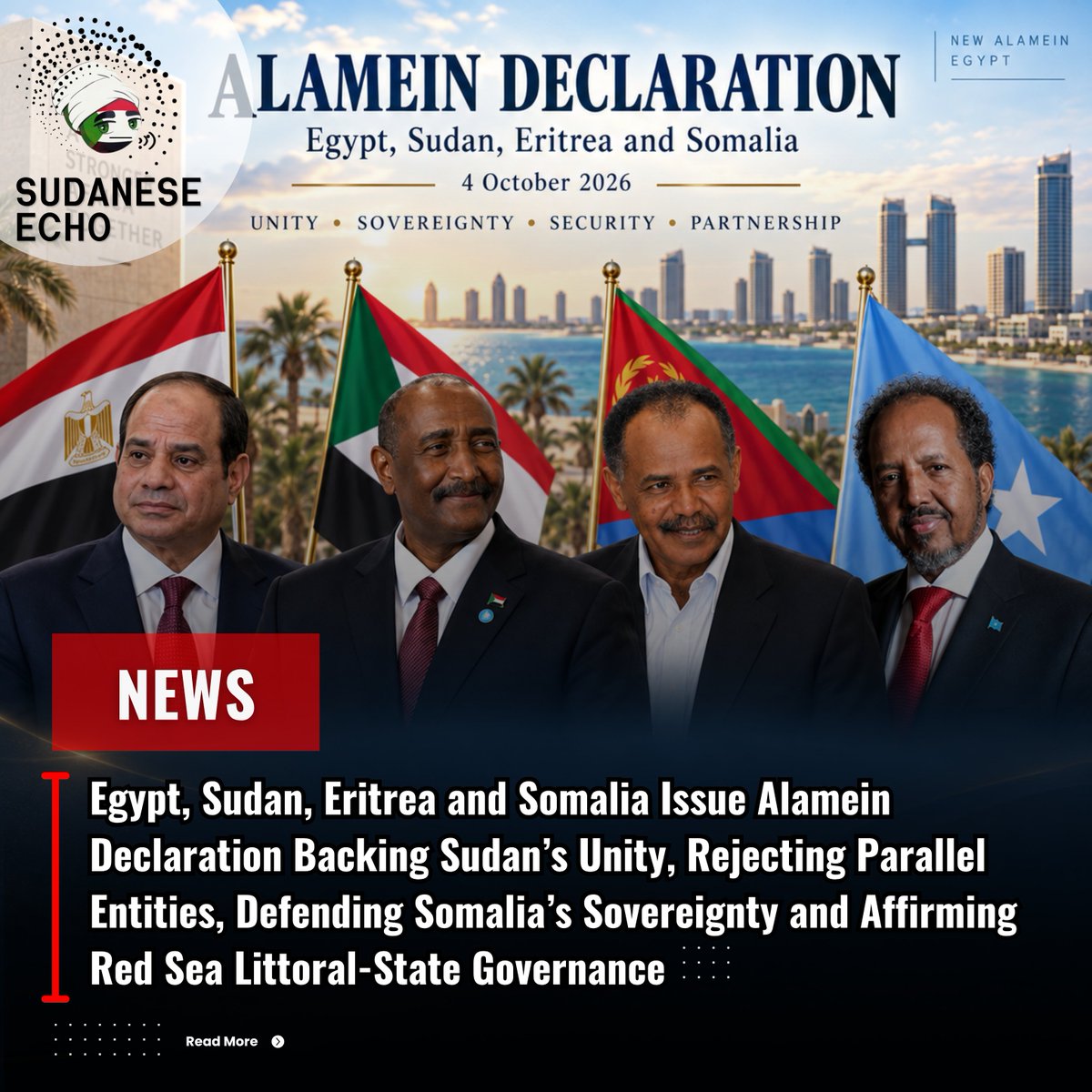
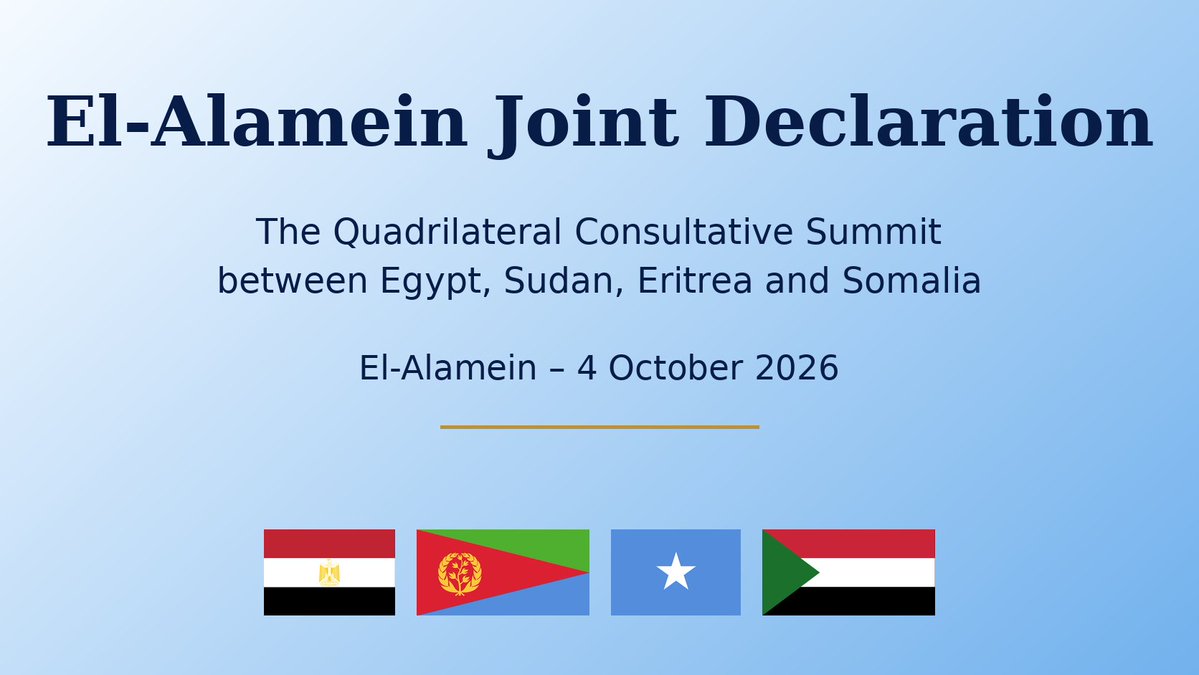
Egypt, Sudan, Eritrea and Somalia Issue Alamein Declaration Backing Sudan’s Unity, Rejecting Parallel Entities and Mercenary Support, Defending Somalia’s Sovereignty and Affirming Red Sea Littoral-State Governance
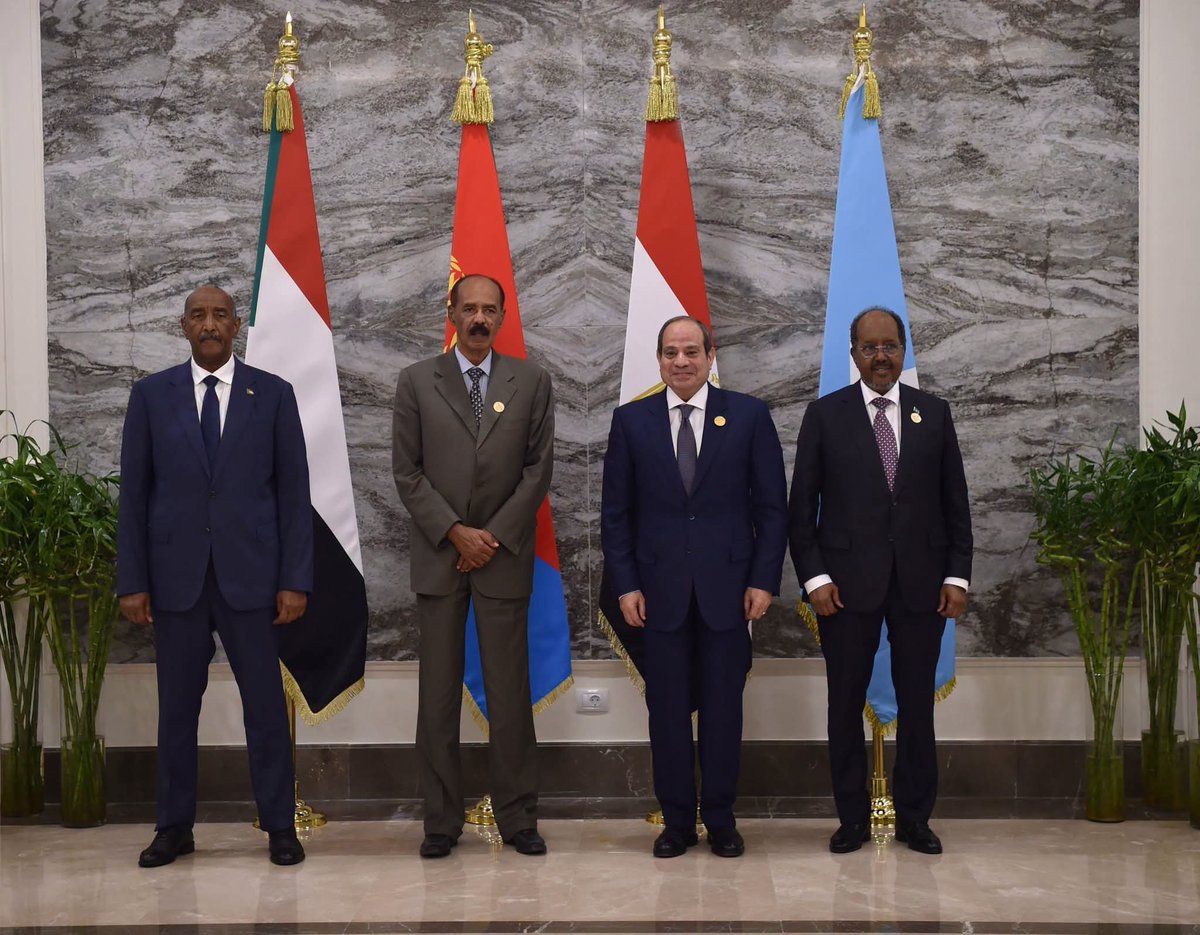
The leaders of Sudan, Egypt, Eritrea and Somalia concluded their consultative summit in New Alamein on Sunday, October 4, 2026, with the issuance of the Joint Alamein Declaration, setting out agreed positions on Sudan, Somalia, Red Sea security, Nile waters and wider regional cooperation.
Sudan featured prominently in the declaration, with the four leaders affirming support for the country’s unity, sovereignty, territorial integrity and national institutions, rejecting the establishment of parallel entities, and calling for the resumption of a Sudanese-owned and Sudanese-led political process. The declaration also expressed complete rejection of any support for mercenaries.
The leaders further affirmed that governance of the Red Sea is the exclusive responsibility of its littoral states, addressed the principles governing transboundary rivers including the Nile, and agreed to establish a mechanism to follow up on the summit’s outcomes, with the consultative summit to be held periodically and whenever circumstances require.
Below is the full text of the Joint Alamein Declaration, translated into English:
----------------------
Joint Alamein Declaration
Issued by the Consultative Quadrilateral Summit Between Egypt, Sudan, Eritrea and Somalia
Alamein, October 4, 2026
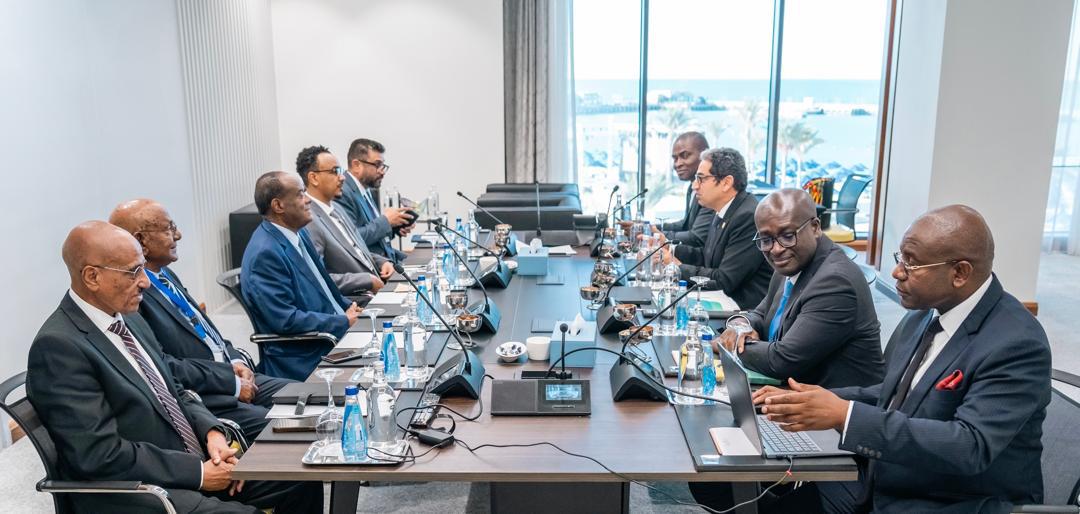
1- At the invitation of His Excellency President Abdel Fattah el-Sisi, President of the Arab Republic of Egypt, extended to His Excellency President Isaias Afwerki, President of the State of Eritrea, His Excellency President Hassan Sheikh Mohamud, President of the Federal Republic of Somalia, and General Abdel Fattah al-Burhan, Chairman of the Transitional Sovereign Council of the Republic of Sudan, the leaders met at a quadrilateral summit today, October 4, 2026, in New Alamein City, where they held intensive fraternal consultations on current regional and international issues, ways to enhance political, trade and economic cooperation among the four countries, and to strengthen consultation and coordination among them.
2- The summit addressed the need to uphold the fundamental principles and pillars of international law as the basis for regional stability and cooperation, particularly respect for the sovereignty, independence and territorial integrity of the countries of the region, upholding the values of good-neighbourliness, rejecting interference in the internal affairs of the countries of the region under any pretext, working to support national institutions, and promoting political and peaceful solutions to conflicts.
3- The summit discussed coordinating joint efforts to achieve regional stability, creating a favourable environment for shared and sustainable development, and advancing economic, trade and cultural relations in a manner that helps achieve economic integration and interconnectedness, sustainable development, and stronger ties among the peoples of all participating countries, taking into account the unity of objectives and a shared destiny.
4- The summit addressed, and the participating leaders reached a common understanding on, the following matters:
A- Supporting the unity of the Republic of Sudan, its sovereignty, territorial integrity and national institutions, rejecting the establishment of any parallel entities, encouraging the resumption of a political process that is Sudanese-owned and Sudanese-led, supporting national institutions, in addition to the complete rejection of any support for mercenaries.
B- Supporting the unity and sovereignty of the Federal Republic of Somalia, rejecting any interference or measures targeting its territorial integrity and national sovereignty, and rejecting any recognition of or support for so-called Somaliland, as this constitutes an infringement on the sovereignty and territorial integrity of the Federal Republic of Somalia.
C- Supporting the efforts of the Federal Republic of Somalia in combating terrorism, enabling state institutions to extend their control over the entirety of its territory, and calling on regional and international partners to provide adequate, sustainable and predictable funding for the African Union Support and Stabilization Mission in Somalia (AUSSOM), in a manner that supports Somalia’s security transition and enables the mission to carry out its mandate in support of the orderly transfer of security responsibilities to Somali forces.
D- Affirming the principle of freedom of navigation and that governance of the Red Sea is the exclusive responsibility of the littoral states.
E- Affirming the importance of respecting international law regarding transboundary rivers, including the Nile River, particularly the principle of causing no harm, and the obligation to cooperate through prior notification, consultation and consensus, while completely rejecting any unilateral measures that harm the existing water uses of the two downstream Nile states.
G- Continuing to further strengthen consultation and coordination among the four countries and with the rest of the brotherly African countries.
5- The leaders agreed to establish a mechanism to follow up on the outcomes of this consultative summit, which will be held periodically and whenever circumstances require, in order to strengthen consultation and coordination among them.
6- The Presidents of Eritrea, Sudan and Somalia expressed their sincere thanks and appreciation for the hosting of this consultative summit.
#Sudan
#Eritrea
#Somalia
#Egypt
To Addis Ababa: It seems the Alamein message has arrived this time from four directions at once.
Simply put, the Nile is not private property, the Red Sea is not a passage whose boundaries can be redrawn unilaterally, and the sovereignty and territorial integrity of neighboring states are not bargaining chips.
When individual messages are ignored, you may find yourself facing a joint declaration that could pave the way for something beyond just another statement.
Egypt, Sudan, Eritrea and Somalia agreed to reject unilateral measures that harm existing uses of Nile waters and reaffirmed their commitment to international law and prior consultation over transboundary rivers, in a direct message to Ethiopia over the Grand Ethiopian Renaissance Dam (GERD). The four countries also stressed that the security and governance of the Red Sea are the responsibility of the states bordering it and rejected any challenge to Somalia’s unity and sovereignty.
The positions were set out at the conclusion of a four-way consultative summit hosted by Egyptian President Abdel Fattah el-Sisi in New Alamein, attended by Eritrean President Isaias Afwerki, Somali President Hassan Sheikh Mohamud and Sudan’s Sovereignty Council Chairman Abdel Fattah al-Burhan.
The leaders reaffirmed respect for international law governing transboundary rivers, including the Nile, particularly the principles of avoiding harm, prior notification, consultation and consensus, and rejected any unilateral measures that could harm the existing water uses of Nile Basin states and downstream countries.
They also declared their support for Sudan’s unity, sovereignty and territorial integrity, rejected parallel entities and support for mercenaries, and backed the resumption of a Sudanese-owned and Sudanese-led political process.
On Somalia, the four countries reaffirmed their support for its unity, sovereignty and territorial integrity and rejected interventions or actions targeting them, including the recognition or support of “Somaliland,” which they said undermines Somalia’s sovereignty and territorial unity.
The summit called for sufficient, sustainable and predictable funding for the African Union Support and Stabilization Mission in Somalia (AUSSOM) to support the security transition and the orderly transfer of responsibilities to Somali forces.
The four countries also reaffirmed freedom of navigation and stressed that the governance and management of the Red Sea are the exclusive responsibility of the states bordering it. They agreed to establish a mechanism to follow up on the summit’s outcomes and to hold the summit periodically or whenever necessary.
President Isaias Afwerki holds talks with President Abdel Fattah el-Sisi
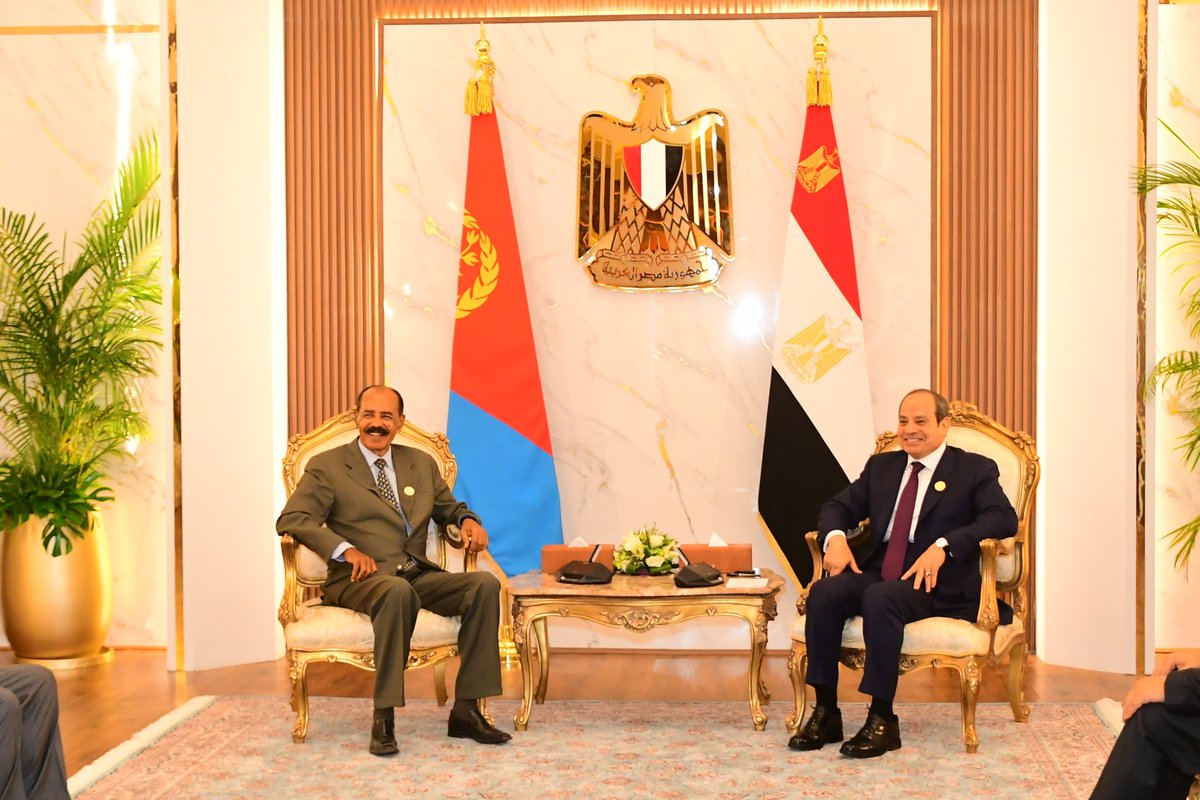
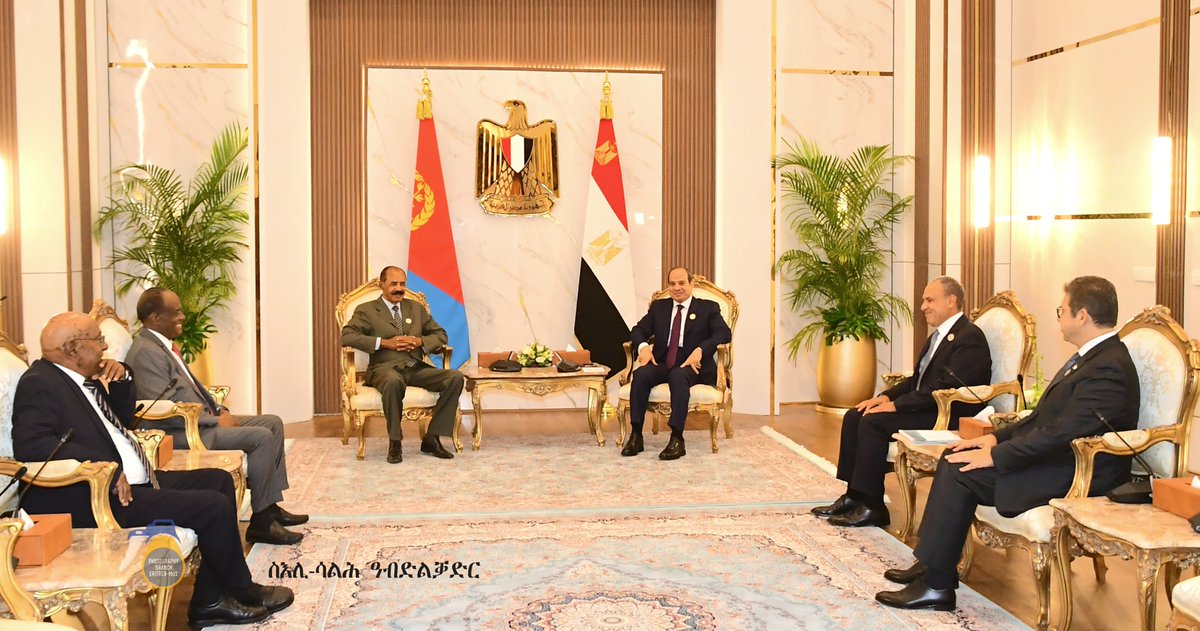
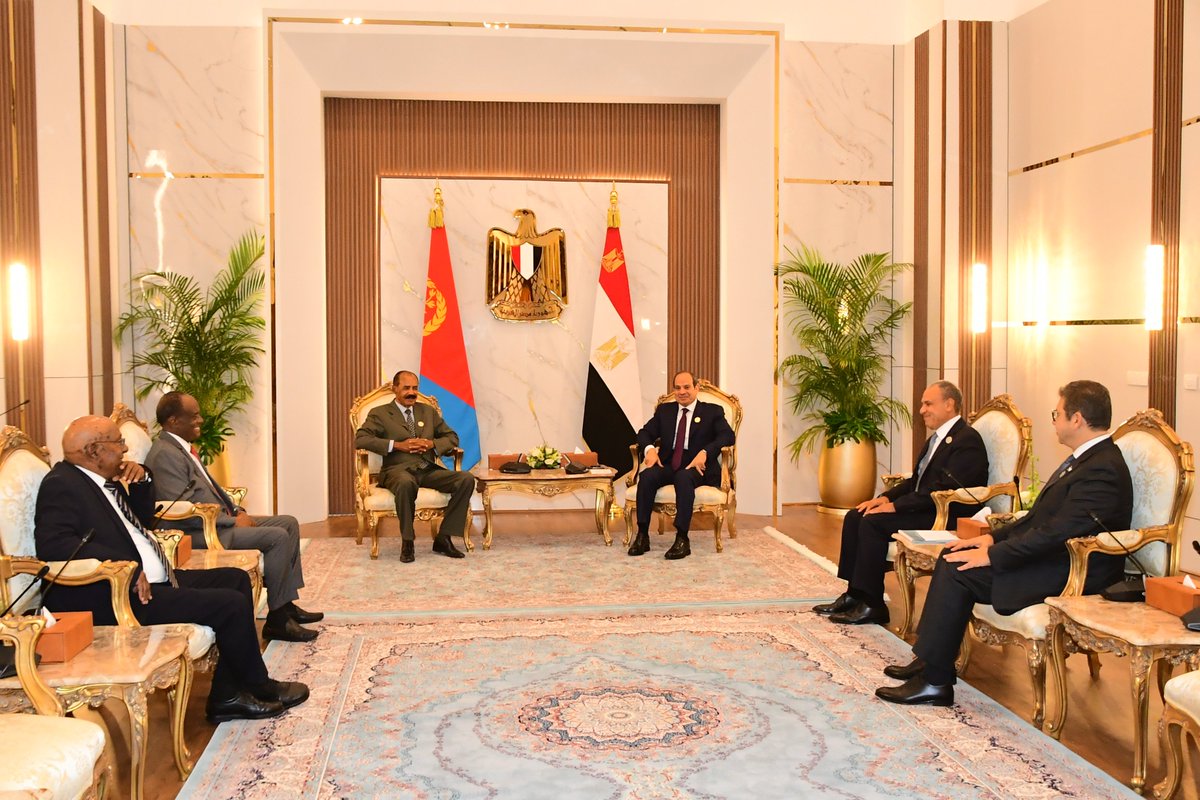
President Isaias Afwerki and President Abdel Fattah el-Sisi held extensive talks in New Alamein City earlier today on the enhancement of bilateral ties, regional and international developments and trends, and other matters of mutual interest.
President Isaias Afwerki underlined the convergent positions of Eritrea and Egypt on regional matters, particularly regarding the cardinal principles of respect for the sovereignty and territorial integrity of nations and non-interference in their internal affairs.
President Isaias further expressed appreciation for President el-Sisi’s efforts to strengthen bilateral cooperation in various sectors and for Egypt’s goodwill and readiness to bolster these ties for the benefit of both peoples and countries.
President el-Sisi, for his part, highlighted the profound historical and strategic ties between the two countries and reaffirmed Egypt’s readiness to further deepen the existing warm bilateral relations through the implementation of economic partnership projects and programmes in priority sectors.
President Isaias will participate in the Summit of Heads of State on collective security, stability and partnership, which will be convened in Alamein tomorrow.
At the invitation of President Abdel Fattah el-Sisi, President Isaias Afwerki departed for Egypt in the early morning hours today for a working visit. #Eritrea
It is hardly a sign of great military intelligence to underestimate the might of the Eritrean Defence Forces, and the resilience of the Eritrean people. Please read about their liberation, consider how they have survived decades under some of the world's worst sanctions.
First in my clan to see a president coming out on top of a car with so many guns around him, in my country regular police are not allowed to carry guns when the president is passing by.
President Isaias Afwerki and President Abdel Fattah el-Sisi held extensive talks, in new Alamien city earlier today, on the enhancement of bilateral ties, regional and international developments and trends, as well as other matters of mutual interest.
President Isaias Afwerki underlined the convergent positions of Eritrea and Egypt on regional matters; especially in regard to cardinal principles on respect of sovereignty and territorial integrity of nations and non-interreference in their internal affairs.
President Isaias further expressed appreciation for President el-Sisi's efforts to strengthen bilateral cooperation in various sectors and for Egypt's goodwill and readiness to bolster these ties for the benefit of both peoples and countries.
President el-Sisi, on his part, invoked the profound historical and strategic ties that exist between the two countries, and reaffirmed Egypt's readiness to further deepen the prevailing warm bilateral ties through implementation of projects and programmes of economic partnership in priority sectors.
President Isaias will participate in the Summit of Heads of State on collective security, stability and partnership that will be convened in Alamien tomorrow.
طبول 🥁 الحرب تدق والجيش الإريتري مستعد كون إثيوبيا 🇪🇹 هي التي كانت تتبع أجندة عداء مستمر ضد إريتريا منذ ثلاث سنوات للحصول على موقع سيادي بالبحر الأحمر وغزو الموانئ والمناطق الساحلية الإريترية السيادية".
أظهرت إريتريا الصبر في تجنب اي تصعيد خطير ولكن اقتربت المعركة ".
On the invitation of President Abdel Fattah el-Sisi, President Isaias Afwerki has departed to Egypt for a working visit in the early morning hours today.
During the visit, President Isaias will participate in the Summit of Heads of State on collective security, stability, and partnership.
The current Summit is a continuation of periodic forums on the wider neighborhood - the Red Sea Region, the Gulf of Aden, the Arabian Gulf as well as the Nile Basin - conducted through different platforms.
President Isaias Afwerki and President Abdel Fattah el-Sisi will also discuss further enhancement of bilateral ties during the visit.
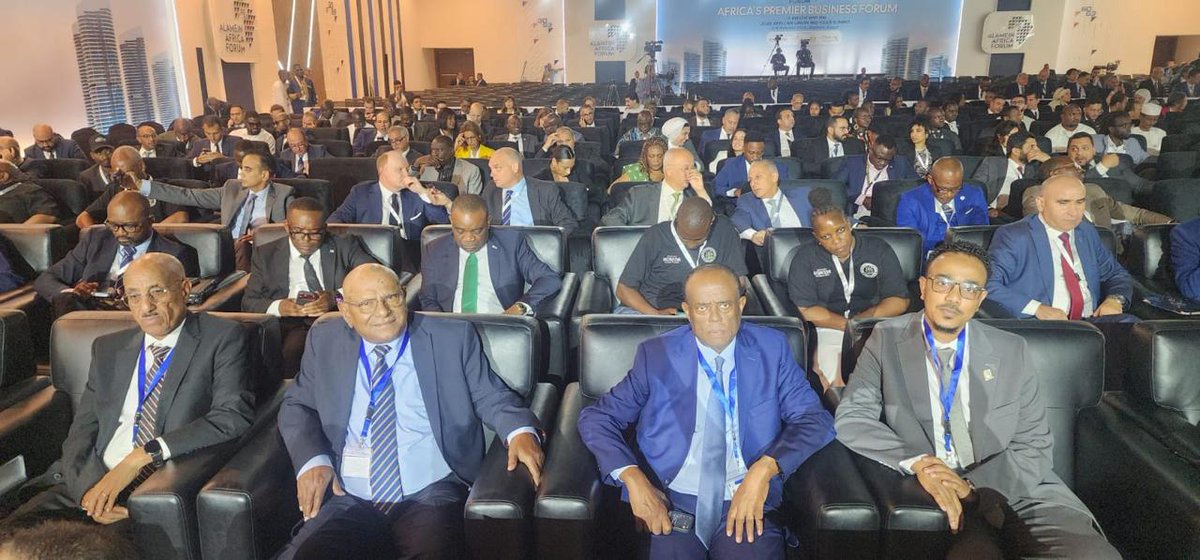
#Eritrea's senior delegation composed of Mr. Hagos Gebrehiwet, Head of Economic Affairs; and, Mr. Nesredin Mohammed Saleh, Minister of Trade and Industry, is participating at the Alamien Business Forum hosted by Egypt from 2 to 3 October this week.
Participants in the Forum include: Heads of State and Government Representatives; senior leaders from leading international and regional financial institutions; as well as key actors driving transformative change across Africa's most critical sectors - from infrastructure, trade and critical minerals to digital innovation, health markets and emerging industries.
Eritea's delegation also met yesterday with Dr. George Elombi, the President and Chariman of the Board of Directors of African Export-Import Bank (Afreximbank).
The discussions centered on existing financial services between Eritrean Banks and Afreximbank. The two sides agreed to expand and bolster the prevailing smooth cooperation and embark on new financial services for various projects.
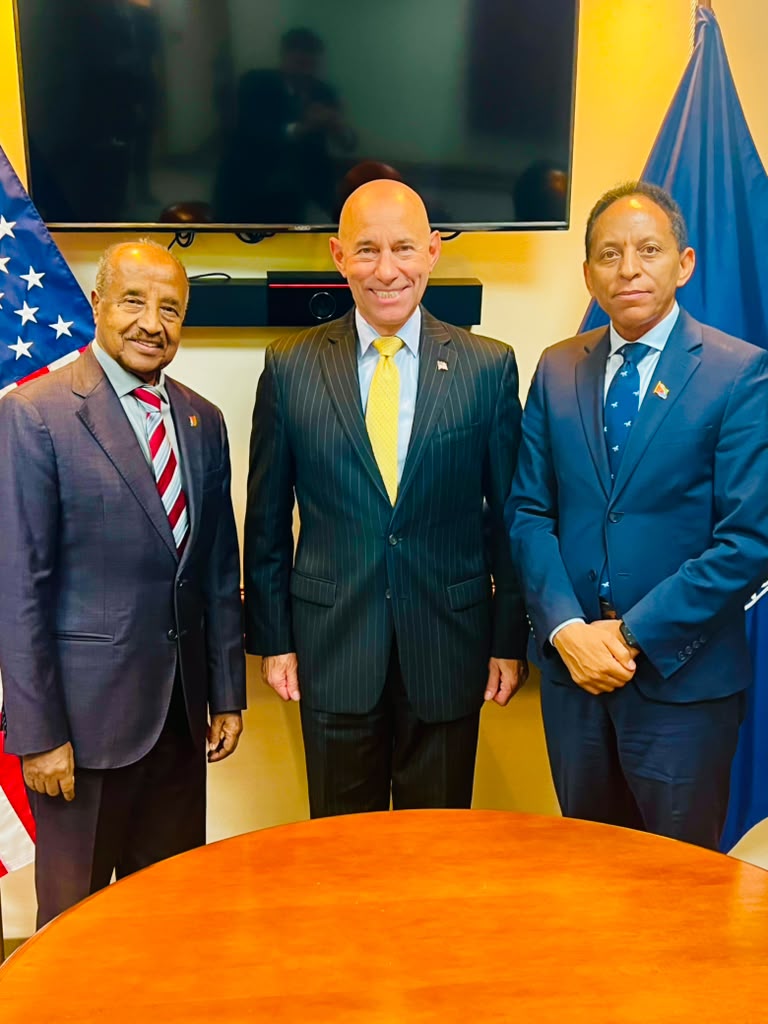
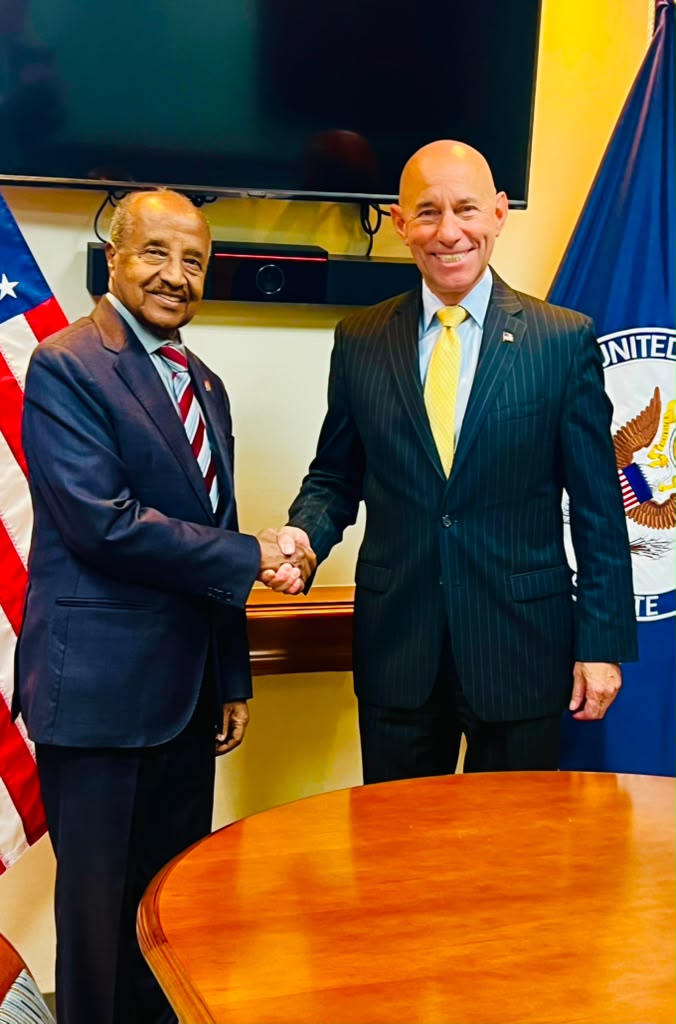
#Eritrea's Delegation led by Foreign Minister Osman Saleh met, yesterday in Washington, with US Under Secretary of State for Political Affairs, Ms. Allison Hooker, and, the Assistant Secretary for Africa, Mr. Frank Garcia ,respectively.
In the meeting with the Under Secretary of State for Political Affairs, Minister Osman welcomed the removal of unilateral sanctions which must be seen as a positive and vital step for turning a new page in Eritrea-US relations.
Eritrea's objective is to create the basis for constructive, mutually beneficial, and genuine partnership in the period ahead. The new chapter should enable us to recoup missed opportunities; pivot towards enhancement of trade and investment; as well as explore and leverage new prospects for genuine partnership that eschews structural dependency, FM Osman stressed.
Minister Osman also referred to the need for further review of unwarranted policies of pressure pursued by previous Administrations. He elaborated on Eritrea's modest and constructive role in the promotion of peace, stability and security in its immediate and wider neighborhood which encompasses the Horn of Africa; the Red Sea and Gulf of Aden; the Nile Basin, and the Wider Gulf Region. The Minister expressed Eritrea's earnest hope to cultivate collaborative efforts with the US in these ideals as well as in the mechanism of cooperation charted out by the littoral States.
The Under Secretary for Political Affairs, for her part, underlined that the lifting of sanctions stemmed from President Trump's commitment to nurture bilateral partnerships based on mutual benefits. This will contribute to the crystallization of warm ties of cooperation between the two countries. Ms. Hooker further remarked on the broad convergence of broad themes of cooperation envisaged by the two sides in these initial and preliminary meetings.
The meeting with the Assistant Secretary State, Mr. Frank Garcia, was likewise focused on broadly similar themes. The two sides agreed that future talks will focus on more profound and concrete consultations for the promotion of trade and investment; regional peace and stability, as well as resolution of pending matters through constructive dialogue.