⭐We’re going LIVE today at 1:15pm (CDT)!
Join our plenary session and hear from regional leaders as they explore how growth is shaping our communities and what it means for the future.
🔴Tune in: https://t.co/9KXImTAhVW
Join our plenary session and hear from regional leaders as they explore how growth is shaping our communities and what it means for the future. Don’t miss this insightful conversation!
✅Register to attend in person: https://t.co/PpFFYDUuL7
🎥Can’t make it? Watch live on YouTube
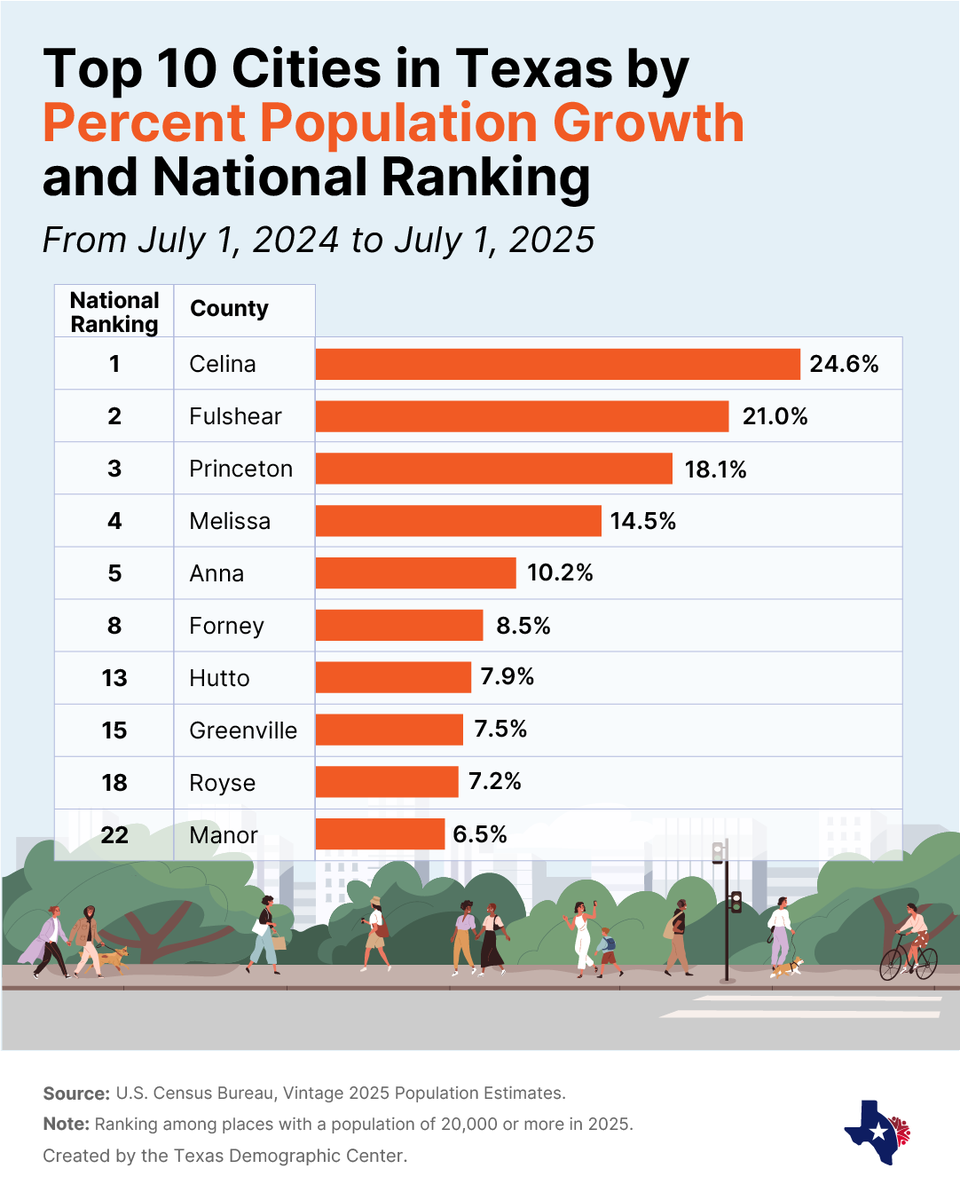
Texas continues to dominate growth. The five fastest-growing U.S. cities are all in Texas, with Celina growing 24.6%, Fulshear 21.0%, and Princeton 18.1%—highlighting rapid expansion across smaller communities.
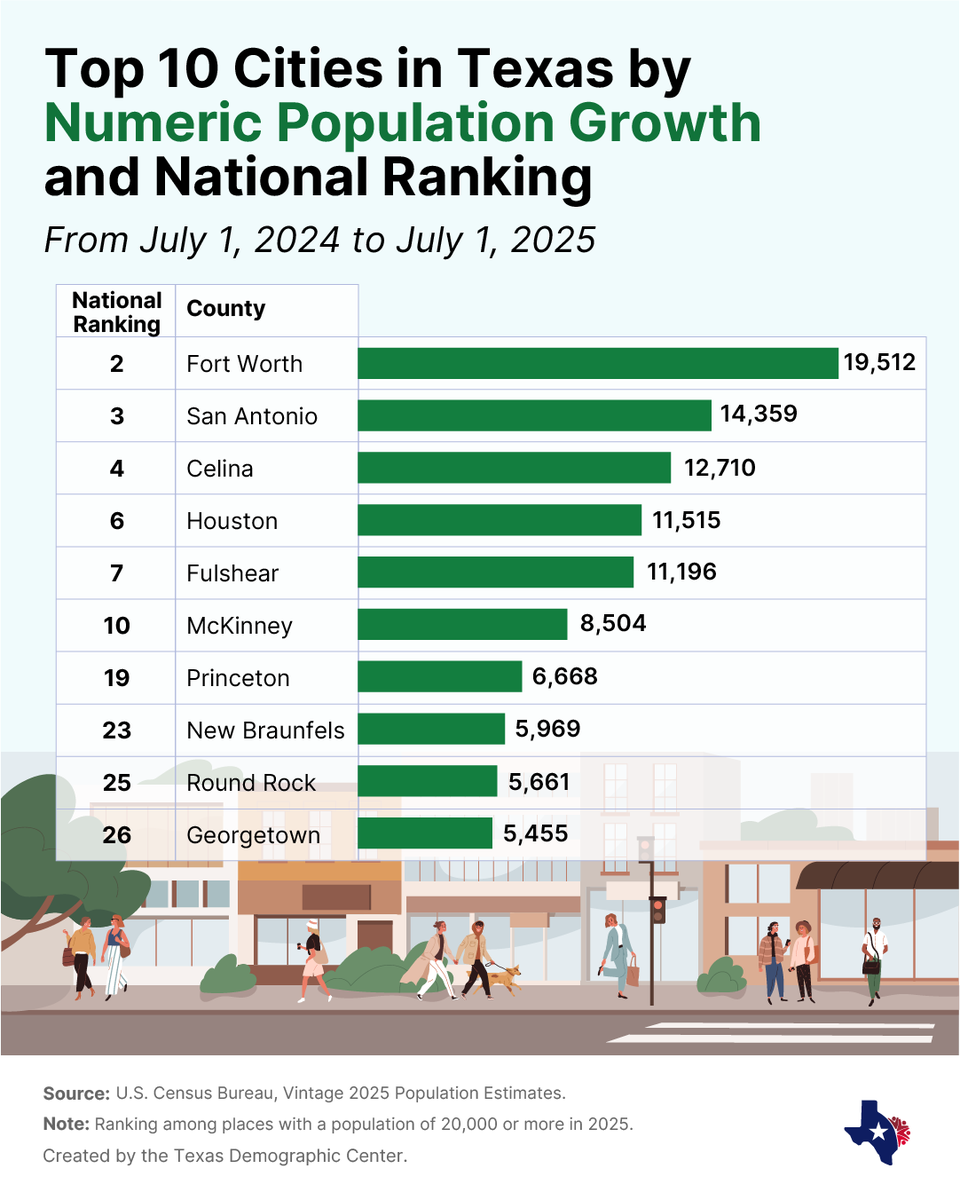
Population growth remains strong across Texas. Fort Worth added 19,512 residents, with San Antonio (14,359) and Celina (12,710) close behind. Several other cities, including Houston and Fulshear, also saw gains above 11,000, reflecting broad-based growth statewide.
Join Dr. Jacqueline Angel as she unpacks how aging, dementia, and caregiver shortages are reshaping the future of care and what we can do about it. Don’t miss this important conversation at the Texas Demographic Conference. Register today! 👉 https://t.co/QR3ZyfBgAy
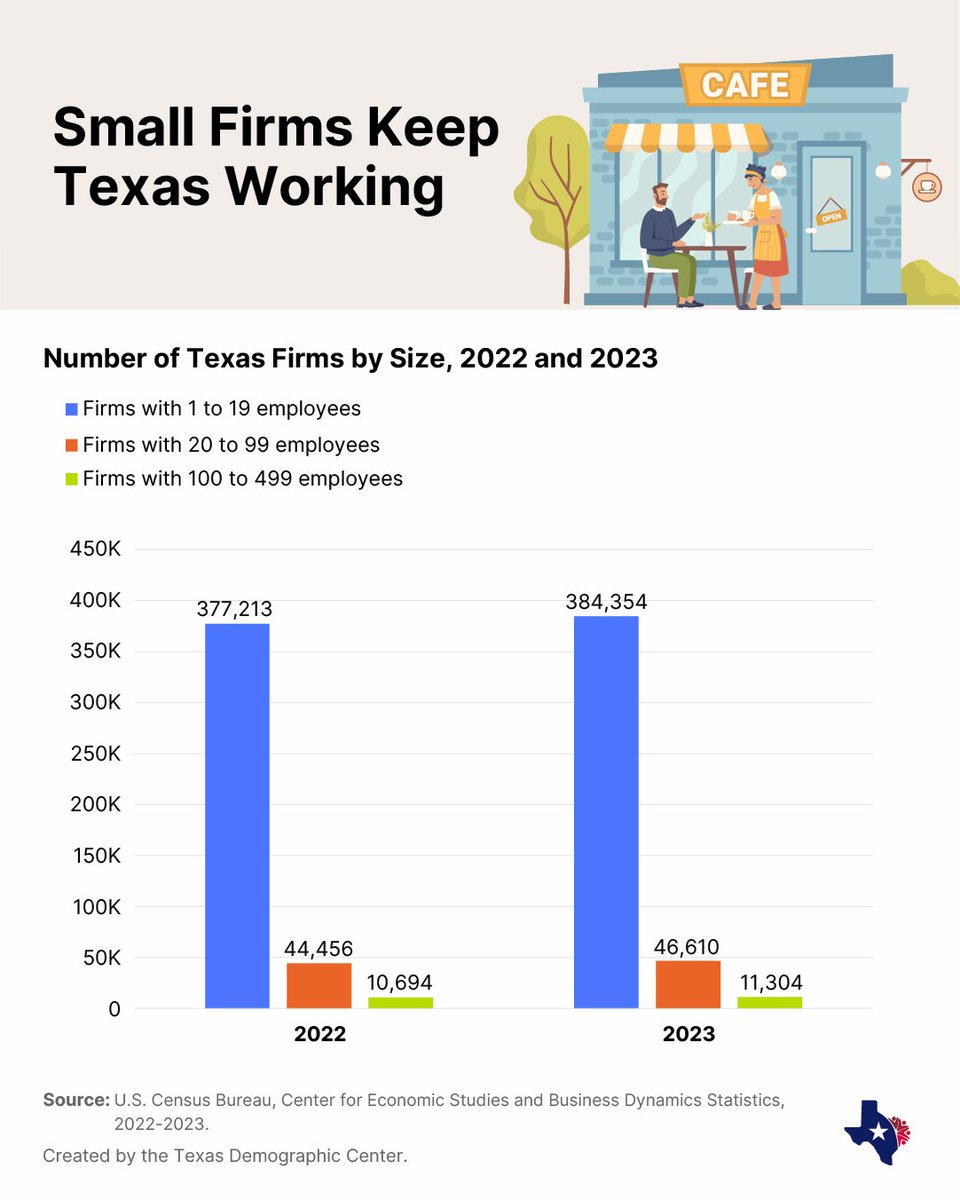
Small Business Week celebrates U.S. entrepreneurs and small business owners. In 2023, 442K Texas firms had fewer than 500 employees, up from 432K in 2022. A majority (86%) of these firms have fewer than 20 employees—showcasing how small businesses power the state’s economy.
As Texas’s population continues to age, labor force participation among older adults has risen since 2010, reaching higher levels for both the 65–74 and 75+ age groups by 2024.
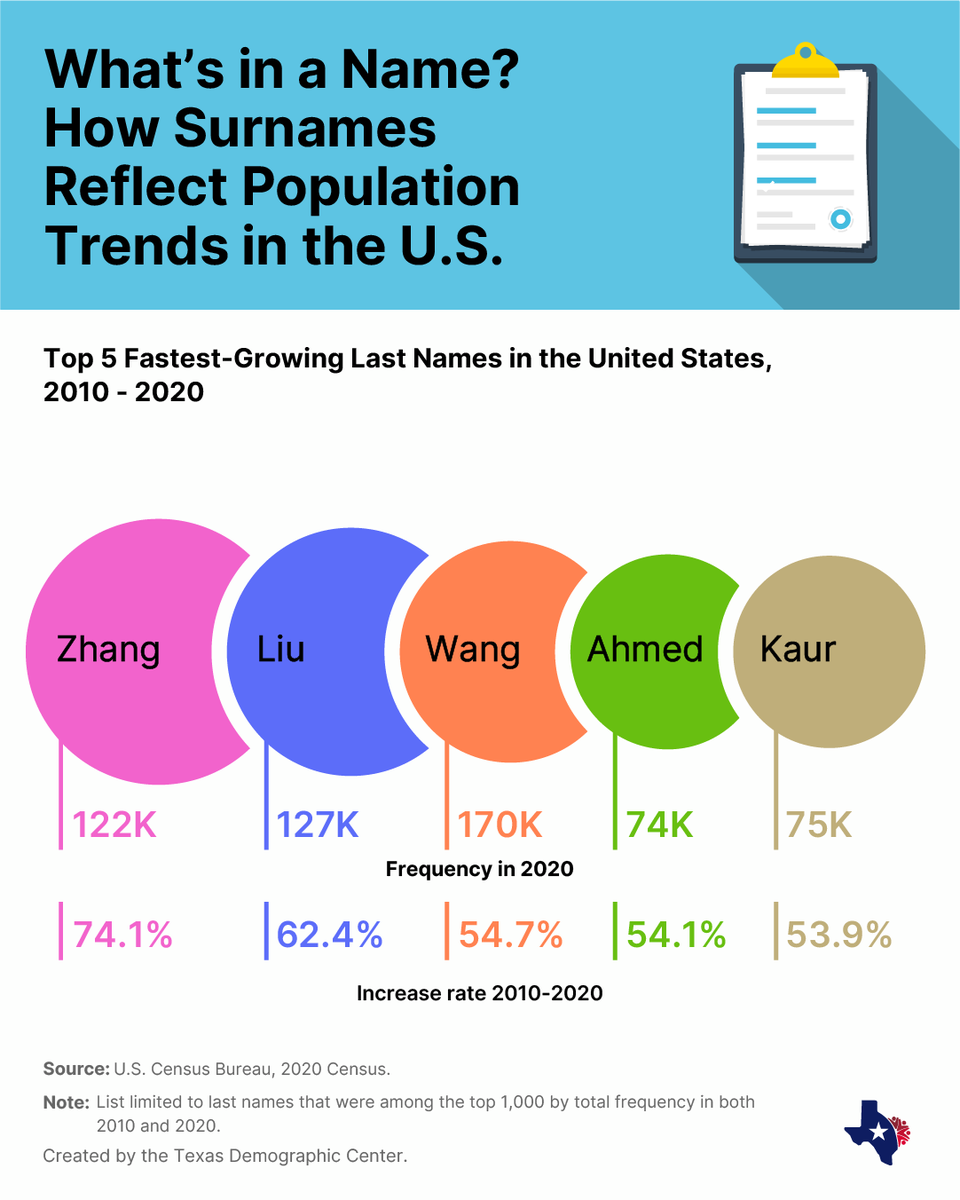
@uscensusbureau 2010–2020 census data show that, among the top 1,000 surnames by total frequency, the fastest‑growing are predominantly Asian and Native Hawaiian or Other Pacific Islander, mirroring broader U.S. trends as these populations grew faster than the nation overall.
Join us May 20–21, 2026, at the Texas Demographic Conference in Austin to explore key demographic trends and connect with experts. Register: https://t.co/QR3ZyfBgAy
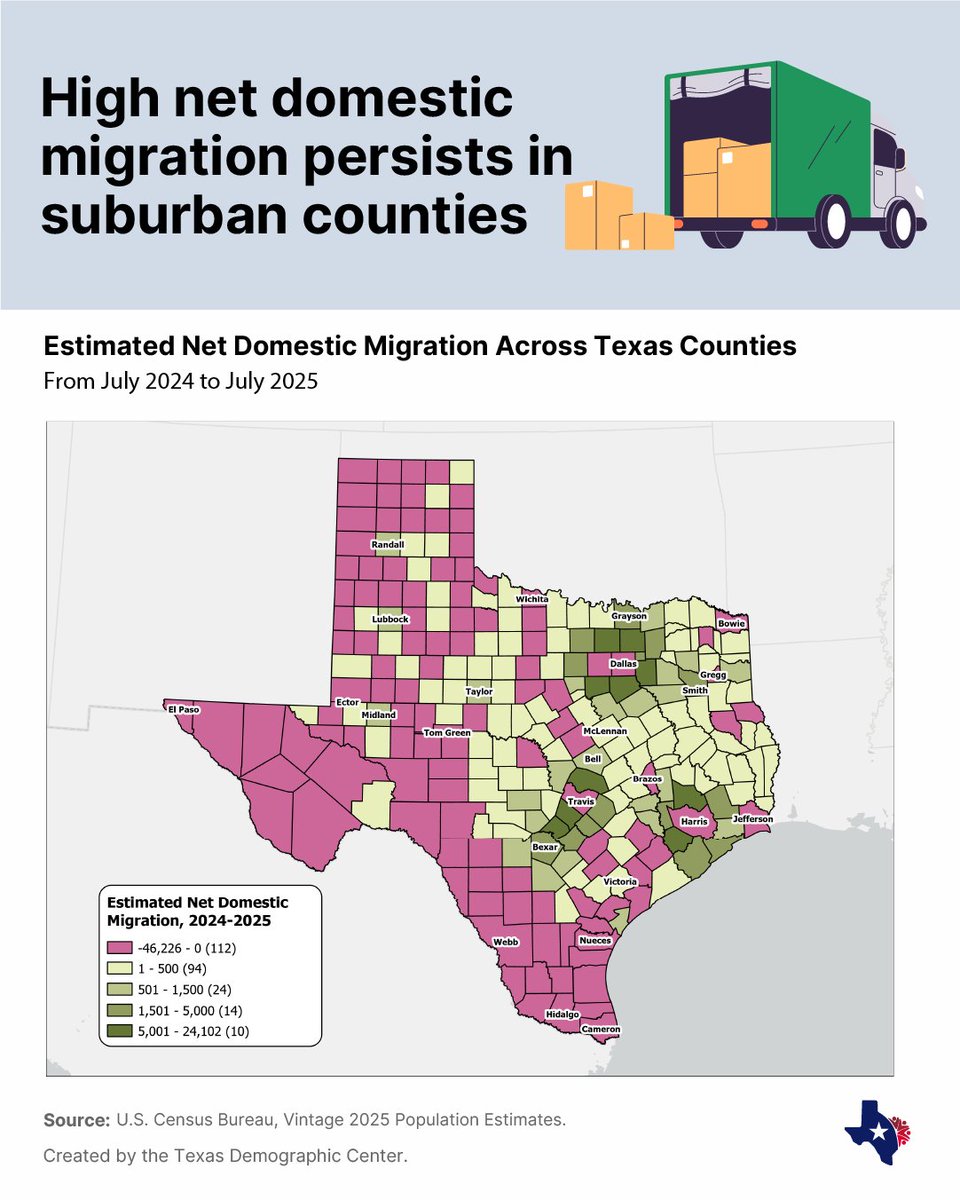
From July 2024 to July 2025, Texas saw its lowest level of domestic migration in more than a decade. The suburban and exurban edges of the Texas metropolitan triangle experienced the strongest net in‑migration, while central‑city counties and West Texas saw net out‑migration.
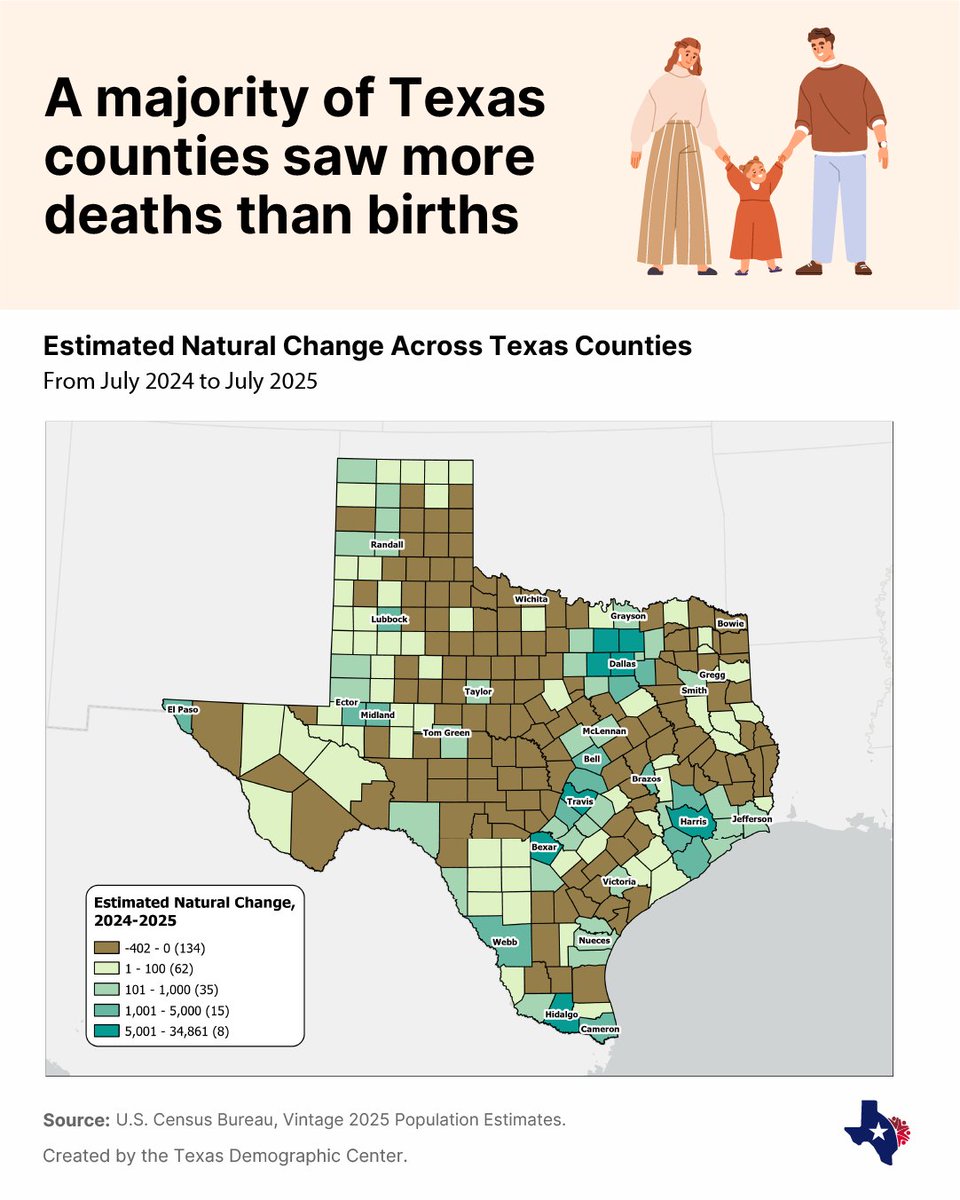
Between 2024 and 2025, 120 Texas counties experienced more births than deaths, a pattern concentrated largely in metropolitan areas and the Permian Basin counties. In contrast, 134 counties experienced natural population decline, with most located in rural areas.
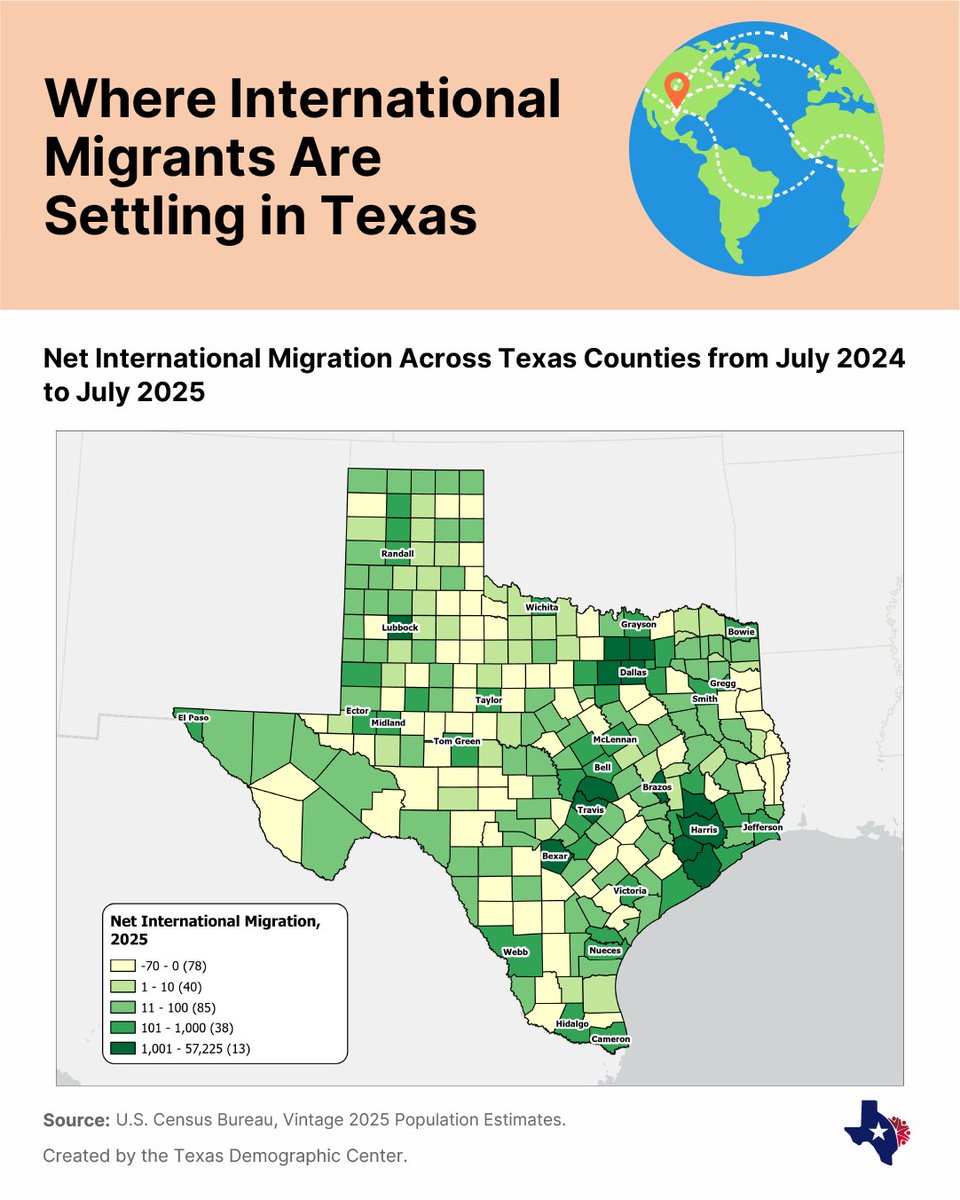
Large Texas metro and border counties are key destinations for international migrants. From July 2024 to July 2025, gateways like Harris and Dallas saw net international migration nearly halve from 2023–24. Many border counties saw even steeper drops after earlier surges.
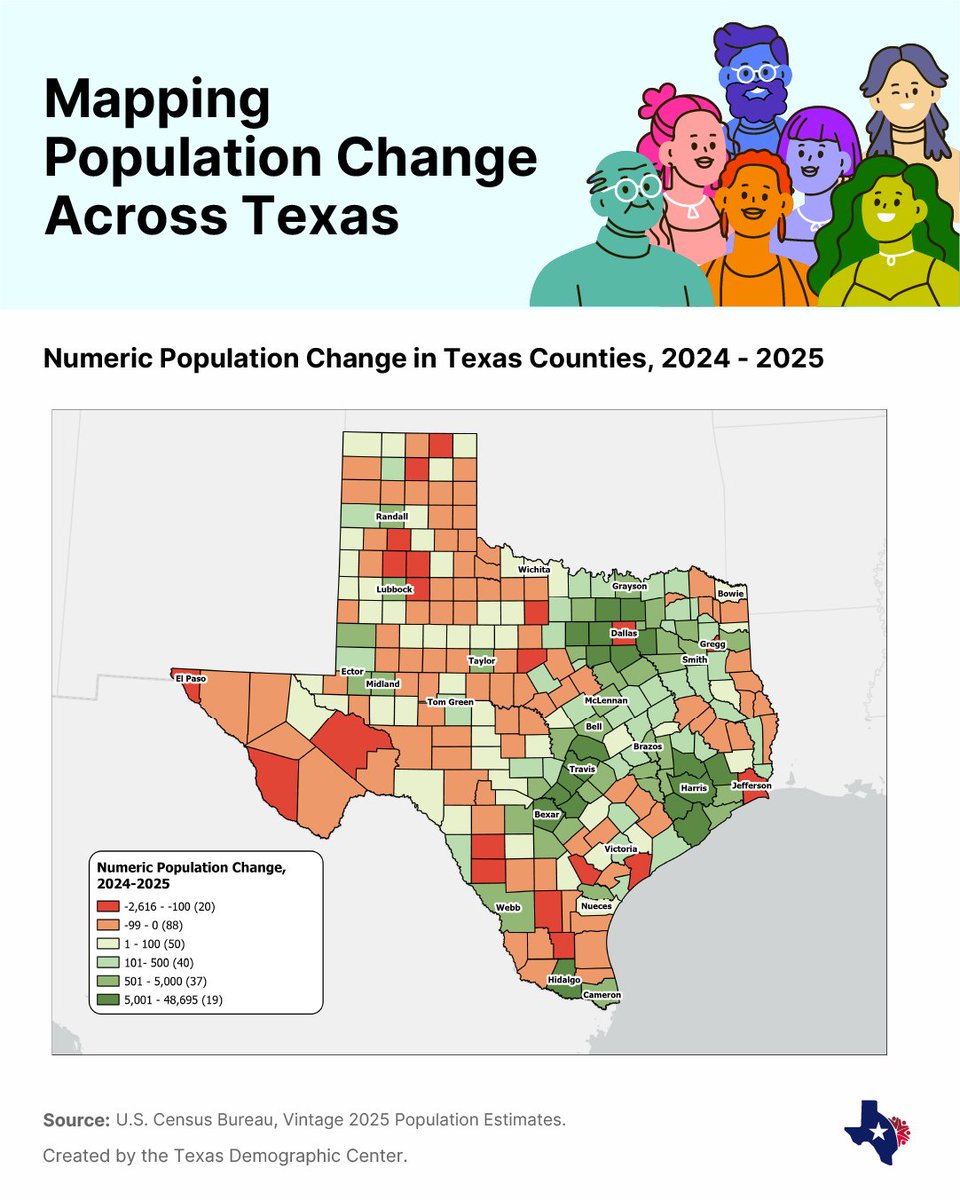
Latest data from Census Bureau show that Texas is still growing, but slower than in previous years. A majority of counties (58%) experienced population growth within the TX triangle, while 108 counties (42%) concentrated in west and south TX lost population in the past year.
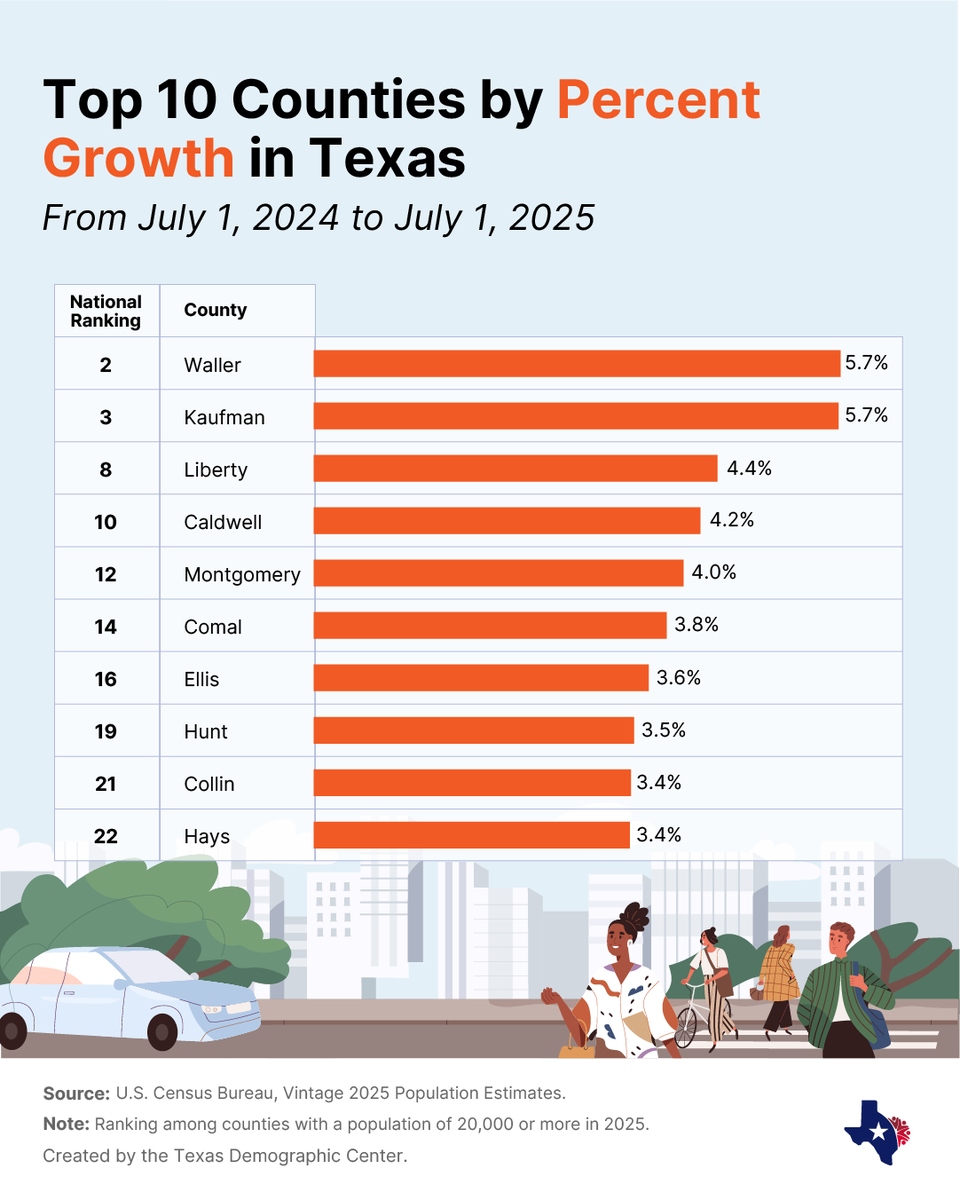
Texas counties are growing fast! From 2024-2025, Waller County leads TX ranking #2 nationally followed by Kaufman, both with a growth rate of 5.7%. Liberty, Caldwell, Montgomery, and others rank in the top 25 nationally as the fastest‑growing counties around major metro suburb
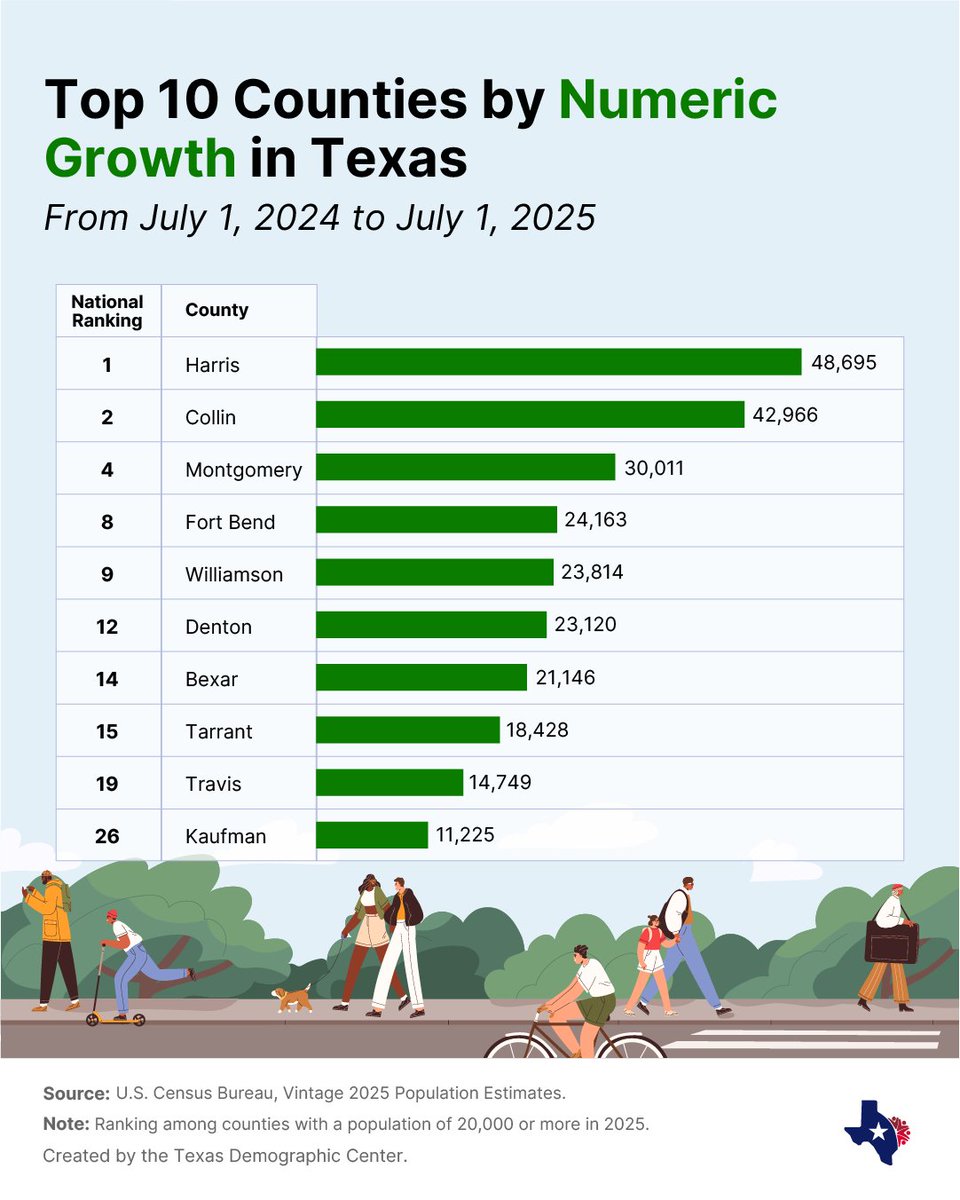
Five of the nation’s top 10 counties for numeric growth are right here in Texas. Harris County leads the state, adding more than 48,000 new residents from 2024 to 2025.Texas continues to be one of the country’s most sought after places to call home.
Irish-American Heritage Month, established in 1991, is celebrated each March alongside St. Patrick’s Day. The graphic highlights the top seven Texas counties with the largest Irish populations and their national rankings; Harris County ranks ninth in the U.S.
Women’s participation in the Texas workforce continues to climb, from 57.7% in 2014 to 60.1% in 2024, while men’s participation remains largely stable. In line with long‑term national trends, this progress strengthens the economy and expands opportunity statewide.
Join us for the Texas Demographic Conference at the Barbara Jordan State Office Building in Austin on May 20–21, 2026. Connect with experts, explore key trends, and network. Register here 👉 https://t.co/9Pf8oveYFc
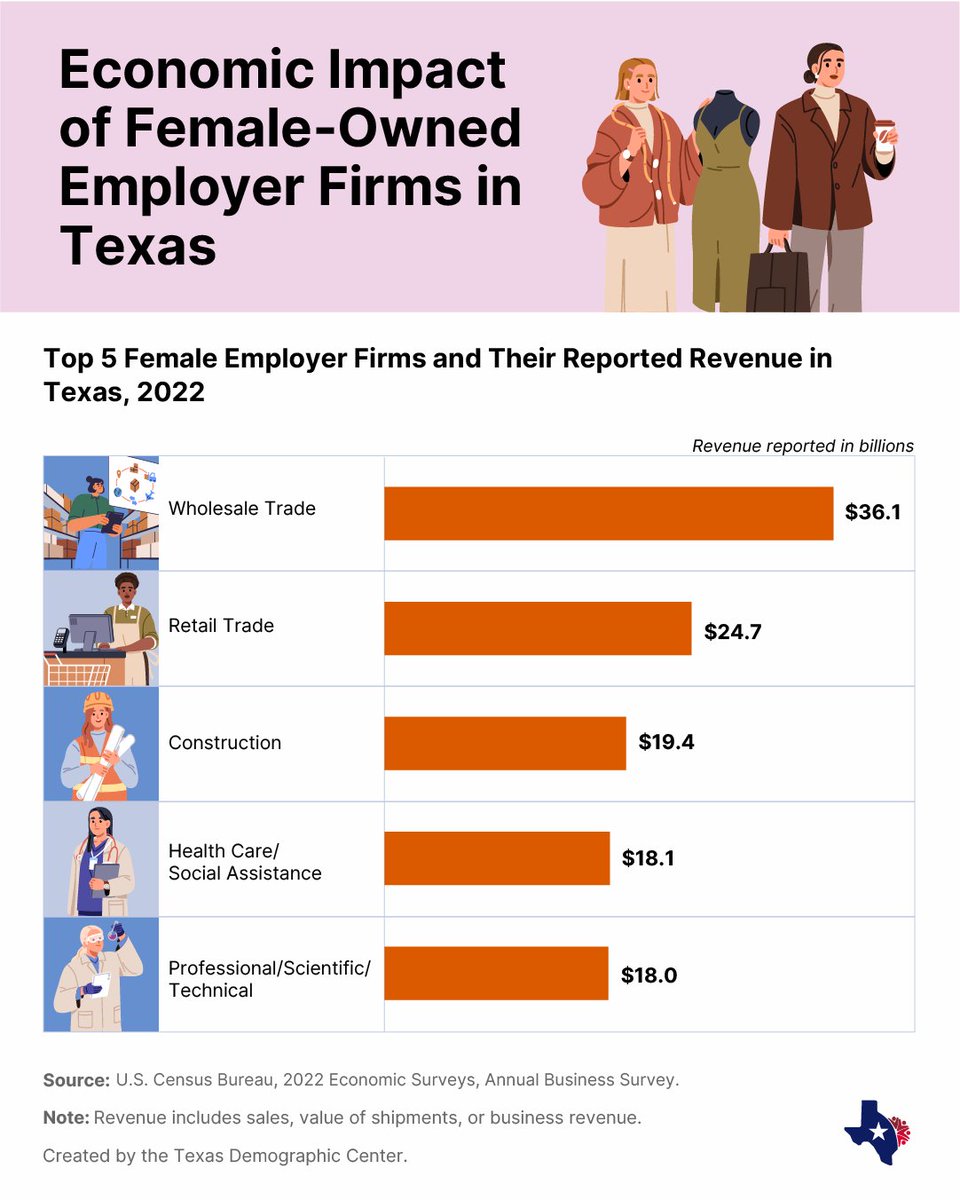
Women in TX own 23% of all employer firms, generate $193.9B in revenue, and employ over 1M people. In addition to the top 5 industries, others include manufacturing, administrative, and accommodation services. Their entrepreneurial spirit contributes to the TX economy every day.