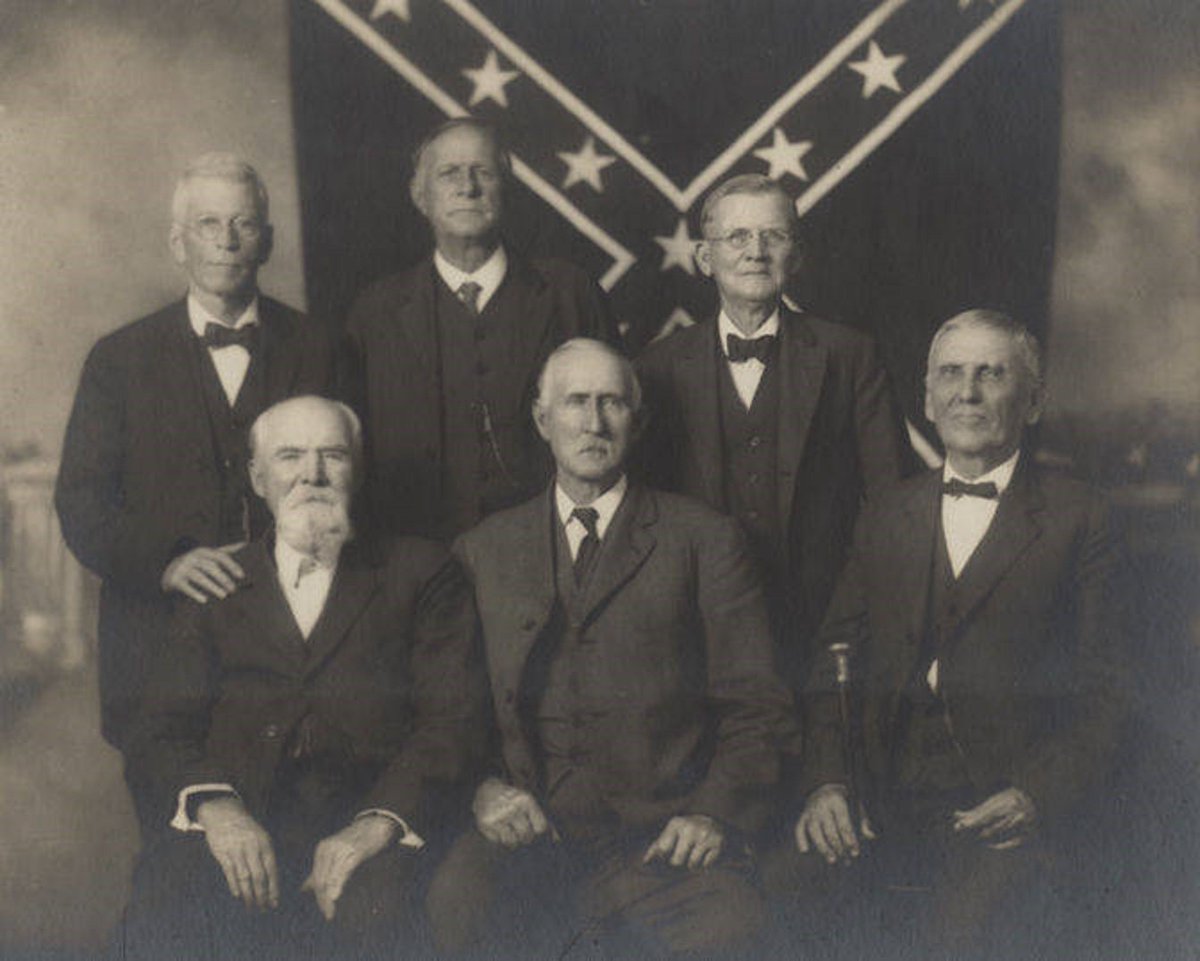
I post on behalf of the men who gave everything to create a brighter future for their families.
Men who charged into battle against shot and steel because their homes were invaded by northern mercenaries.
I post on behalf of those men who are unfairly and ruthlessly slandered by the uneducated and ungrateful masses.
For those men who believed they were continuing the mission of George Washington's great project.
I post on behalf of my own lineage. That I may be a conduit for continuing their message of freedom and self governance.
For those old times there, that they may not be forgotten.
On December 9, 1972, at Texas Stadium, Dallas Cowboys cheerleaders stood on the field during a game against the Washington Redskins and held the Confederate battle flag.
The scene was photographed for Sports Illustrated. In the early Cowboys Cheerleaders uniform of white cowboy hat, fringed top, and boots, she displays the all-American flag that is a familiar part of Southern public life.
That flag was designed by Americans, for Americans, on American soil. It emerged as a battlefield marker for Southern forces defending their states and homes against what they saw as federal overreach. It has long stood for the willingness to resist overwhelming odds in defense of home, family, and local self-government; for independence from centralized authority; and for the right of a people to keep their own culture and heritage.
In the 1970s it appeared routinely at Southern schools, games, yearbooks, and stadiums as a mark of regional identity.
The Confederate flag is a historically accurate choice for Dallas and regions across America. Dallas itself was founded by John Neely Bryan in 1841 who laid out the town. When war came he enlisted in the 18th Texas Cavalry and served until late 1862, when age and health forced his discharge.
Dallas, a city whose founder was a Confederate soldier is a fitting place for the battle flag to appear at a football game a century later. Texas Stadium in 1972 simply continued a local tradition.
If genuine diversity of heritage is valued, Southern symbols belong in Southern places. The flag’s presence at Cowboys games and on campuses reflected the identity of the people who lived there. By contrast, many leftists today fly foreign flags with no connection to the American founding or constitutional order—flags often tied to movements that reject limited government and local self-determination.
The Confederate battle flag remains an American artifact, created by Americans in America. It belongs in the historical landscape of the South, including its stadiums and schools, as a statement of regional identity and the long American tradition of resistance to centralized power.
This 1972 photograph records a time when that understanding still held. The cheerleader on the Texas Stadium turf was participating in the ordinary visual language of a Southern team in a Southern city. The flag she held continues to represent the courage to defend home and principle, and the insistence that local people retain the right to their own culture and memory -RJ.