Is narcissistic psychopathology within a couple always the result of narcissistic personality disorder in one of the partners?
Dr. Otto Kernberg offers a much more complex understanding of this psychodynamic phenomenon. In Love Relations: Normality and Pathology (1995), he demonstrates that narcissistic psychopathology within a couple may take many different forms and does not necessarily reflect the underlying personality structure of each partner. As he writes:
“Narcissistic psychopathology in couples ranges widely.
One couple makes conscious efforts to maintain an unrealistic public image of their relationship as one of total mutual gratification.
Another couple unconsciously colludes in the ruthless exploitation of one partner by the other.
Psychoanalytic investigation shows that the proverbial image of a narcissistic partner matched with a masochistic partner does not necessarily coincide with the character pathologies of each. More generally, a partner's unconscious identification with dissociated and projected aspects of him- or herself, together with the partners' mutual induction of complementary roles by means of projective identification, may result in a role distribution that conveys an erroneous impression of each partner's psychopathology.
An inconsiderate husband's self-centered exploitation of his wife, for example, may suggest significant narcissistic psychopathology in him and victimization in his wife.
An exploration of the couple's conscious and unconscious interactions, however, reveals that she is unconsciously provoking him and projecting onto him her own sadistic superego.
The intactness, depth, and commitment of the husband's relationships to others reveal him to be predominantly infantile rather than narcissistic.
Thus, according to Kernberg, we have to deal with two problems: narcissistic psychopathology in one or both partners and the "interchange" of personality aspects of both, bringing about the couple's pathological relationship that does not correspond to the individual pathology of the partners”.
These considerations underscore the importance of examining not only the personality structure of each partner but also the unconscious relational dynamics that emerge between them. These dynamics often shape the nature of conflict, the allocation of roles, and the ways in which partners experience love, guilt, aggression, and intimacy.
We invite you to examine these processes in greater depth together with Dr. Otto Kernberg at the seminar:
Oedipal conflicts, sexual morality, social and political control (over erotic life)
Faculty: Dr. Otto Kernberg, M.D.
July 18, 2026
Online
For more information, please leave a “+” under this post or follow the link in the profile header.
Otto Kernberg: Challenges in the Treatment of Narcissistic Personality Disorder
This video fragment is part of the lecture “Narcissistic Disorder,” delivered by Dr. Otto Kernberg for the Ukrainian Institute for Personality Disorders Studies (March 3, 2023).
The Ukrainian Institute for Personality Disorders Studies is an educational platform providing advanced online training for psychotherapists worldwide.
The Institute collaborates closely with the Ukrainian Association for Transference-Focused Psychotherapy (TFP-Group Ukraine), creating a professional and contemporary environment for psychotherapeutic education.
We support our students in mastering complex and evidence-based methods of psychotherapy, drawing on the expertise of leading specialists such as Otto Kernberg, Frank Yeomans, Monica Carsky, Nel Draijer, Jos van Mosel, Veronica Steiner, Katarzyna Gwóźdź, Mathieu Norton-Poulin, Julia Sowislo, and others.
At the Ukrainian Institute for Personality Disorders Studies, participants are trained and supervised in preparation for obtaining international qualification in the model of Transference-Focused Psychotherapy (TFP).
Learn with us and gain empirically grounded knowledge.
More about our current training programs: https://t.co/SP73gmNmu0
#OttoKernberg #Kernberg #borderline #personalitydisorders #diagnosis #levels_of_personality_organization
Can an Extramarital Relationship Help Preserve a Marriage?
It is commonly assumed that an extramarital affair inevitably destroys a relationship.
However, Otto Kernberg describes clinical situations in Love Relations: Normality and Pathology (1995) in which an extramarital affair may temporarily serve the opposite function. As he writes:
Sometimes when one partner maintains a relationship with a third party, the affair is preliminary to the destruction of the couple (that is, the couple or the marriage dissolves and gives way to a new couple formation);
And sometimes the marriage seems to stabilize with the presence of a third party.
In the latter case, various outcomes can materialize.Frequently, when one of the partners has an affair, it permits the stabilizing expression of unresolved oedipal conflicts.
A woman who is frigid with her husband and sexually satisfied by her lover may experience a conscious thrill and sense of satisfaction that sustain the marriage, though unconsciously she enjoys her husband as a hated transference representative of her oedipal father.
In the dual relationship, she experiences an unconscious triumph over the father who had had both her mother and her under his control, whereas now she is the one who has two men under hers.
The wish for the affair may also stem from unconscious guilt over experiencing her marital relationship as an oedipal triumph while not daring to establish a total identification with the oedipal mother; thus the conflict between desire and guilt is acted out in her playing Russian roulette with the marriage.
Paradoxically, the deeper and fuller these parallel marital and extramarital relationships become, the more they tend toward self-destruction, because the splitting of the object representation attained through the triangular situation eventually tends to be lost.
Whether such relationships are maintained secretly or accepted openly, of course, depends upon other factors, such as the extent to which sadomasochistic conflicts play a role in the marital interaction.
"Openness" about extramarital affairs, more often than not, is a sadomasochistic interaction and reflects the need to express aggression or defend against guilt feelings.
Sometimes a couple's actual relationship is obscured by a liaison established in response to social, political, or economic pressures.
For example, a couple can have a meaningful, often secret relationship that for each partner exists parallel to a merely formal one, such as a marriage of convenience.
There are other instances in which both parallel relationships in a triangular situation are basically formalistic and ritualized, as in subcultures in which having a lover is a mark of status expected of a person from a certain social stratum.
Kernberg emphasizes that triangular situations, especially those that include a long-term, stable extramarital relationship, may have complex, variable effects upon the relationship of the primary couple.
Stable triangular relationships usually reflect various types of compromise formations involving unresolved oedipal conflicts. They may protect a couple against the direct expression of some types of aggression, but in most cases, the capacity for real depth and intimacy declines, the price exacted for this protection.
We invite you to deepen your understanding of the psychodynamics of love, sexual desire, jealousy, infidelity, love triangles, and the pathology of intimate relationships at our upcoming seminar:
Oedipal conflicts, sexual morality, social and political control (over erotic life)
Faculty: Dr. Otto Kernberg, M.D.
July 18, 2026
Online
For more information, please leave a “+” under this post or follow the link in the profile header.
Otto Kernberg: The Four Core Techniques of TFP
This video fragment is part of a lecture delivered by Dr. Otto Kernberg for the Ukrainian Institute for Personality Disorders Studies.
The Ukrainian Institute for Personality Disorders Studies is an educational platform providing advanced online training for psychotherapists worldwide.
The Institute collaborates closely with the Ukrainian Association for Transference-Focused Psychotherapy (TFP-Group Ukraine), creating a professional and contemporary environment for psychotherapeutic education.
We support our students in mastering complex and evidence-based methods of psychotherapy, drawing on the expertise of leading specialists such as Otto Kernberg, Frank Yeomans, Monica Carsky, Nel Draijer, Jos van Mosel, Veronica Steiner, Katarzyna Gwóźdź, Mathieu Norton-Poulin, Julia Sowislo, and others.
At the Ukrainian Institute for Personality Disorders Studies, participants are trained and supervised in preparation for obtaining international qualification in the model of Transference-Focused Psychotherapy (TFP).
Learn with us and gain empirically grounded knowledge.
More about our current training programs: https://t.co/SP73gmNmu0
#OttoKernberg #Kernberg #borderline #personalitydisorders #diagnosis #levels_of_personality_organization
Why does the success of the person we love sometimes evoke not joy and pride, but irritation, subtle devaluation, or unconscious envy?
Otto Kernberg regards this as one of the central questions in understanding competition within intimate relationships.
According to Otto Kernberg:
"mature love involves the capacity to experience a partner's growth, success, and psychological separateness without losing one's own internal equilibrium. It rests on the integration of love and aggression, tolerance for ambivalence, mature idealization, and the ability to derive satisfaction not only from one's own development but also from the development of the other. Under these conditions, a partner's success is not experienced as a threat to the self but as a source of shared joy".
When such integration has not been achieved, however, a partner's accomplishments begin to activate much deeper psychological conflicts.
Professional recognition, career advancement, status among colleagues, or even a partner's success as a parent may unconsciously be experienced as confirmation of one's own inadequacy, defeat, or loss of uniqueness.
At that point, the partner ceases to be experienced solely as an object of love.
The partner becomes a rival.
According to Kernberg, competition within a couple often reflects the reactivation of early Oedipal conflicts, in which love for the object is intertwined from the outset with rivalry, envy, and aggressive impulses. When these conflicts remain insufficiently integrated during personality development, they continue to organize intimate relationships throughout adult life.
In clinical practice, we frequently encounter couples in whom the professional success of one partner is followed by a marked increase in conflict. Sometimes this takes the form of persistent criticism, devaluation of the partner's achievements, or subtle sabotage. In other cases, it appears as a loss of sexual desire, emotional distancing, or a chronic struggle over whose opinion matters more, whose career is more successful, or whose contribution to family life is more significant.
Kernberg emphasizes that the capacity to genuinely admire one's partner without experiencing their success as a humiliation of one's own worth is one of the hallmarks of mature sexual love. This becomes possible only when libidinally and aggressively charged self- and object representations have been integrated into a cohesive system of internal object relations. Such integration enables an individual to love the other, compete with them in real life, and yet avoid turning rivalry into a struggle for psychological survival.
These psychodynamic processes will be explored in depth during our seminar:
Oedipal conflicts, sexual morality, social and political control (over erotic life)
Faculty: Dr. Otto Kernberg, M.D.
July 18, 2026
Online
For more information, please leave a “+” under this post or follow the link https://t.co/0ZhKJYhv61
Otto Kernberg: The Prognosis of Treating Narcissistic Personality
This video fragment is part of the lecture “Narcissistic Disorder,” delivered by Dr. Otto Kernberg for the Ukrainian Institute for Personality Disorders Studies (March 3, 2023).
The Ukrainian Institute for Personality Disorders Studies is an educational platform providing advanced online training for psychotherapists worldwide.
The Institute collaborates closely with the Ukrainian Association for Transference-Focused Psychotherapy (TFP-Group Ukraine), creating a professional and contemporary environment for psychotherapeutic education.
We support our students in mastering complex and evidence-based methods of psychotherapy, drawing on the expertise of leading specialists such as Otto Kernberg, Frank Yeomans, Monica Carsky, Nel Draijer, Jos van Mosel, Veronica Steiner, Katarzyna Gwóźdź, Mathieu Norton-Poulin, Julia Sowislo, and others.
At the Ukrainian Institute for Personality Disorders Studies, participants are trained and supervised in preparation for obtaining international qualification in the model of Transference-Focused Psychotherapy (TFP).
Learn with us and gain empirically grounded knowledge.
More about our current training programs: https://t.co/SP73gmNmu0
#OttoKernberg #Kernberg #borderline #personalitydisorders #diagnosis #levels_of_personality_organization
Why is it that, for some people, love and sexual desire naturally coexist within the same relationship, while for others this integration seems almost impossible?
Dr. Otto Kernberg regards this as one of the central questions in understanding the pathology of love relationships.
In clinical practice, we frequently encounter patients who maintain a deep emotional attachment to their spouse yet are unable to sustain sexual desire within the relationship. Intense erotic excitement, by contrast, can be experienced only in extramarital relationships, while the marital relationship remains a domain of care, responsibility, and mutual dependence. Despite repeated attempts to end one of these relationships, the same internal relational configuration is repeatedly recreated.
It is at this point that Kernberg offers a fundamentally different understanding of infidelity.
According to Otto Kernberg:
“a long-term love triangle often reflects an inability to integrate sexual desire, love, aggression, and moral prohibitions in relation to the same love object. In such cases, different partners come to serve different psychological functions: one becomes the object of tenderness, care, stability, and familial attachment, while the other embodies sexual desire, idealization, Oedipal rivalry, or narcissistic regulation of self-esteem” (Otto Kernberg, Love Relations: Normality and Pathology, 1995).
As a result, different love objects come to perform distinct psychological functions that, in a mature personality organization, would ordinarily be integrated within a single intimate relationship.
Also, within such a structure, different parts of self- and object-representations can in turn be projected onto each side of the triangle. Yet even in these cases the structure remains the same: one object serves to realize attachment relationships, while sexual desires are directed toward the other, even if there is alternation between the objects.
Throughout his work, Kernberg repeatedly emphasizes that marital infidelity does not necessarily reflect a loss of love for one's partner. More often, it reflects an inability to integrate love and sexuality, together with the persistence of primitive defensive mechanisms—most notably splitting—which maintain the dissociation of internal object relations.
These and related questions will be explored during our upcoming seminar:
Oedipal conflicts, sexual morality, social and political control (over erotic life)
Faculty: Dr. Otto Kernberg, M.D.
July 18, 2026
Online
For more information, please leave a “+” under this post or follow the link: https://t.co/fy9SZuwQZP
Otto Kernberg: A Brief Introduction to TFP
This video fragment is part of a lecture delivered by Dr. Otto Kernberg for the Ukrainian Institute for Personality Disorders Studies.
The Ukrainian Institute for Personality Disorders Studies is an educational platform providing advanced online training for psychotherapists worldwide.
The Institute collaborates closely with the Ukrainian Association for Transference-Focused Psychotherapy (TFP-Group Ukraine), creating a professional and contemporary environment for psychotherapeutic education.
We support our students in mastering complex and evidence-based methods of psychotherapy, drawing on the expertise of leading specialists such as Otto Kernberg, Frank Yeomans, Monica Carsky, Nel Draijer, Jos van Mosel, Veronica Steiner, Katarzyna Gwóźdź, Mathieu Norton-Poulin, Julia Sowislo, and others.
At the Ukrainian Institute for Personality Disorders Studies, participants are trained and supervised in preparation for obtaining international qualification in the model of Transference-Focused Psychotherapy (TFP).
Learn with us and gain empirically grounded knowledge.
More about our current training programs: https://t.co/SP73gmNmu0
#OttoKernberg #Kernberg #borderline #personalitydisorders #diagnosis #levels_of_personality_organization
“Who is in charge of the relationship?”
It is often around this issue that a hidden struggle for power, influence, and recognition unfolds over many years.
One partner seeks to control important decisions, while the other strives to preserve their independence. Conflicts arise over careers, finances, raising children, the division of responsibilities, the balance of power within the relationship, or even whose opinion carries greater weight.
According to Otto Kernberg, such struggles for dominance within a relationship often reflect much deeper intrapsychic conflicts.
In his work, Kernberg describes love relationships as a context in which unconscious object relations established in early childhood become reactivated. As a result, the partner may be experienced not only as an object of love but also as a rival upon whom one's sense of self-worth, security, and psychological superiority comes to depend.
In such relationships, the pursuit of mutuality gradually gives way to a struggle for control, recognition, and dominance. A partner's success may be experienced as one's own defeat, while intimacy itself may be perceived as a threat to autonomy or self-esteem.
According to Kernberg, mature love relationships become possible only when an individual is able to integrate love and aggression toward the same person, tolerate ambivalence, and relinquish the need to prevail over the partner in order to maintain a sense of self-worth.
Power struggles within a couple are often only one manifestation of deeper internal conflicts related to Oedipal dynamics, sexual morality, and unconscious prohibitions.
These questions will be explored by Otto Kernberg during his seminar:
“Oedipal Conflicts. Sexual Morality. Social and Political Control of Erotic Life”
July 18, 2026
We invite you to join Otto Kernberg in exploring how Oedipal conflicts shape personality development, love relationships, and sexuality, as well as the psychoanalytic understanding of the development of sexual morality and the mechanisms of social and political control over erotic life.
For more information, please leave a “+” under this post or follow the link https://t.co/0ZhKJYhv61
Otto Kernberg: Treatment of Narcissistic Personality
This video fragment is part of the lecture “Narcissistic Disorder,” delivered by Dr. Otto Kernberg for the Ukrainian Institute for Personality Disorders Studies (March 3, 2023).
The Ukrainian Institute for Personality Disorders Studies is an educational platform providing advanced online training for psychotherapists worldwide.
The Institute collaborates closely with the Ukrainian Association for Transference-Focused Psychotherapy (TFP-Group Ukraine), creating a professional and contemporary environment for psychotherapeutic education.
We support our students in mastering complex and evidence-based methods of psychotherapy, drawing on the expertise of leading specialists such as Otto Kernberg, Frank Yeomans, Monica Carsky, Nel Draijer, Jos van Mosel, Veronica Steiner, Katarzyna Gwóźdź, Mathieu Norton-Poulin, Julia Sowislo, and others.
At the Ukrainian Institute for Personality Disorders Studies, participants are trained and supervised in preparation for obtaining international qualification in the model of Transference-Focused Psychotherapy (TFP).
Learn with us and gain empirically grounded knowledge.
More about our current training programs: https://t.co/SP73gmNmu0
#OttoKernberg #Kernberg #borderline #personalitydisorders #diagnosis #levels_of_personality_organization
“I fall in love only with people who are already in relationships...”
Why are some individuals repeatedly drawn to unavailable partners?
Why does intimacy become especially desirable when a third person is already present?
And why does the struggle for another person's love sometimes become more emotionally significant than the relationship itself?
Stories like these are not uncommon in clinical practice. At first glance, they may appear to reflect a series of unfortunate choices or mere coincidence.
From Otto Kernberg’s perspective, however, repeatedly becoming involved in another couple’s relationship or entering into love triangles often reflects much deeper intrapsychic conflicts.
In his writings on love relationships, Otto Kernberg emphasizes that the Oedipal conflict continues to shape an individual’s love life long after childhood. Love almost always contains an element of rivalry, competition for the love of the object, and the capacity to tolerate the existence of a third person.
For this reason, triangulation occupies a central place in the understanding of love relationships. According to Otto Kernberg, mature love requires the capacity to accept that the loved person has desires of their own, other attachments, and a separate inner world. When this capacity is compromised, the love triangle can become a stable way of organizing relationships.
Kernberg pays particular attention to narcissistic envy directed toward the couple. A stable and intimate relationship between two people may be unconsciously experienced as a source of painful envy by the individual who remains outside that bond. In such cases, the desire to win over the partner may be driven not only by love or sexual attraction but also by a need to disrupt the connection between two people or to occupy the position of the person perceived as happier, more desired, or more privileged.
Otto Kernberg notes that love triangles are often sustained not only by libidinal desires but also by aggression, envy, and rivalry. This helps explain why a person may feel a powerful attraction to an unavailable partner yet lose interest once the relationship becomes real and accessible.
An equally important factor is the splitting of love and sexuality. Kernberg emphasizes that difficulties integrating tenderness, sexual desire, aggression, and attachment may lead individuals to experience stable intimate relationships as less exciting than situations involving rivalry, risk, or prohibition.
These topics will be explored in depth
on July 18 at Otto Kernberg’s seminar:
“Oedipal conflicts, sexual morality, social and political control (over erotic life) ”
For more information about the seminars, please leave a “+” under this post or follow the link: https://t.co/0ZhKJYhv61
Otto Kernberg: Depersonalization as a sequela of PTSD
This video fragment is part of a lecture delivered by Dr. Otto Kernberg for the Ukrainian Institute for Personality Disorders Studies.
The Ukrainian Institute for Personality Disorders Studies is an educational platform providing advanced online training for psychotherapists worldwide.
The Institute collaborates closely with the Ukrainian Association for Transference-Focused Psychotherapy (TFP-Group Ukraine), creating a professional and contemporary environment for psychotherapeutic education.
We support our students in mastering complex and evidence-based methods of psychotherapy, drawing on the expertise of leading specialists such as Otto Kernberg, Frank Yeomans, Monica Carsky, Nel Draijer, Jos van Mosel, Veronica Steiner, Katarzyna Gwóźdź, Mathieu Norton-Poulin, Julia Sowislo, and others.
At the Ukrainian Institute for Personality Disorders Studies, participants are trained and supervised in preparation for obtaining international qualification in the model of Transference-Focused Psychotherapy (TFP).
Learn with us and gain empirically grounded knowledge.
More about our current training programs: https://t.co/SP73gmNmu0
#OttoKernberg #Kernberg #borderline #personalitydisorders #diagnosis #levels_of_personality_organization
“I Love My Wife. Yet I Am Involved in Other Relationships... ”
Stories like this are not uncommon in clinical practice. On the surface, they may appear to reflect a lack of responsibility, a moral choice, or an inability to end a relationship. From Otto Kernberg’s perspective, however, love triangles and marital infidelity often reflect much deeper intrapsychic conflicts.
Otto Kernberg emphasizes that the capacity to integrate love, sexual desire, and long-term commitment is one of the most important achievements of mature personality development. Difficulties in this area therefore often reflect not only problems within a relationship but also the structure of the individual’s internal world.
In his writings on love relationships, Kernberg repeatedly argues that sexual passion develops not outside the Oedipal conflict but, to a significant extent, through it. Love almost always includes the wish to be chosen over others, competition for the love of the object, and the capacity to tolerate the existence of a third person.
For this reason, triangulation occupies a central place in his understanding of love relationships. According to Kernberg, mature love requires the capacity to tolerate the reality that the loved person has an independent inner world, other attachments, and desires that are not fully under one’s control.
When this capacity is compromised, Oedipal conflicts, narcissistic envy, and unconscious rivalry may become activated. In such circumstances, the love triangle ceases to be an accident and instead becomes a way of organizing relationships.
Kernberg draws particular attention to the fact that chronic infidelity is often rooted not in an excess of love for multiple people but in difficulties integrating love and sexual desire within the same relationship. In such cases, an individual may unconsciously split tenderness and sexuality, intimacy and passion, creating separate relationships through which different aspects of emotional life are expressed.
In Kernberg’s view, narcissistic envy also plays an important role. When a couple is perceived as possessing a special source of gratification, intimacy, or happiness, envy may generate an unconscious wish to disrupt that bond or to occupy the position of the third party. As a result, love triangles are often sustained not only by love but also by aggression, rivalry, and envy.
These complex and often contradictory dimensions of love relationships will be the focus of Otto Kernberg’s seminar on July 18, 2026:
“Oedipal conflicts, sexual morality, social and political control (over erotic life) ”
For more information about the seminars, please leave a “+” under this post or follow the link https://t.co/0ZhKJYhv61
Otto Kernberg: Depersonalization as a sequela of PTSD
This video fragment is part of a lecture delivered by Dr. Otto Kernberg for the Ukrainian Institute for Personality Disorders Studies.
The Ukrainian Institute for Personality Disorders Studies is an educational platform providing advanced online training for psychotherapists worldwide.
The Institute collaborates closely with the Ukrainian Association for Transference-Focused Psychotherapy (TFP-Group Ukraine), creating a professional and contemporary environment for psychotherapeutic education.
We support our students in mastering complex and evidence-based methods of psychotherapy, drawing on the expertise of leading specialists such as Otto Kernberg, Frank Yeomans, Monica Carsky, Nel Draijer, Jos van Mosel, Veronica Steiner, Katarzyna Gwóźdź, Mathieu Norton-Poulin, Julia Sowislo, and others.
At the Ukrainian Institute for Personality Disorders Studies, participants are trained and supervised in preparation for obtaining international qualification in the model of Transference-Focused Psychotherapy (TFP).
Learn with us and gain empirically grounded knowledge.
More about our current training programs: https://t.co/SP73gmNmu0
#OttoKernberg #Kernberg #borderline #personalitydisorders #diagnosis #levels_of_personality_organization
Otto Kernberg: Differentiating Narcissistic Personality Disorder from Hypochondriacal Personality Disorder
This video fragment is part of the lecture “Narcissistic Disorder,” delivered by Dr. Otto Kernberg for the Ukrainian Institute for Personality Disorders Studies (March 3, 2023).
The Ukrainian Institute for Personality Disorders Studies is an educational platform providing advanced online training for psychotherapists worldwide.
The Institute collaborates closely with the Ukrainian Association for Transference-Focused Psychotherapy (TFP-Group Ukraine), creating a professional and contemporary environment for psychotherapeutic education.
We support our students in mastering complex and evidence-based methods of psychotherapy, drawing on the expertise of leading specialists such as Otto Kernberg, Frank Yeomans, Monica Carsky, Nel Draijer, Jos van Mosel, Veronica Steiner, Katarzyna Gwóźdź, Mathieu Norton-Poulin, Julia Sowislo, and others.
At the Ukrainian Institute for Personality Disorders Studies, participants are trained and supervised in preparation for obtaining international qualification in the model of Transference-Focused Psychotherapy (TFP).
Learn with us and gain empirically grounded knowledge.
More about our current training programs: https://t.co/SP73gmNmu0
#OttoKernberg #Kernberg #borderline #personalitydisorders #diagnosis #levels_of_personality_organization
“I know I should move on, but I cannot let go of this loss...”
Many people are familiar with such experiences.
Yet why do some losses gradually become integrated into a person's life experience over time, while others continue for years to evoke pain, guilt, anger, a sense of inner emptiness, or an inability to form new relationships?
According to Otto Kernberg’s conceptual framework, the loss of a significant object is not merely an external event. It becomes a challenge to the individual’s entire system of internal object relations.
Kernberg emphasizes that mourning is not simply a process of gradually reducing emotional pain or adapting to new life circumstances. The loss of an important object activates the individual’s internal world—their internalized object relations, affective bonds, fantasies, and unconscious conflicts associated with the lost object.
For Otto Kernberg, the central task of mourning is not relinquishing the object but transforming one’s relationship to it. The individual gradually acknowledges the irreversibility of the loss in external reality while preserving an internal connection to the important object as part of their inner world.
From Kernberg’s perspective, successful mourning is directly related to the capacity to integrate love and aggression toward the object. When these feelings remain split, the individual may become trapped in either idealization or devaluation. In one case, the lost object is experienced as entirely perfect and irreplaceable; in the other, the object's significance is denied as a defense against the pain of loss.
Neither idealization nor devaluation, however, allows the loss to be fully worked through.
Kernberg regards the capacity for mourning as one of the most important indicators of mature personality organization.
For this reason, the outcome of mature mourning is neither forgetting nor “letting go” of the object. Rather, the individual develops a stable internal representation of the lost object that continues to exist as part of their personality, life history, and capacity to love.
For Otto Kernberg, the ability to endure loss without the collapse of one’s internal world is among the most important achievements of psychological maturity.
We invite you to join
This Saturday, June 20, 2026, Dr. Otto Kernberg will present the seminar:
“Adolescence and the Development of Love Relationships. Love Relationships Across the Lifespan. Marital Conflicts. Couples Therapy”.
For more information about the seminars, please leave a “+” under this post or follow the link: https://t.co/fy9SZuwQZP
“I am jealous of my partner, and it is damaging our intimacy...”
Many people are familiar with such experiences, which often become a source of significant difficulties in relationships.
From Otto Kernberg’s perspective, jealousy is a complex psychological phenomenon in which love, aggression, envy, fear of loss, and the underlying organization of personality are intricately intertwined.
Otto Kernberg emphasizes that jealousy is not pathological in and of itself. In its normal form, it arises when a person fears losing the love of an important partner.
Pathological jealousy, however, has a different nature.
Otto Kernberg associates pathological forms of jealousy with elevated levels of aggression, narcissistic vulnerability, fears of abandonment, and difficulties integrating positive and negative aspects of the partner representation.
He assigns a special role to envy in intimate relationships and couple conflicts, referring to it as “the greatest enemy of love.”
He emphasizes that jealousy and envy are not identical experiences.
Whereas jealousy is rooted in the fear of losing a loved person to a rival, envy is directed toward something valuable that another person possesses and that one perceives as lacking in oneself.
For this reason, jealousy often contains not only the fear of losing love, but also aggression, envy, and unconscious hostility toward the fact that another person may possess something valuable, desirable, or unattainable.
It is therefore not surprising that jealousy is often accompanied by controlling behavior, checking, accusations, or attempts to restrict the partner’s freedom.
The themes of love, intimacy, jealousy, conflict, and the complex dynamics of relationships are explored in depth throughout Otto Kernberg’s clinical seminar series.
This Saturday, June 20, 2026, we will hold a seminar devoted to the following topics:
• Adolescence and the Development of Love Relationships
• Love Relationships Across the Lifespan
• Marital Conflicts
• Couple Therapy
For more information about the seminars, please leave a “+” under this post or follow the link: https://t.co/0ZhKJYhv61
Otto Kernberg: Differentiating Narcissistic Personality Disorder from Depressive-Masochistic Personality Disorder
This video fragment is part of the lecture “Narcissistic Disorder,” delivered by Dr. Otto Kernberg for the Ukrainian Institute for Personality Disorders Studies (March 3, 2023).
The Ukrainian Institute for Personality Disorders Studies is an educational platform providing advanced online training for psychotherapists worldwide.
The Institute collaborates closely with the Ukrainian Association for Transference-Focused Psychotherapy (TFP-Group Ukraine), creating a professional and contemporary environment for psychotherapeutic education.
We support our students in mastering complex and evidence-based methods of psychotherapy, drawing on the expertise of leading specialists such as Otto Kernberg, Frank Yeomans, Monica Carsky, Nel Draijer, Jos van Mosel, Veronica Steiner, Katarzyna Gwóźdź, Mathieu Norton-Poulin, Julia Sowislo, and others.
At the Ukrainian Institute for Personality Disorders Studies, participants are trained and supervised in preparation for obtaining international qualification in the model of Transference-Focused Psychotherapy (TFP).
Learn with us and gain empirically grounded knowledge.
More about our current training programs: https://t.co/SP73gmNmu0
#OttoKernberg #Kernberg #borderline #personalitydisorders #diagnosis #levels_of_personality_organization
Dear Colleagues, we, the team of the Ukrainian Association for Transference-Focused Psychotherapy, together with the Ukrainian Institute for Personality Disorders Studies, sincerely congratulate all participants on completing the didactic training course in Transference-Focused Psychotherapy (TFP) under the guidance of Tennyson Lee, FRCPsych.
The course comprised 96 hours of training and combined theoretical instruction, numerous practical exercises, role-plays, demonstration therapy sessions, and intensive work with clinical material.
We would also like to express our gratitude to the course instructor, Tennyson Lee, FRCPsych — psychoanalyst, Chair of TFP UK, certified TFP trainer and supervisor, and member of the Certification Board of the International Society of Transference-Focused Psychotherapy (ISTFP).
We would also like to express our sincere gratitude to our guest faculty members:
- Joanna Bilińska, PsyD
- Jonathan Radcliffe, DClinPsy
- Orestis Kanter Bax, MRCPsych
- Mathieu Norton-Poulin, PsyD
Their expertise, clinical experience, and valuable contributions significantly enriched the educational experience of our participants.
We would also like to extend our special gratitude to Joshua Higgott. A former actor and now a TFP therapist, Joshua made an outstanding contribution through his participation in role-play simulations of psychotherapy sessions, where he brought clinical scenarios to life by realistically portraying patients.
Dear colleagues, thank you for your active participation, openness to new experiences, and commitment to intensive learning.
We wish you every success in integrating the knowledge you have acquired into your clinical practice, continuing your professional development, and maintaining a deep interest in understanding the inner world of your patients.
Please know that we remain available and committed to supporting your professional development and growth every step of the way.
We look forward to meeting you again at future training programs, clinical seminars, and supervision groups.
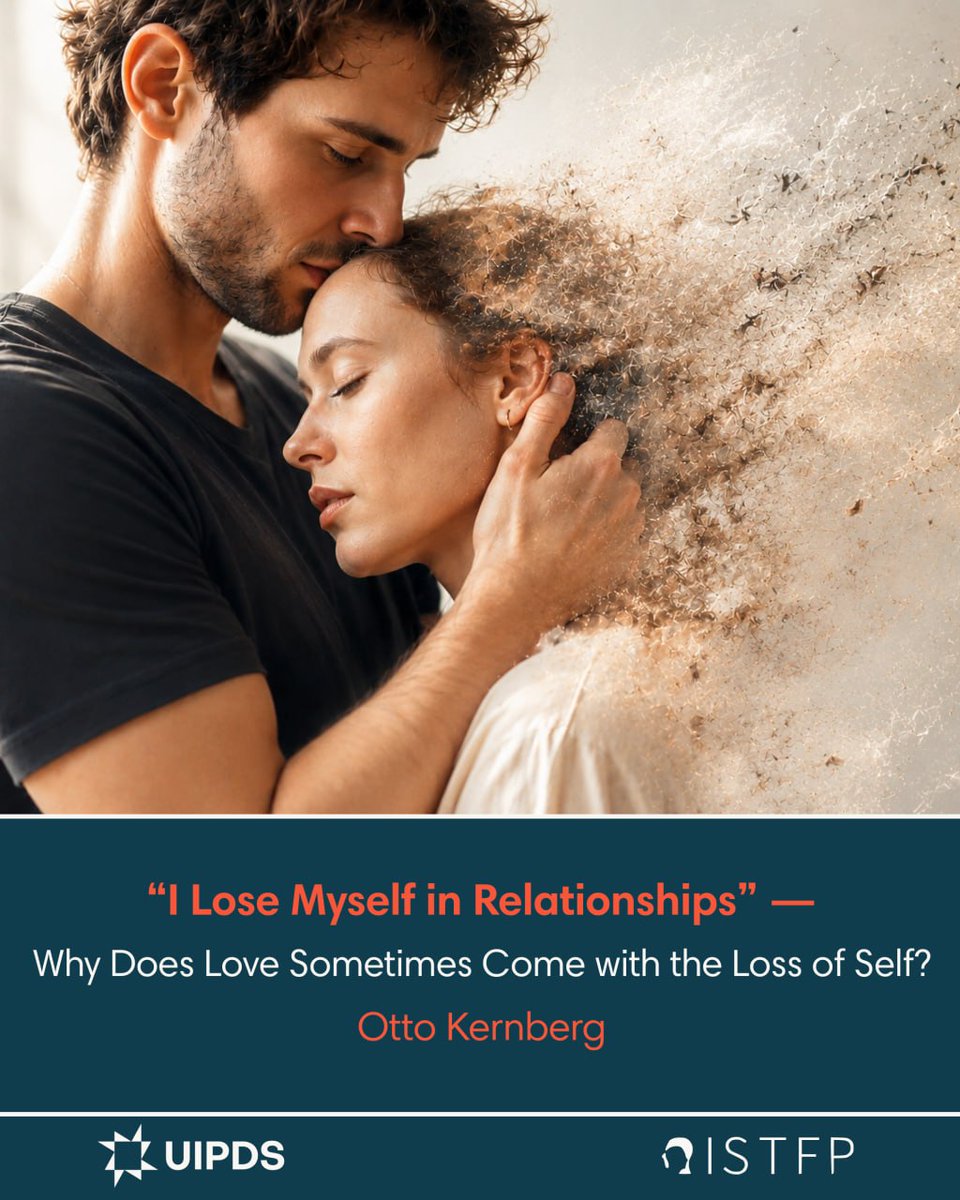
“I lose myself in relationships.
When I fall in love, it feels as though I stop being myself...”
Complaints like this are not uncommon in the therapy room.
At first glance, it may seem to be a matter of excessive attachment or dependency on a partner.
From Otto Kernberg’s perspective, however, the issue often lies much deeper — in a person's capacity to maintain their own identity within the context of intimate relationships.
According to Otto Kernberg, mature love allows a person to experience themselves as a separate individual even while engaged in a deeply meaningful emotional relationship.
One can love another person without losing one’s sense of self.
For some individuals, however, intimacy becomes accompanied by a gradual erosion of psychological boundaries. Their own desires, interests, and goals gradually recede into the background.
Sometimes a person becomes so focused on preserving the relationship that they lose touch with what they themselves want.
Otto Kernberg associated such difficulties with disturbances in identity integration.
In pathological conditions, a person's sense of self may come to be determined by the presence, approval, or acceptance of another person.
In such situations, a person may unconsciously give up their own needs, tolerate what does not truly satisfy them, avoid conflict, or continuously adapt themselves to their partner.
Because the loss of the partner’s presence comes to be experienced as something far more threatening — as the loss of oneself.
For this reason, therapeutic work in such cases involves more than exploring the relationship itself.
Equally important is the development of an integrated identity and the capacity to maintain a coherent sense of self, one’s own desires, and personal boundaries while remaining deeply emotionally connected to another person.
After all, for Otto Kernberg, mature love involves discovering the freedom of another person. It is the recognition that the loved object is, at the same time, a body we may long to possess and a mind into which we can never fully enter, and which can never be completely controlled.
So, mature love is not the fusion of two people into https://t.co/zeZsQp6rkT is the capacity to remain oneself while being with the person one loves.
We invite you to join us
on June 20, 2026, for Otto Kernberg’s clinical seminar:
“Adolescence. Love Relationships Across the Lifespan. Marital Conflicts. Couple Therapy.”
During this seminar, participants will be introduced to a contemporary psychoanalytic perspective on the development of love relationships, the nature of intimacy and dependency, and the conflicts most commonly encountered by couples throughout their shared lives.
For more information about the seminars, please leave a “+” under this post or follow the link https://t.co/0ZhKJYhv61