Curie is now LIVE on @Scroll_ZKP mainnet 📜
Transaction fees on Scroll have been reduced by 2x, thanks to the successful introduction of Data Compression.
Check out our thread + blog post for more details👇
I am applying to participate in the 2nd EthStorage public testnet campaign, and my wallet address is 0x9c12CcDBe2702A8aC3e8488d9DaB2A6b67814049
. @EthStorage.
web3://0x8B1443E5DE4B92991E7132c672b138247DfBd039:3333/app.html
We are excited to expand the Scroll ecosystem through our new integration with @Kaskade_Finance!
The launch of Kaskade on Scroll not only enhances our DeFi landscape but also rewards our community with Marks for their engagement. ⬇️
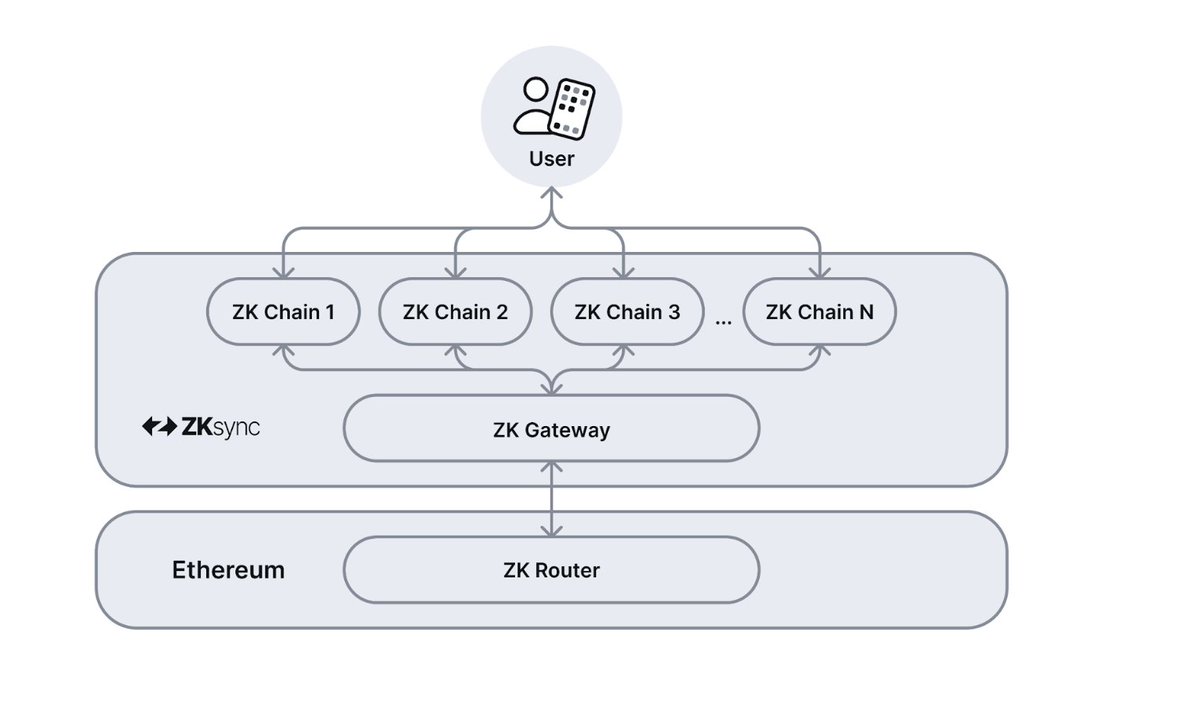
The recent protocol upgrade is transforming ZKsync from a single Ethereum L2 into the Elastic Chain (ZKsync 3.0) by reconfiguring ZKsync’s L1 bridge to support an expanding network of ZK chains.
https://t.co/s2MVNIjy0b
ZKsync was designed from the ground up to make this vision a reality.
The Elastic Chain is comprised of several key components:
1️⃣ ZK chains. Custom, autonomous rollups, validiums, or volitions. Built using the ZK Stack framework. Operated independently, yet interconnected.
2️⃣ ZK Gateway. Middleware between Ethereum and the ZK chains, and facilitates full interoperability between ZK chains and optimizes Ethereum interactions.
3️⃣ ZK Router. Manages network state and shared liquidity between ZK chains.
Messages and native crypto-assets can be passed freely and trustlessly between ZK chains, with no third party bridges or capital required.
The ZK Gateway combines proofs from the ZK chains into a single proof that can verify the entire network on Ethereum. The ZK chain states will also be concatenated, deduplicated, and re-compressed into blobs. This will dramatically reduce the verification costs for all users.
ZK Chains are not required to use the ZK Gateway; they can switch between using the ZK Gateway and directly settling to Ethereum at any time without affecting the security of their chains. But using ZK Gateway is more cost-efficient, thanks to its data compression service.
The ZK Gateway will be operated by a decentralized, trustless set of validators, to ensure resilience and reliability of the network. The participation in this decentralized validation process requires a ERC20 token, designated by ZKsync network governance.
The validators will charge a fee to facilitate bridging, as well as a fee for every byte of state diff data posted to the ZK Gateway. This means that the revenue of the ZK Gateway validators can grow exponentially over time, as more and more of the value transactions move onchain.