The client you think is difficult is often the client your process failed.
Show day micromanagement is almost never a personality problem. It’s a pre-production problem.
A change request after lock-in isn’t a problem. It’s how the change gets handled that determines whether it stays a request or becomes a show-day surprise.
The brief tells you how much thinking has already been done.
A thin one doesn’t get rejected but it does determine what the first three conversations are about.
#EventProduction#PharmaEvents#The180Group
Trust is a liability on a live show floor.
The standard we hold ourselves to doesn't change because someone else is holding the cable.
Every partner on a 180 show floor has been vetted for the same level of discipline and redundancy we bring ourselves.
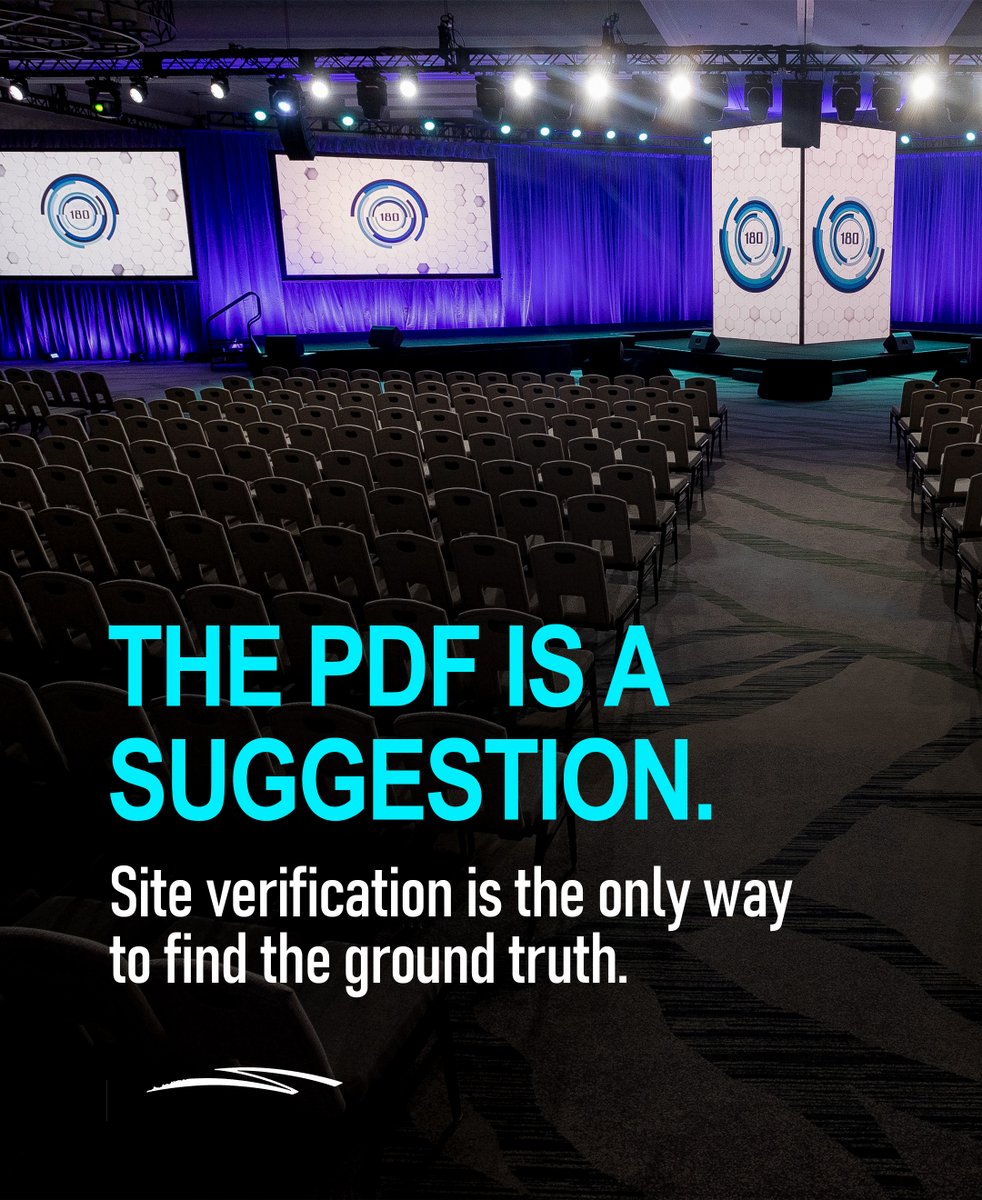
Most producers trust the venue's PDF. We don't. We verify the power, rigging, and load-in routes.
If you haven't touched the floor, you haven't planned the show.
Your schedule is a lie if your floor plan ignores physics. We use WIFT to validate room capacity vs. headcount.
If the math says the foyer can't hold the crowd during a break, we fix the layout before the trucks roll. No guessing.
The Make-A-Wish gala is defined by the mission.
In a room like this, technical execution and logistics should be transparent.
When the infrastructure is silent, the room stays centered on the impact.
A proud moment for The 180 Group.
If your floor plan doesn't account for pillars, you don't have a plan.
Venues give you a CAD file that looks perfect. The floor is never perfect. There are pillars, ceiling height variances, and fire-exit constraints.
We validate the reality before we ever hang a motor.
A room that fits on paper can still fail in reality.
A PDF shows you where the chairs go. It doesn't show you the friction that happens when 400 people try to leave a meeting room through a single 36-inch door.