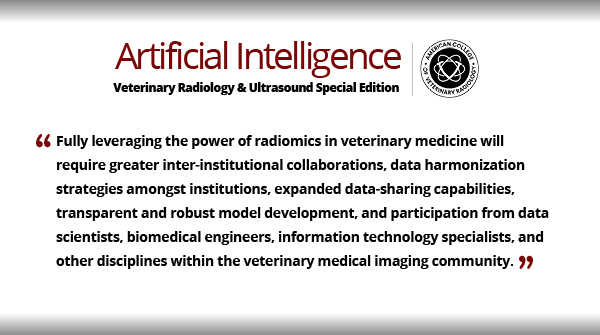
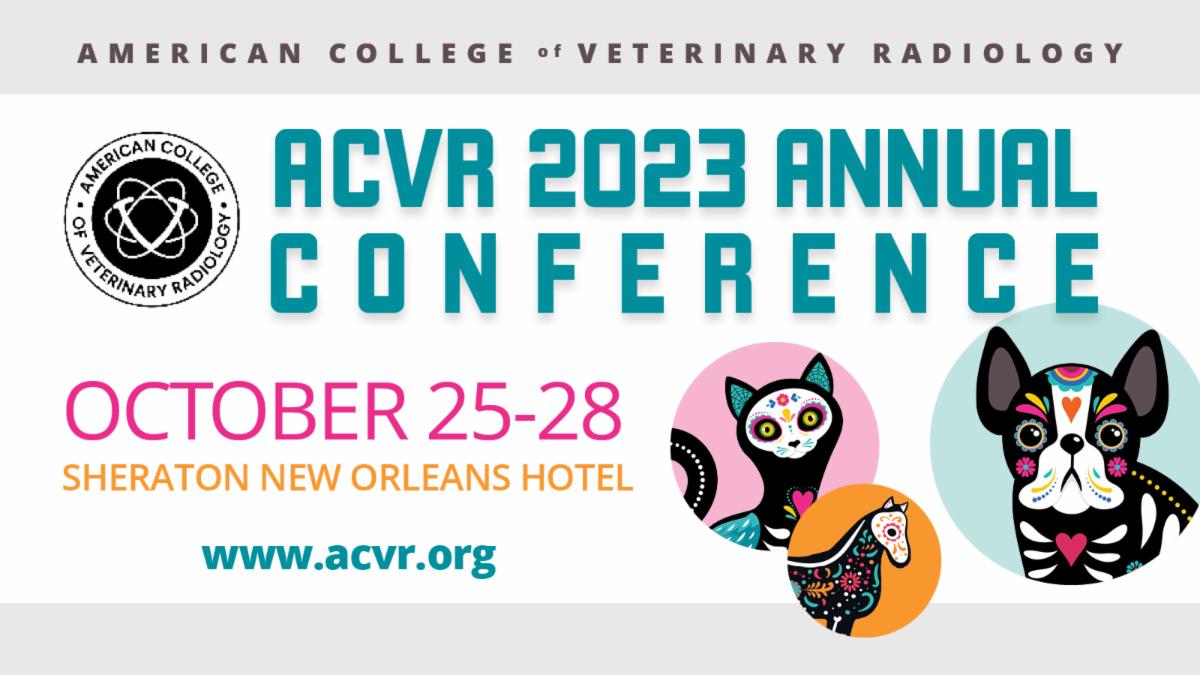
Save the date and plan to join ACVR in New Orleans for the 2023 Annual Scientific Conference! Visit our website to stay up to date on conference information as it becomes available - https://t.co/RNgfdkK8v9
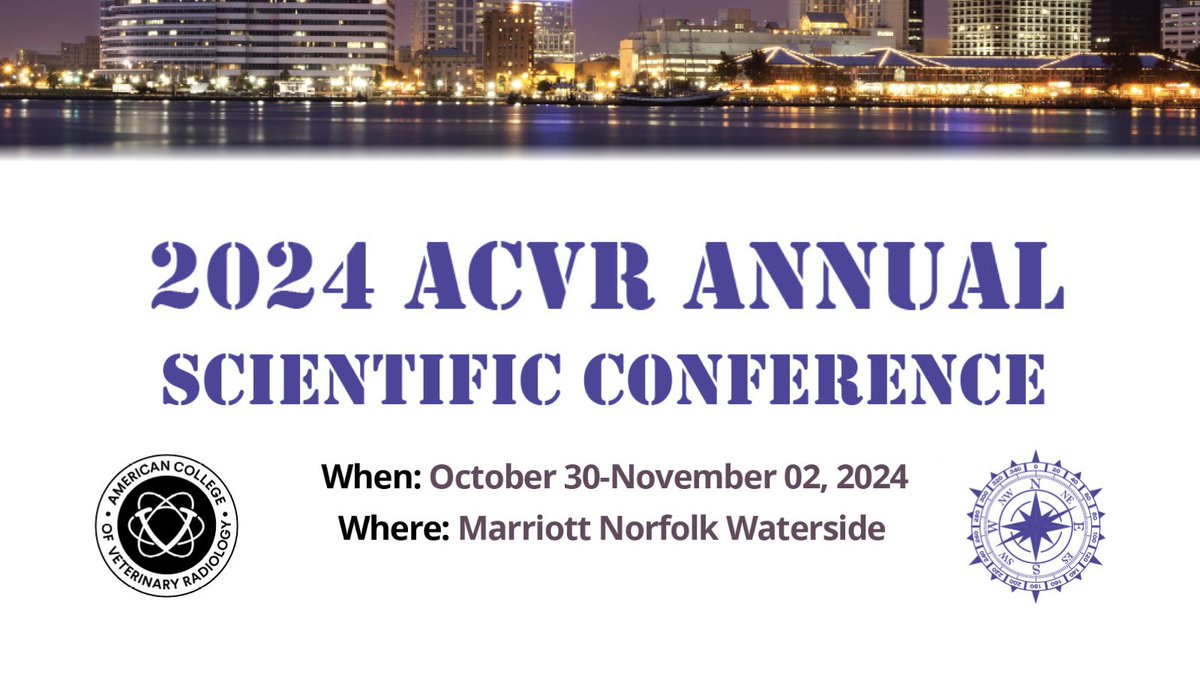
SAVE THE DATE: ACVR will be taking our Annual Scientific Conference to Norfolk, Virginia this Fall! Plan to join us beginning October 30, 2024. More details will be coming soon on https://t.co/P36Hvwymaq.
Registration is now open for the 2023 Annual Scientific Conference in the Big Easy! We are excited to be returning in person once again with another great year of educational content!
Learn more and register - https://t.co/RNgfdkKGkH
Attending the 2023 Annual Scientific Conference? Enhance your experience, submit an abstract! Submissions are being accepted online, and winning abstracts will hold their presentations during the general session!
Learn more - https://t.co/muxoaz6kWC
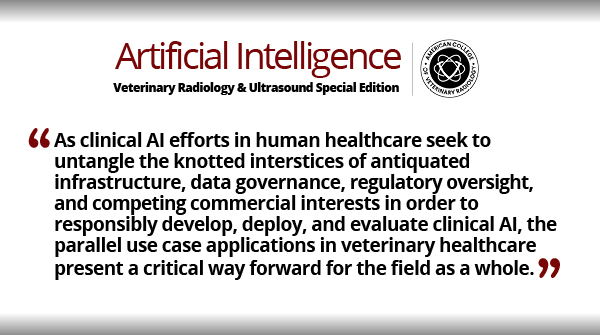
“Deployment of high-performance deep learning-based clinical systems at scale in veterinary care across a variety of use cases may provide critical insights that can serve to address the gap in translation for these promising ..."
Read more – https://t.co/oGSqS4y4iB
“There remains uncertainty about the reliability and reproducibility of [second order , third order and deep] radiomic features, or their value to the decision-making process.”
Read more – https://t.co/bPK3OjZLkD
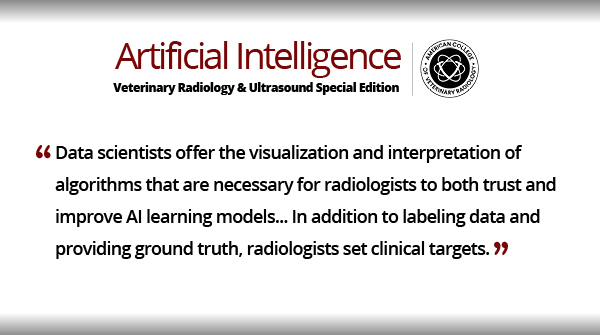
“With the wave of interest to develop machine learning for the interpretation of diagnostic images it has become necessary for data scientists and radiologists to communicate through interdisciplinary research and collaboration.”
Read more – https://t.co/VsrhL1XyGi
“Since it is not always clear how the CNN has arrived at the outcome or prediction. This is generally referred to as the “black box” or “magic box” phenomenon”
Read more – https://t.co/UKAuq3H5B0
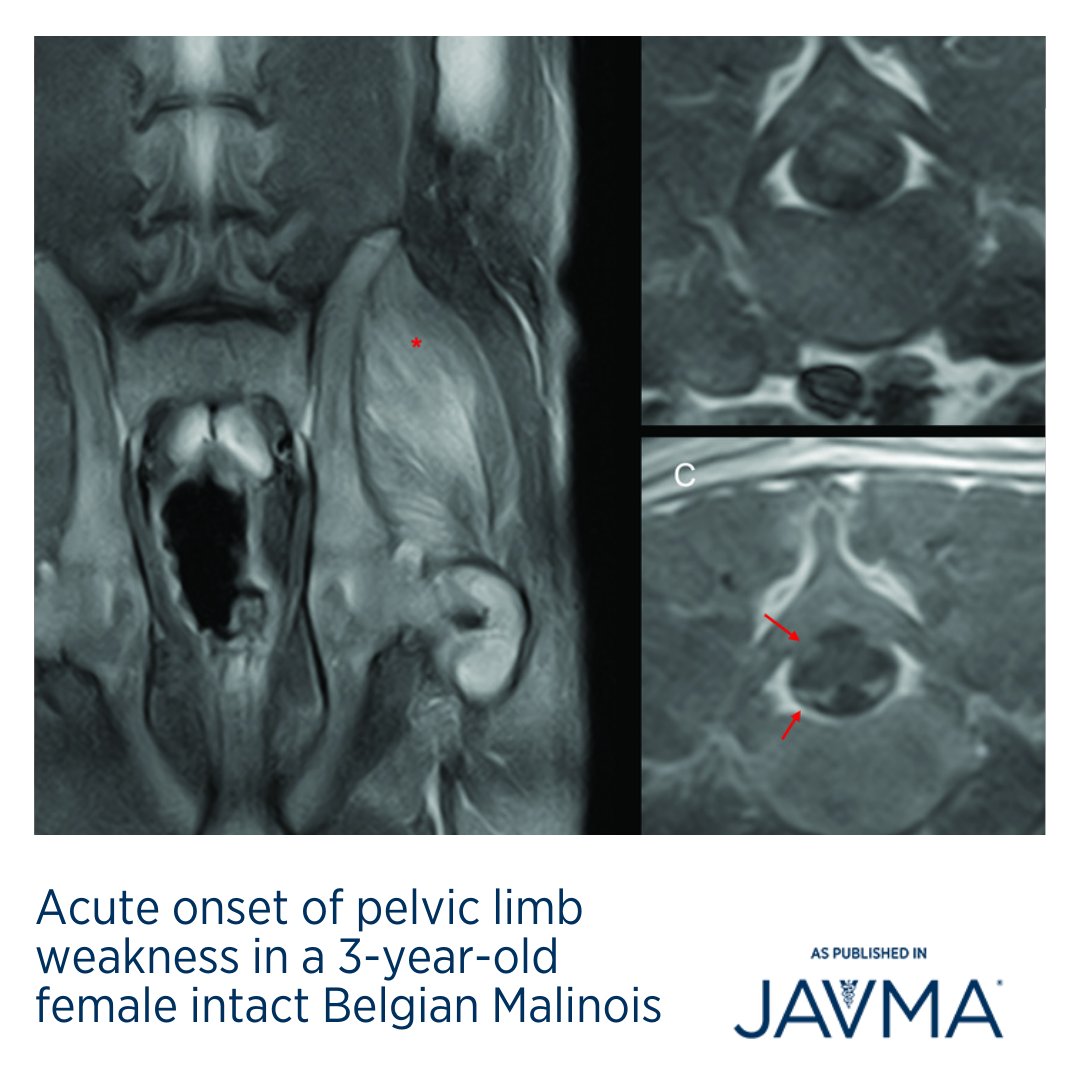
What are your differential diagnoses for an acute onset of pelvic limb weakness in a 3-year-old female intact Belgian Malinois? Full case: https://t.co/LnrEqbmZnQ @ACVIM@TheACVR#neurology#neurosurgery#neuro#mri
“[As of May 2022], less than 40 peer-reviewed publications have utilized machine learning to perform imaging-associated tasks across multiple anatomic regions in veterinary clinical and
biomedical research.”
Read more – https://t.co/efaDPLvZO6
“Medical images contain information that reflects underlying pathophysiology or disease-specific processes which may or may not be perceptible to the human eye.” - Parminder S. Basran and Ian Porter
Read more from "Radiomics in Veterinary Medicine" - https://t.co/mev5p5hhtS
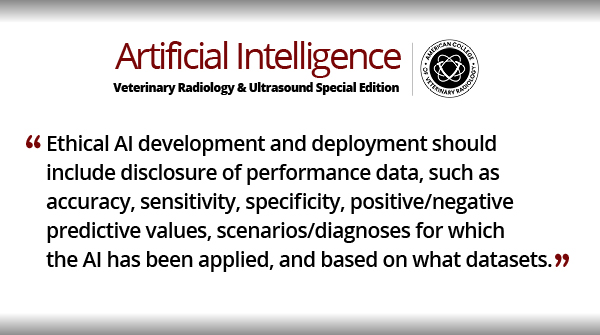
"Deploying these technologies prior to considering the larger ethical and legal implications and without stringent validation is putting the AI cart before the horse, and risks putting patients and the profession in harm’s way."
Read more - https://t.co/4rtJHI11Nq








![TheACVR's tweet photo. “There remains uncertainty about the reliability and reproducibility of [second order , third order and deep] radiomic features, or their value to the decision-making process.”
Read more – https://t.co/bPK3OjZLkD https://t.co/FYQEEkl9BZ](https://pbs.twimg.com/media/Fq3DlbyX0AQk-c7.jpg)


![TheACVR's tweet photo. “[As of May 2022], less than 40 peer-reviewed publications have utilized machine learning to perform imaging-associated tasks across multiple anatomic regions in veterinary clinical and
biomedical research.”
Read more – https://t.co/efaDPLvZO6 https://t.co/4qBmJtw6Cd](https://pbs.twimg.com/media/Fpb3JEMX0A0lhOq.jpg)